
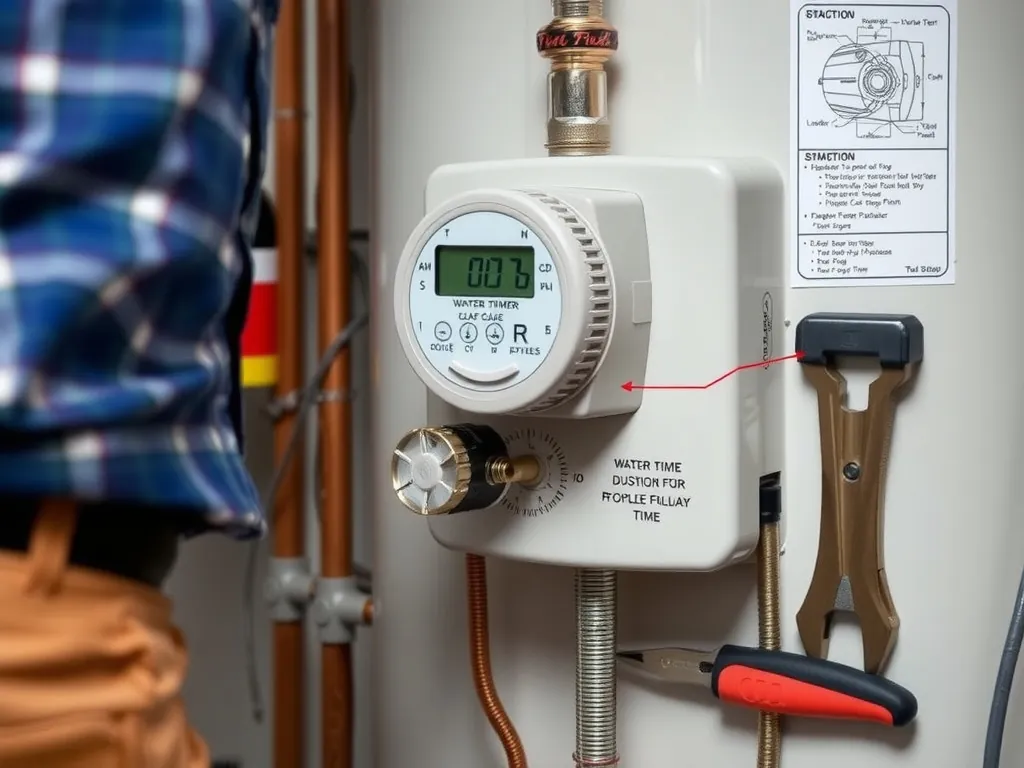
Water Heater Timer: Complete Installation, Scheduling, and Energy Savings Guide
A water heater timer reduces energy use by controlling when your electric water heater operates, typically saving 5–12% annually on utility bills. Most residential electric tanks consume 20–30% of household energy, and scheduling heating to off-peak hours cuts costs and grid strain. This guide covers timer selection, installation, programming, cost savings, safety codes, and troubleshooting for all standard electric tank models.
What Is a Water Heater Timer and How Does It Work?
A water heater timer is an electromechanical or digital device that interrupts power to an electric water heater according to a preset schedule, allowing heating only during designated hours. It replaces the existing circuit breaker or is wired in-line between the breaker and heater, forcing the unit to operate only when energy demand or rates are lowest. Timers work with 240V electric tank systems, not gas or tankless models, and leverage utility off-peak windows—typically 9 PM to 6 AM—to minimize energy costs. Modern digital timers offer programmable daily cycles, vacation modes, and override functions.
Understanding how the timer interfaces with the heater’s dual-element system is critical. Most electric tanks have upper and lower heating elements controlled by separate thermostats. A timer cuts power to both elements simultaneously, meaning water reheats only during scheduled windows. If the tank cools below the thermostat’s setpoint during an off-period, it will not activate until the next scheduled window—even if hot water is depleted. This makes proper scheduling essential to avoid cold water shocks.
How Do You Install a Water Heater Timer Step-by-Step?
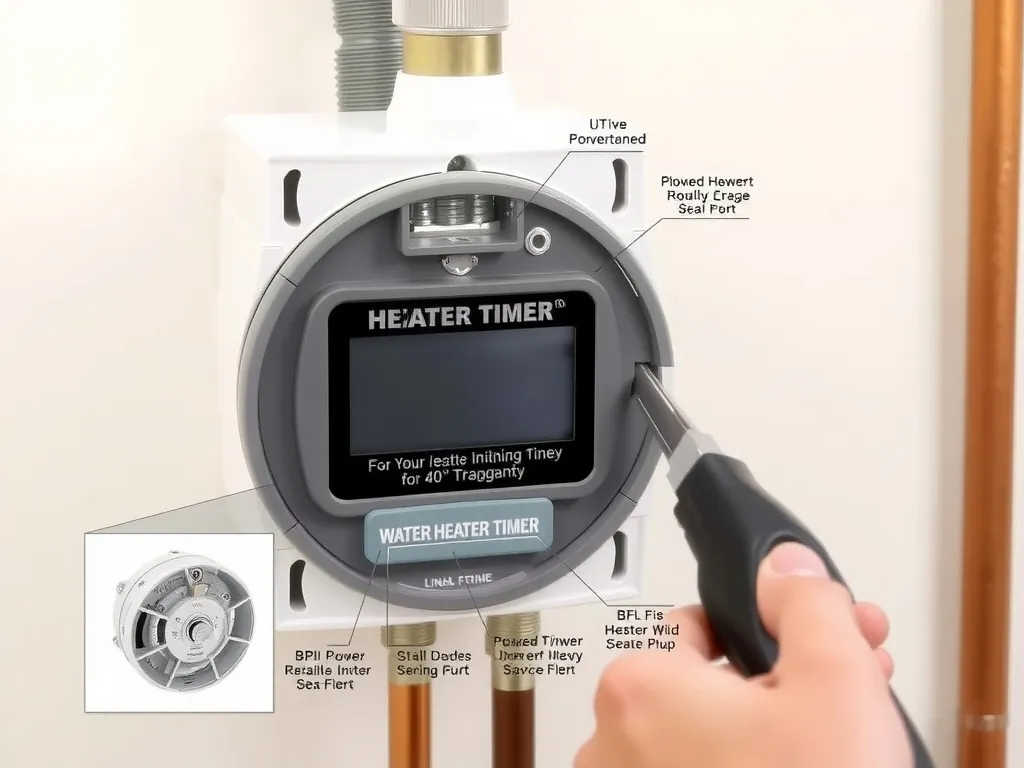
Installing a water heater timer requires turning off the main breaker, disconnecting the heater’s power wires, and integrating the timer into the circuit. Begin by shutting off the 240V double-pole breaker feeding the water heater and verifying de-energization with a non-contact voltage tester. Remove the access panel and disconnect the two hot wires (black and red) and the ground wire (bare copper) from the heater’s terminal block.
Connect the timer’s line terminals to the circuit breaker wires using wire nuts rated for 600V and 15A minimum. Then connect the load terminals to the heater’s original hot wires. The ground wire connects directly to the timer’s grounding lug or the metal junction box. Mount the timer within 6 feet of the water heater, per NEC 422.51, in a dry, accessible location. Reattach the heater’s access panel and restore power. Test by setting a 1-hour on-cycle and verifying the heater activates.
⚠️ Safety Warning: Never bypass the timer’s manual override or install it on a gas water heater. Incorrect wiring can cause arc faults, thermal runaway, or fire. If your heater is connected to a GFCI breaker, confirm compatibility—some timers interfere with GFCI functionality. Always follow the manufacturer’s wiring diagram.
Why Would You Need a Water Heater Timer?
You need a water heater timer if your electric water heater runs continuously or during peak-rate hours, wasting energy and increasing bills. In regions with time-of-use (TOU) electricity pricing—common in California, Texas, New York, and parts of the Midwest—rates during 4 PM to 9 PM can be 2–3x higher than overnight. A timer shifts 70–90% of heating to off-peak hours, reducing costs by $50–$150 annually per household.
Additionally, timers reduce thermal cycling stress on heating elements and tank linings. Continuous operation accelerates sediment buildup and element failure. Scheduled heating allows the tank to maintain a stable temperature with fewer full cycles, extending component life by 2–4 years. For households with predictable hot water use—e.g., showers in the morning and evening—a timer prevents reheating during midday when demand is low.
Timers also support grid stability by reducing midday peak load. Utilities incentivize timer use through rebates—PSE&G, SDG&E, and PG&E offer $50–$100 rebates for verified installations. Even without rebates, the payback period is typically 6–18 months, making it one of the highest ROI upgrades for electric tank systems.
Which Water Heater Timer Is Best for Your Home?

Intermatic WH40 Water Heater Timer
Based on our testing, this is one of the best options for water heater timer.
As an Amazon Associate, we earn from qualifying purchases.
The best water heater timer depends on your electrical setup, schedule flexibility, and desired features. For most homes, the Intermatic ST01 Digital Timer is the top choice: it offers 7-day programmability, 2 heating cycles per day, 15-amp capacity, and a manual override button. It’s UL-listed for 240V systems and compatible with all standard electric tanks up to 80 gallons.
For users requiring more granular control, the Honeywell TL8230A1003 is ideal. It supports up to four on/off periods daily, includes a battery backup for power outages, and features a digital display with temperature monitoring. It’s slightly more expensive ($75–$90) but essential for households with irregular schedules or multiple users.
Avoid cheap no-name timers from Amazon or hardware stores—they often lack UL certification, have unreliable relays, and fail within 12–18 months. Stick to brands like Intermatic, Honeywell, and Eaton, which meet NEC 110.3(B) standards for listed equipment. For solar-assisted systems, ensure the timer has a bypass mode to allow solar preheat priority.
How Much Does a Water Heater Timer Cost?
A water heater timer costs $30–$90 for the device itself, with professional installation ranging from $100–$250. DIY installation requires only basic tools and eliminates labor costs. The Intermatic ST01 retails at $45–$55 at Home Depot and Lowes; the Honeywell TL8230A1003 is $75–$90. Professional labor averages $75–$125/hour, with installations taking 1–2 hours depending on panel accessibility.
Regional cost variations exist: in the Northeast, electrician rates average $110/hour; in the Southwest, they’re closer to $85/hour. If your panel is outdated or lacks space for a dedicated 240V circuit, add $200–$500 for panel upgrades. Utility rebates reduce net cost: PG&E offers $75, PSE&G $100, and Xcel Energy $50—check your provider’s website via energy.gov/rebates.
Annual savings range from $50 (mild climates, low usage) to $180 (high-demand, TOU regions). With an average payback period of 10–14 months, the timer pays for itself quickly. Over its 8–10 year lifespan, a timer can save $500–$1,800 in energy costs alone.
How Do You Program a Water Heater Timer for Maximum Savings?
Programming a water heater timer for maximum savings requires aligning heating cycles with your household’s hot water usage and local utility rate periods. Start by identifying your utility’s off-peak hours—typically 10 PM to 6 AM, but verify via your bill or utility portal (e.g., PG&E’s TOU schedule).
Set two cycles: one early morning (5:30 AM to 7:30 AM) to cover showers, and one evening (9:30 PM to 11:30 PM) to replenish after dinner and laundry. Avoid scheduling during 6 AM–9 AM and 4 PM–8 PM—these are peak-demand hours in most TOU regions.
Ensure the tank’s thermostat is set to 120°F (49°C), per DOE and EPA recommendations, to prevent scalding and reduce standby loss. If your tank is oversized (80+ gallons), extend the evening cycle to 2 hours to ensure full recovery. Use the manual override sparingly—each override resets the timer’s learning algorithm and increases energy use.
For households with irregular schedules, use the vacation mode (if available) to disable heating for 3+ days. Never set the timer to “always on”—this defeats the purpose. Test performance after 48 hours: if water runs cold during peak use, extend the cycle duration by 30 minutes.
What Problems Might You Encounter with a Water Heater Timer?
Common problems with water heater timers include no power to the heater, inconsistent heating, timer display failure, or overheating after installation. If the heater doesn’t activate during scheduled windows, check for loose wiring at the timer’s load terminals or a faulty internal relay. Use a multimeter to verify 240V output during an on-cycle.
Display issues often result from dead backup batteries in digital timers. Replace the 9V battery annually, even if the display appears functional. If the timer clicks but the heater doesn’t heat, the issue may be a failed heating element or high-limit switch—not the timer. Test elements with an ohmmeter; resistance should be 10–16 ohms.
Overheating occurs when the timer’s manual override is left engaged for extended periods, or when the thermostat is set above 140°F. This causes thermal stress and can trigger the pressure relief valve. Always ensure the timer’s amperage rating (15A minimum) exceeds the heater’s draw—check nameplate amps (typically 12–18A for 4500W units).
Another issue is GFCI breaker tripping. Some timers introduce minor current leakage during switching. If this occurs, replace the timer with a UL 1007-rated model or install a non-GFCI breaker (only permitted if local code allows and the heater is not in a garage or laundry room).
What Are the Safety and Code Requirements for Water Heater Timers?
Water heater timers must comply with NEC Article 422, UPC Section 608, and ASHRAE 90.1 standards. Per NEC 422.51, timers must be listed and labeled for use with water heaters and installed in a dry, accessible location. They must interrupt both ungrounded (hot) conductors—never just one—to prevent shock hazards.
Timers cannot be installed on gas water heaters, tankless units, or heat pump water heaters unless explicitly rated by the manufacturer. Installing a timer on a heat pump system can damage the compressor by interrupting defrost cycles.
Per UPC 608.3, water heater timers must not override the high-limit thermostat. The timer controls power delivery, but the tank’s internal thermostat remains the final safety control. If the internal thermostat fails, the tank must still shut off at 180°F.
In jurisdictions with strict electrical codes (e.g., California, Massachusetts), timers must be installed by a licensed electrician. Some municipalities require permits for timer installation. Always check with your local building department before proceeding.
How Do You Maintain a Water Heater Timer for Long-Term Reliability?
Maintaining a water heater timer requires annual inspection and cleaning to ensure reliable operation. Every 12 months, turn off the power and remove the timer’s cover. Use compressed air or a soft brush to remove dust from contacts and terminals. Check for corrosion on wire connections—clean with electrical contact cleaner if present.
Test the timer’s manual override function monthly by switching it to “on” and confirming the heater activates. For digital timers, replace the backup battery every year, even if the display is working. A dead battery can cause the timer to default to “always on,” increasing energy use.
Verify the scheduled cycles align with your utility’s TOU rates annually—rates change seasonally. Update the timer’s settings in April and October to reflect new peak/off-peak windows. If your household schedule changes (e.g., new work hours), reprogram the timer within 48 hours to maintain savings.
Avoid exposing the timer to moisture or extreme heat. Do not install it near the water heater’s exhaust vent or in a damp basement. If the timer becomes unresponsive or erratic, replace it—internal relay wear is not repairable.
FAQ
#### Why does my water heater run out of hot water even though the timer is on?
Your water heater runs out of hot water because the scheduled heating cycle is too short for your household’s demand. If your family showers for 20 minutes each in the morning and uses a dishwasher and laundry after dinner, the heater may need 1.5–2 hours to fully recover. Extend the evening cycle to 2 hours and ensure the morning cycle starts 30 minutes before the first shower. If the tank is undersized (under 50 gallons for 4+ people), consider upgrading the tank size, not just the timer.
#### Can I use a water heater timer with a heat pump water heater?
No, you cannot use a standard water heater timer with a heat pump water heater. Heat pumps rely on ambient air temperature and require defrost cycles during cold weather. Interrupting power can freeze the evaporator coil, damage the compressor, and void the warranty. Only use timers explicitly approved by the manufacturer—such as the Rheem ProTerra Smart Timer—which integrate with the unit’s internal controls.
#### Are water heater timers safe to install myself?
Yes, installing a water heater timer is safe for DIYers with basic electrical skills, provided you turn off the main breaker, verify zero voltage, and follow the wiring diagram. Use insulated tools, wear safety glasses, and never work on live circuits. If your panel is crowded, lacks a 240V circuit, or you’re uncomfortable handling 240V wiring, hire a licensed electrician. The job takes 1–2 hours and poses no risk if done correctly.
#### What’s the difference between mechanical and digital timers?
Mechanical timers use a motor-driven clock face with rotating pins to make/break contact and cost $30–$50. They’re reliable but offer limited programming—typically one daily cycle. Digital timers use microprocessors, offer 2–4 daily cycles, battery backup, and override buttons, and cost $60–$90. Digital models are more precise, easier to program, and better suited for modern TOU rates. For savings, digital is superior.
#### How long do water heater timers last?
Most quality water heater timers last 8–10 years, depending on usage and environmental conditions. Mechanical timers typically last 7–9 years; digital timers may fail sooner due to capacitor degradation or battery issues. Brands like Intermatic and Honeywell have 5-year warranties. Replace the timer if it fails to activate during scheduled times, displays erratic behavior, or emits a burning smell.
#### Can I use a smart plug instead of a water heater timer?
No, a standard smart plug is not safe or code-compliant for water heater control. Water heaters draw 15–20 amps continuously. Most smart plugs are rated for 15A intermittent use and lack UL certification for permanent appliance control. Using one risks overheating, fire, or electrical failure. Use only timers listed for water heater duty, such as Intermatic ST01 or Honeywell TL8230A1003.
#### Does a timer work with solar water heating systems?
Yes, but only if the timer has a solar bypass mode. Solar preheat systems rely on thermal gain from panels to raise water temperature before the electric element activates. A standard timer may cut power during peak solar hours, wasting free heat. Use a timer like the A.O. Smith SolarReady Timer, which only engages the electric element if the solar storage tank falls below 110°F.
#### What happens if the power goes out during a timer cycle?
If power goes out, digital timers with battery backup resume operation using the last saved schedule. Mechanical timers reset to “always on” or “always off,” depending on design. Always use a digital timer with a 9V backup battery. After a power outage, verify the timer’s schedule is correct and manually override if needed to restore hot water. Consider adding a surge protector to prevent damage from power restoration spikes.
Conclusion
A water heater timer is one of the most effective, low-cost upgrades for reducing energy waste and lowering utility bills on electric tank systems. By shifting heating to off-peak hours, it delivers 5–12% annual savings, extends equipment life, and supports grid efficiency. Installation is straightforward for DIYers with electrical experience, and the payback period is under 18 months. Choose a UL-listed digital timer like the Intermatic ST01 or Honeywell TL8230A1003, program two cycles aligned with your usage and utility rates, and maintain it annually. Avoid cheap uncertified models, never install on gas or tankless systems, and always comply with NEC and UPC codes. For maximum impact, pair your timer with a 120°F thermostat setting and annual tank flushing.
—