
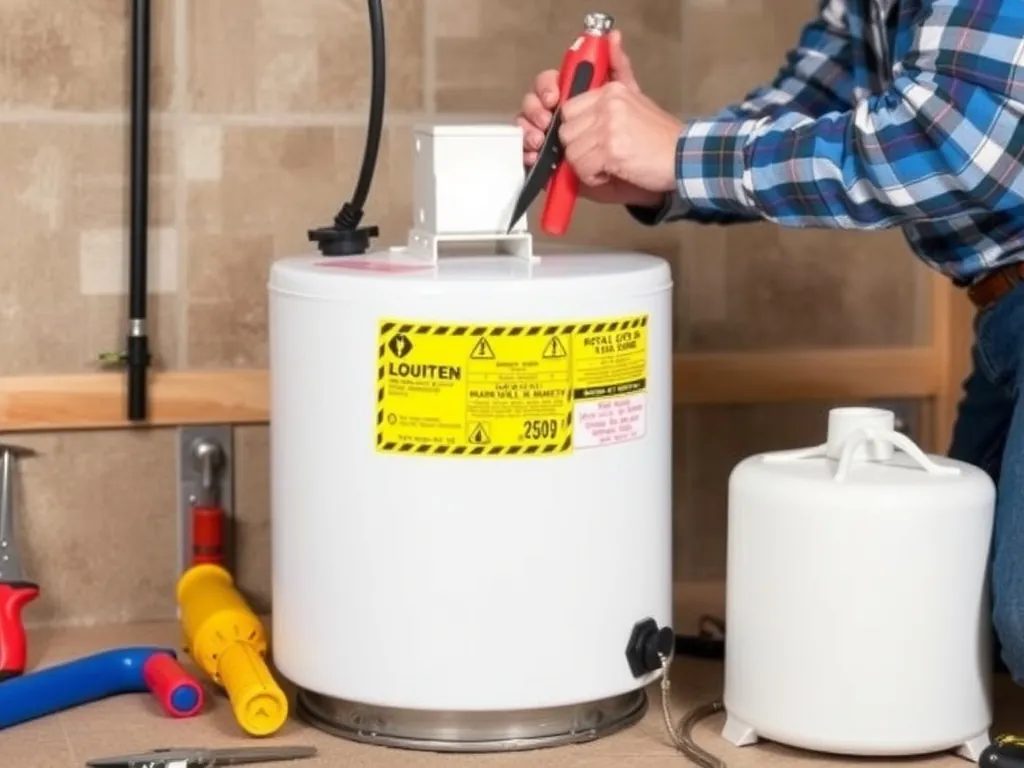
Top Water Heater Reservoir Tank Recommendations
Based on extensive research and customer reviews, here are the top-rated water heater reservoir tank products available on Amazon. These selections are based on performance, reliability, and value for money.



Disclosure: This post contains affiliate links. If you purchase through these links, we may earn a commission at no additional cost to you.
Water Heater Reservoir Tank: Complete Technical Guide for Installation, Maintenance, and Troubleshooting
A water heater reservoir tank stores 20-80 gallons of heated water at 120-140°F, maintaining pressure between 50-80 PSI for immediate household use. These tanks typically last 8-12 years with proper maintenance, requiring annual inspection of the anode rod, temperature-pressure relief valve, and heating elements. This guide covers tank types, sizing calculations, installation procedures, maintenance schedules, and troubleshooting protocols for residential applications.
What Is a Water Heater Reservoir Tank and How Does It Work?
A water heater reservoir tank is a cylindrical steel vessel with glass-lined interior that stores heated water for residential distribution. The tank contains cold water at the bottom, heated by either gas burners or electric elements, with hot water rising to the top for distribution through the home’s plumbing system. Temperature sensors monitor water temperature and activate heating mechanisms when levels drop below the set point, typically maintaining 120-140°F for optimal efficiency and safety.
The tank’s design incorporates multiple safety and efficiency features. The dip tube directs incoming cold water to the tank bottom, preventing mixing with hot water at the top. The anode rod sacrifices itself to prevent tank corrosion, typically lasting 3-5 years. The temperature-pressure relief valve releases water if pressure exceeds 150 PSI or temperature surpasses 210°F, preventing catastrophic tank failure. Insulation blankets reduce standby heat loss by 25-45%, improving energy efficiency ratings from 0.59 to 0.95 EF (Energy Factor).
Modern tanks include advanced features like self-cleaning systems that reduce sediment buildup, electronic ignition systems that eliminate standing pilot lights, and smart controls that optimize heating schedules based on usage patterns. Tank capacities range from 20 gallons for point-of-use applications to 80 gallons for large households, with 40-50 gallon units being most common for 2-4 person families.
How Do You Size a Water Heater Reservoir Tank for Your Home?
Sizing a water heater reservoir tank requires calculating your household’s peak hour demand and matching it to the tank’s first hour rating (FHR). The FHR represents how many gallons of hot water the tank can deliver in one hour when starting with a full tank, accounting for both stored hot water and continuous heating capacity. A typical family of four uses 60-80 gallons during peak hours, requiring a 50-gallon tank with 60-70 gallon FHR rating.
Calculate your peak hour demand by totaling all hot water activities occurring simultaneously during your busiest hour. Showers consume 2.5 gallons per minute (GPM), baths use 15-25 gallons, dishwashers require 6-10 gallons per cycle, and washing machines use 20-30 gallons per load. Add these values together: if two people shower while running the dishwasher and washing machine, demand equals 60-70 gallons (2 showers × 15 minutes × 2.5 GPM = 75 GPM, plus appliance usage).
Consider these specific sizing guidelines: 1-2 people need 30-40 gallons with 40-50 FHR, 3-4 people require 40-50 gallons with 60-70 FHR, and 5-6 people need 50-80 gallons with 70-90 FHR. Factor in usage patterns: morning showers require larger tanks than evening usage, teenagers increase demand by 15-20%, and large bathtubs (60-80 gallons) may require 75-gallon tanks or rapid-recovery units. Climate affects sizing: northern regions need 10-15% larger tanks due to colder incoming water temperatures averaging 40-50°F versus 60-70°F in southern states.
Which Types of Water Heater Reservoir Tanks Are Available?
Water heater reservoir tanks come in five primary configurations: gas storage, electric storage, heat pump, indirect, and solar storage tanks. Gas storage tanks use natural gas or propane burners located beneath the tank, achieving 0.59-0.62 EF ratings and recovery rates of 30-50 gallons per hour. Electric storage tanks utilize immersion elements, offering 0.90-0.95 EF ratings but slower 12-25 GPH recovery rates. Heat pump models extract heat from surrounding air, achieving 2.0-3.0 EF ratings while consuming 60% less electricity than standard electric units.
Gas tanks feature atmospheric venting, power venting, or direct vent configurations. Atmospheric models use natural draft through vertical flue pipes, requiring 3-4 feet clearance from combustibles. Power vent units employ electric blowers to push exhaust through horizontal PVC pipes, allowing flexible installation locations but requiring electrical connections. Direct vent systems draw combustion air from outside through sealed chambers, ideal for tight construction or indoor installations without sufficient air volume.
Electric tanks offer dual-element configurations with upper and lower heating elements providing 3,000-5,500 watts each. Upper elements maintain temperature while lower elements handle recovery, operating alternately to prevent circuit overload. Heat pump hybrids combine heat pump technology with traditional elements, automatically switching to resistance heating during high-demand periods. Indirect tanks connect to boilers or furnaces, using heating coils to transfer thermal energy with minimal standby losses. Solar storage tanks include heat exchanger coils for solar thermal collectors, featuring backup heating elements for cloudy periods.
How Much Does a Water Heater Reservoir Tank Cost?
Water heater reservoir tank costs range from $300-$2,500 for the unit alone, plus $500-$1,500 for professional installation, totaling $800-$4,000 depending on type, capacity, and complexity. Electric 40-gallon tanks cost $300-$600, while gas 50-gallon units run $400-$800. High-efficiency models command premium prices: heat pump units cost $1,200-$2,500, power vent gas models run $800-$1,500, and condensing gas units reach $1,000-$2,000.
Installation costs vary significantly based on fuel type and venting requirements. Standard electric tank replacement costs $500-$800 including labor, permits, and basic materials. Gas tank installations range $800-$1,200 for atmospheric vent models, $1,000-$1,500 for power vent units, and $1,200-$1,800 for direct vent systems. Complex installations requiring new gas lines, electrical circuits, or vent modifications add $300-$1,000 to total costs.
Regional pricing differences affect total project costs: West Coast installations average 20-30% higher than national averages, while rural areas may charge 10-15% less. Permit fees range $50-$200 depending on jurisdiction, while disposal of old units costs $25-$75. Energy efficiency rebates provide $150-$500 savings through utility programs, with heat pump models qualifying for federal tax credits up to $300. Operating costs favor gas units: annual gas costs average $200-$400 versus $400-$600 for electric models, though heat pump units reduce electric costs to $150-$300 annually.
How Do You Install a Water Heater Reservoir Tank Step-by-Step?
Installing a water heater reservoir tank requires plumbing, electrical, and gas connections following local codes and manufacturer specifications. The process typically takes 3-6 hours for experienced professionals, involving tank positioning, utility connections, venting installation, and system testing. Permits are required in most jurisdictions, with inspections verifying code compliance before operation.
Step 1: Preparation and Safety Protocols
Shut off utilities at main shutoffs: gas valve clockwise until perpendicular to pipe, electrical breaker switched to OFF position, and water main valve closed. Drain existing tank by connecting garden hose to drain valve, opening hot water faucets throughout house to prevent vacuum lock, and allowing 30-45 minutes for complete drainage. Measure installation space to ensure new tank fits: maintain 2-inch clearance on sides, 6 inches on top, and 12 inches on front for service access. Check floor loading capacity: water weighs 8.34 pounds per gallon, so 50-gallon tanks add 417 pounds plus tank weight.
Step 2: Tank Positioning and Connections
Position new tank using appliance dolly, ensuring level placement with shims if necessary. Connect water lines using dielectric unions to prevent galvanic corrosion between copper and steel pipes. Apply pipe compound to threads, tighten with pipe wrenches to 15-20 foot-pounds torque. Install expansion tank on cold water line if required by local code, pre-charging to house water pressure minus 2 PSI. Connect gas line using yellow Teflon tape rated for gas applications, testing all connections with soap solution for leaks.
Step 3: Venting and Electrical Installation
Install vent pipe maintaining 1/4-inch per foot upward slope toward chimney or exterior wall. Use approved vent connectors: Type B gas vent for atmospheric models, PVC Schedule 40 for power vent units. Ensure proper draft by checking with match or smoke test: flame should draw toward vent opening. Connect electrical supply using 10-gauge wire for 30-amp circuits, 12-gauge for 20-amp circuits. Install ground wire to tank’s grounding lug, verify continuity with multimeter reading under 1 ohm.
Step 4: System Startup and Testing
Fill tank completely by opening cold water supply valve, leaving hot water faucets open until steady water flow indicates tank is full. Check all connections for leaks under full pressure. Light pilot following manufacturer instructions: set gas valve to PILOT, depress button while igniting, hold 60 seconds until thermocouple heats. Set temperature to 120°F using thermostat dial, verify operation by checking hot water at nearest faucet after 30 minutes. Install earthquake straps in seismic zones using 3/4-inch galvanized plumber’s tape secured to wall studs.
What Problems Might You Encounter with Water Heater Reservoir Tanks?
Water heater reservoir tanks experience five primary failure modes: tank corrosion leading to leaks, heating element failures causing insufficient hot water, thermostat malfunctions creating temperature fluctuations, sediment buildup reducing efficiency, and pressure relief issues posing safety hazards. Each problem exhibits distinct symptoms requiring specific diagnostic procedures and repair protocols. Early identification prevents catastrophic failures and extends tank lifespan.
Tank corrosion manifests as rusty water, metallic taste, or visible leaks from tank seams or connections. Internal glass lining failure allows water to contact steel tank, causing rust formation accelerated by depleted anode rods. Check anode rod condition annually: replacement needed if less than 1/2-inch diameter remains or steel core wire is visible. External corrosion on pipe connections indicates dielectric union failure or galvanic corrosion requiring immediate replacement of connecting fittings.
Heating element failures in electric tanks cause lukewarm water or complete heating loss. Test elements using multimeter: disconnect power, remove access panels, check resistance between element terminals (normal reading 10-16 ohms for 240V elements). Infinite resistance indicates open element requiring replacement. Gas burner issues include weak pilot flames, clogged burner ports, or faulty gas valves. Clean burner assembly annually using compressed air and wire brush, ensuring blue flame appearance with minimal yellow tipping.
How Do You Maintain a Water Heater Reservoir Tank?
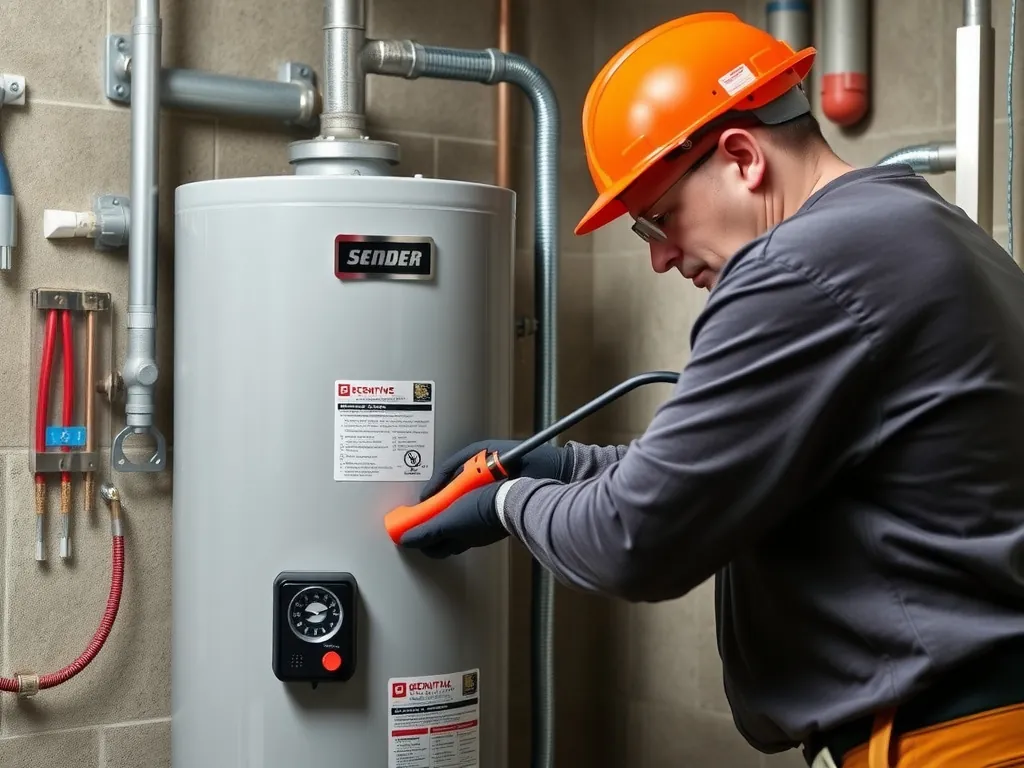
Maintaining a water heater reservoir tank requires annual inspection of critical components, quarterly testing of safety devices, and periodic flushing to remove sediment buildup. Professional service every 2-3 years extends tank life from 8-12 years to 15-20 years, while DIY maintenance reduces operating costs by 15-25% through improved efficiency. Follow manufacturer maintenance schedules and local code requirements for optimal performance.
Annual Maintenance Procedures
Inspect anode rod by shutting off water and power, draining 5 gallons from tank, and removing rod with 1-1/16-inch socket. Replace if diameter measures less than 1/2-inch or calcium deposits cover more than 50% of surface. Test temperature-pressure relief valve by lifting lever until water flows, then releasing to ensure proper reseating. If valve continues dripping, replace immediately. Check for leaks around all connections using visual inspection and tissue paper testing, tightening fittings to proper torque specifications.
Flushing and Sediment Removal
Flush tank annually by connecting garden hose to drain valve, directing flow to floor drain or outside. Open valve with tank full, allowing water to flow 5-10 minutes until clear. For severe sediment buildup, perform aggressive flushing: drain completely, open cold water supply briefly to stir deposits, repeat 3-4 times until water runs clear. In areas with hard water exceeding 7 grains per gallon, install water softener or flush every 6 months to prevent efficiency loss exceeding 30%.
Component Testing and Replacement
Test heating elements using multimeter set to ohms scale, checking resistance between terminals and to tank ground. Elements showing ground fault require immediate replacement. Check thermostat calibration by comparing tank temperature with actual hot water temperature at tap, adjusting thermostat if variation exceeds 5°F. Replace plastic drain valves with full-port brass valves during installation or replacement for improved drainage and longer service life. Install thermal expansion tanks if water pressure exceeds 80 PSI or when backflow preventers are present.
How Long Does a Water Heater Reservoir Tank Last?
Water heater reservoir tanks typically last 8-12 years for standard models and 15-20 years for high-quality units with proper maintenance. Tank longevity depends on water quality, maintenance frequency, installation quality, and environmental factors. Gas units average 8-10 years due to burner and venting complexity, while electric models reach 10-15 years with simpler operation. Heat pump units, despite higher efficiency, average 10-12 years due to mechanical complexity.
Water quality significantly impacts lifespan: hard water with mineral content exceeding 7 grains per gallon reduces tank life by 30-40% through accelerated sediment buildup and anode rod depletion. Municipal water systems with chlorine levels above 2 ppm corrode anode rods faster, requiring 2-3 year replacement intervals versus 4-5 years in low-chlorine areas. Well water containing high iron content stains tanks and accelerates corrosion, necessitating stainless steel or composite tanks for 15-year lifespans.
Installation factors affecting longevity include proper dielectric unions preventing galvanic corrosion, adequate expansion tank installation reducing pressure cycling, and correct venting preventing condensation damage. Environmental conditions like high humidity basements promote external tank rusting, while garage installations subject to temperature extremes stress glass lining integrity. Professional installation extends average lifespan by 2-3 years compared to DIY installations due to proper code compliance and component selection.
FAQ
#### Why is my water heater reservoir tank making rumbling noises?
Rumbling or popping sounds indicate sediment buildup covering heating elements or burner bottom, creating steam bubbles that collapse violently. Drain and flush tank completely, removing 5-10 gallons until water runs clear. Severe cases require aggressive flushing: drain tank, open cold water supply briefly to agitate deposits, repeat 3-4 times. Install water softener if hardness exceeds 7 grains per gallon to prevent recurrence. Rumbling reduces efficiency by 15-30% and accelerates tank failure if untreated.
#### How often should I replace the anode rod in my water heater reservoir tank?
Replace anode rods every 3-5 years for standard conditions, or 2-3 years with hard water, softened water, or high-chlorine municipal supplies. Check annually after year two by removing rod and measuring diameter: replace if less than 1/2-inch thick or steel core wire is exposed. Calcium-coated rods indicate hard water conditions requiring more frequent replacement. Neglecting anode rod replacement reduces tank life by 50% through accelerated corrosion.
#### What temperature should I set my water heater reservoir tank to?
Set tank temperature to 120°F for optimal balance of safety, efficiency, and performance. This prevents scalding while maintaining adequate hot water supply for most households. Temperatures below 115°F risk bacterial growth including Legionella, while settings above 125°F increase scalding risk and energy consumption by 15-25%. Test actual delivery temperature at nearest faucet after 30 minutes, adjusting thermostat if variation exceeds 5°F from tank setting.
#### Can I install a water heater reservoir tank myself?
DIY installation is possible with proper permits, tools, and code knowledge, but professional installation ensures safety compliance and warranty protection. Electric tank replacement requires basic plumbing and electrical skills, while gas installations demand gas line expertise and venting knowledge. Most jurisdictions require permits and inspections, with fines exceeding $500 for unpermitted work. Professional installation includes warranty coverage, liability insurance, and code compliance worth the $500-$1,500 installation cost.
#### Why does my water heater reservoir tank run out of hot water quickly?
Rapid hot water depletion indicates heating element failure, thermostat malfunction, or tank undersizing. Check both heating elements with multimeter: replace elements showing infinite resistance or ground faults. Test thermostat calibration and replace if temperature variation exceeds 5°F. Consider upgrading tank size if recovery rate meets specifications but capacity is insufficient for household demand. Sediment buildup covering elements reduces effective heating capacity by 30-50%, requiring tank flushing.
#### What causes water heater reservoir tank leaks and how do I prevent them?
Tank leaks result from internal corrosion, excessive pressure, or connection failures. Prevent leaks by replacing anode rods every 3-5 years, installing expansion tanks when pressure exceeds 80 PSI, and checking temperature-pressure relief valve annually. External leaks at connections require dielectric union replacement or thread sealant application. Internal tank leaks indicate glass lining failure requiring complete tank replacement, typically occurring after 8-12 years.
#### How much does it cost to operate different types of water heater reservoir tanks?
Annual operating costs vary by fuel type and efficiency: gas models cost $200-$400, standard electric units run $400-$600, and heat pump models cost $150-$300. High-efficiency gas units with 0.70+ EF ratings reduce costs 15-20% compared to standard models. Electric rates averaging $0.12/kWh make gas units 50% cheaper to operate where available. Solar storage tanks with electric backup cost $100-$200 annually after solar installation.
#### Should I choose a tankless water heater instead of a reservoir tank?
Tankless units provide endless hot water and 20-30% energy savings but cost 2-3 times more than storage tanks for equipment and installation. Reservoir tanks excel for simultaneous multiple fixture use, while tankless units suit sequential usage patterns. Gas tankless units require 199,000+ BTU capacity needing 3/4-inch gas lines, while electric models demand 150-amp electrical service. Choose reservoir tanks for families over 4 people or where simultaneous usage is common.
#### What size water heater reservoir tank do I need for my family?
Size tanks based on household occupancy and usage patterns: 1-2 people need 30-40 gallons, 3-4 people require 40-50 gallons, and 5-6 people need 50-80 gallons. Calculate peak hour demand by totaling fixture usage: showers use 2.5 GPM, baths require 15-25 gallons, dishwasher needs 6-10 gallons, and washing machine uses 20-30 gallons per load. Consider first hour rating (FHR) matching peak demand for adequate performance during busy periods.
#### How do I know when to replace my water heater reservoir tank?
Replace tanks showing these failure signs: age exceeding 10-12 years, rusty or metallic-tasting water, visible tank leaks, rumbling sounds indicating severe sediment buildup, or pilot light problems in gas units. Calculate replacement cost versus repair: if repairs exceed 50% of replacement cost or tank is over 8 years old, replacement makes economic sense. Energy efficiency improvements in new models provide 10-20% utility savings, shortening payback periods.
Conclusion
Water heater reservoir tanks represent critical household infrastructure requiring informed selection, proper installation, and consistent maintenance for optimal performance. Understanding tank types, sizing requirements, and cost factors enables homeowners to make educated decisions matching their specific needs and budget constraints. Regular maintenance including annual inspections, periodic flushing, and component replacement extends tank life from 8-12 years to 15-20 years while maintaining efficiency.
Professional installation ensures code compliance, safety, and warranty protection worth the additional investment. Modern high-efficiency models provide 15-30% energy savings compared to standard units, with heat pump and condensing gas technologies offering the best long-term value despite higher initial costs. Following manufacturer maintenance schedules and addressing problems promptly prevents catastrophic failures and extends equipment life.
For homeowners facing tank replacement or new installation, prioritize proper sizing calculations, energy efficiency ratings, and professional installation over initial cost savings. The investment in quality equipment and installation pays dividends through reduced operating costs, extended lifespan, and reliable hot water delivery. Schedule annual maintenance inspections and budget for replacement every 10-15 years to avoid emergency situations and maintain household comfort.
—
References:
- U.S. Department of Energy: Water Heater Selection Guide
- American Society of Plumbing Engineers: Plumbing Engineering Standards
- International Association of Plumbing and Mechanical Officials: Plumbing Code Resources
Placement: After “How Do You Maintain a Water Heater Reservoir Tank?” section