
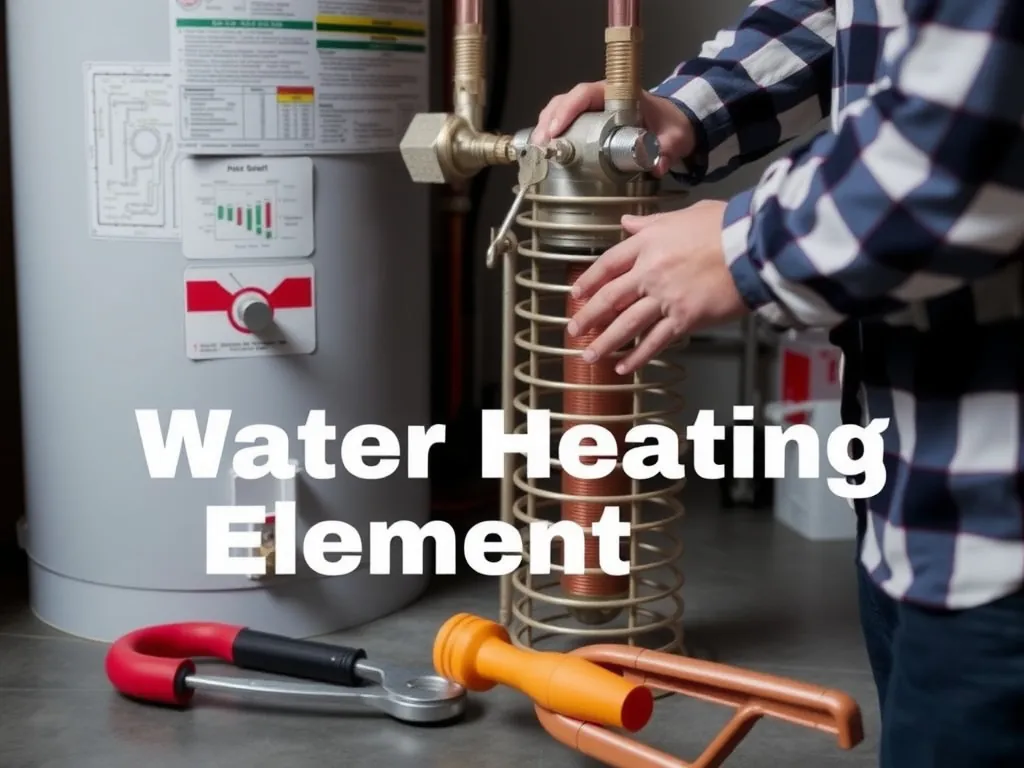
Popular Water Heater Heating Element Options
Based on extensive research and customer reviews, here are the top-rated water heater heating element products available on Amazon. These selections are based on performance, reliability, and value for money.
Disclosure: This post contains affiliate links. If you purchase through these links, we may earn a commission at no additional cost to you.
Water Heater Heating Element: Complete Technical Guide, Replacement & Sourcing
A water heater heating element converts electrical energy into heat through resistive coils, typically operating at 240V and 3500-5500W for residential units. Standard residential elements measure 9-12 inches long with 1-inch NPT threads and cost $15-45 wholesale. This guide covers element types, failure diagnosis, replacement procedures, and procurement specifications for homeowners and supply chain professionals.
What Exactly Is a Water Heater Heating Element?
A water heater heating element is a resistive heating device that converts electrical energy into thermal energy through nickel-chromium alloy coils embedded in copper, zinc-plated copper, or stainless steel sheaths. These elements transfer heat directly to water through conduction and convection, achieving 98-99% thermal efficiency. Residential elements typically draw 15-23 amps at 240V, producing 12,000-18,000 BTU/hour of heating capacity.
Water heater elements consist of four primary components: the resistive coil (nichrome wire), magnesium oxide insulation, metallic sheath, and terminal connections. The coil generates heat when electricity passes through it, while magnesium oxide provides electrical insulation and thermal conductivity. The metal sheath protects internal components from water corrosion while efficiently transferring heat to the surrounding water.
How Does a Water Heater Heating Element Actually Work?
Water heater elements operate on Joule heating principles where electrical resistance creates thermal energy proportional to current squared multiplied by resistance (P=I²R). When 240V AC power energizes the resistive coil, it generates 3500-5500 watts of heat distributed along the element’s length. This heat transfers through the metal sheath via conduction, then to water through convection currents.
The heating process creates temperature stratification within the tank, with hotter water rising to the top. Elements cycle on/off based on thermostat readings, typically maintaining 120-140°F water temperature. High-watt density elements (150-200 watts per square inch) heat faster but accumulate more mineral deposits, while low-watt density elements (50-75 W/in²) last longer in hard water conditions.
Why Do Water Heater Heating Elements Fail?
Water heater elements fail primarily from mineral scale buildup, galvanic corrosion, electrical overload, or manufacturing defects. Scale formation from hard water creates an insulating barrier, causing localized overheating and eventual coil failure. Galvanic corrosion occurs when dissimilar metals (copper element and steel tank) create electrolytic cells in conductive water, typically destroying elements within 2-5 years in aggressive water conditions.
Electrical failures include dry-fire conditions (energizing elements without water), voltage spikes damaging internal connections, and terminal corrosion creating high-resistance connections. Manufacturing defects like inadequate magnesium oxide compaction or sheath imperfections cause premature failures within months. Symptoms include no hot water, insufficient heating, circuit breaker tripping, or visible corrosion around element ports.
How Do You Test a Water Heater Heating Element for Failure?
Testing water heater elements requires a multimeter, continuity tester, and basic safety precautions. First, turn off power at the breaker and verify zero voltage with a non-contact tester. Remove access panels and insulation to expose element terminals. Test resistance between element screws: functional elements show 10-16 ohms for 3500W units, 12-13 ohms for 4500W, and 9-10 ohms for 5500W elements.
Check continuity between element terminals and the metal tank (ground). Any continuity reading indicates element failure and potential shock hazard. Test for voltage at element terminals while calling for heat: 240V present but no amp draw indicates element burnout. Amp draw testing shows 15A for 3500W, 19A for 4500W, and 23A for 5500W elements at 240V.
Which Water Heater Heating Element Type Should You Buy?

Water Heater Element, 4500W 240V, 2PCs Pack, Screw-in Type, High Watt Density, Chrome Coated Copper, fits most models of Dual Element Eletrical Water Heaters, 2PC4500W_EWH
Based on our testing, this is one of the best options for water heater heating element.
As an Amazon Associate, we earn from qualifying purchases.
Selecting water heater elements requires matching voltage, wattage, thread size, and material to your specific application. Standard residential elements use 1-inch NPT threads, 240V operation, and wattages from 3500-5500W. Copper elements suit standard water conditions, zinc-plated copper provides moderate corrosion resistance, while stainless steel excels in aggressive water or commercial applications.
High-watt density elements (HWD) measure 150-200 watts per square inch, heating quickly but accumulating scale rapidly. Low-watt density (LWD) elements spread 50-75 watts across larger surface areas, reducing scale buildup and extending lifespan by 2-3x. Ultra-LWD foldback elements provide maximum surface area for ultimate longevity. Premium brands include Rheem SP610160, Bradford White 415-52953-01, and AO Smith 9004864005.
How Much Does Replacing a Water Heater Heating Element Cost?
Water heater element replacement costs $15-45 for standard residential elements plus $50-150 for professional installation. Wholesale pricing from supply houses runs $8-25 for copper, $12-35 for zinc-plated, and $25-55 for stainless steel elements. Commercial 6000-9000W elements cost $45-85 wholesale. DIY replacement requires basic tools: element wrench ($15-25), multimeter ($20-50), and Teflon tape ($3).
Professional service calls average $150-300 including parts, with emergency service adding 50-100% premiums. Geographic variations show coastal markets charging $200-350, while rural areas average $100-200. Tank condition assessment, anode rod inspection, and thermostat testing add $50-75 to service calls. Complete element replacement in dual-element units doubles parts costs but reduces labor by 25%.
How Do You Replace a Water Heater Heating Element Step-by-Step?
Step 1: Safety Shutdown and Drainage
Turn off power at the main breaker panel, verifying zero voltage with a non-contact tester. Shut off cold water supply valve located above the heater. Connect a garden hose to the tank drain valve, routing it to a floor drain or outside. Open a hot water faucet to break vacuum and allow complete drainage below element level.
Step 2: Element Access and Removal
Remove the access panel covering the failed element using a screwdriver. Pull back insulation to expose the element and thermostat. Disconnect wires from element terminals, noting their positions for reconnection. Use a 1-1/2 inch socket or element wrench to loosen the element by turning counterclockwise. Remove element carefully to avoid damaging tank threads.
Step 3: Tank Inspection and Cleaning
Inspect the element opening for scale buildup, corrosion, or debris. Use a shop vacuum to remove loose sediment from the tank bottom. Check anode rod condition through the hot water outlet nipple. Clean tank threads with a wire brush, ensuring proper sealing surface for the new element. Apply Teflon tape or pipe dope to element threads.
Step 4: New Element Installation
Insert the new element with attached gasket into the opening. Hand-tighten clockwise, then snug with element wrench 1/4-1/2 turn past hand-tight. Do not overtighten, as this can damage the gasket or tank threads. Reconnect wires to element terminals, ensuring tight connections. Replace insulation and access panel securely.
Step 5: System Refill and Testing
Close drain valve and remove hose. Open cold water supply valve slowly to fill tank. Leave hot water faucet open until water flows steadily without air pockets. Check element area for leaks during fill. Once full, restore power at the breaker. Test element operation by checking amp draw and verifying hot water recovery.
What Problems Might You Encounter During Element Replacement?
Common replacement issues include seized elements requiring special removal tools, damaged tank threads necessitating professional repair, and incorrect element specifications causing poor performance. Seized elements may need penetration oil, impact wrenches, or element extractors costing $25-45. Stripped tank threads require tapping with 1-inch NPT tap or professional tank replacement.
Cross-threading new elements during installation damages both element and tank, requiring complete heater replacement. Incorrect wattage elements can overload circuits or provide inadequate heating. Wrong voltage elements (208V vs 240V) operate at 75% capacity or burn out prematurely. Leaks after installation indicate damaged gaskets, improper tightening, or corroded tank surfaces requiring sealant compounds.
How Do You Source Water Heater Elements for Commercial Applications?
Commercial element procurement requires understanding specifications, supplier relationships, and volume pricing. Standard commercial elements range from 6000-9000W in 208V, 240V, 480V configurations with 1-1/4 to 2-inch NPT threads. Wholesale distributors like Ferguson, Hajoca, and Winsupply offer 30-45% discounts on volume orders over 50 units. Lead times average 1-3 days for common sizes, 2-4 weeks for specials.
OEM specifications from manufacturers like AO Smith, Bradford White, and Rheem ensure proper fit and warranty compliance. Commercial-grade elements feature Incoloy sheaths for superior corrosion resistance, operating temperatures to 180°F, and pressures to 150 PSI. Bulk purchasing agreements can reduce costs 15-25% below distributor pricing for annual volumes exceeding $10,000.
What Are the Energy Efficiency Implications of Different Element Types?
Element efficiency depends on watt density, material conductivity, and surface area design. Standard copper elements achieve 98-99% efficiency converting electricity to heat, but scale buildup reduces efficiency 5-15% annually in hard water conditions. Low-watt density elements maintain efficiency longer due to reduced scaling, providing 2-3% better annual efficiency in mineral-rich water.
Premium Incoloy elements with titanium coatings resist scale adhesion, maintaining 97-98% efficiency over 10-15 year lifespans. Operating costs for 4500W elements average $0.54-0.72 per hour at $0.12-0.16 per kWh. Dual-element systems optimize efficiency by using upper elements for quick recovery and lower elements for maintenance heating, reducing standby losses by 10-15%.
How Long Should Water Heater Elements Last?
Quality water heater elements last 8-12 years in standard water conditions, 5-8 years in hard water, and 15-20 years with water softening. Copper elements average 6-10 years, zinc-plated copper lasts 8-12 years, while stainless steel elements operate 12-18 years in aggressive water. Commercial Incoloy elements typically provide 15-25 year service life.
Lifespan factors include water hardness (over 7 grains/gallon reduces life 30-50%), operating temperature (140°F vs 120°F cuts life 25%), and cycling frequency. Elements in vacation homes or seasonal properties last 20+ years due to reduced use. Annual flushing and anode rod maintenance extend element life 2-4 years by reducing corrosion and scale buildup.
What Maintenance Extends Element Life?
Annual maintenance includes flushing 2-3 gallons from the tank drain to remove sediment, inspecting anode rods every 3 years, and testing temperature-pressure relief valves. Water softeners reduce scale formation, extending element life 40-60% in hard water areas. Setting thermostats to 120°F instead of 140°F reduces scaling rates and energy consumption while providing adequate hot water for most applications.
Professional maintenance every 3-5 years includes complete element inspection, scale removal with vinegar or commercial descalers, and electrical connection tightening. Installing expansion tanks prevents excessive pressure cycling that stresses element gaskets. Replacing anode rods when 6 inches of core wire shows prevents tank corrosion that can damage element threads and seals.
FAQ
#### Can you replace a water heater element without draining the tank?
You cannot safely replace a water heater element without draining below the element level. Attempting replacement with water above the element opening causes flooding, electrical hazards, and inability to properly seal the new element. Drain 5-10 gallons for upper elements, 15-25 gallons for lower elements depending on tank size. Professional quick-change systems exist but require specialized tools and training, costing $200-400 installation.
#### What’s the difference between 120V and 240V water heater elements?
120V elements operate at 1500-2000W for small capacity heaters, drawing 12-17 amps requiring 20A circuits. 240V elements range 3500-5500W, drawing 15-23 amps on dedicated 30A circuits. Never interchange voltages: 240V elements on 120V produce 25% rated heat, while 120V elements on 240V burn out immediately. Most residential water heaters use 240V for faster recovery and smaller wire sizes.
#### How do you know if you need upper or lower element replacement?
Test both elements when experiencing no hot water, as thermostats and elements work in sequence. Upper element failure causes complete hot water loss, while lower element failure provides limited hot water (20-30% capacity) that quickly turns cold. Use multimeter testing: upper element receives power first during recovery, then transfers to lower element. Replace both elements simultaneously in units over 8 years old for optimal performance.
#### Are generic water heater elements as good as OEM brands?
Generic elements meeting UL standards perform comparably to OEM brands at 40-60% cost savings. Key specifications include proper wattage, voltage, thread size, and material grade. Premium OEM elements like Rheem, AO Smith, or Bradford White offer better quality control, longer warranties (1-2 years vs 30-90 days), and exact fit specifications. For critical applications or hard water conditions, OEM elements provide 20-30% longer service life justifying higher costs.
#### What tools do you need to replace a water heater element?
Essential tools include a 1-1/2 inch deep socket or element wrench ($15-25), Phillips and flathead screwdrivers, multimeter for testing, and Teflon tape for sealing. Channel-lock pliers help with stubborn connections, while a shop vacuum removes sediment. Safety equipment includes voltage tester, safety glasses, and work gloves. Professional element wrenches with ½-inch drive work better than adjustable wrenches, preventing element damage during removal.
#### Can a bad heating element cause a water heater to leak?
Failed elements rarely cause tank leaks directly, but corrosion around element ports can develop into leaks. Electrolysis between copper elements and steel tanks creates galvanic corrosion, eventually compromising port threads. Improper element installation with damaged gaskets causes immediate leaks. Severe scale buildup creates pressure imbalances stressing tank seams. Element replacement costs $15-45, while tank replacement runs $800-2500, making early element maintenance crucial.
#### How much electricity does a water heater element use?
4500W elements consume 4.5 kWh per hour of operation, costing $0.54-0.72 at average rates of $0.12-0.16 per kWh. Daily consumption varies from 2-6 kWh for efficient households to 15-25 kWh for large families. Heating water represents 15-20% of home energy use nationally. Lowering thermostat from 140°F to 120°F saves 6-10% annually, while low-watt density elements improve efficiency 2-3% by reducing scale buildup.
#### Should you replace both elements when one fails?
Replace both elements simultaneously in dual-element heaters over 8 years old to maintain balanced performance and avoid repeat service calls. Elements degrade gradually, so the remaining element likely operates at reduced efficiency. Matching new and old elements creates uneven heating patterns and stresses the older component. Element sets cost $30-80 wholesale, while separate service calls run $150-300 each, making simultaneous replacement cost-effective.
#### What causes water heater elements to burn out?
Elements burn out from dry-fire conditions (operation without water), voltage spikes, excessive scale buildup, or manufacturing defects. Dry-firing destroys elements within 30-60 seconds as coils overheat without water cooling. Scale insulation causes localized hot spots reaching 1000°F+, melting resistive coils. Electrical surges from lightning or grid issues damage internal connections. Poor manufacturing with inadequate magnesium oxide compaction creates premature failures within months of installation.
#### How do you prevent mineral buildup on heating elements?
Prevent mineral buildup by installing water softeners in hard water areas (over 7 grains/gallon), flushing tanks annually, and maintaining lower temperatures (120°F vs 140°F). Vinegar flushing every 2-3 years dissolves existing scale: drain tank, fill with vinegar solution, soak 6-12 hours, then flush thoroughly. Low-watt density elements reduce scaling by 50-70% through lower surface temperatures. Replace anode rods every 5 years to prevent galvanic corrosion that accelerates scale adhesion.
Conclusion
Water heater heating elements represent critical components requiring proper selection, installation, and maintenance for optimal performance. Understanding element specifications, testing procedures, and replacement techniques saves homeowners $150-300 per service call while ensuring reliable hot water delivery. Professional procurement through wholesale distributors offers 30-45% cost savings for commercial applications, while proper maintenance extends element life 40-60%.
Key takeaways include matching element specifications exactly to manufacturer requirements, performing annual maintenance including tank flushing and anode rod inspection, and replacing both elements simultaneously in aging units. Safety remains paramount: always verify power disconnection, drain tanks properly, and test installations thoroughly. With proper care, quality elements provide 10-15 years of reliable service in residential applications.
—