
Tankless Water Heater Recirculation Pump: Complete Installation, Cost, and Troubleshooting Guide
A tankless water heater recirculation pump reduces hot water wait time by continuously circulating heated water through plumbing loops, eliminating the need to run taps. This system improves comfort and water efficiency, especially in large homes with distant fixtures. Recirculation pumps integrate with tankless units via dedicated return lines or under-sink bypass systems. This guide covers selection, installation, cost, troubleshooting, and code-compliant operation.
What Is a Tankless Water Heater Recirculation Pump and How Does It Work?
A tankless water heater recirculation pump circulates hot water through plumbing pipes to deliver instant hot water at fixtures without running the tap. It operates by pushing heated water from the water heater through the distribution loop and returning cooled water back via a dedicated return line or bypass valve. The pump activates based on a timer, temperature sensor, or occupancy detection to minimize energy waste.
Most systems use a check valve to prevent thermosiphoning and include an insulated return line in hydronic configurations. In retrofit applications, demand-controlled pumps use a push-button or motion sensor under the sink to activate only when hot water is needed. These pumps typically consume 40–60 watts during operation and cycle every 15–30 minutes in continuous mode.
Recirculation systems are categorized into three types: full-loop (with return line), crossover (using cold water line as return), and demand-based (on-demand activation). Full-loop systems are most efficient but require additional piping. Crossover systems are common in retrofits but can warm the cold water line. Demand systems offer optimal energy efficiency by eliminating standby circulation.
The integration with tankless heaters requires compatibility with flow sensors. Most tankless units need a minimum flow rate of 0.26–0.5 gallons per minute (gpm) to activate. Recirculation pumps must meet or exceed this threshold or use a buffer tank to ensure consistent ignition. Without proper flow, the heater may fail to ignite or short-cycle, reducing lifespan.
Industry standards such as the Uniform Plumbing Code (UPC) Section 606 and International Plumbing Code (IPC) Chapter 6 regulate recirculation system design, including pipe insulation, pump controls, and temperature maintenance. Systems must maintain water at 120°F or higher in recirculation loops to prevent microbial growth, per ASHRAE 12-2000 guidelines.
How Does a Tankless Water Heater Recirculation Pump Save Water and Energy?
A tankless water heater recirculation pump saves water by eliminating the need to run taps while waiting for hot water, reducing average waste from 1–2 gallons per use to near zero. In a typical household, this prevents 10,000–15,000 gallons of water waste annually. Energy savings occur when the system uses demand controls or timers, reducing pump runtime and avoiding continuous reheating of looped water.
Continuous recirculation systems consume more energy due to constant pump operation and heat loss from uninsulated or undersized pipes. A 50-foot uninsulated loop can lose 20,000–30,000 BTU/day. Insulated ½-inch copper pipe reduces loss to 8,000–12,000 BTU/day. Demand systems consume 10–20% of the energy of continuous models by operating only 5–10 minutes per activation.
Energy Star-rated pumps like the Grundfos Comfort System or Taco D’MAND series use variable-speed motors and smart sensors to optimize performance. These units consume 8–12 watts in standby and 40–50 watts during operation. When paired with programmable timers (e.g., 6–9 AM and 5–8 PM), daily energy use drops to 0.2–0.4 kWh.
Tankless heaters themselves are 24–34% more efficient than tank models (EF 0.92–0.96 vs. 0.60–0.70). Adding a recirculation pump increases efficiency only if it prevents excessive water waste. The U.S. Department of Energy estimates that households save $50–$100 annually in water heating costs with optimized recirculation systems.
However, improper setup can negate savings. A pump that activates too frequently or lacks insulation increases gas or electric consumption. For example, a Rinnai RL75i recirculation kit on a 9.5 GPM heater adds $25–$40/year in electricity but saves $75–$120 in water costs. ROI occurs within 1–2 years in high-usage homes.
How Do You Install a Tankless Water Heater Recirculation Pump Step-by-Step?
Installing a tankless water heater recirculation pump requires plumbing, electrical, and control integration, typically taking 3–6 hours for a licensed professional. The process differs based on system type: full-loop, crossover, or demand-based. Each method must comply with local plumbing codes and manufacturer specifications.
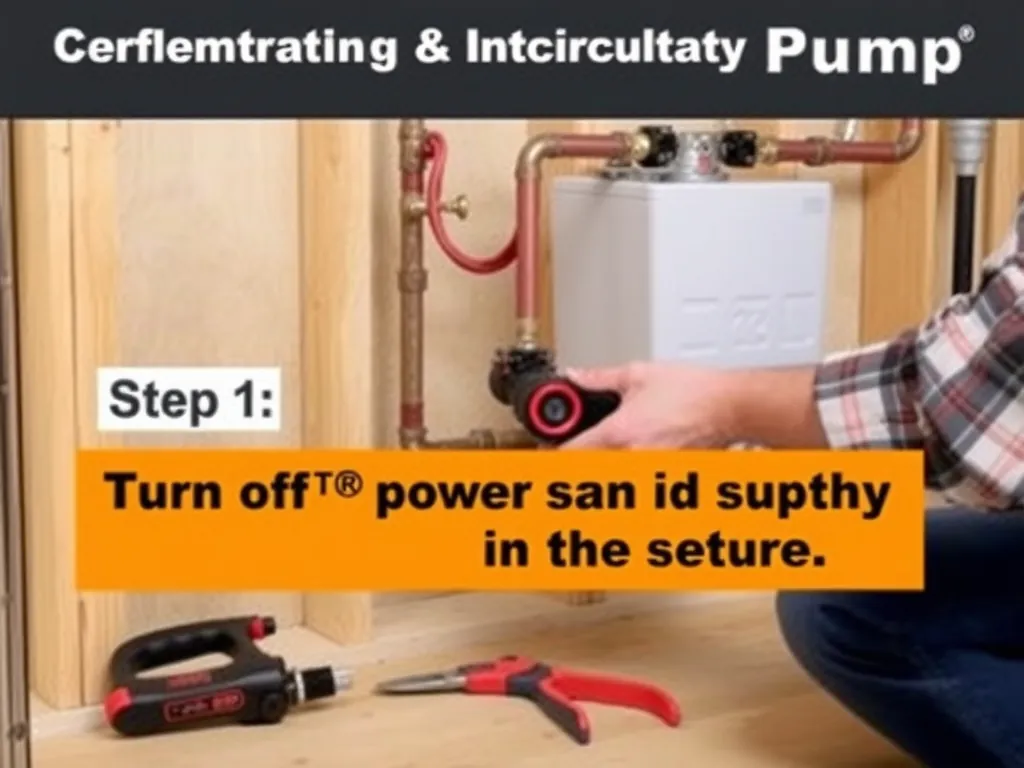
Step 1: Turn Off Power and Water Supply
Shut off electrical power to the tankless heater at the breaker and close the main water shutoff. Relieve pressure by opening a hot water tap. Failure to do so risks electrical shock or pipe rupture.
Step 2: Determine Recirculation Method
For new construction, install a dedicated ½-inch return line from the farthest fixture back to the heater. In retrofits, use a crossover valve (e.g., Uponor Aquatec) at the fixture or a demand pump (e.g., Grundfos Comfort) under the sink. Crossover systems require an automatic valve to prevent cold water contamination.
Step 3: Mount the Pump
Attach the recirculation pump near the water heater using mounting brackets. Models like the Taco D’MAND S-35 require vertical orientation with electrical connections facing up. Use union fittings for service access.
Step 4: Connect Plumbing Lines
Install the pump in-line with the hot water outlet. Connect the return line to the pump’s inlet. Use PEX-AL-PEX or copper with lead-free solder. Include a shut-off valve on both sides for maintenance. For crossover systems, connect the pump outlet to the cold water line via a thermostatic mixing valve.
Step 5: Wire the Pump and Controls
Connect 120V power via a GFCI-protected circuit. Wire timer or sensor controls per manufacturer specs. The Grundfos Comfort requires a 24V transformer for the under-sink sensor. Label all wires for future service.
Step 6: Set Temperature and Flow
Adjust the pump’s temperature sensor to activate when loop water drops below 95–100°F. Set timer schedules to match household usage. Test flow rate: ensure minimum 0.3 gpm to trigger the tankless heater. Use a flow meter to verify.
Step 7: Test and Insulate
Turn on water and power. Check for leaks and proper heater ignition. Insulate all hot and return lines with ¾-inch closed-cell foam (R-4+). Uninsulated loops increase energy loss by 30–50%.
Failure to follow these steps risks pump cavitation, heater lockout, or scalding. Always consult the manufacturer’s manual and local code amendments.
How Much Does a Tankless Water Heater Recirculation Pump Cost to Install?
A tankless water heater recirculation pump costs $400–$1,200 for equipment and installation, with regional labor rates and system complexity determining final price. Equipment alone ranges from $150–$500, while labor adds $250–$700 depending on plumbing modifications.
Itemized Cost Breakdown:
| Item | Low Cost | High Cost | Notes |
|---|---|---|---|
| Pump Unit (Demand) | $150 | $300 | Grundfos Comfort, Taco D’MAND |
| Pump Unit (Continuous) | $200 | $500 | Rinnai RL75i, Navien NPE-A |
| Labor (No New Pipes) | $250 | $400 | 3–4 hours, retrofit |
| Labor (With Return Line) | $500 | $700 | 5–6 hours, new construction |
| Insulation & Fittings | $50 | $100 | PEX, valves, foam |
In high-cost regions (e.g., California, New York), labor exceeds $100/hour, increasing total cost by 20–30%. Systems with smart controls (Wi-Fi, app integration) add $100–$200.
Return on investment occurs in 2–4 years due to water and energy savings. A household using 12,000 gallons annually saves $80–$110 in water/sewer charges and $40–$60 in gas costs. Rebates from utilities like U.S. Department of Energy or local programs may cover 10–20% of costs.
What Problems Might You Encounter with a Tankless Water Heater Recirculation Pump?
Common problems with tankless water heater recirculation pumps include failure to activate, overheating, noise, short cycling, and cold water sandwiching. Each issue stems from improper installation, control settings, or component failure.
1. Pump Does Not Activate
Cause: Power failure, tripped GFCI, or faulty timer/sensor. Solution: Verify power supply, reset GFCI, and test sensor with multimeter. Replace if signal voltage is below 24V.
2. Heater Fails to Ignite
Cause: Insufficient flow rate (<0.3 gpm). Tankless units require minimum flow to engage burners. Solution: Install a buffer tank (e.g., Temptrol) or adjust pump speed to ensure flow exceeds 0.4 gpm.
3. Excessive Noise (Gurgling, Hammering)
Cause: Air in lines or water hammer. Solution: Bleed air from the system and install a water hammer arrestor near the pump.
4. Hot Water Temperature Fluctuations
Cause: Improper sensor placement or uninsulated pipes. Solution: Relocate temperature sensor to a shaded, insulated section of pipe. Add R-4 foam insulation.
5. Cold Water Sandwich Effect
Cause: Short cycling where cooled water trapped between hot segments delivers lukewarm bursts. Solution: Increase pump runtime or install a check valve to prevent backflow.
6. High Energy Consumption
Cause: Continuous operation without timer or insulation. Solution: Switch to demand mode and insulate all recirculation lines.
7. Scalding Risk
Cause: Thermostat set above 120°F or failed mixing valve. Solution: Install an anti-scald valve and set system max temperature to 110–115°F.
Preventive maintenance every 12 months extends pump life to 8–12 years. Flush the system annually to remove mineral buildup, especially in hard water areas (above 7 gpg).
Which Tankless Recirculation Pump System Is Best for Your Home?

Smart Instant Hot Water Recirculating Pump System NSF/ANSI 61 & 372 for Tanked, Tankless Water Heater 3 speed Bulit-in Thermostat Recirculating Pump for Water Heater Extremely Quiet HBS24-12
Based on our testing, this is one of the best options for tankless water heater recirculation pump.
As an Amazon Associate, we earn from qualifying purchases.
The best tankless recirculation pump system depends on home size, plumbing layout, usage patterns, and budget. Demand-controlled systems are optimal for retrofits, while full-loop systems suit new construction.
Demand Systems (Best for Retrofits)
Models: Grundfos Comfort, Taco D’MAND
Pros: No return line needed, low energy use (0.2–0.4 kWh/day), easy installation
Cons: Requires under-sink power, slight delay (10–15 sec)
Ideal for: Homes with 1–2 bathrooms, moderate hot water use
Continuous Systems with Timer (Best for High Usage)
Models: Rinnai RL75i, Navien NPE-A
Pros: Instant hot water, programmable schedules
Cons: Higher energy use, requires return line
Ideal for: Large homes (3+ bathrooms), frequent use
Hybrid Systems with Buffer Tank (Best for Low-Flow Heaters)
Models: Temptrol + Grundfos
Pros: Ensures minimum flow, eliminates cold sandwich
Cons: High cost ($800–$1,200), space requirements
Ideal for: Rinnai, Navien, or Bosch units with strict flow requirements
Climate affects performance. In cold regions (e.g., Northeast), uninsulated pipes lose heat rapidly, making insulation critical. In hard water areas (e.g., Southwest), scale buildup requires annual descaling with vinegar or citric acid.
Choose ENERGY STAR-certified pumps for verified efficiency. The ENERGY STAR specification requires pumps to use ≤260 kWh/year and include programmable controls.
How Do You Maintain a Tankless Water Heater Recirculation Pump?
Maintaining a tankless water heater recirculation pump requires annual inspection, cleaning, and system flushing to prevent failures and ensure efficiency. Neglect reduces pump lifespan from 10–12 years to 5–7 years.
Monthly Checks:
- Verify timer settings match usage
- Listen for unusual noises (grinding, hammering)
- Confirm hot water delivery within 5 seconds
Annual Maintenance:
1. Turn off power and water supply.
2. Disconnect pump and inspect impeller for debris. Clean with vinegar if scaled.
3. Flush the recirculation loop with 1 gallon of 50% vinegar solution. Circulate for 30 minutes.
4. Replace worn seals or O-rings.
5. Test flow rate with a digital meter; ensure >0.4 gpm.
6. Inspect insulation for damage; repair with closed-cell foam.
In hard water areas (TDS >300 ppm), descale every 6 months. Install a whole-house water softener (e.g., Fleck 5600) to reduce maintenance.
Replace pump bearings every 7 years. Use manufacturer-approved parts to maintain warranty compliance. Record maintenance dates for warranty validation.
Can You Use a Recirculation Pump with Any Tankless Water Heater?
You can use a recirculation pump with most tankless water heaters, but compatibility depends on flow rate, control interface, and manufacturer approval. Units from Rinnai, Navien, and Rheem support recirculation via integrated controls or external pumps. Some brands void warranties if non-approved pumps are used.
Rinnai requires the RL75i or RL94i recirculation kit for warranty coverage. Navien accepts NPE-A series pumps or third-party models with 0.3+ gpm output. Rheem models accept any pump meeting minimum flow and voltage requirements.
Check the heater’s minimum activation flow (typically 0.26–0.5 gpm). Pumps must deliver at least this flow continuously. Low-output pumps (e.g., 0.2 gpm) cause short cycling and heater lockout.
Gas-powered tankless units require proper venting and combustion air during recirculation. Electric models need a dedicated 20A circuit if pump and heater share power.
Always consult the manufacturer’s installation manual. The Rheem ProTerra installation guide specifies compatible recirculation setups.
How Long Does a Tankless Water Heater Recirculation Pump Last?
A tankless water heater recirculation pump lasts 8–12 years with proper maintenance and water quality. Failure before 8 years indicates poor installation, hard water, or electrical issues. High-end models (Grundfos, Taco) often exceed 12 years.
Lifespan factors:
- Water hardness: Scale buildup reduces flow and overheats motor
- Runtime: Continuous systems wear faster than demand models
- Voltage stability: Power surges damage control boards
- Insulation: Poorly insulated loops increase pump cycling
Replace the pump if:
- Flow drops below 0.3 gpm
- Noise increases significantly
- Heater fails to ignite consistently
- Energy use spikes unexpectedly
Most pumps carry a 3–5 year limited warranty. Register the product within 30 days for full coverage.
FAQ
#### Why does my tankless recirculation pump make noise?
A tankless recirculation pump makes noise due to air in the lines, loose mounting, or water hammer. Air causes gurgling; secure the pump and bleed the system. Water hammer creates banging; install an arrestor. Worn bearings produce grinding; replace the motor assembly. Ensure the pump is mounted on vibration-dampening brackets and all fittings are tight.
#### How much electricity does a recirculation pump use?
A recirculation pump uses 8–60 watts depending on type. Demand models consume 8–12 watts in standby and 40–50 watts during 5–10 minute cycles, totaling 0.2–0.4 kWh/day. Continuous pumps use 40–60 watts nonstop (0.96–1.44 kWh/day). Annual cost ranges from $25 (demand) to $120 (continuous) at $0.13/kWh. Use timers to reduce consumption.
#### Are recirculation pumps required by plumbing code?
Recirculation pumps are not universally required, but the Uniform Plumbing Code (UPC) Section 606 mandates them in multi-family buildings over 3 stories and hotels where hot water delivery exceeds 10 seconds. For single-family homes, they are optional but encouraged for water conservation. Local amendments may impose additional requirements.
#### Which is better: a built-in or external recirculation pump?
A built-in recirculation pump (e.g., Rinnai RL75i) offers better compatibility and warranty protection, while external pumps (e.g., Grundfos) provide flexibility and easier service. Built-in models integrate seamlessly but cost more to replace. External units allow brand mixing but require careful flow matching. Choose built-in for new installations, external for retrofits.
#### Can I install a recirculation pump myself?
You can install a recirculation pump yourself if you have plumbing and electrical experience, but improper installation risks leaks, electrical hazards, or heater damage. DIYers should use demand systems (e.g., Grundfos Comfort) which require only under-sink valves and low-voltage wiring. Full-loop systems need permits and inspections. Hire a licensed plumber for gas line or return pipe modifications.
#### How long does it take to get hot water with a recirculation pump?
With a recirculation pump, hot water arrives in 2–5 seconds at fixtures. Demand systems add a 10–15 second delay for pump activation. Continuous systems deliver instantly. Distance, pipe diameter, and insulation affect speed. A 50-foot loop with ½-inch insulated PEX delivers in 3 seconds; uninsulated copper takes 6–8 seconds.
#### Do recirculation pumps increase water heating bills?
Recirculation pumps increase water heating bills if poorly controlled or uninsulated. Continuous systems add $80–$150/year in energy costs. Demand systems increase bills by $25–$50 but save $100–$150 in water costs, resulting in net savings. Insulate pipes and use timers to minimize waste.
#### What tools are needed to install a recirculation pump?
Tools needed include pipe cutter, wrench set, screwdrivers, voltage tester, PEX crimping tool, drill, and insulation knife. For electrical work, use wire strippers and a multimeter. Safety gear: gloves, goggles, and non-slip shoes. Professional kits include isolation flanges and mounting brackets. Rent a pressure tester for leak checks.
#### How often should you replace a recirculation pump?
Replace a recirculation pump every 8–12 years or when flow drops below 0.3 gpm, noise increases, or the heater fails to ignite. Annual maintenance extends life. In hard water, replace seals every 5 years. Monitor performance; sudden changes indicate impending failure. Keep spare parts for critical components.
#### Does a recirculation pump work with solar water heating?
A recirculation pump works with solar water heating if the system includes a temperature-activated controller and compatible pump. Solar thermal systems use differential controllers to activate recirculation when storage tank temperature exceeds the setpoint. Use a DC pump for off-grid setups. Ensure freeze protection in cold climates.
Conclusion
A tankless water heater recirculation pump delivers instant hot water, reduces waste, and improves efficiency when properly selected and installed. Demand systems offer the best ROI for retrofits, while full-loop setups excel in new construction. Installation costs $400–$1,200, with payback in 2–4 years through water and energy savings. Maintenance every 12 months ensures 8–12 year lifespan.
Key success factors include proper flow rate (≥0.4 gpm), pipe insulation, and control settings. Always follow manufacturer guidelines and local codes. For complex installations, hire a licensed plumber with tankless system experience.
Placement: How Much Does a Tankless Water Heater Recirculation Pump Cost to Install?