
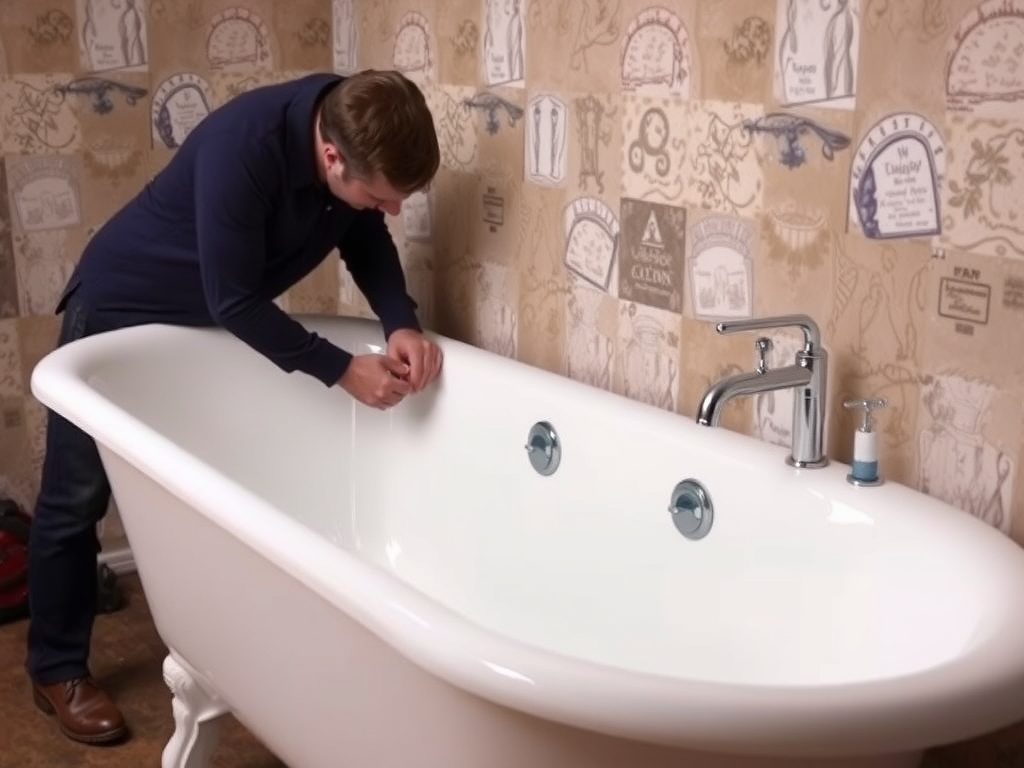
The apprentice held up two drain assemblies like they were choosing between pints. “Both say tub waste on the card, boss. One’s £12, the other’s £48. What’s the difference?” I let him sweat for a second, then flipped the cheaper one over. The thread gauge looked like it had been chased with a butter knife. “This one,” I said, tapping the pricier Oatey QuietPipe, “is 1½” BSP, 11½ threads per inch, and the rubber actually fits a standard British bath shoe. The other one will leak faster than you can say ‘call-back’.” He nodded, but I could tell he’d already learned the expensive lesson: standard doesn’t always mean fits.
This guide focuses on sizing standards. For comprehensive installation procedures, see our complete shower drain installation guide.
I’ve been pulling and replacing tub wastes for fifteen years—north of 1,800 at last count—so I’ve seen every so-called universal drain that isn’t. I carry a Lurghi thread gauge in the van because manufacturers still play fast and loose with tolerances, and I’ve got the water-damaged kitchen ceilings to prove it. If you’re about to order a new bath or just want to stop the slow drip staining your joists, stick around. By the end you’ll know the exact size you need, the brands that actually measure up, and the £6 part that saves you £200 in rot repairs.
What “Standard” Really Means in the UK
Walk into any Travis Perkins, Wickes, or plumbase counter and ask for a standard tub drain and they’ll slide you a 1½” solvent-weld waste. That’s 43 mm outside diameter, 11½ TPI, and a 45° bath shoe angle. Sounds universal, right? Except Victorian cast-iron baths, Bette steel models, and Acrylux’s latest stone-resin all use the same thread form but slightly different flange heights. I once spent an hour hand-filing a McAlpine flange down 1.2 mm so it would seat flush on a 1920s roll-top without rocking. The customer thought I was being fussy—until the alternative was a gap big enough to swallow grout and leak every time the kids splashed.
The rule of thumb: if the bath was made after 1995 and sold in the UK, assume 1½” BSP. Anything older, whip out your phone and measure the male thread crest with a caliper; you’ll often find 1¼” or the odd 1⅞” colonial size that sneaked in with imported acrylics. Keep a £4 thread-pitch card in your toolbox; it’s faster than driving back to the merchant for the third time. When choosing a drain, always verify compatibility with your bath type and local building codes to avoid costly callbacks.
Trip-Waste, Pop-Up, or Exposed? Size Doesn’t Change
Clients always ask whether the style affects the diameter. It doesn’t. Whether you choose a traditional chrome exposed waste (£22 Screwfix, Wirquin ECO model) or a modern pop-up (£56 at Toolstation, Hudson Reed SPA008), the threaded portion is still 1½”. The difference is the head diameter and the linkage length. I fitted a pop-up to my own bath last year—thought the clean lines would impress the missus. Six months later the brass pivot corroded and the stopper stuck shut. Swapped it for a £15 click-clack. Lesson: moving parts fail; thread size stays loyal. For guidance on choosing the right drain style without compromising function, refer to our detailed comparison.
Measuring Your Old Drain Without Removing It
You don’t have to rip the whole waste out to check size. Shove your phone under the bath, torch on, and take a photo straight up the shoe. Zoom in and count the threads across 10 mm; if you see roughly 4.5 crests, you’ve got 11½ TPI. Next, measure the visible male thread OD with a cheap plastic vernier—Harbor Freight sells one for £7 that lives in my glovebox. 43 mm means 1½”; 36 mm means you’re hunting for the rarer 1¼” waste. Do it twice; parallax error has fooled me into ordering the wrong McAlpine washer before, and they’re £1.80 each plus VAT—petrol costs more than the part. Always cross-check your findings against official building code specifications for your region.
Plastic, Brass, or ABS? Material Matters for Longevity
Plastic wastes are injection-moulded ABS and cost buttons—£4.50 for a FloPlast SP22 at B&Q. They’re fine for rental flats where you want cheap and cheerful, but they crack if you overtighten by even a quarter-turn. Brass is the old-school choice; a proper BSSP brass waste runs £18–£28 (Yale YPMD range) and you can reface the flange with a wire wheel when it tarnishes. I fit brass on high-end refurb jobs because it machines true if the bath hole is slightly out-of-round. ABS with a chrome plate? Looks shiny, plate peels in hard-water areas within three years. I’ve got a box of failed ones I keep as evidence for sceptical customers who want the £9 “bargain”. Selecting the right material is part of choosing a drain that balances budget, durability, and compliance.
Height Adjustments: Getting the Shoe to Meet the Trap
Standard drain thread length is 40 mm, but bath thickness varies from 4 mm acrylic to 12 mm stone resin. If the waste nut barely grabs, buy a 10 mm extension collar—Wirquin WT10, £2.90. I keep a handful in the van because nothing’s worse than tightening the back-nut and feeling it strip just as the rubber seats. Pro tip: pack a 3 mm fibre washer under the flange if the bath surface is slightly dished; it stops the chrome from spider-cracking under load. I learned that the hard way on a £2,200 Bette bath in a Pimlico townhouse—had to replace the whole waste because a hairline crack spread to the overflow. Ensure all modifications align with local building codes to maintain warranty and safety standards.
Overflow Pipe Diameter: Often Forgotten, Always Standard
The overflow elbow that tees into the waste is 22 mm solvent weld—has been since the 1970s. Yet I still see DIYers buy 1½” drain kits that come with 19 mm overflow tails because the packet says European universal. The mismatch creates a lip that snags hair and blocks every six months. Check the spec line on the back: look for 22 mm overflow or part code ending in -22. If you’ve already got the wrong one, heat the pipe gently with a hot-air gun and slip on a 22–19 mm reducer—Floplast part R22-19, 85 pence. Do it once, bill once, no callback.
Sealing Tricks That Survive the Warranty Period
I ditched hemp and Boss White years ago. Now I use Loctite 55 pipe sealant tape—stretch it three turns onto the male thread, then add a smear of Jetlube SS-30. The combo fills micro-scratches and lets you torque the nut without galling. On plastic-to-brass joints I still add a dab of silicone-free grease so future plumbers (probably me) can unscrew it. One rookie mistake: overtightening. Finger-tight plus one full turn with 10” wrenches is enough. I’ve calibrated my wrist on a test rig; you should use a torque wrench set to 8 Nm if you’re unsure. Any more and you ovalise the rubber, any less and you’ll weep 200 ml a day—enough to rot the joist before the customer notices the smell.
Tools That Make the Job 10 Minutes, Not 45
You only need four tools: 10” adjustable wrench, 12” pump pliers, a 2 mm hex key for the overflow faceplate screws, and a 22 mm pipe slice. Leave the massive Stillsons at home—they chew chrome. I also carry a homemade bath waste socket: 43 mm copper tube with two saw cuts, slipped over a ⅜” extension bar. It grabs the hex on McAlpine and Wirquin wastes without marring the finish. Cost me £6 in parts, saves me replacing a £40 waste every time some cowboy has already rounded the flats.
Cost Reality Check: Parts vs Labour in 2025
Material prices jumped again in January. A mid-range brass waste (McAlpine TTA-1) is now £24 trade, £32 retail. Add a 22 mm trap (McAlpine T22) at £18, two metres of overflow pipe £4, and you’re looking at £54 before you’ve turned a screw. My day rate is £280 inside the M25, so a straightforward swap takes an hour, but if the old waste shears off you’re into chiselling time and a half. Always quote worst-case: I tell customers £180–£320 including parts. If it goes smoothly they feel they’ve saved money; if the bath shoe is welded solid with limescale, I’m still covered.
FAQ
Do acrylic and steel baths use the same drain size?
Yes—both use 1½” BSP. Steel is thinner, so you may need the extension collar I mentioned. Acrylic can flex; tighten the back-nut evenly in quarter-turns to stop the bath bowing.
Can I reuse the old overflow grid?
Only if it’s chrome-brass and unscrews cleanly. Plastic grids go yellow and brittle. A new grid is £3–£8; fit it while everything’s apart.
Why does my new drain leak even though it’s “hand-tight”?
Check the rubber washer hasn’t flipped. I’ve seen them folded like a taco during shipping. Flip it back, smear a touch of silicone, and try again.
Is there a left-hand thread tub waste?
Not in the UK. If your waste unscrews anti-clockwise someone’s cross-threaded it so badly the nut’s fused—cut it off and start fresh.
Can I fit a 1½” waste to a 1¼” hole?
No. The flange will sit proud and crack the bath. Use a reducer bush (McAlpine B125) or buy the correct waste—saving £15 isn’t worth a £2,000 bath replacement.
Conclusion
Grab your caliper, confirm 43 mm and 11½ TPI, then buy a branded waste with a 22 mm overflow. Fit it once, torque it right, and you’ll never think about it again. If the thread looks odd, WhatsApp a photo to your local plumbers’ merchant—most will ID it free rather than handle a return. Do it properly today and the only thing going down the drain tomorrow will be your bathwater, not your weekend.