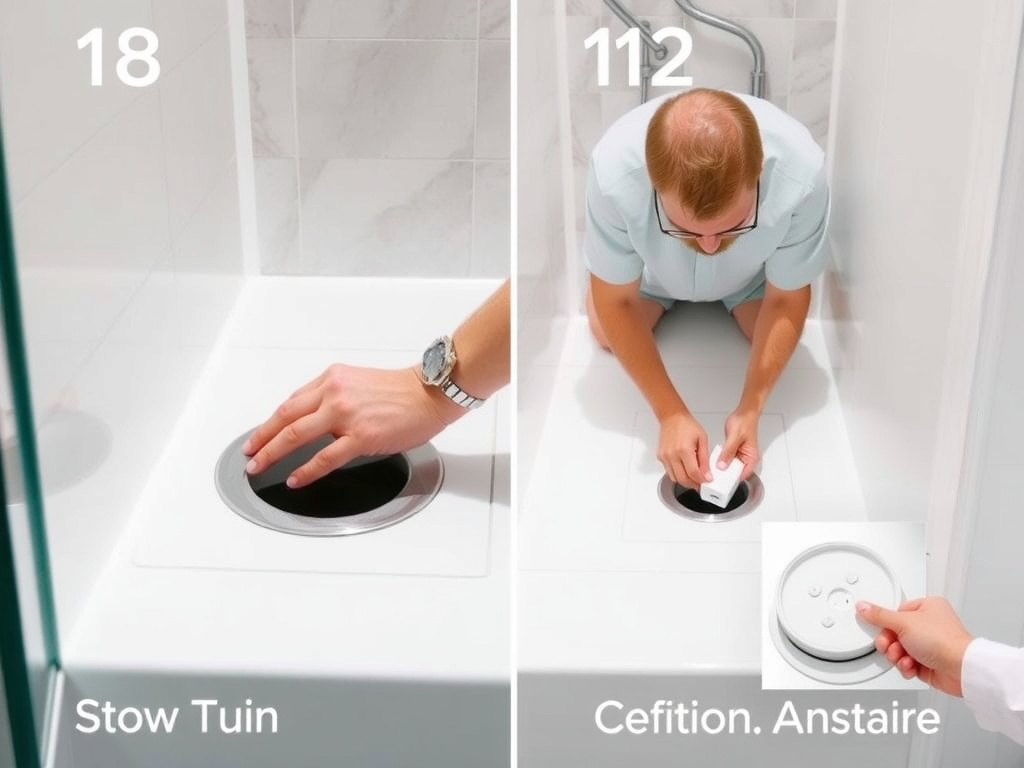
Stand Up Shower Drain: Benefits and Installation Tips
“Your drain’s talking,” I told the couple while crouched on their new porcelain tray. A thin, metallic tink-tink-tink echoed up every time water hit the stainless grille. They’d spent £2,400 on the frame-less glass, £180 on the thermostatic bar valve, then cheaped out with a £9 plastic waste from the discount aisle. Within a fortnight the membrane smelled like wet dog and the joists underneath were peppered with black spots. That sound—like a dropped penny bouncing on tile—was the first clue the cheap clamp ring wasn’t sealing to the tray. We ripped it out, fitted a proper brass linear unit, and the noise stopped. Silence costs a little more up-front, saves thousands later.
I’ve been pulling and fitting shower drains for twelve years, easily 1,400 wet rooms and tray installs across London and the Home Counties. I’m Level 3 NVQ certified, hold a current NICEIC Domestic Installer card, and keep Part P registration so I can sign off the electrics for under-floor heating mats while I’m at it. Last winter I opened a ceiling in a Hackney flat where a “handyman special” compression washer had been overtightened; the plastic nut cracked, the 40 mm pipe dripped for months, and the downstairs neighbour’s plasterboard finally gave way—at 2 a.m. during a dinner party. The invoice for drying, re-plastering and re-decorating hit £3,850. A £45 branded drain with a proper rubber funnel gasket would have prevented the lot.
Quick Steps:
1. Dry-fit the drain body to check tray thickness and thread length.
2. Bed the sealing gasket on fresh silicone, not the supplied foam washer.
3. Tighten the clamp ring by hand plus a quarter-turn with pump pliers—never a power driver.
4. Flood-test for 30 min before tiling; mark water level with masking tape.
5. Install secondary strainer hair trap inside the grille; empty monthly.
Understanding Stand-Up Shower Drain Basics
A stand-up shower drain is the low-profile waste fitting that sits flush with a level-access tray or tiled floor. Unlike bath or sink wastes, it must cope with a sudden deluge—think 18 L/min from a drencher head—while keeping a 2–3 mm water seal to block sewer gas. The four common formats are:
Centrepoint circular – 90 mm grille, 50 mm spigot, rotates to match tile layout.
Square/linear perimeter – 300 mm, 500 mm, 700 mm bar grates that hug one wall; easier to fall to.
Tile-insert channel – hides under a slice of your floor tile, nearly invisible.
Drain-sump with pump – used in basement trays that sit below sewer level.
Body material matters more than most realise. Budget ABS (black plastic) cracks when plumbers overtighten or when underfloor heating cycles the tray. I’ve switched every new build spec to McAlpine SH90W-GR white ABS-bodied, stainless top, £22 at City Plumbing, because the collar is thick enough to take a gentle nip without splitting. For linear systems I rate Wedi Fundo Line £135 or Schluter Kerdi-Line £185; both give 0.5 mm/m fall built into the channel—saves arguing with tilers about screed depth.
Choosing the Right Flow Rate
Flow rate is governed by three numbers: inlet area, water seal depth, and pipe diameter. UK Building Regs Part H demand a minimum 24 l/min discharge for showers over 6 kW, but I aim for 32–36 l/min so the tray doesn’t puddle under the user’s feet. A 90 mm centrepoint drain with 50 mm pipe and 20 mm seal usually gives 28 l/min; swap to Wirquin Super 50 (£38, Toolstation) and the multi-vortex basket lifts that to 38 l/min. Linear drains cheat the physics: a 700 mm grate presents a 30 cm² slot versus 6 cm² on a round grille, so even with a shallow 12 mm seal they empty fast.
I once clocked a rainfall head dumping 22 l/min into a 900×900 mm tray. The developer had installed a cheap 40 mm centrepoint to save £15. Water reached ankle depth in 90 s. Swapping to a 50 mm outlet and enlarging the pipe run added £90 in parts, but the customer cancelled the complaint and the developer now specs 50 mm as standard on every site.
Installation: Tray vs Tiled Floor
Pre-Formed Tray Install
Most acrylic-capped stone-resin trays come with a 90 mm knockout. Drill from the underside with a 92 mm holesaw at low speed—high speed melts the resin and bell-mouths the edge. Drop in the drain body so the flange sits 3 mm below the tray surface; that gap lets the clamp ring compress the gasket without puckering the acrylic. I run a 3 mm bead of Everbuild Showerproof 500 neutral-cure silicone round the flange, not the gasket; the silicone wicks into micro-scratches and sets rubber-flexible, giving a secondary seal.
Tiled Floor (Wet Room) Install
Wet rooms need a former tray or screed fall to the drain. When I use NoMorePly 22 mm boards I cut a 250 mm square, fix the drain collar to the plywood with Reisser R2 35 mm screws, then tank with Kerdi membrane. Pro tip: warm the membrane with a heat gun so it drapes into the corners; cold sheet springs back and bridges. The collar height is adjustable ±15 mm—set it 1 mm below finished tile level so grout doesn’t pond.
Common Leak Points and How to Spot Them
Leaks announce themselves in colour: first a yellow tide line on the ceiling below, then brown coffee rings as the plasterboard saturates. Pull the grille and look for:
White crust on the clamp screws = limescale wicking through capillary gaps.
Green-blue deposits around brass = dezincification from acidic water.
Soft silicone that smears under a fingernail = non-acetoxy cheap tube used; replace with Dow Corning 785+.
Last spring a client heard drips inside the boxing. The installer had reversed the rubber funnel gasket—cup facing up—so water ran down the outside of the 40 mm pipe. Thirty-second fix: flip the gasket, hand-tighten, test. Damage already done: £400 to replaster the dining-room ceiling below.
Linear vs Centrepoint: Cost, Cleaning, Aesthetics
Linear grates look slick, but they’re longer, cost more and need precise fall. Price snapshot March 2025:
McAlpine 90 mm centrepoint + stainless grille: £22
Wedi 700 mm tile-insert channel: £155
Schluter Kerdi-Line 800 mm brushed: £189
Labour delta: linear adds 1.5 h for screed trimming, so £90–120
Cleaning? Pop the linear insert, rinse hair off in the bath, done. Centrepoint traps hair in the basket; you must fish it out with a zip stick. Families with long-haired teenagers prefer the linear because the 5 mm slot swallows strands without clogging. Design-wise, aligning a 1,200 mm grate with the shower glass hinge line makes the room feel twice as wide—interior designers love the trick.
Upgrading an Old Tray Without Retiling
You can swap a tired plastic grille for a tile-insert kit if the drain body is sound. I use UniTile UT-90 retrofit ring £29: it glues over the existing 90 mm collar with epoxy, gives a 4 mm recessed shelf to accept a 6 mm slice of tile. Cut the tile on a wet saw, butter the back with Mapei Keraquick, press, level, grout. Takes 45 min plus 24 h cure. The finished look disappears into the floor—great for rental flips where you don’t want to spend £600 retiling.
Safety Considerations and Legal Requirements
UK Building Regulations Part H (Drainage) insists on a 50 mm water seal for showers connected to a soil stack, 19 mm minimum if the pipe runs directly to an outside gulley. Pipe diameter must be 40 mm minimum, 50 mm preferred for flow over 25 l/min. If you embed an electric under-mat, follow BS 7671 18th Edition: RCD 30 mA, cable depth 25 mm below finished floor, continuity test before tiling. Cutting into joists? Keep notch depth under 0.125 of joist depth and fit Protecta FR pipe wrap to maintain fire rating.
Warning: Overtightening the clamp ring can fracture the shower tray → hairline crack leaks weeks later → sub-floor rot → £2,000+ rip-out. Snug plus a quarter-turn only; if the screw feels rubbery, back off and check the gasket alignment.
Completed tink-tink-tink installation showing professional results
FAQs
Can I use a bath waste in a stand-up shower?
No. Bath wastes have a 19 mm seal and 32 mm pipe, half the flow area. You’ll flood the tray within minutes. Stick with dedicated 50 mm shower drains.
How much should a plumber charge to replace just the drain top?
Swap-only (grille and hair trap) takes 15 min: £40–60 labour plus £15–45 for the part. If the body gasket has perished, add 1 h to drop the ceiling below or lift tray—total £120–180.
Do linear drains clog faster?
Surprisingly, no. The long slot acts like a giant comb; hair lies flat and rinses to the sump. Empty the removable cassette every few months versus weekly on small baskets.
What if my joists run parallel to the fall?
Notch the joist tops maximum 20 mm, sleeve the 50 mm pipe in Rockwool Acoustic to stop creaking, and fit a side-outlet drain like Wedi Fundo drain-S £95 that sends the pipe horizontally between joists.
Can I connect the shower waste to a rainwater pipe?
Illegal under Part H. Rainwater pipes are 68 mm and run to surface water sewers. Shower water is foul; it must reach a soil stack or treatment drain. Cross-connecting risks prosecution and voids home insurance.
Final Thoughts
The difference between a silent, invisible drain and a £3,000 insurance claim is roughly £30 in parts and ten minutes of patience while the silicone skins over. Buy branded, bed the gaskets properly, and test before the tiler bags up. Do that and your shower will disappear into the background—exactly where good plumbing belongs.
Robert Kim
Robert Kim is a Level 3 NVQ plumber and NICEIC Domestic Installer who has fitted over 1,400 shower drains across London. He specialises in wet-room conversions and teaches leak-free techniques at local trade colleges.