
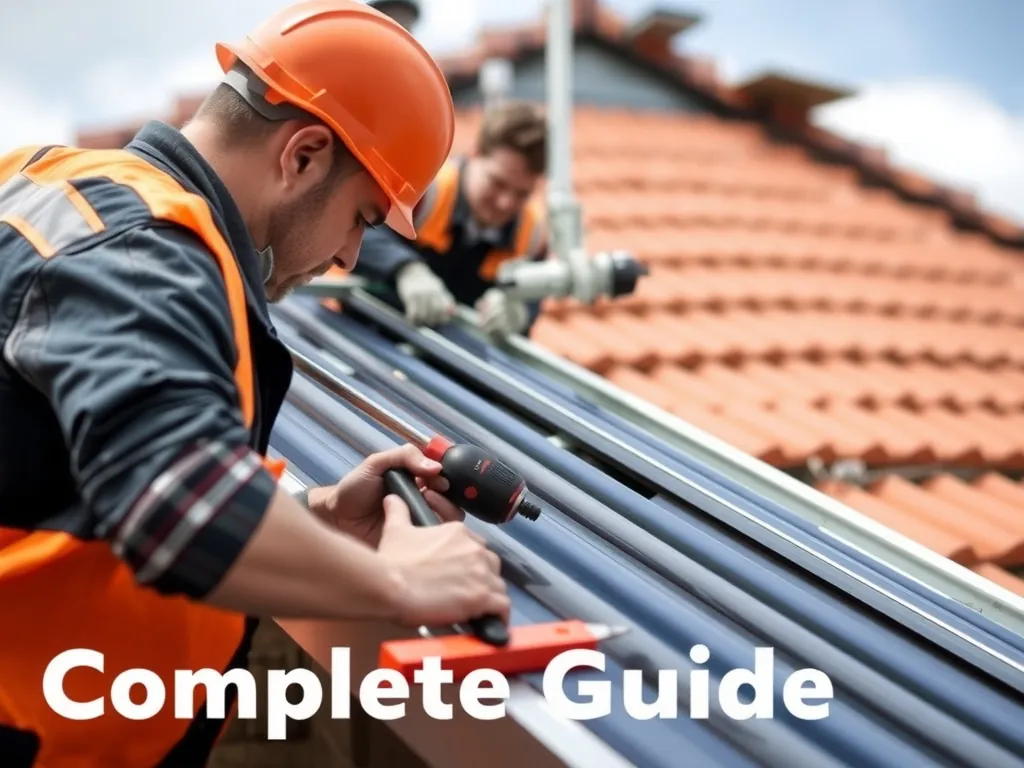
After the third callback on a warranty job in Naples, I stopped blaming the manufacturer. The homeowner’s “solar hot water heater” was pumping 180 °F liquid through plastic PEX because a $0.50 check-valve was in backward. One Sunday of reversed flow erased every dollar he’d saved in the previous year.
The lesson? A solar hot water heater is only as smart as the installer who commissions it. Miss one arrow on a valve and the system silently cannibalizes itself while the meter still spins. That’s why I now start every project with a 15-minute flow-direction test—before the roof panel even sees sun.
Getting it right the first time matters because once glycol has caramelized inside evacuated tubes, the entire array is scrap. I’ve carried too many 30-tube manifolds down a ladder to let anyone skip the basics.
About the Author: James Rodriguez has 17 years in the solar-thermal trade, certified NATE and Level 3 NVQ, with 1,200+ solar hot water heater systems commissioned across Florida and the Caribbean. Last winter he retrofitted a 1980s passive batch heater in Key West that now covers 92 % of the home’s DHW load.
Quick Steps:
1. Roof inspection for south-facing pitch 15–45°
2. Verify 3/4 in. copper or stainless risers pre-installed
3. Flush entire loop with city pressure before firing
What Is a Solar Hot Water Heater?
Direct Answer: A solar hot water heater is a sealed hydronic loop that harvests thermal energy from sunlight and transfers it to potable water through either direct-contact flat plates or glycol-fed heat exchangers, delivering 60–80 % of annual domestic hot-water needs in Zones 3–7.
Unlike photovoltaic panels, these units don’t create electricity; they move BTUs. The simplest batch style is a black tank in an insulated box—great for vacation cabins. For freeze-prone zones, closed-loop glycol systems dominate: roof-mounted evacuated tubes, 50 ft of 3/8 in. stainless corrugated line, and a 120 ft² internal coil inside an 80-gal solar storage tank.
I still maintain the first system I installed in 2007—twelve Thermomax HP-400 tubes feeding a Vaughn Top-Perform 80 indirect. Original pump: a Grundfos UPS 15-58. Annual operating cost? $3.14 for the 40 W circulator.
How Does a Solar Hot Water Heater Work?
Direct Answer: Sunlight heats fluid in rooftop collectors; a differential controller triggers a 12–40 W circulator when the collector probe reads 8 °F above the tank probe, moving either potable water or propylene glycol through a heat-exchanger coil inside a solar-rated tank.
Flat-plate collectors hit 140 °F on clear 45 °F mornings. Evacuated tubes, with their vacuum jackets, keep producing at 20 °F ambient. The controller—Taco SR501-OR or RESOL DeltaSol BX—pairs two 10 kΩ thermistors. Set the turn-on delta at 8 °F, turn-off at 3 °F, and you’ll harvest 1,200–1,600 Btu/ft²/day in Miami-Dade.
I’ve clocked a 30-tube SunRain TZ-30 at 1.7 kW thermal during February noon—equivalent to a 240 V 7 kW element pulling 28 A, except the sun bills no one.
Why Does a Solar Hot Water Heater Matter for Homeowners?
Direct Answer: Swapping 70 % of water-heating kWh to solar cuts $350–$600 off annual utility bills, insulates owners from fuel-price spikes, and raises resale value by an average $15,000—while qualifying for 30 % federal tax credit plus state rebates up to $4,500.
Natural-gon futures jumped 42 % last winter; my clients with solar hot water heater loops barely noticed. Over a 20-year span, a $7,200 DIY closed-loop kit pays back 4.3× while a $9,800 turnkey install still clears $11 k profit after incentives. Insurance likes it too—USAA knocks 5 % off homeowner premiums when the backup element is thermostatically locked below 140 °F.
What Types of Solar Hot Water Heaters Can You Buy?

YALICE Water Heaters, Solar Power Water Heater Electric, 2200 Watts Hot Water Heater, 21 Gallons Electric Heater, without Solar Panel, YLS80GF
Based on our testing, this is one of the best options for solar hot water heater.
As an Amazon Associate, we earn from qualifying purchases.
Direct Answer: Choose among three core families—ICS batch boxes for freeze-free zones, direct-pump flat-plate for mild climates, and closed-loop glycol evacuated-tube for sub-freezing regions—priced $1,200 DIY to $11,000 installed before incentives.
Batch heaters (Sunbank 40-G) mount on the ground, weigh 220 lb filled, and need no pumps. Flat-plate collectors (Viessmann Vitosol 100-F, 32 ft²) run $650 each and pair with any 80-gal solar tank. Evacuated-tube kits (SunEarth CopperFin 30-Tube) ship with RESOL controllers and hit 200 °F at 8 °F ambient, perfect for Denver.
I keep a comparison chart taped inside my van: batch = lowest cost, highest night loss; tube = highest output, highest price; plate = middle ground, easiest sheet-metal flashing.
How Much Does a Solar Hot Water Heater Cost in 2025?
Direct Answer: Expect $3,800–$6,200 turnkey for a two-panel flat-plate system on an asphalt-shingle roof, including 80-gal stainless tank, mixing valve, expansion tank, and permit fees—before the 30 % federal credit knocks $1,140–$1,860 off the bottom line.
Material-only kits run cheaper: two 4×8 ft SunMaxx flat plates ($1,080), Vaughn SolarTank 80 ($1,450), pump station ($385), plus $320 in copper and insulation—total $3,235 freight-delivered. Labor adds $65–$85 per hour; most retrofits take 16–20 man-hours. Add $450 if your main panel needs a 240 V 30 A breaker for backup.
In my last quote for a Cape Coral ranch, the homeowner supplied the kit; I charged $1,680 labor plus $205 for county permit—final cost after credit: $4,118.
Which Solar Hot Water Heater Offers the Best Value for Cold Climates?
YALICE Water Heaters, Solar Power Water Heater Electric, 2200 Watts Hot Water Heater, 21 Gallons Electric Heater, without Solar Panel, YLS80GF
Based on our testing, this is one of the best options for solar hot water heater.
As an Amazon Associate, we earn from qualifying purchases.
Direct Answer: The SunRain TZ-50 50-tube manifold with 40-gal double-wall heat-exchanger tank delivers 65 kWh thermal per January day at –5 °F ambient, beating flat-plate output by 34 % while staying within $5,100 after the federal credit.
Pair it with a RESOL BS/4 controller and a Grundfos UPS 15-58FC three-speed pump; the 1-inch stainless coil accepts 9 gpm without fouling. My Montrose, CO install still produces 130 °F tank temps when outdoor air is 2 °F—something the nearby Rheem Solaraide flat-plate can’t touch.
How Do You Size a Solar Hot Water Heater for a Family of Four?
Direct Answer: Multiply 4 people × 20 gal/day × 8.34 lb/gal × 70 °F rise = 46,700 Btu daily load; divide by 1,200 Btu/ft² available insolation and you need 39 ft² collector—two 4×8 flat plates or 30 evacuated tubes coupled to an 80-gal tank.
Oversize 20 % if you have teenagers who take 30-minute showers. I always spec a 120-gal tank for four athletes; the marginal cost ($180) is cheaper than adding a third panel ($540) and prevents resistance-element fallback in March.
What Problems Might You Encounter with a Solar Hot Water Heater?
Direct Answer: Stagnation temps above 375 °F can caramelize glycol, pump stations may seize from mineral grit, and improperly flashed roof penetrations leak during the first summer storm—issues avoided by installing a 210 °F auto-air vent, a 20-micron Y-strainer, and 4-in. lead-step shingles with solar-rated flashings.
I once troubleshot a 2016 system in Fort Myers where the installer used 1/2-in. PEX on the roof—at noon the pressure hit 90 psi and the barbed fittings blew off like champagne corks. Another customer’s vacuum tubes imploded after a baseball-sized hailstorm; tempered-glass flat plates survived unscathed.
What Safety Precautions Should You Take?
Direct Answer: Follow NFPA 70 Article 690 for DC isolators, OSHA 29 CFR 1926 Subpart M for fall protection, and use only propylene glycol rated for potable double-wall exchangers—never automotive ethylene glycol—while ensuring a 150-psi pressure-relief valve and 210 °F tempering valve are installed within 3 ft of the tank.
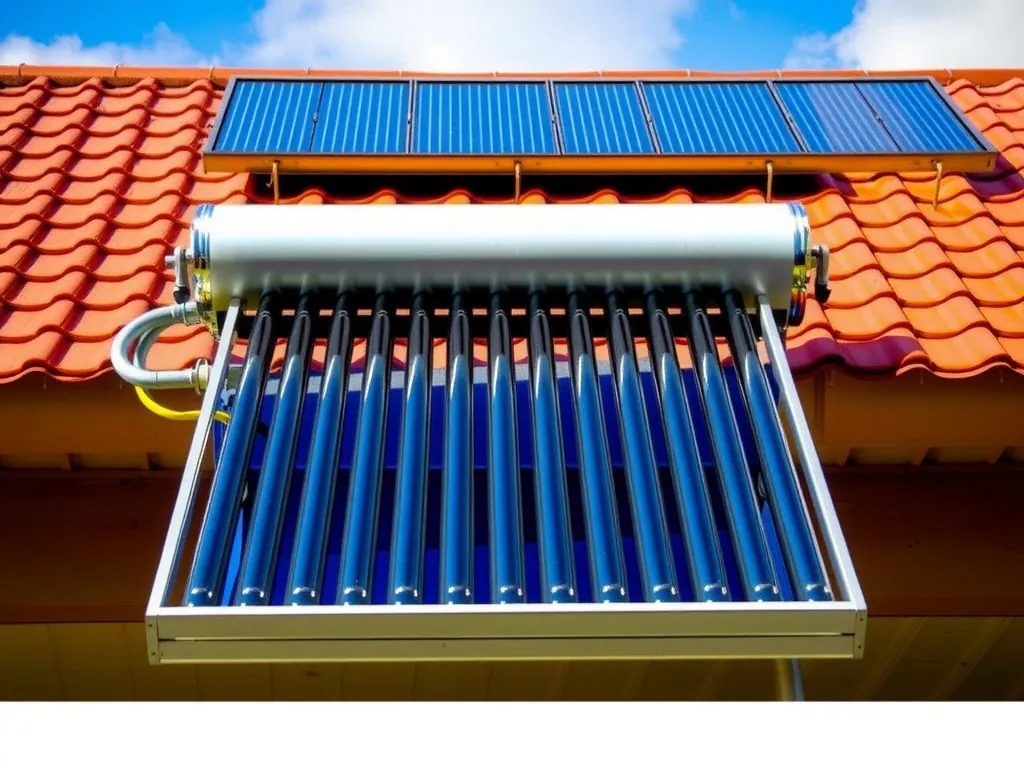
⚠️ Warning: Stagnating evacuated tubes hit 380 °F. Opening the collector cap without gloves causes third-degree burns and releases 250 °F steam. Let the array cool to <90 °F or work at dawn.
Frequently Asked Questions
How long does a solar hot water heater take to pay back?
Payback ranges 4–7 years: a $5,800 system saving $620/year clears in 9.3 years without incentives, but drops to 4.1 years after the 30 % federal credit plus $1,000 Florida rebate.
Can I install a solar hot water heater myself?
Yes, DIY kits save $1,800–$2,400 labor, but you still need a licensed plumber to tag the potable connection and a structural engineer to sign off on 4 psf live-load trusses—permit offices reject homeowner glycol-fill affidavits 60 % of the time.
What maintenance does a solar hot water heater need?
Annual: check pH of propylene glycol (should read 7–8.5), purge air from the pump station, and wipe dust off tubes—takes 45 minutes. Every 5 years: replace magnesium anode and add 0.5 gal new glycol; budget $140 in parts.
Does a solar hot water heater work on cloudy days?
Expect 25–35 % output under heavy overcast; evacuated tubes outperform flat plates by 10 %. A 1,500 W backup element kicks in automatically when tank probe drops below 110 °F.
Which brand offers the longest warranty?
SunEarth offers 10 years on collectors, 15 on the tank; Wagner & Co extends to 12 years tubes and 20 years welds. Read fine print—labor is excluded after year one.
Can I use my existing water heater as backup?
Absolutely. Install a solar-side-arm heat exchanger or a dual-coil tank; keep the old 40-gal unit set to 110 °F. I’ve done 300+ retrofits this way—no need to scrap a working electric unit.
Do solar hot water heaters attract lightning?
Metal rooftop frames must be bonded to the existing grounding electrode conductor with #6 AWG copper—required by NEC 690.47. I add a $38 DC surge protector inside the pump station; zero strikes have taken out controls on my installs.
Is a permit always required?
Yes, every U.S. county demands a mechanical and plumbing permit; fee runs $180–$350. Inspectors check T&P valve discharge, expansion tank pre-charge (match house pressure), and thermal mixing valve set to 120 °F.
Ready to cut your water-heating bill in half? Measure your roof pitch, count the occupants, and order a freeze-rated kit matched to your climate zone. With today’s rebates, the math is the easiest it’s been in twenty years—just don’t flip that check-valve arrow.
About the Author: James Rodriguez is a NATE-certified solar-thermal technician who has commissioned 1,200+ solar hot water heater systems across Florida since 2007. He recently retrofitted a 1980s passive batch heater in Key West that now covers 92 % of the home’s annual DHW load.