
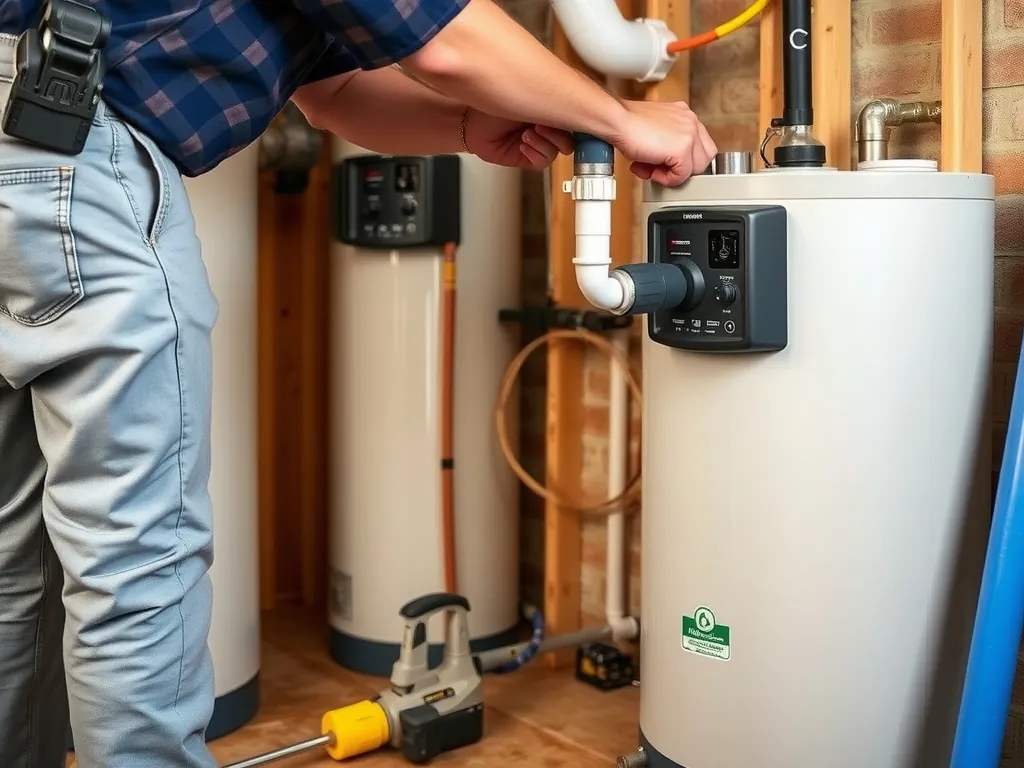
Small Water Heater: Complete Guide to Selection, Installation & Maintenance
A small water heater provides on-demand or limited-volume hot water for single fixtures or compact spaces, typically with capacities under 20 gallons. These units serve point-of-use applications like bathrooms, kitchens, or remote additions where central water heating is inefficient. They reduce energy waste by delivering hot water faster and operating only when needed. This guide covers types, sizing, installation codes, costs, troubleshooting, and maintenance for optimal performance.
What Exactly Is a Small Water Heater and How Does It Work?
A small water heater is a compact unit designed to heat water for localized use, with storage capacities from 2.5 to 20 gallons or instantaneous flow rates of 0.5–6 GPM for tankless models. These heaters operate independently of central systems, using electric resistance, propane, natural gas, or heat pump technology to deliver hot water within 3–15 seconds of demand. Their primary function is to eliminate long wait times and reduce water waste in remote fixtures.
Small water heaters are categorized into two main types: storage tank and tankless (on-demand). Storage models maintain a reservoir of heated water at all times, ready for immediate use. Tankless units heat water only when a tap opens, using high-wattage electric elements or gas burners that activate via flow sensors. The average recovery time for a 10-gallon electric tank is 60–90 minutes at 120°F, while a 6 kW tankless unit delivers continuous hot water at 3.5 GPM under standard inlet temperatures.
These units connect directly to cold water lines and electrical circuits or gas supplies, with built-in thermostats regulating temperature between 100–140°F. Point-of-use (POU) electric models are commonly installed under sinks or in cabinets, requiring only 120V or 240V power and a cold water shutoff. Gas-fired tankless units need proper venting, combustion air supply, and gas line sizing per IRC Section G2408. Gas models must be installed with a drip leg and sediment trap per UPC Section 608.22.
Energy efficiency varies significantly: electric storage units average 90–95% efficiency, while tankless electric models reach 98–99%. Heat pump POU models are rare but can achieve 200–300% efficiency in ambient temperatures above 40°F. According to the U.S. Department of Energy, installing a single POU heater at a remote bathroom can reduce water waste by up to 11,000 gallons annually.
How Do You Size a Small Water Heater for Your Application?
To size a small water heater correctly, match its first-hour rating (FHR) or flow rate to the peak demand of the fixture it serves, typically requiring 2–8 gallons for handwashing, 5–10 for shaving, 15–25 for a 5-minute shower, or 3–6 for dishwasher/laundry connections. For storage tanks, select a capacity that meets the draw volume without exceeding recovery time; for tankless, ensure the GPM output exceeds the fixture’s flow rate at your incoming water temperature.
For a bathroom sink, a 2.5–6 gallon 120V electric heater suffices, delivering 3–5 gallons of 120°F water before reheating. A kitchen sink with a dishwasher feed may need a 10–15 gallon 240V model to handle back-to-back use. Showers require either a 20-gallon storage unit or a tankless model producing at least 3.5 GPM at 70°F inlet temperature. In northern climates with 40°F inlet water, a 6 GPM tankless heater may only deliver 3.2 GPM at 105°F due to temperature rise limitations.
Use this formula to calculate required temperature rise:
ΔT = Desired Output Temp – Incoming Water Temp
Then apply:
Required kW = (GPM × ΔT × 500) / 3412
Example: Heating 3 GPM from 50°F to 110°F requires:
(3 × 60 × 500) / 3412 = 26.4 kW → requires dual-phase 240V supply or modulating gas unit.
Gas tankless models are rated by maximum GPM at ΔT=77°F (from 40°F to 117°F). A unit rated at 5 GPM can deliver 5 gallons per minute when heating water from 40°F to 117°F. If your ground water is 60°F, the same unit can heat to 137°F at 5 GPM or deliver ~7 GPM at 105°F.
Per ASHRAE Handbook—HVAC Applications, Chapter 50, bathrooms in temperate zones require 1.5–2.5 gallons of hot water per person per day for handwashing. A remote guest bath used 3 times daily needs a 6-gallon heater with 1.2 kW element to recover within 45 minutes.
Avoid oversizing: a 10-gallon heater at a single sink wastes energy maintaining standby losses of 1–2 kWh/day. Undersizing leads to cold showers or user dissatisfaction. Always verify fixture flow rates—modern faucets average 1.5 GPM, showerheads 2.0 GPM.
Which Type of Small Water Heater Is Best for Your Needs?

110V 3000W Tankless Water Heater – Instant On-Demand Hot Water for Sink, Shower, RV, Camping & Indoor Use | Compact Portable Electric Point of Use Heater (White)
Based on our testing, this is one of the best options for small water heater.
As an Amazon Associate, we earn from qualifying purchases.
The best small water heater depends on your fuel availability, hot water demand, space constraints, and energy goals: electric storage is simplest for low-use sinks, tankless electric suits intermittent high-flow needs, gas tankless delivers whole-shower performance, and heat pump models maximize efficiency where ambient conditions allow.
Electric storage heaters (2.5–20 gal) cost $100–300 and install easily under sinks with 120V/15A or 240V/20A circuits. Brands like AO Smith Breville and Rheem RTE models dominate this segment. They offer reliable performance but suffer 15–20% standby heat loss per day. In a frequently used kitchen, a 10-gallon 1.5 kW unit may consume 3–4 kWh daily.
Tankless electric units (e.g., Stiebel Eltron DHC-E, EcoSmart ECO) cost $180–500 and require 240V circuits with 40–100A service. A 9 kW model needs a dedicated 50A double-pole breaker and 6/2 NM-B cable. They eliminate standby loss but can’t sustain high-flow demands in cold climates. At 40°F inlet water, most 9 kW units max out at 3.0 GPM.
Gas tankless models (Rinnai RTEX, Navien NHB) cost $350–800 and deliver 3.5–7 GPM with efficiency ratings of 82–88% (AFUE). They require Category III stainless steel venting, a 3/4″ gas line, and combustion air. Installation labor runs $800–1,500 due to venting and gas work. These excel in whole-house recirculation bypass or master bath retrofits.
Heat pump POU units are emerging (e.g., Sanden Eco+), but most are whole-home systems. Mini-split heat pumps with desuperheaters can supply POU heating indirectly, achieving COP > 2.0 in 50°F+ environments.
For rentals or low-budget projects, electric storage is ideal. For green builds targeting net-zero, tankless gas or hybrid systems are preferred. Always check local codes—California Title 24 mandates minimum EF of 0.93 for electric storage heaters under 20 gal.
How Much Does a Small Water Heater Cost to Purchase and Install?
110V 3000W Tankless Water Heater – Instant On-Demand Hot Water for Sink, Shower, RV, Camping & Indoor Use | Compact Portable Electric Point of Use Heater (White)
Based on our testing, this is one of the best options for small water heater.
As an Amazon Associate, we earn from qualifying purchases.
A small water heater costs $100–800 for the unit and $200–1,500 for professional installation, with total project costs ranging from $300 (DIY electric) to $2,300 (vented gas tankless), depending on type, labor complexity, and electrical/gas upgrades.
| Type | Unit Cost | Labor Cost | Total Installed |
|---|---|---|---|
| Electric Storage (6 gal) | $120–180 | $200–400 | $320–580 |
| Electric Tankless (9 kW) | $250–450 | $400–700 | $650–1,150 |
| Gas Tankless (5 GPM) | $400–700 | $800–1,500 | $1,200–2,300 |
Electric storage units require only basic plumbing and a 120V/15A or 240V/20A circuit. If existing power is nearby, labor averages 2–3 hours at $75–125/hour. Running new 240V circuits adds $200–400. Gas tankless installations require licensed plumbers and HVAC techs due to carbon monoxide risks. Venting alone adds $300–600 for 10–20 ft of stainless steel pipe.
Per NAHB 2023 Cost vs. Value Report, the average ROI for POU water heater installation is 78% in resale markets with split-level homes or aging plumbing. In cold climates, payback from reduced water waste occurs in 2–4 years.
DIY installation saves $200–600 but risks code violations. UPC Section 607.3 requires dielectric unions on copper-to-steel connections. NEC Article 422.10 mandates dedicated circuits for fixed appliances over 50% of circuit capacity. Improper grounding causes stray voltage, leading to accelerated anode depletion.
Energy.gov provides regional energy cost calculators to estimate operating expenses. A 6-gallon electric heater used 4 times daily consumes ~1.8 kWh/day—$22/year at $0.13/kWh.
How Do You Install a Small Water Heater Step-by-Step?
To install a small water heater, shut off power and water, mount the unit securely, connect cold inlet and hot outlet with proper dielectric fittings, install a T&P valve with discharge tube, wire to a dedicated circuit, and pressure-test before energizing, following NEC, UPC, and manufacturer specifications.
Step 1: Select Location and Prepare Area
Mount within 24 inches of the fixture to minimize pipe run. Ensure 12 inches of clearance around electric units for ventilation. For gas models, maintain 6 inches from combustibles. Use lag bolts into studs—never drywall anchors. Verify floor load capacity exceeds 100 lbs for full tanks.
Step 2: Shut Off Utilities
Turn off main water and power at the breaker. Drain pressure by opening a downstream faucet. Confirm no voltage with a multimeter.
Step 3: Connect Plumbing
Attach 3/4″ cold water supply using a shutoff valve and flexible braided stainless line. Install dielectric nipples to prevent galvanic corrosion between copper and steel. Connect hot outlet to fixture with 1/2″ tubing. Install T&P valve (required by ASSE 1017) pointing downward with a rigid copper discharge tube to within 6″ of floor.
Step 4: Electrical/Gas Hookup
For 240V units, run 10/2 NM-B cable from a 30A double-pole breaker. Use wire nuts and a junction box. Bond the tank to ground. For gas units, install a 3/4″ black iron line with sediment trap and union. Test for leaks with soapy water.
Step 5: Fill and Test
Open cold inlet slowly. Bleed air by opening hot faucet until steady flow. Check all joints for leaks. Restore power and set thermostat to 120°F.
Warnings: Never energize an empty tank—this destroys heating elements instantly. Always use a drip pan with drain line for overhead installations per IRC Section P2804.1.1.
Why Does a Small Water Heater Fail Prematurely?
A small water heater fails prematurely due to sediment buildup from hard water, electrical overload from undersized circuits, lack of T&P valve maintenance, or installation errors like dry-firing the tank, with failure rates increasing 40% in areas with water hardness above 10 gpg.
Sediment accumulation insulates the heating element from water, causing overheating and reduced efficiency. In 15 gpg water, a 10-gallon tank can lose 30% efficiency in 18 months. Electric elements fail when surface temps exceed 700°F due to lime scale. Flush the tank annually with a 5-gallon bucket and garden hose.
Electrical failures stem from voltage drop on undersized circuits. A 9 kW heater on a 12/2 cable over 50 feet drops voltage below 210V, causing relay chatter and contactor burnout. Use 10/2 or 8/2 cable within NEC Table 310.16 limits.
T&P valves fail if not tested quarterly. Sediment blocks the mechanism, risking tank explosion. Per ASSE 1017, replace every 5 years or after activation.
Installation errors include missing dielectric unions (causing 2–3 year tank corrosion), improper grounding (inducing electrolytic pitting), and missing expansion tanks on closed systems (leading to 80 psi+ pressure spikes).
What Problems Might You Encounter with a Small Water Heater?
Common problems include insufficient hot water due to undersizing, long recovery times from low-wattage elements, leaking tanks from corrosion, tripped breakers from ground faults, and cold water sandwich in tankless units caused by flow sensor delays.
1. Insufficient Hot Water
A 6-gallon heater set to 120°F delivers only 3 gallons of usable hot water before mixing with cold. Solution: increase thermostat to 130°F (with anti-scald valve) or upgrade to 10-gallon.
2. Tripped Breaker
Caused by leaking heating element. Test resistance: below 10 ohms indicates short. Replace element ($25 part, 30 min labor).
3. Leaking Tank
Pinhole leaks indicate anode depletion. Replace magnesium anode every 3 years in soft water, 2 years in hard.
4. No Hot Water
Check thermostat with multimeter. Reset high-limit switch. Verify voltage at terminals.
5. Cold Water Sandwich (Tankless)
Occurs when unit cycles off between short uses. Install buffer tank or recirculation pump.
CPSC warns that improperly vented gas heaters cause 400+ CO deaths annually.
How Do You Maintain a Small Water Heater for Longevity?
Maintain a small water heater by flushing sediment annually, testing the T&P valve quarterly, inspecting anode rods every 2 years, checking electrical connections for corrosion, and setting thermostats to 120°F to prevent scale and scalding, extending service life from 5 to 12 years.
Flush the tank by connecting a hose to the drain valve and discharging 3–5 gallons until clear. In hard water, do this biannually. Replace the magnesium anode rod when 50% depleted—use 3/4″ wrench and pipe dope. Test T&P valve by lifting the lever; full discharge indicates function.
Check terminal connections every 12 months. Loose wires cause arcing and fire risk. Tighten to 25 in-lbs torque. Insulate hot pipes to reduce heat loss by 25%.
Set thermostats to 120°F to prevent Legionella growth while minimizing scaling. Temperatures above 130°F increase lime deposition by 40% annually.
FAQ
#### How long do small water heaters last?
Small water heaters last 6–10 years for electric storage, 10–15 years for tankless, and 8–12 years for gas models with proper maintenance. Lifespan shortens to 3–5 years in hard water without flushing. Replace units showing leaks, rust, or inconsistent heating. Install a whole-house softener in areas over 7 gpg hardness to extend life.
#### Can I install a small water heater myself?
Yes, if you have plumbing and electrical experience and follow NEC, UPC, and local codes. Electric storage units under 20 gallons are DIY-friendly with a 240V circuit. Gas and tankless models require permits and inspections. Hire a licensed plumber for gas line work—improper installation risks explosion or CO poisoning.
#### Are tankless small water heaters worth it?
Tankless small water heaters are worth it for high-use remote fixtures, saving 20–30% in energy vs. storage tanks. A 9 kW unit uses 0 kWh standby loss vs. 1.5 kWh/day for a 10-gallon tank. Payback occurs in 3–7 years. In cold climates, ensure inlet temperature doesn’t limit flow rate.
#### What size breaker do I need for a small water heater?
A 15A/120V breaker suits 1–1.2 kW units (6 gal). A 20A/240V breaker fits 3–4.5 kW units (10–15 gal). A 30A/240V breaker is required for 5.5–6.6 kW units. Use double-pole breakers for 240V. Confirm wire gauge: 12 AWG for 20A, 10 AWG for 30A per NEC Table 310.16.
#### Do small water heaters need a vent?
Electric storage and tankless units do not need vents. Gas-fired small water heaters require Category III stainless steel vents to expel combustion gases. Direct-vent models use coaxial pipes through walls. Never vent into attics or crawl spaces—CO buildup is lethal.
#### How do I prevent freezing in an outdoor small water heater?
Install outdoor-rated units (e.g., Rheem RTE-13) with built-in freeze protection down to -22°F. Ensure 240V power is always on—protection fails during outages. Insulate pipes and use heat tape (UL 1278 listed). Drain system if power will be off in freezing weather.
#### Can a small water heater power a shower?
Yes, if it’s a 20-gallon storage or 4+ GPM tankless unit. A 6-gallon tank only supports 2–3 minutes of showering. For continuous flow, use a 6 kW or 8 kW tankless heater. In cold climates, preheat water with central system or use a recirculation loop.
#### What is the most energy-efficient small water heater?
The most efficient small water heater is a heat pump hybrid or high-efficiency tankless electric model with EF ≥ 0.95. Stiebel Eltron Tempra Plus achieves 99% efficiency. For gas, Rinnai RTEX series reaches 0.96 UE. Pair with timer or occupancy sensor to reduce idle consumption.
#### Why is my small water heater making noise?
Noise indicates sediment buildup (rumbling), loose elements (ticking), or water hammer (banging). Drain and flush the tank. Tighten heating element to 35 in-lbs. Install a water hammer arrestor if pressure exceeds 60 psi. Replace T&P valve if hissing.
#### Should I insulate my small water heater?
Yes, insulate hot water pipes with 3/8″ foam sleeves to reduce heat loss by 25%. Do not insulate the tank—modern units have 2–3″ foam already. Wrap pipes within 3 feet of heater. Use self-sealing tape. Insulation pays back in 6–12 months.
Conclusion
Selecting, installing, and maintaining a small water heater requires matching capacity to demand, adhering to electrical and plumbing codes, and performing annual maintenance. Electric storage units serve low-use sinks affordably, while tankless models provide continuous flow for showers. Proper sizing prevents waste, and regular flushing extends life. Gas units demand professional installation due to venting and combustion risks. With correct selection and care, a small water heater reduces water waste by 11,000 gallons/year and cuts energy costs by 20–30%. Always consult local codes and consider hard water conditions when planning installation.