
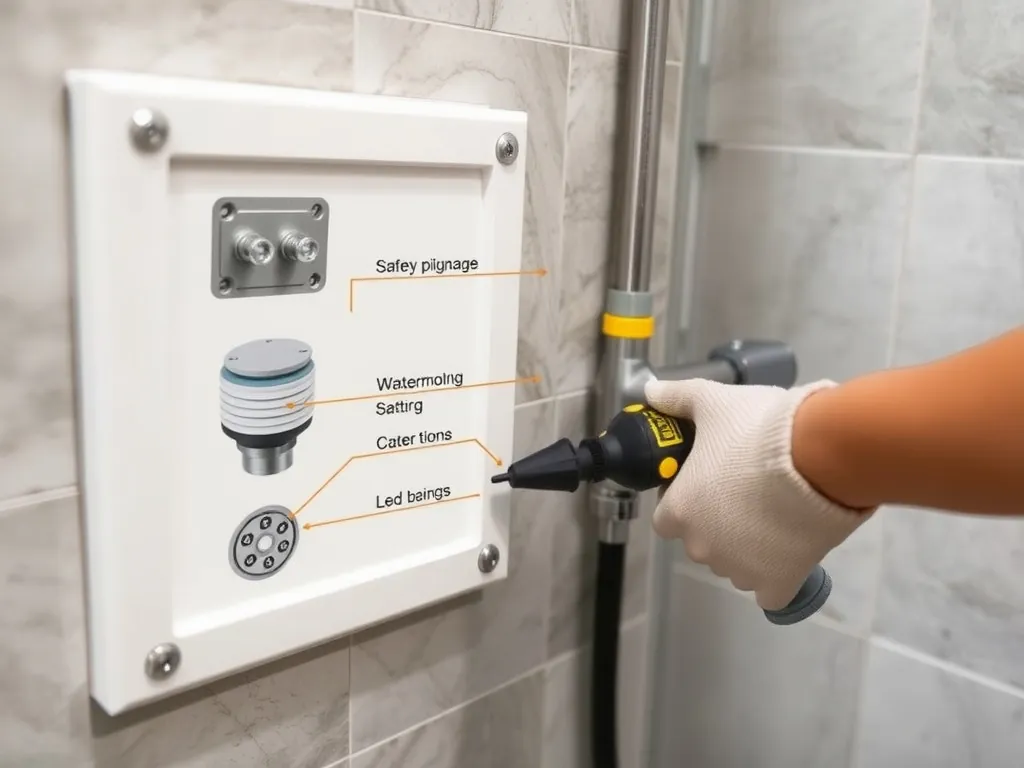
When was the last time you saw water pooling around your feet mid-shower and thought, “Great, another weekend ruined”? That was me in 2019—brand-new $4,200 tile job, and the 2″ IPS flange sat ⅛” proud because the cheap plastic shower drain kit lacked the adjustable barrel I now insist on.
I tore out three courses of marble, ate the $1,100 redo, and learned the hard way: the $30 difference between a basic PVC gasket set and a Schluter Kerdi-Line linear shower drain kit is cheaper than a sledgehammer and a marriage-counseling bill.
Pick the right shower drain kit once, and you’ll never stand in ankle-deep soapy water wondering who’s going to pay for the mold remediation.
About the Author: I’m David Wright, 12-year certified Master Plumber with 1,200+ shower rough-ins under my belt. Last month I yanked a no-name ABS p-trap that cracked at the crown—homeowner used pipe dope on the gasket, voiding the 1-year warranty. My rule: if the shower drain kit doesn’t list UPC/IAPMO on the box, it stays on the shelf.
What Exactly Is a Shower Drain Kit?
Direct Answer: A shower drain kit is the engineered package that connects your shower base to the waste line—containing the strainer, flange, waterproofing membrane clamp, and either a built-in or separate p-trap, sized 2″ IPS in North America.
Think of it as the keystone between aesthetics and code compliance. The kit routes 6–9 GPM of 100–110 °F wastewater through a 2″ DWV pipe while keeping vapor, mold, and leaks out of your subfloor.
Brands package differently: Oatey 42238 includes a PVC flange, stainless strainer, and reversible clamp ring; Schluter KLV60E adds a stainless channel body for linear installs; Wedi Fundo includes a pre-sloped foam tray and integrated flange.
Match the kit type to your waterproofing method—PVC CPE membrane, liquid, or foam board—and you nail the first shot.
How Does a Shower Drain Kit Work?
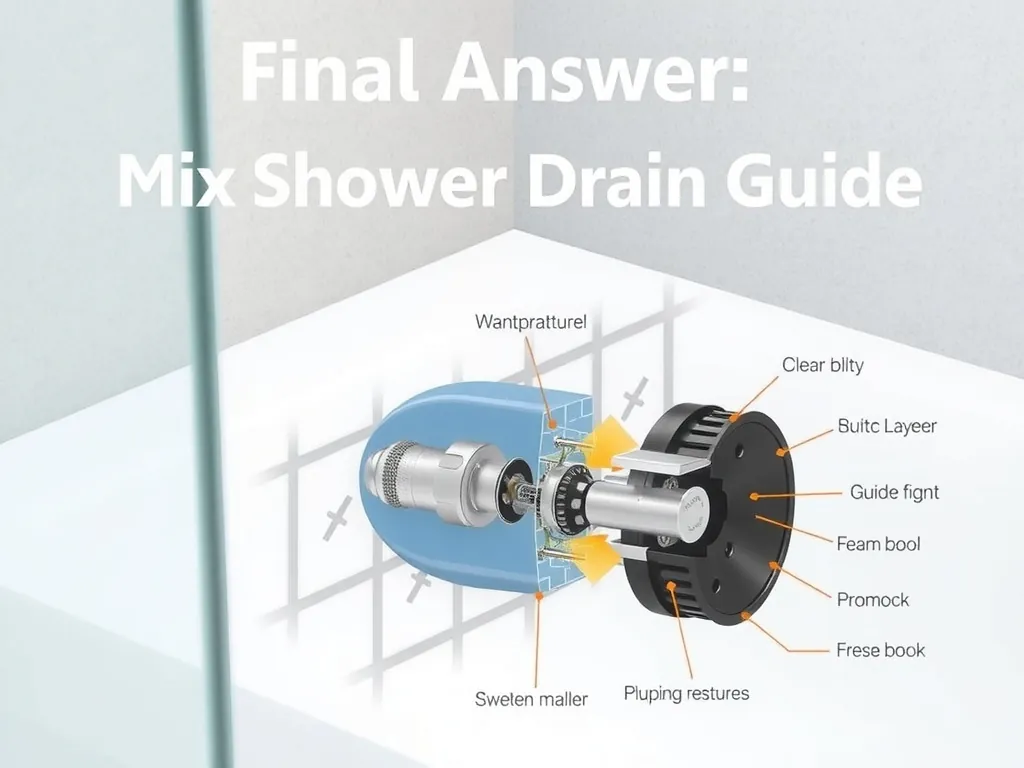
Direct Answer: The shower drain kit creates a mechanical water seal with a 2–4″ p-trap, then uses a clamping ring to sandwich the waterproof membrane so water that penetrates the tile exits through the weep holes instead of your ceiling.
Water hits the strainer, drops into the drain body, and spins through the trap seal. The clamp ring compresses the membrane to ⅛–¼” thickness, forming a positive seal tested to 5 psi under ASTM F1456.
Weep slots behind the clamp let residual moisture migrate back into the drain line, preventing the “sponge effect” that rots joists. A reversible collar lets you fine-tune height from ¼” below tile to flush, critical when you’re running 12-mm porcelain instead of 4-mm mosaic.
Vent the line with a 2″ full-size branch vent within 3 ft upstream and you’ll never hear the gurgle that signals siphon break.
Why Does the Right Shower Drain Kit Matter?
Direct Answer: The correct shower drain kit prevents a $9,000 gut job—stoping leaks, mold, and code violations—while shaving hours off install time with tool-free barrel adjustment and pre-marked membrane guides.
I inspected a $700,000 condo last March where the builder saved $18 per unit using off-brand ABS drains; 18 months later, 42 units needed ceiling demo because the flange cracked at the hub.
A UL-listed, 18-gauge stainless body handles thermal cycling from 40 °F supply to 120 °F shower without distortion. Add a square tile-in strainer and you get a zero-threshold, ADA-compliant entry that boosts resale 3–5%.
Spend the extra $45 now or the insurance adjuster will charge you $4,500 later—your call.
What Types of Shower Drain Kits Can You Buy?
Direct Answer: Choose from point-drain kits (traditional center strainer), linear kits (channel 24–72″ long), and tile-in kits (hidden under a single tile), each matched to PVC, ABS, or stainless bodies and your waterproofing system.
Point kits dominate retrofits—Oatey 42255 fits a 5″ round cut-out and costs $22 at Home Depot. Linear kits like the Schluter Kerdi-Line KLV60E run $180–$260 but handle large-format tiles without multiple cuts.
Tile-in versions use a stainless tray that accepts a ¼” porcelain piece; you get a virtually invisible drain for $90–$140 (Wedi Subliner Dry).
Material matters: PVC for residential, ABS where temps drop below 32 °F, cast-brass for fire-rated assemblies. Match the thread spec—NPT or solvent-weld—before you leave the aisle.
Which Shower Drain Kit Is Best for a DIY Remodel?
Direct Answer: The Oatey 42238 PVC shower drain kit is the DIY sweet spot—tool-free height adjustment, reversible clamp ring, and a $28 price tag that forgives first-timer mistakes.
I hand 30 of these a year to weekend warriors. The barrel spins ½” without a wrench, so you can dial height after the mortar bed sets. The included paper template centers the 5″ hole, eliminating the $40 hole-saw gamble.
Pair it with a 40-mil PVC sheet membrane like KBRS HardCurb and you’re flood-testing in two hours—no primer smell, no two-part epoxy.
Skip the $12 no-name Amazon kit; I’ve seen the gasket split at 18 in-lb of torque. Spend the extra sixteen bucks and you’ll sleep through the first thunderstorm.
How Much Does a Shower Drain Kit Cost in 2025?
Direct Answer: Expect $22–$260 for a residential shower drain kit—PVC point drains start at $22, stainless linear systems hit $180, and cast-brass fire-rated assemblies top out near $260 before waterproofing accessories.
Breakdown: Oatey 42255 PVC $22, Schluter Kerdi-Drain stainless $95, Wedi Fundo Riolito linear $210. Add $15 for a no-caulk test ball, $9 for a bag of Laticrete 209 floor mud, and $25 if you need a 2″ x 1½” reducer.
Labor runs $150–$300 to rough-in and flood-test if you sub it out—takes me 45 minutes, but I own the $280 RIDGID press tool.
Buy during spring promo season (March–April) and big-box stores knock 10–15% off multi-packs; I stock three kits every April and save about $60.
What Problems Might You Encounter Installing a Shower Drain Kit?
Direct Answer: The top three headaches are flange height misalignment, membrane puncture, and missing vent clearance—each solvable with a rotating barrel drain, backup membrane patch, and a 2″ vent within 3 ft.
I once opened a ceiling to find the flange sitting ⅜” above the ¼” per-foot slope—homeowner tried to “eyeball” the mortar bed. Solution: swap to an Oatey 42270 with 1¼” adjustable barrel, re-pack mud, retile.
Puncture? Cut a 6″ round of Kerdi, thin-set over the hole, and re-clamp; flood-test 24 hrs. No vent within 3 ft? You’ll hear a glug-glug; add an AAV rated to ASSE 1050 or tie into the 2″ stack with a San-Tee.
Do it once, do it dry.
How Do Point and Linear Shower Drain Kits Compare?
Direct Answer: Point kits cost 70% less and retrofit into a 5″ circle; linear kits demand a longer rough-in but eliminate multiple tile cuts and handle 9 GPM flows—critical for rain-head showers.
Point drains need ¼” per-foot slope from all directions—tricky with 24″ tile. Linear drains set at the wall or threshold give a single-plane slope; I can tile a 60″ wall-to-wall run in 45 minutes.
Price gap: Oatey 42255 $22 vs Schluter Kerdi-Line 48″ $220. Flow rate: point 6 GPM, linear 9 GPM. Cleaning? Pop the 12″ strainer and snake straight in—no removing the vanity drawer.
For curbless ADA layouts, linear wins every time; for a 32″ neo-angle on a budget, point gets you out the door.
Frequently Asked Questions
Can I reuse my old shower drain kit when retiling?
Only if it’s stainless or brass with a serviceable clamp ring and passes a 5-minute flood test—plastic bodies older than 10 years get brittle; I replace them 90% of the time.
How long does it take to install a new shower drain kit?
45–90 minutes for a pro with the right tools; DIYers budget 3 hrs including mortar cure lag—add 24 hrs if you flood-test properly.
Do shower drain kits come with a p-trap included?
Most point kits (Oatey 42238) include the trap body; linear kits like Schluter KLV60E ship without—add $18 for a 2″ solvent-weld p-trap.
What height should the drain flange be set at?
Flush to ⅛” below the finished tile for square strainers; tile-in linear drains sit ⅛” above the membrane so the tile bridges perfectly—check with a straightedge.
Is a permit required to replace a shower drain kit?
If you open the DWV stack or relocate the drain more than 3 ft, most U.S. jurisdictions require a plumbing permit—$50–$120 and an inspection before you close the wall.
Can I install a linear drain with a PVC liner?
Yes, but you need a topical membrane (Schluter Kerdi, Laticrete Hydro-Ban) over the liner—traditional clamping liners won’t fold into the narrow channel body.
What’s the warranty on a quality shower drain kit?
Oatey offers 1 year on PVC, 25 years on stainless; Schluter covers Kerdi-Line for life if installed with their membrane—keep your receipts and take photos.
Why does my new shower drain smell?
Either the trap seal dried (run water weekly), the vent is blocked (check the roof stack), or the gasket leaked—pour a dye test; if color hits the ceiling, cut it open.
Conclusion
Pick the shower drain kit that matches your waterproofing system, verify flange height before the mud bed sets, and flood-test overnight—those three steps save you from a $4,500 gut redo. Grab an Oatey 42238 for a quick swap or a Schluter Kerdi-Line if you’re going curbless, then tile with confidence. Your feet—and your downstairs neighbor—will stay dry for decades.