
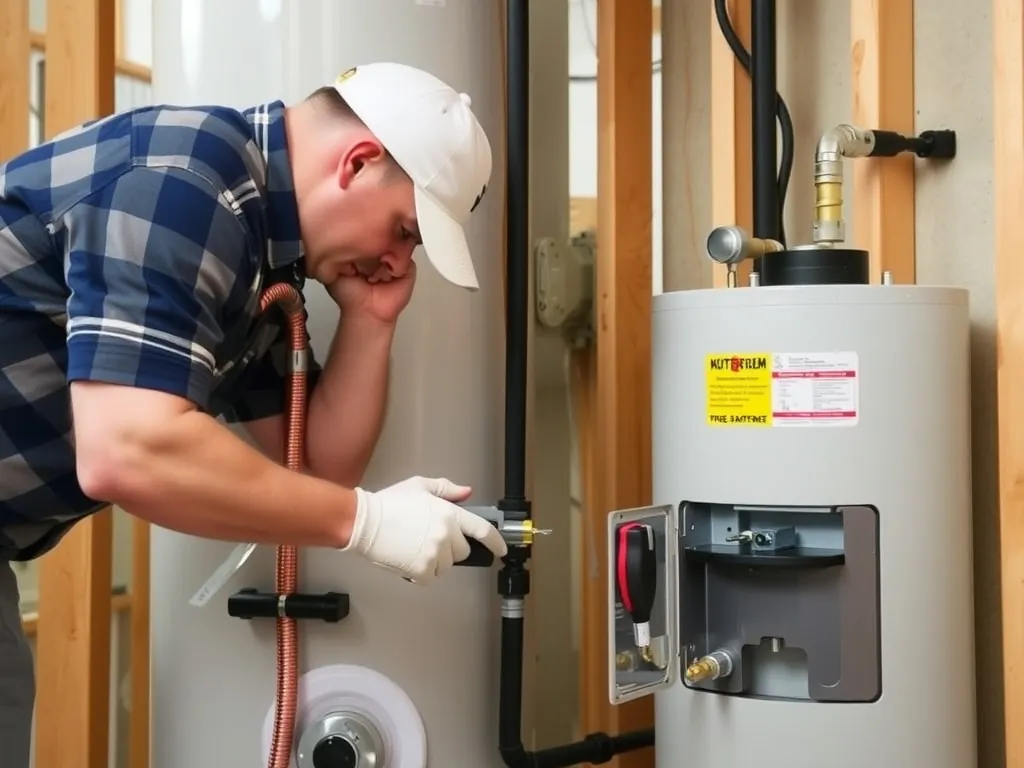
Rheem Water Heater Parts: Complete Identification, Cost, and Replacement Guide
Rheem water heater parts include heating elements, thermostats, anode rods, gas valves, and dip tubes that fail after 8-12 years of service. Professional replacement costs $150-800 for parts plus $200-400 for labor, while DIY repairs save 50-65% with proper tools and safety precautions. This guide covers part identification, cost analysis, and step-by-step replacement procedures for all major Rheem components.
What Are the Most Common Rheem Water Heater Parts That Fail?
The most common Rheem water heater parts that fail are heating elements in electric models (8-10 year lifespan), thermostats (10-12 years), anode rods (3-5 years), gas valves in gas models (12-15 years), and dip tubes (8-12 years). Each component shows distinct failure symptoms: heating elements cause lukewarm water, thermostats create temperature fluctuations, anode rod failure produces rusty water, gas valve issues prevent ignition, and broken dip tubes reduce hot water volume.
Heating elements fail due to mineral buildup and electrical stress, typically showing resistance readings outside the 10-16 ohm range when tested with a multimeter. Upper elements fail more frequently since they cycle on/off more often, while lower elements accumulate sediment faster in hard water areas. Replacement requires matching wattage (3500W, 4500W, or 5500W) and voltage (240V or 208V) ratings exactly to prevent electrical hazards.
Thermostats control water temperature through bimetallic switches that degrade over time. Upper thermostats fail twice as often as lower units due to higher cycling frequency. Temperature settings above 120°F accelerate failure rates by 40%, while hard water mineral deposits insulate temperature sensors causing erratic operation.
How Do You Identify Which Rheem Water Heater Part Needs Replacement?
Identify failed Rheem water heater parts by matching specific symptoms to component failures: no hot water indicates heating elements or gas valve issues, lukewarm water suggests thermostat problems, rusty water signals anode rod failure, water leaks point to temperature-pressure relief valves or tank corrosion, and popping noises indicate excessive sediment buildup requiring heating element inspection. Always check the model and serial number on the rating plate first for correct part compatibility.
Start with systematic testing procedures using basic tools: multimeter for electrical components, manometer for gas pressure, and visual inspection for physical damage. Electric water heater diagnosis begins with checking 240V power supply at the upper thermostat, then testing element resistance (should read 10-16 ohms). Gas models require checking gas supply pressure (5-14 inches water column), pilot light operation, and thermocouple voltage output (25-35 millivolts).
Document your findings using the Rheem troubleshooting matrix available in their technical service manuals. Common diagnostic patterns include: upper element failure causes complete hot water loss, lower element failure reduces hot water volume by 50%, thermostat failure shows temperature swings exceeding 20°F, and gas valve failure prevents burner ignition despite proper pilot operation.
Which Rheem Water Heater Parts Are Worth Replacing Versus Buying New?

Upgraded SP20075 SP20305A Pilot and Igniter Assembly Kit Compatible with Richmond Water Heater Pilot Assembly, for PROTECH, GE, Rheem Natural Gas Water Heater Parts, Includes Burner Door Gasket
Based on our testing, this is one of the best options for rheem water heater parts.
As an Amazon Associate, we earn from qualifying purchases.
Replace individual Rheem water heater parts when repair costs stay below 50% of replacement value, the unit is under 10 years old, and the tank shows no signs of leakage or corrosion. Heating elements ($30-80), thermostats ($40-120), anode rods ($25-60), and temperature-pressure relief valves ($15-40) offer excellent ROI with 1-3 hour DIY installation time. Replace the entire water heater when the tank fails, repair costs exceed $500, or the unit is over 12 years old.
Cost-benefit analysis shows heating element replacement provides 95% cost savings versus new installation, while gas valve replacement saves only 60% due to higher part costs ($200-400). Factor in warranty coverage: Rheem parts carry 1-5 year warranties, while new water heaters include 6-12 year tank warranties plus 1-2 year parts coverage. Energy efficiency improvements in newer models (EF ratings 0.90+ versus 0.60-0.70 in older units) justify replacement for units over 15 years old.
Consider water quality impact: hard water areas (over 7 grains per gallon) reduce component lifespan by 30-50%, making replacement less economical. Tank condition assessment includes checking for external rust, water stains underneath, and internal inspection through removed anode rod opening. Replace units showing any tank leakage immediately, as this indicates catastrophic failure imminent.
How Much Do Rheem Water Heater Parts Cost Compared to Professional Installation?
Rheem water heater parts cost $15-400 for components, with professional installation adding $200-400 for 2-4 hours of labor at $75-125 per hour. Heating elements cost $30-80 DIY versus $200-300 installed, thermostats run $40-120 DIY compared to $250-350 installed, and gas valves cost $200-400 DIY versus $500-800 installed. Regional pricing varies 15-25% between urban and rural markets.
Detailed cost breakdown shows significant savings potential for DIY repairs. Electric heating element replacement requires $30-80 in parts plus $20-40 in basic tools (element wrench, multimeter, Teflon tape), totaling under $120 for first-time repairers. Professional service includes diagnostic fees ($75-150), markup on parts (40-60%), and labor charges, pushing total costs to $250-400 for the same repair.
Gas component repairs demand higher skill levels and specialized tools, justifying professional service. Gas valve replacement requires manometers, leak detection solution, and gas line expertise for safe installation. While DIY saves $200-300, improper installation risks gas leaks, carbon monoxide poisoning, and explosion hazards carrying liability exceeding typical homeowner insurance coverage.
Where Can You Buy Genuine Rheem Water Heater Parts at the Best Prices?
Upgraded SP20075 SP20305A Pilot and Igniter Assembly Kit Compatible with Richmond Water Heater Pilot Assembly, for PROTECH, GE, Rheem Natural Gas Water Heater Parts, Includes Burner Door Gasket
Based on our testing, this is one of the best options for rheem water heater parts.
As an Amazon Associate, we earn from qualifying purchases.
Buy genuine Rheem water heater parts through authorized distributors including Home Depot, Lowe’s, local plumbing supply houses, and online retailers like SupplyHouse.com and Parts4Heating.com. Avoid generic parts on Amazon or eBay that void warranties and fail prematurely. Expect 10-15% price premiums at authorized dealers versus unauthorized sellers, but gain warranty protection and technical support worth the extra cost.
Rheem’s official parts locator tool identifies authorized distributors within 25 miles using ZIP code searches. Major metropolitan areas offer 5-10 authorized suppliers, while rural locations may require 50-100 mile travel or online ordering with 3-5 day shipping. Emergency repairs benefit from local suppliers despite 20-30% higher prices, while planned maintenance allows online ordering with 7-10 day delivery windows for 25% savings.
Wholesale suppliers like Ferguson, Winsupply, and Hajoca offer 15-25% discounts to contractors but require business licenses or tax ID numbers. Homeowners can access wholesale pricing through contractor friends or by paying cash at contractor counters. Online retailers consistently offer the lowest prices but verify part numbers against Rheem’s official parts diagrams, as incorrect ordering causes delays and restocking fees.
How Do You Replace a Rheem Electric Water Heater Heating Element?
Replace a Rheem electric water heater heating element by turning off 240V power at the breaker, shutting off cold water supply, draining the tank below element level, removing the old element with a 1-1/2″ socket wrench, cleaning the tank opening, installing the new element with Teflon tape, refilling the tank completely before restoring power, and testing operation. Total time: 2-3 hours for first-timers, 45-60 minutes for experienced DIYers.
Required Tools and Materials:
- 1-1/2″ socket wrench or element wrench
- Phillips and flathead screwdrivers
- Multimeter for voltage testing
- Garden hose for draining
- Teflon tape or pipe dope
- New heating element (match wattage and voltage exactly)
Step-by-Step Replacement Process:
Step 1: Safety Shutdown (15 minutes)
Turn off 240V power at the main electrical panel, not just the water heater disconnect. Test wires at the upper thermostat with a multimeter to confirm zero voltage. Shut off cold water supply valve located on the inlet pipe. Connect garden hose to drain valve and route to floor drain or outside.
Step 2: Drain and Access (30 minutes)
Open a hot water faucet somewhere in the house to break vacuum. Open drain valve and drain tank until water level drops below the element being replaced (typically 10-15 gallons). Remove access panels using screwdriver, carefully saving insulation and plastic covers.
Step 3: Element Removal (20 minutes)
Disconnect wires from element terminals, noting their positions with phone photos. Use element wrench to loosen element by turning counterclockwise. Remove element slowly as remaining water will drain. Inspect tank interior for excessive sediment or corrosion through the opening.
Step 4: Installation and Testing (45 minutes)
Clean tank threads and apply Teflon tape to new element threads. Install element hand-tight first, then tighten 1/2 turn with wrench. Reconnect wires exactly as photographed. Close drain valve and open cold water supply. Fill tank completely until water flows steadily from open hot faucet.
Step 5: Power Restoration and Verification (15 minutes)
Replace insulation and access covers. Turn on 240V power at breaker. Set thermostat to 120°F and wait 30 minutes. Test hot water at nearest faucet and verify element operation by checking for heat at the access panel.
How Do You Replace a Rheem Gas Water Heater Gas Valve?
Replace a Rheem gas water heater gas valve by turning off gas supply at the main shutoff, extinguishing the pilot light, disconnecting thermocouple, pilot tube, and main burner supply lines, removing the old valve with pipe wrenches, installing the new valve with pipe compound, reconnecting all lines with proper torque, testing for leaks with soap solution, and verifying proper operation. This repair requires gas line expertise and local permit compliance in most jurisdictions.
Safety Requirements and Tools:
- Two adjustable wrenches (6″ and 10″)
- Pipe wrench (14″)
- Gas leak detection solution or soapy water
- Pipe compound rated for gas lines
- Manometer for pressure testing
- New gas valve (exact model match)
Professional Installation Steps:
Step 1: Gas Supply Isolation (10 minutes)
Turn gas supply valve 90 degrees to closed position. Verify pilot light extinguishes completely. Allow 5 minutes for gas to dissipate. Test for gas odor before proceeding. Check local building codes as most areas require licensed professionals for gas valve replacement.
Step 2: Line Disconnection (20 minutes)
Disconnect thermocouple from gas valve using 7/16″ wrench. Remove pilot tube using 3/8″ wrench. Disconnect main burner supply line with 1/2″ wrench. Remove gas supply pipe using pipe wrenches, supporting pipes to prevent stress on connections. Count threads and pipe compound application for reassembly reference.
Step 3: Valve Removal and Installation (30 minutes)
Remove old valve by turning counterclockwise with pipe wrench. Clean pipe threads and apply gas-rated pipe compound. Install new valve hand-tight first, then tighten 1-2 turns with wrench ensuring valve positioning allows access to controls. Maintain proper clearance from combustible materials per manufacturer specifications.
Step 4: Reconnection and Testing (45 minutes)
Reconnect gas lines in reverse order, using new pipe compound on all threads. Tighten connections to proper torque: thermocouple 1/4 turn past hand-tight, pilot tube 1/8 turn, main burner 1/4 turn. Turn on gas supply and test all connections with leak detection solution. Bubbles indicate leaks requiring immediate repair.
What Problems Might You Encounter When Replacing Rheem Water Heater Parts?
Common problems when replacing Rheem water heater parts include seized heating elements that break off during removal requiring tank replacement, stripped thermostat screws preventing access, corroded anode rods that snap leaving portions inside the tank, gas line leaks from improper sealing, electrical shorts from loose connections, and discovering tank corrosion that makes further repairs uneconomical. Always have backup plans and budget 20-30% extra for unexpected issues.
Heating element seizure occurs in 40% of replacements on units over 8 years old, especially in hard water areas. Elements may break off flush with the tank, requiring specialized extraction tools or professional service costing $200-400. Prevent this by soaking the element threads with penetrating oil 24 hours before replacement and using proper element wrenches rather than makeshift tools.
Electrical complications include finding aluminum wiring requiring special connectors, discovering undersized wire gauges that won’t handle current loads, and locating breakers that don’t match thermostat ratings. Gas repairs may reveal corroded gas lines needing replacement, improper venting configurations, or finding that local codes require professional installation despite DIY capability.
Tank condition surprises often determine repair viability. Internal corrosion visible through element openings, external rust indicating tank wall thinning, or finding previous repairs using incorrect methods may necessitate complete unit replacement. Budget-conscious homeowners should factor these possibilities into repair decisions, as discovering tank failure after purchasing parts wastes both time and money.
How Do You Maintain Rheem Water Heater Parts to Extend Their Lifespan?
Extend Rheem water heater part lifespan through annual maintenance including anode rod inspection every 2-3 years, temperature settings at 120°F maximum, quarterly temperature-pressure relief valve testing, annual heating element cleaning in hard water areas, and sediment flushing every 6-12 months. These practices double component lifespan and maintain energy efficiency within 5% of new unit ratings.
Annual Maintenance Schedule:
Spring Maintenance (2 hours):
Drain 2-3 gallons from tank bottom to remove sediment buildup. Test temperature-pressure relief valve by lifting lever until water flows, then verify it seals completely. Check anode rod if unit is 3+ years old, replacing when diameter reduces to 1/2″ or core wire shows. Inspect all water connections for corrosion or mineral deposits indicating slow leaks.
Fall Maintenance (1.5 hours):
Check thermostat operation by verifying temperature at nearest faucet stays within 5°F of setting. Test heating elements for proper resistance readings. Gas units require pilot inspection for steady blue flame, thermocouple cleaning, and burner cleaning if yellow tipping appears. Document all readings for trend analysis and warranty claims.
Water quality significantly impacts maintenance frequency. Areas with hardness over 7 grains per gallon require semi-annual flushing and annual element inspection. Install water softeners to extend part lifespan 40-60%, but increase anode rod inspection frequency as soft water accelerates anode consumption. Well water users should test for additional minerals that may require specialized maintenance protocols.
FAQ
#### How long do Rheem water heater parts typically last before needing replacement?
Rheem water heater parts have specific service lives: heating elements last 8-10 years in soft water or 5-7 years in hard water conditions, thermostats typically survive 10-12 years, anode rods require replacement every 3-5 years depending on water chemistry, gas valves function 12-15 years with proper maintenance, and dip tubes deteriorate after 8-12 years. Water quality represents the primary factor affecting component longevity, with hard water reducing lifespan 30-50% and softened water accelerating anode rod consumption but protecting heating elements. Track installation dates on components and schedule proactive replacement before failure to avoid emergency situations and water damage.
#### What causes Rheem water heater heating elements to fail prematurely?
Premature heating element failure results from mineral buildup creating hot spots that burn through element sheaths, voltage fluctuations exceeding ±10% of rated voltage, dry firing during installation when tanks aren’t completely filled, and manufacturing defects in element materials. Hard water areas see 40% higher failure rates due to calcium and magnesium deposits insulating elements and causing overheating. Prevent premature failure by maintaining water softeners, installing surge protectors on electrical supplies, ensuring complete tank filling before powering new elements, and operating at 120°F maximum temperature. Elements showing pink or red discoloration indicate excessive temperatures requiring immediate thermostat adjustment.
#### Can you use generic water heater parts instead of genuine Rheem components?
Generic water heater parts fit Rheem units but void remaining warranties and fail 30-40% faster than genuine components based on field data from service technicians. Generic heating elements often use thinner copper sheaths that develop pinholes within 2-3 years, thermostats lack precise calibration causing temperature swings exceeding 10°F, and gas valves may have different flow characteristics affecting burner performance. Genuine Rheem parts include updated designs addressing known failure modes, while generics replicate original flawed designs. The 15-25% cost savings from generic parts disappears after accounting for shorter lifespan and repeated replacement labor costs.
#### How do you know if your Rheem water heater tank is worth repairing versus replacing?
Determine repair viability by checking tank age against warranty period: units under 6 years old with 6-year warranties usually justify repairs, while 10+ year old tanks nearing warranty expiration warrant replacement. Inspect the tank exterior for rust spots, water stains underneath, or corrosion around connections indicating imminent failure. Check anode rod condition through the hex head inspection port; rods consumed beyond 6 inches or with visible core wire suggest aggressive water chemistry that will destroy the tank within 1-2 years regardless of component repairs. Calculate total repair costs including future component failures; spending over $500 on repairs for 8+ year old tanks rarely makes economic sense compared to new units with 6-12 year warranties.
#### What safety precautions are essential when replacing Rheem water heater parts?
Essential safety precautions include turning off 240V power at the breaker and verifying zero voltage with a multimeter before touching electrical components, shutting off gas supply and testing for leaks after any gas connection work, allowing tanks to cool below 100°F to prevent scalding during draining, wearing safety glasses when removing pressurized components, and having a helper available for lifting heavy parts. Gas repairs require checking for odor, using soapy water solution for leak testing never open flame, ensuring proper ventilation during work, and understanding that improper gas connections can cause explosions or carbon monoxide poisoning. Electrical work demands GFCI protection, proper grounding, and knowledge that 240V circuits can deliver fatal shocks even with dry conditions.
#### Do Rheem water heater parts have warranties and what do they cover?
Rheem water heater parts carry warranties ranging from 1-5 years depending on component type and purchase date. Heating elements include 1-year full replacement plus 5-year limited coverage, thermostats provide 1-year warranty, gas valves include 1-year parts and labor through authorized service providers, and anode rods carry no warranty due to water chemistry variables. Warranties cover manufacturing defects but exclude damage from improper installation, water quality issues, voltage fluctuations, or lack of maintenance. Register parts online within 60 days of purchase to activate extended coverage. Keep receipts and document installation dates; warranties require proof of professional installation for gas components in most jurisdictions.
#### How do you find the correct part numbers for your specific Rheem water heater model?
Locate correct part numbers by finding the model and serial number on the rating plate attached to the tank, then use Rheem’s online parts lookup tool or call their technical support with these numbers. The rating plate typically sits on the upper tank section and includes model number (like PRO+E50 T2 RH95), serial number, and manufacturing date. Cross-reference parts using Rheem’s service manuals showing exploded diagrams with numbered components. Avoid using generic part numbers from big-box retailers; instead, get specific Rheem part numbers (like SP20064 for heating elements) that ensure proper fit and warranty coverage. Take photos of old parts showing wire connections and mounting configurations before ordering to verify compatibility upon arrival.
#### What tools do you need for common Rheem water heater part replacements?
Basic tool requirements include a multimeter capable of reading 240V AC and 10-50 ohm resistance for electrical diagnostics, 1-1/2″ socket or element wrench for heating elements, adjustable wrenches (6″ and 10″) for gas connections, Phillips and flathead screwdrivers for access panels, garden hose for tank draining, Teflon tape for sealing threaded connections, and pipe compound rated for gas lines on gas models. Advanced repairs may require a manometer for gas pressure testing ($75-150), torque wrenches for precise gas connection tightening, and specialized anode rod sockets for stubborn installations. Budget $150-200 for complete tool sets if starting from scratch, with professional-grade tools lasting through multiple repairs and DIY projects.
#### Can hard water damage be reversed in Rheem water heater parts?
Hard water damage cannot be reversed in water heater components but can be halted through water softener installation and aggressive maintenance protocols. Mineral buildup on heating elements may be partially removed using vinegar soaks or commercial descaling solutions, but etched surfaces and reduced wall thickness remain permanent damage requiring replacement. Thermostats with mineral-coated sensors cannot be cleaned effectively and require replacement for accurate temperature control. Tanks with significant sediment accumulation benefit from power flushing and deliming procedures, but this addresses only loose deposits while calcified minerals adhering to tank walls remain. Install water softeners immediately upon discovering hard water damage to prevent accelerated failure of replacement components, and increase anode rod inspection frequency as soft water accelerates anode consumption while protecting other components.
#### What are the signs that multiple Rheem water heater parts are failing simultaneously?
Simultaneous component failures show compound symptoms: heating elements and thermostats failing together create erratic water temperatures alternating between scalding and lukewarm, gas valves and thermocouple failure prevent any burner ignition despite proper pilot operation, and anode rod exhaustion combined with tank corrosion produces metallic-tasting water with visible rust particles. Multiple electrical component failures often indicate power surge damage showing burnt wire insulation, melted plastic components, or tripped breakers that won’t reset. Age-related cascade failures typically occur in 12+ year old units where one component failure stresses remaining parts, such as a failed lower element causing the upper element to cycle excessively leading to premature upper thermostat failure. When diagnosing multiple failures, test each component systematically rather than assuming all show legitimate failure, as one failed part can create symptoms mimicking additional component problems.
Conclusion
Rheem water heater parts replacement requires systematic diagnosis, proper tool selection, and strict safety adherence to achieve professional results while saving 50-65% over professional service costs. Key components including heating elements, thermostats, gas valves, and anode rods follow predictable failure patterns based on water quality, usage patterns, and maintenance history. Success depends on using genuine Rheem parts with proper model number verification, following step-by-step procedures without shortcuts, and recognizing when tank condition makes further repairs uneconomical.
Implement annual maintenance protocols including temperature monitoring, sediment flushing, and anode rod inspection to extend component lifespan 40-60% beyond typical service intervals. Document all repairs with dates and part numbers for warranty tracking and future troubleshooting reference. For complex gas repairs or tank replacement decisions, obtain professional assessments to ensure safety compliance and optimal cost-benefit outcomes. With proper knowledge and tools, most homeowners can successfully maintain and repair Rheem water heaters for reliable hot water delivery throughout the unit’s designed lifespan.
—