

Rheem Performance Platinum Water Heater: Complete Technical Guide, Costs, and Installation
Rheem Performance Platinum water heaters deliver 0.92-0.93 Uniform Energy Factor (UEF) ratings with 10-12 year warranty coverage and Wi-Fi leak detection capabilities. These ENERGY STAR certified units reduce annual operating costs by $175-250 compared to standard models while providing 65-75 gallons first-hour delivery. This guide covers technical specifications, installation requirements, maintenance schedules, and cost analysis for all Performance Platinum models.
What Exactly Is a Rheem Performance Platinum Water Heater?
Rheem Performance Platinum represents the brand’s premium residential water heater line featuring advanced technology integration and maximum efficiency ratings. These units incorporate EcoNet Wi-Fi connectivity, leak detection sensors, and powered anode rods that eliminate the need for annual anode replacement. The series includes gas, electric, and hybrid heat pump models ranging from 40-80 gallon capacities with recovery rates of 21-28 gallons per hour at 90°F rise.
The Performance Platinum designation indicates top-tier efficiency within Rheem’s product hierarchy, surpassing the standard Performance and mid-tier Performance Plus lines. Each unit includes professional installation requirements to maintain warranty coverage and optimize performance parameters. The integrated smart technology enables remote temperature adjustment, diagnostic monitoring, and automatic shutoff capabilities during leak events.
How Do Rheem Performance Platinum Models Compare to Standard Water Heaters?
Performance Platinum models achieve 25-35% higher efficiency than standard units through advanced heat exchanger designs, enhanced insulation systems, and intelligent control algorithms. Gas models feature ultra-low NOx burners meeting California emissions standards while maintaining 76,000 BTU input ratings. Electric units incorporate dual 5500-watt heating elements with incoloy construction for extended element life.
The integrated EcoNet system provides real-time performance monitoring, predictive maintenance alerts, and energy usage tracking through smartphone applications. Standard models lack these connectivity features and typically offer 6-year warranties versus the 10-12 year coverage on Platinum units. The enhanced efficiency translates to annual energy savings of $175-250 for average households using 64 gallons daily.
Premium features include brass drain valves instead of plastic, heat trap nipples preventing thermosiphoning, and diagnostic LED displays showing operational status. The powered anode system prevents tank corrosion without requiring the 3-5 year replacement intervals of standard magnesium anodes.
Which Rheem Performance Platinum Model Should You Choose?
Model selection depends on household size, fuel type availability, and efficiency priorities. The 50-gallon gas PROG50-38U model serves 3-4 person households with 78-gallon first-hour delivery and 0.82 UEF rating. Electric XE50T12EC45U0 units provide 0.93 UEF efficiency for 4-5 person families with 21 GPH recovery rates.
Hybrid heat pump models like the 65-gallon PROPH65 T2 RH375-30 deliver 3.70 UEF ratings but require 700 cubic feet minimum air space and operate optimally in 40-90°F ambient conditions. Gas condensing units achieve 0.92 UEF through secondary heat exchangers but need PVC venting systems and condensate drainage.
Consider physical dimensions: 50-gallon models measure 60-5/8″ height × 22″ diameter, while 80-gallon units require 70-1/2″ height × 24″ diameter. Installation location must accommodate service clearances: 24″ front access, 6″ sides, and 12″ top clearance for maintenance access.
How Much Does a Rheem Performance Platinum Water Heater Cost?
Performance Platinum water heaters cost $1,200-2,800 for units alone, depending on capacity and technology type. Gas models range $1,200-1,800, electric units cost $800-1,400, and hybrid heat pump models run $2,200-2,800. Professional installation adds $800-1,500 including permits, materials, and labor.
Regional pricing variations affect total costs: West Coast installations average 15-20% higher than Midwest pricing due to code requirements and labor rates. Gas line modifications cost $300-800 if upgrading from smaller units requiring larger diameter piping. Electric service upgrades for hybrid models may require 30-amp dedicated circuits costing $400-1,200.
Annual operating costs vary by fuel type and local utility rates: gas models average $225-275 yearly, electric units cost $475-575, and heat pump models operate at $175-225 annually. Energy savings compared to standard units recover the premium price difference in 4-6 years for most households.
How Do You Install a Rheem Performance Platinum Water Heater Step-by-Step?
Step 1: Site Preparation and Safety Setup
Turn off utilities at main shutoffs and verify zero pressure using a pressure gauge on the temperature-pressure relief valve. Drain existing unit completely through the drain valve using a garden hose to appropriate floor drain or outdoor location. Measure installation space to confirm adequate clearances per manufacturer specifications and local codes.
Disconnect existing plumbing using appropriate wrenches, supporting pipes to prevent stress on building connections. Remove electrical connections after testing for voltage with a multimeter, capping wires with wire nuts. For gas units, shut off gas supply and disconnect using two pipe wrenches to prevent pipe damage.
Step 2: Position New Unit and Connect Plumbing
Position the new unit using an appliance dolly, maintaining vertical orientation to prevent damage to internal components. Install new flexible water connectors rated for 150 PSI and 180°F minimum temperature. Apply pipe thread compound to male threads, tightening connections to 20-25 foot-pounds using adjustable wrenches.
Install thermal expansion tank if required by local code, pre-charging to match incoming water pressure measured with a pressure gauge. Connect hot and cold lines ensuring proper orientation: cold inlet connects to the dip tube extending to tank bottom. Install heat trap nipples provided with the unit to prevent thermosiphoning losses.
Step 3: Complete Gas Connections and Testing
Apply gas-rated pipe thread compound to connections, assembling using two wrenches to prevent pipe rotation. Test all connections using a 50/50 soap and water solution, watching for bubble formation indicating leaks. Digital manometers must show 7-14 inches water column pressure at the gas valve inlet.
Install sediment trap in gas line before the unit, maintaining 3-inch minimum clearance from combustible materials. Connect venting system using Category III stainless steel vent pipe with proper slope of 1/4 inch per foot upward toward termination. Install condensate drainage for high-efficiency models using 3/4-inch PVC with proper trap and neutralization if required.
Step 4: Electrical Connections and System Startup
Connect electrical supply using 10-gauge wire for 4500-watt elements or 8-gauge for 5500-watt elements on 240-volt circuits. Install dedicated 30-amp double-pole breaker with appropriate disconnect means within sight of the unit. Bond all metallic piping systems using 6-gauge copper wire to the electrical service ground.
Fill tank completely opening the nearest hot water faucet until consistent water flow indicates air removal. Check for leaks at all connections while the system pressurizes to full operating pressure. Set thermostat to 120°F initially, allowing the unit to complete one full heating cycle before adjusting to final temperature settings.
What Maintenance Does a Rheem Performance Platinum Water Heater Require?
Annual maintenance includes flushing 2-3 gallons from the drain valve to remove sediment accumulation, testing the temperature-pressure relief valve by lifting the lever until water flows freely, and inspecting the anode rod condition through the top access port. Powered anode systems require no replacement but benefit from electrical connection inspection.
Quarterly tasks include checking for water leaks around connections, verifying proper temperature settings at 120°F for optimal efficiency and safety, and cleaning the intake air screen on gas models using compressed air. Hybrid models require monthly air filter cleaning using warm water and mild detergent, allowing complete drying before reinstallation.
EcoNet system maintenance involves updating firmware through the smartphone application, testing leak detection sensors using the built-in test function, and verifying Wi-Fi connectivity strength remains above -70 dBm for reliable operation. Professional service should occur every 3-5 years including combustion analysis on gas models and element inspection on electric units.
What Problems Might You Encounter with Rheem Performance Platinum Models?
Common issues include error codes displayed through the LED diagnostic system: Error 001 indicates thermistor failure requiring replacement of the temperature sensor assembly. Error 004 signals high limit switch activation from overheating, often caused by sediment buildup or element failure. Error 105 on gas models indicates ignition failure from gas supply issues or igniter problems.
Wi-Fi connectivity problems affect 15-20% of installations, typically resolved by ensuring 2.4 GHz network compatibility and signal strength above -70 dBm. Leak detection sensors may trigger false alarms from condensation or minor spills, requiring sensor cleaning and repositioning away from potential moisture sources.
Premature element failure occurs in areas with aggressive water chemistry, particularly well water systems with high mineral content. Powered anode systems prevent most corrosion issues but may experience control board failures after 8-10 years. Gas valve problems manifest as intermittent heating cycles or failure to maintain set temperatures, requiring professional diagnosis using manometers and multimeters.
How Do You Troubleshoot Rheem Performance Platinum Error Codes?
Error code 001 indicates thermistor circuit failure, displaying when the control board detects resistance values outside the 10,000-11,000 ohm range at 77°F. Test thermistor resistance using a multimeter after disconnecting the sensor wires, replacing the assembly if readings exceed ±10% tolerance. Check wiring connections for corrosion or loose terminals causing intermittent readings.
Error 004 activates when water temperature exceeds 190°F, triggering the high-limit safety switch. Reset the switch by pressing the red button located behind the lower access panel after the unit cools below 120°F. Persistent errors indicate element grounding, thermostat failure, or control board malfunction requiring professional service.
Gas model error 105 indicates five consecutive ignition failures, typically from insufficient gas pressure below 5 inches water column or defective igniter operation. Verify gas supply pressure using a manometer, clean the igniter rod with fine sandpaper if carbonized, and check flame sensor positioning 1/8-1/4 inch from burner surface.
Which Professional Should Install Your Rheem Performance Platinum Water Heater?
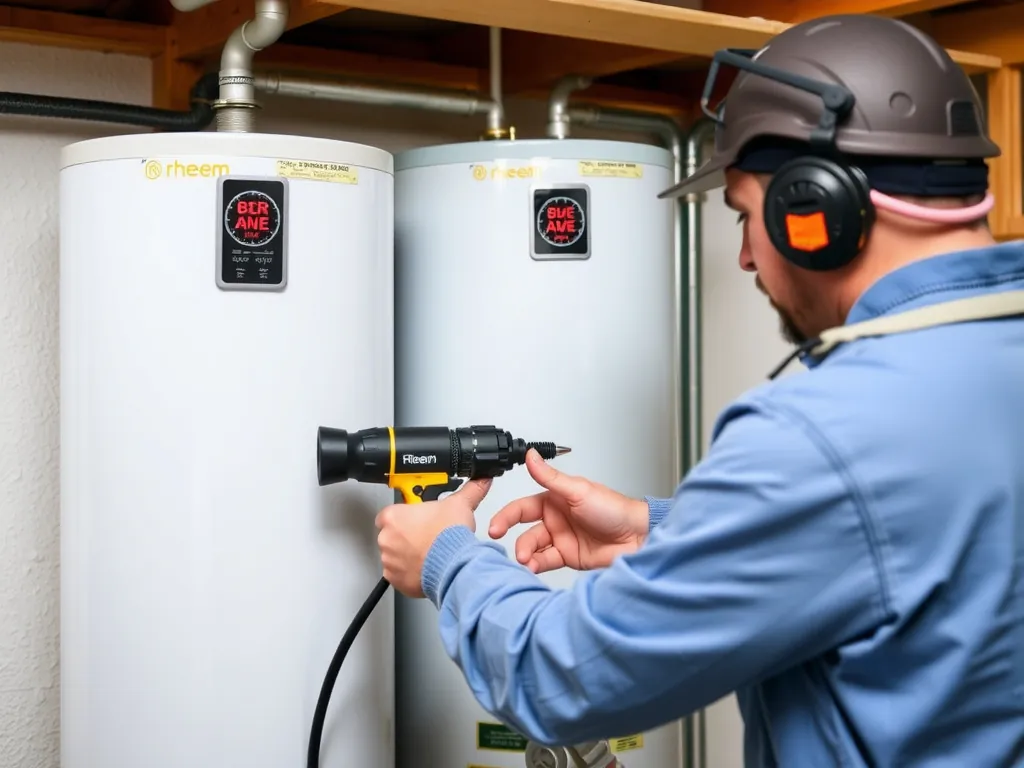
Licensed plumbers with water heater installation certification should perform Performance Platinum installations to maintain warranty coverage and ensure code compliance. Verify credentials including state plumbing license, insurance coverage minimum $500,000 liability, and specific Rheem factory training certification for EcoNet system setup.
Request references from recent installations within the past 6 months, confirming similar model installations and EcoNet connectivity setup. Professional installation should include permit acquisition, pressure testing, combustion analysis for gas models, and complete system commissioning with EcoNet app configuration.
Obtain three written estimates specifying exact model numbers, installation timeline, warranty terms, and total costs including all materials and permits. Verify installer familiarity with local code requirements including thermal expansion tank mandates, seismic strap specifications, and gas line sizing calculations based on total system demand.
FAQ
#### What causes Rheem Performance Platinum water heaters to stop heating?
Complete heating failure typically results from tripped circuit breakers on electric models, extinguished pilot lights on gas units, or failed heating elements drawing insufficient amperage. Check the electrical panel for tripped breakers, reset high-limit switches behind access panels, and test element continuity using a multimeter showing 10-20 ohm readings for 4500-watt elements. Gas models require pilot relighting following manufacturer procedures while checking thermocouple positioning 1/8-1/4 inch into the pilot flame. Control board failures display specific error codes requiring professional diagnosis using manufacturer-specific testing procedures.
#### How long should a Rheem Performance Platinum water heater last?
Performance Platinum models typically last 12-15 years with proper maintenance, exceeding standard 8-12 year lifespans through enhanced corrosion protection and component quality. Powered anode systems eliminate the 3-5 year anode replacements required by standard models, while enhanced insulation reduces thermal cycling stress. Professional maintenance every 3-5 years including element inspection, gas valve testing, and heat exchanger cleaning extends operational life. Water quality significantly impacts longevity: soft water systems may achieve 15-18 years, while aggressive water conditions with pH below 6.5 or above 8.5 may reduce lifespan to 10-12 years despite premium features.
#### Can you install a Rheem Performance Platinum water heater yourself?
Self-installation voids the 10-12 year warranty requiring professional installation documentation for coverage validation. Installation requires plumbing permits in most jurisdictions, gas line pressure testing certification, and electrical work potentially needing licensed electricians. Complex installations involving gas line modifications, electrical service upgrades, or venting system changes demand professional expertise meeting local codes. DIY installation saves $800-1,500 in labor costs but risks improper setup causing efficiency losses, safety hazards, or premature failure. Professional installation includes system commissioning, EcoNet setup, and performance optimization ensuring maximum efficiency and warranty protection.
#### Why does my Rheem Performance Platinum show error code 001?
Error code 001 indicates thermistor circuit failure when the control system detects temperature sensor readings outside acceptable parameters, typically resistance values beyond 9,000-13,000 ohm range at operating temperatures. This failure prevents accurate temperature control, potentially causing overheating or insufficient heating. Test thermistor resistance using a digital multimeter after powering down the unit and disconnecting sensor wires, expecting 10,000-11,000 ohms at 77°F ambient temperature. Replace the complete thermistor assembly if readings vary more than ±10% from specifications, ensuring proper wire routing away from heating elements and secure connection seating in the control board terminals.
#### How much energy does a Rheem Performance Platinum save annually?
Performance Platinum models save $175-325 annually compared to standard units through 0.92-0.93 UEF ratings versus 0.58-0.62 for conventional models. Gas models reduce consumption by 25-30% through enhanced combustion efficiency and reduced standby losses, while electric units achieve 35-40% savings via improved insulation and element design. Hybrid heat pump models deliver maximum savings of $300-450 annually but require specific installation conditions. Actual savings depend on household usage patterns, local utility rates, and incoming water temperatures varying by climate zone. Energy cost calculators using Department of Energy test procedures show 4-6 year payback periods for the premium price difference in most installations.
#### What size Rheem Performance Platinum do I need for my family?
Family size determines minimum capacity requirements: 2-3 people need 40-50 gallons, 4-5 people require 50-65 gallons, and households exceeding 5 people need 65-80 gallon capacity. First-hour delivery ratings prove more critical than tank capacity, with 50-gallon gas models providing 78 gallons versus 67 gallons for electric units. High-demand scenarios including multiple simultaneous showers, whirlpool tubs, or large families benefit from 65-80 gallon models with 85-90 gallon first-hour delivery. Hybrid heat pump models effectively provide 75-gallon equivalent capacity through heat pump operation but require longer recovery times between heavy usage periods.
#### How do you reset a Rheem Performance Platinum water heater?
Reset procedures vary by fuel type and error condition. Electric models require turning off power at the circuit breaker, removing access panels, and pressing the red high-limit reset button located on the upper thermostat. Gas models need gas valve control knob turned to “OFF” for 5 minutes, then pilot relighting following manufacturer instructions posted on the unit. Control board resets involve holding the mode button for 5 seconds until the display shows “rES” then releasing. EcoNet connectivity issues require unplugging the communication module for 30 seconds, then reconnecting while ensuring Wi-Fi signal strength remains adequate for proper operation.
#### When should you replace the anode rod in a Rheem Performance Platinum?
Performance Platinum models feature powered anode systems eliminating traditional anode replacement requirements through impressed current technology preventing corrosion. These systems use electrical current instead of sacrificial metal, requiring only annual electrical connection inspection rather than 3-5 year rod replacement. Powered anode control boards typically last 8-10 years before requiring replacement at $200-400 parts cost. Visual inspection of the tank interior through the anode port during professional maintenance checks for corrosion indicators, though powered anodes effectively eliminate rust formation in properly functioning systems. Traditional magnesium anode replacement intervals don’t apply to these premium models.
Conclusion
Rheem Performance Platinum water heaters deliver superior efficiency, advanced technology integration, and extended longevity through premium components and smart system monitoring. The 0.92-0.93 UEF ratings provide substantial energy savings offsetting premium pricing within 4-6 years for most households. Professional installation maintains warranty coverage while ensuring optimal performance and safety compliance.
Key selection factors include household size determining capacity requirements, fuel type availability affecting operating costs, and installation space accommodating physical dimensions and service clearances. Regular maintenance focuses on annual system flushing, component inspection, and EcoNet connectivity verification rather than traditional anode replacement. Understanding error codes enables quick troubleshooting while recognizing when professional service becomes necessary prevents extended downtime.
Consider local utility rebates up to $500 for high-efficiency models, potential tax credits for heat pump variants, and manufacturer promotions reducing initial investment costs. The combination of energy savings, extended warranty coverage, and smart home integration makes Performance Platinum models excellent long-term investments for homeowners prioritizing efficiency and reliability in their water heating systems.
—