
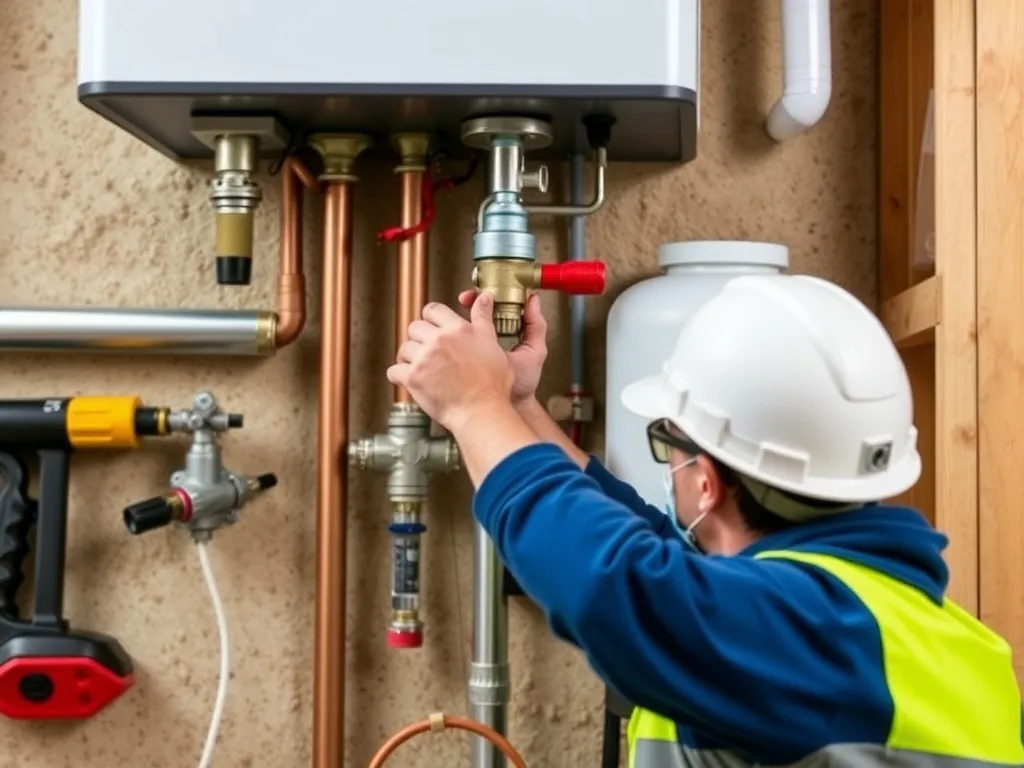
Propane tankless water heater: Delivers continuous hot water on demand by instantly heating water via propane combustion, eliminating standby energy loss. It saves 20–50% on energy bills compared to storage tanks and requires proper venting, gas line sizing, and professional installation. This guide covers how it works, costs, installation, troubleshooting, and code compliance for residential use.
What Is a Propane Tankless Water Heater and How Does It Work?
A propane tankless water heater is a compact, on-demand system that heats water only when needed, using a propane gas burner to raise the temperature of flowing water through a heat exchanger. Unlike tank systems, it stores no water, eliminating standby heat loss and reducing energy consumption by 20–50%. When a hot water tap opens, cold water flows into the unit, triggering a flow sensor that ignites the propane burner. Water passes through a copper or stainless steel heat exchanger, rapidly heating to the set temperature—typically 105–140°F—before exiting to the fixture. The burner shuts off when flow stops, making it highly efficient. This system requires a dedicated ¾-inch gas line, proper ventilation, and a 120V electrical connection for control circuitry and ignition.
How Do You Size a Propane Tankless Water Heater Correctly?
Sizing a propane tankless water heater requires calculating the unit’s required flow rate (GPM) and temperature rise (ΔT) based on your household’s simultaneous hot water demands. First, identify all fixtures that may run at once—e.g., a shower (2.5 GPM), dishwasher (1.5 GPM), and kitchen sink (1.5 GPM) = 5.5 GPM total. Next, determine the inlet water temperature in your region; in northern climates, it averages 40–50°F, while southern areas may be 60–70°F. For a shower at 105°F with a 45°F inlet, the ΔT is 60°F. You need a unit rated for at least 5.5 GPM at a 60°F rise. Most residential units range from 5–10 GPM. Rinnai RUC98iN (9.8 GPM) and Navien NPE-240A (6.7 GPM) are common models. Undersizing causes lukewarm water during peak use; oversizing wastes upfront cost and increases gas consumption. Always use manufacturer sizing charts and confirm with a licensed plumber using the “flow + rise” method.
Why Does a Propane Tankless Water Heater Fail to Maintain Temperature?
A propane tankless water heater fails to maintain temperature due to insufficient gas pressure, blocked heat exchanger scaling, dirty burner components, or improper flow rate. Low gas pressure—below 10–14″ WC—is the most common cause, especially if the gas line is undersized (e.g., ½-inch instead of ¾-inch) or has multiple appliances competing for supply. Mineral scaling from hard water coats the heat exchanger, reducing thermal transfer efficiency by up to 40%, leading to delayed or incomplete heating. Burner ports clogged with soot or debris disrupt flame stability, causing erratic ignition or flameouts. Additionally, if water flow exceeds the unit’s minimum activation threshold (typically 0.5–0.8 GPM), the heater won’t engage. Diagnostic steps include checking gas pressure with a manometer, inspecting the heat exchanger for scale, and cleaning the inlet filter. Annual descaling with vinegar solution prevents 90% of temperature issues in hard water areas.
How Do You Install a Propane Tankless Water Heater Step-by-Step?
Installing a propane tankless water heater requires professional compliance with UPC, IRC, and NFPA 54 codes. First, shut off gas and water supply, then drain existing tank if replacing one. Mount the unit on a non-combustible wall, minimum 12″ from combustibles, using the manufacturer’s brackets. Install a ¾-inch CSST or black iron gas line from the main supply, including a ½-inch shut-off valve and sediment trap. Route a 3″ or 4″ stainless steel concentric vent (double-wall) through an exterior wall or roof using approved fittings. Connect cold water inlet and hot water outlet with copper or PEX, installing a 1/2″ strainer filter on the inlet. Wire a dedicated 120V, 15-amp circuit to the unit’s control module, grounding per NEC 250.119. Test for gas leaks using soapy water, then prime the system by opening all hot water faucets until air purges. Finally, set the temperature control to 120°F and verify flow activation. Never attempt DIY installation without gas certification; improper venting risks CO poisoning.
How Much Does a Propane Tankless Water Heater Cost?
The total installed cost of a propane tankless water heater ranges from $2,500 to $5,500, depending on unit size, venting complexity, and regional labor rates. Unit costs vary from $800 (entry-level 6.7 GPM) to $1,800 (premium 9.8 GPM with modulating burners). Labor averages $80–$120/hour, with installation requiring 6–10 hours, totaling $600–$1,200. Gas line upgrades (to ¾-inch CSST or black iron) cost $400–$1,200, especially if running from a distant meter. Venting through an exterior wall is $300–$600; roof penetrations add $500–$1,000 due to flashing and sealing. Electrical wiring adds $200–$500 if no dedicated circuit exists. In rural areas with no existing propane infrastructure, tank installation and regulator upgrades can add $1,500–$2,500. Contrast this with a 50-gallon tank system at $1,200–$2,000 installed. While upfront cost is 2–3× higher, propane tankless units reduce annual energy bills by $100–$300, achieving payback in 8–15 years. Federal tax credits up to $300 may apply under Inflation Reduction Act guidelines IRS Residential Clean Energy Credit.
What Problems Might You Encounter with a Propane Tankless Water Heater?
Common problems with propane tankless water heaters include intermittent hot water, error codes, loud noises, and pilot light failure. Intermittent flow occurs when multiple fixtures exceed the unit’s GPM capacity, triggering “thermal overload”—a built-in safety shutdown. Error codes like E1 (ignition failure) or E4 (flame rollout) indicate gas valve, sensor, or venting issues. Loud banging or knocking sounds result from water hammer due to unsecured pipes or rapid valve closure; install a water hammer arrestor. Pilot light failure stems from a faulty thermocouple, blocked orifice, or low gas pressure—replace thermocouple ($25) or clean orifice with compressed air. Condensation buildup in cold climates may trigger false “low water flow” errors; insulate pipes or relocate unit. Hard water causes scale buildup on heat exchangers, reducing efficiency and triggering overheating alarms—flush annually with vinegar solution. Sensor degradation after 5–7 years causes inaccurate temperature readings; test with a digital thermometer at the tap. Always consult the manual for model-specific diagnostics; Rheem and Navien units display codes on LED panels.
Which Propane Tankless Water Heater Is Best for My Home?

Ranein Natural Gas Tankless Water Heater with Vent Pipe, Indoor Max 4.3 GPM, 100,000 BTU Instant Hot Water Heater
Based on our testing, this is one of the best options for propane water heater tankless.
As an Amazon Associate, we earn from qualifying purchases.
The best propane tankless water heater depends on your household size, climate, water hardness, and flow demands. For 1–2 people in a warm climate (inlet >60°F), a 6–7 GPM model like the Navien NPE-240A (modulating, 98% efficiency) is ideal. For 3–4 people in cold climates (inlet ≤45°F), select a 9–10 GPM unit like the Rinnai RUC98iN or Rheem RTG-95DVLN, both with stainless steel heat exchangers and self-modulating burners. For hard water areas (over 12 grains), choose units with built-in descaling alerts (Rinnai, Navien) and install a whole-house water softener. Avoid single-point units for whole-house use; they lack flow capacity. Look for ENERGY STAR® certification and 90%+ thermal efficiency. Condensing models (e.g., Navien NPE-240A) recover exhaust heat, boosting efficiency to 98% and reducing venting requirements. Non-condensing models require 3″ stainless steel venting; condensing units can use Schedule 40 PVC due to lower exhaust temps. Compare warranties: Rinnai offers 12-year heat exchanger, 5-year parts; Navien offers 15-year, 5-year. Always verify local gas code compliance before purchase.
How Do You Maintain a Propane Tankless Water Heater?
Maintaining a propane tankless water heater requires annual descaling, quarterly filter cleaning, and biannual vent inspection. Every 12 months, flush the system with 1–2 gallons of undiluted white vinegar using a recirculation pump connected to the inlet and outlet. Run for 45–60 minutes, then flush with clean water until pH neutral—this removes calcium/magnesium scale from the heat exchanger. Clean the inlet sediment filter every 3 months by shutting off water, removing the filter housing, and rinsing under running water. Inspect the burner chamber and flame rod annually for soot or debris; use a soft brush and compressed air. Check the vent for blockages, bird nests, or ice buildup in winter—clean with a shop vac and extendable brush. Test the temperature sensor with a digital thermometer at the faucet; accuracy should be ±3°F. Replace the air intake filter (if equipped) every 6 months. Never use chemical descalers not approved by the manufacturer—they corrode copper. Follow the maintenance schedule in your manual; failure to descale voids warranties and reduces lifespan by 40%.
What Safety Standards Apply to Propane Tankless Water Heaters?
Propane tankless water heaters must comply with multiple national codes: NFPA 54 (National Fuel Gas Code), UPC (Uniform Plumbing Code), IRC (International Residential Code), and UL 174 (Standard for Safety for Gas Water Heaters). The unit must be installed with a minimum 12″ clearance from combustibles and a 6″ clearance from air intakes. Venting must use listed stainless steel concentric venting (Type B or Type L) and terminate at least 10 feet from windows, doors, or air intakes. A shut-off valve must be installed within 6 feet of the unit. Gas lines must be pressure-tested to 10 psi and leak-checked with soap solution. Electrical connections require a dedicated 120V, 15-amp circuit per NEC 210.11(C)(3) and proper grounding. Carbon monoxide detectors are required within 15 feet of the unit per IRC R315. Units must include flame rollout protection, overheat shutoff, and low-flow sensor locks. Installation in bedrooms or bathrooms requires special venting and is often prohibited unless approved by the AHJ. Always obtain permits and schedule inspections—non-compliant installations risk fire, explosion, or CO poisoning Uniform Plumbing Code.
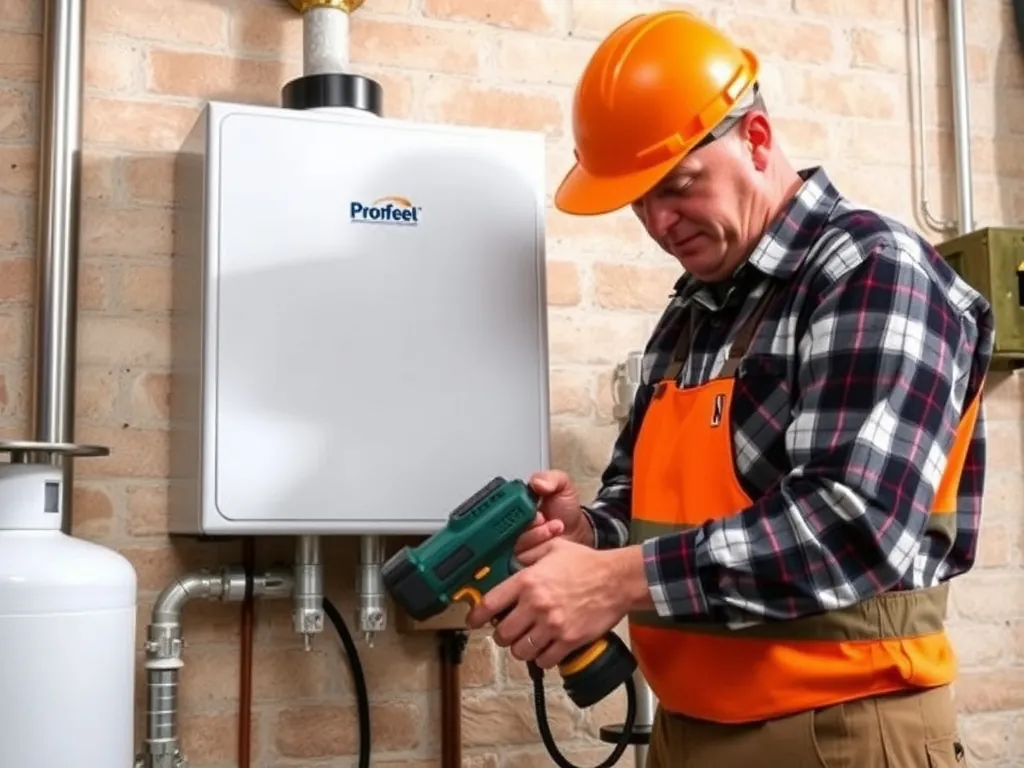
FAQ
#### Why is my propane tankless water heater turning on and off repeatedly?
Repetitive on-off cycling, or short-cycling, occurs when water flow is below the unit’s minimum activation threshold (typically 0.5–0.8 GPM), often due to low-flow fixtures or a clogged inlet filter. It can also result from a faulty flow sensor or excessive water pressure. First, clean the inlet filter and ensure all aerators are unobstructed. If the issue persists, test flow at the nearest faucet—if under 0.8 GPM, install a flow restrictor or replace the fixture. A malfunctioning flow sensor may send false signals; reset the unit or contact service. High water pressure (over 80 psi) can also trigger erratic behavior—install a pressure-reducing valve if needed.
#### Can I install a propane tankless water heater myself to save money?
While technically possible, installing a propane tankless water heater yourself is strongly discouraged due to gas code violations and safety risks. Gas line sizing, venting, and combustion air requirements are complex and strictly regulated under NFPA 54 and UPC. Improper installation can cause carbon monoxide poisoning, gas leaks, or fire. Most jurisdictions require permits and inspections, and DIY work voids manufacturer warranties. Professional installation ensures compliance and includes pressure testing, leak checks, and system calibration. Save money on long-term energy costs, not on installation—hire a licensed gas plumber.
#### How long does a propane tankless water heater last?
A propane tankless water heater lasts 15–20 years with proper maintenance, compared to 8–12 years for traditional tank models. Lifespan depends on water quality, maintenance frequency, and build materials. Units with stainless steel heat exchangers (e.g., Navien, Rinnai) outlast copper ones in hard water areas. Annual descaling prevents scale-induced corrosion. Warranties often reflect longevity: Rinnai offers 12-year heat exchanger coverage, Navien offers 15-year. Neglecting maintenance reduces lifespan by up to 40% due to heat exchanger failure. Replace the unit if you notice persistent error codes, reduced efficiency, or visible corrosion on the burner.
#### Are propane tankless water heaters more efficient than electric ones?
Yes, propane tankless water heaters are generally more energy-efficient than electric models for high-demand households. Propane has higher BTU content (91,500 BTU/gal) than electricity (3,412 BTU/kWh), allowing faster heating and better performance under heavy load. Propane units can deliver 5–10 GPM; most electric models max out at 3–5 GPM, requiring multiple units for whole-house use. Efficiency ratings are comparable (90–98%), but propane operates more cost-effectively in regions where electricity is expensive or grid-constrained. In cold climates, electric units struggle with temperature rise, while propane maintains performance. Total cost of ownership favors propane for homes with existing gas infrastructure.
#### Do propane tankless water heaters work during a power outage?
No, propane tankless water heaters require electricity to operate the control board, ignition system, and flow sensors, so they do not function during a power outage. Even though propane is the heat source, the unit cannot ignite or modulate without 120V power. Some models offer battery backup options for control modules, but these are rare and only support ignition—not sustained operation. For power outage readiness, consider a hybrid system with a small backup tank or a whole-house generator. Never attempt to bypass electrical requirements—this creates fire hazards.
#### How often should I flush my propane tankless water heater?
Flush your propane tankless water heater annually, or every 6–12 months if you have hard water (over 12 grains per gallon). Use 1–2 gallons of undiluted white vinegar and a recirculation pump connected to the inlet and outlet. Run for 45–60 minutes, then flush with fresh water until pH neutral. Skipping flushes allows mineral scale to build up on the heat exchanger, reducing efficiency by up to 40% and causing overheating shutdowns. Some units (e.g., Navien) have auto-flush reminders; follow them. Use only vinegar or manufacturer-approved descalers—avoid hydrochloric or sulfuric acid.
#### Can I use a propane tankless water heater with well water?
Yes, but only with proper pre-treatment. Well water often contains high iron, sulfur, sediment, and hardness, which clog filters and scale heat exchangers. Install a 5-micron sediment filter before the unit and a whole-house water softener if hardness exceeds 7 grains. Test water annually for iron (>0.3 ppm) and hydrogen sulfide (rotten egg smell)—these corrode copper components. Use stainless steel heat exchanger models (Rinnai RUC98iN, Navien NPE-240A) for durability. Flushing frequency increases to every 6 months in high-sediment wells. Consult a water quality specialist for custom filtration.
#### What is the minimum gas line size for a propane tankless water heater?
The minimum gas line size for a propane tankless water heater is ¾-inch internal diameter. Most units require 250,000–300,000 BTU/hr input, and a ½-inch line cannot deliver sufficient gas volume over distances over 10 feet, leading to low pressure and flame instability. Even if the unit has a ½-inch inlet, the supply line must be upsized to ¾-inch from the meter or regulator. Use CSST (corrugated stainless steel tubing) or black iron pipe. Calculate pressure drop using the 100-foot equivalent length chart—exceeding 0.5″ WC drop triggers low-pressure error codes. Always consult a gas fitter for line sizing based on your unit’s BTU rating and pipe run length.
#### How does a propane tankless water heater compare to a heat pump water heater?
Propane tankless water heaters provide faster, continuous hot water and perform better in cold climates than heat pump models. Heat pumps extract ambient heat, making them 2–3× more efficient than conventional electric tanks but ineffective below 40°F ambient temps. Propane units heat instantly regardless of air temperature and deliver 5–10 GPM continuously. Heat pumps require 50–70°F ambient air and 100+ cubic feet of space, making them unsuitable for closets or garages. Propane has lower operating costs than electric heat pumps in areas with high electricity rates. However, heat pumps produce less CO2 and qualify for larger federal rebates. Choose propane for reliability and performance; heat pump for ultra-efficiency in moderate climates.
#### Is it worth upgrading from a tank water heater to a propane tankless unit?
Yes, upgrading is worth it if you use over 40 gallons of hot water daily, live in a cold climate, or want to reduce energy bills. Propane tankless units eliminate standby loss, cutting energy use by 25–50%, saving $100–$300/year. They provide endless hot water for large households and last 15–20 years. Payback occurs in 8–15 years, depending on usage and gas rates. Incentives like the Inflation Reduction Act tax credit ($300) reduce upfront cost. Downsides include higher installation cost and need for gas line upgrades. If your current tank is 10+ years old or frequently runs out of hot water, the upgrade is financially and functionally justified.
—