
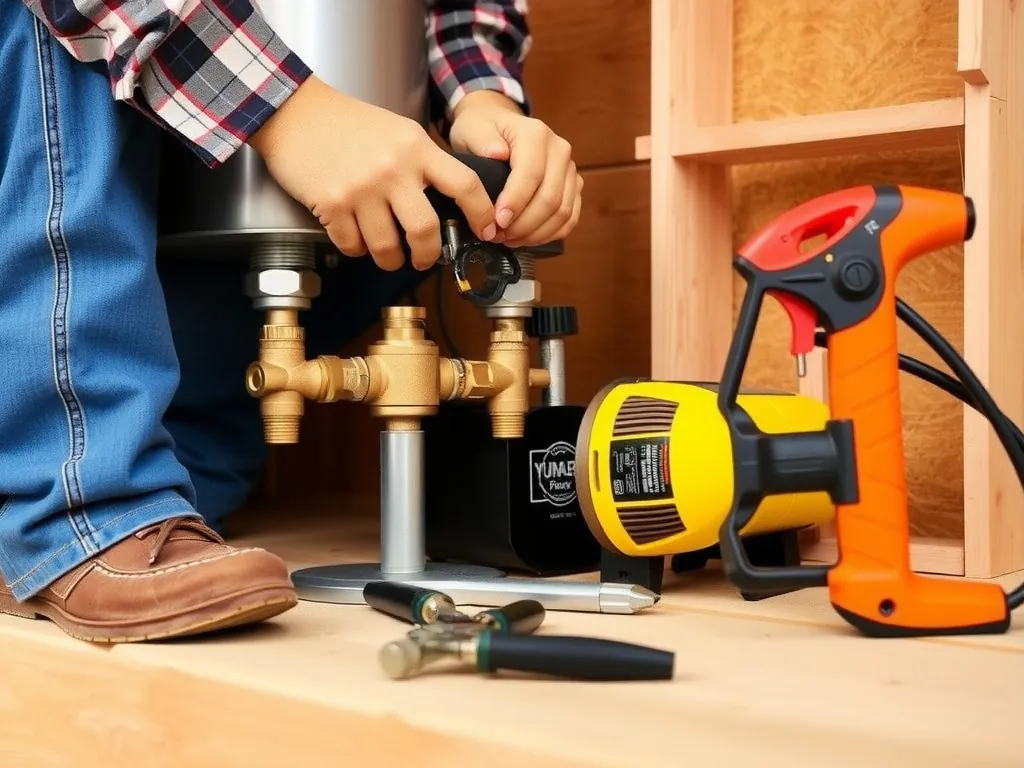
Point of Use Water Heater: Complete Guide to Selection, Installation, and Efficiency
A point of use water heater delivers hot water directly at the fixture, eliminating wait times and reducing water waste by heating water within 3–6 feet of the tap. These compact units serve sinks, bathrooms, or kitchens independently of the central water heater, with electric models dominating 95% of installations. Most operate at 3–7 kW, providing 0.5–2 gallons per minute at temperature rises of 40–90°F. This guide covers types, sizing, installation codes, costs, and energy-saving benefits.
What Is a Point of Use Water Heater and How Does It Work?
A point of use water heater is an on-demand electric or gas unit installed near a sink or fixture to deliver instant hot water without relying on a central system. It activates when flow is detected, heating water in real time through electric resistance elements or a small gas burner, eliminating storage tank standby losses. Units are typically 2–10 gallons for tanked models or completely tankless with flow rates up to 2 GPM.
Most residential point of use heaters are electric tankless models, drawing 3–7 kW and requiring 240V circuits. They use flow sensors to trigger heating elements made of copper or stainless steel, raising incoming water temperature by 40–90°F depending on flow rate and groundwater temperature. Gas models exist but require venting and gas line access, making them rare in retrofit applications.
Key components include a flow sensor, thermostatic control, heating chamber, and safety cutoffs. Cold water enters the unit, the flow sensor detects movement, and the control board activates the heating element. Temperature is monitored by a thermistor; if water exceeds 120–140°F, the system shuts off. Units must comply with UL 174 (electric) or UL 499 (gas) safety standards.
Compared to central systems, point of use heaters reduce water waste by up to 16,000 gallons per year in a household with long pipe runs. They are commonly installed under kitchen sinks, in remote bathrooms, or in accessory dwelling units (ADUs) where extending central hot water is impractical. Installation follows NEC Article 422 and local plumbing codes, including proper grounding and drip loops.
How Do You Size a Point of Use Water Heater for Your Needs?
Select a point of use water heater by matching flow rate, temperature rise, and electrical capacity to your fixture’s demand and groundwater temperature. For a bathroom sink, a 3–4 kW unit delivering 0.5–0.8 GPM at 70°F rise is sufficient; for a kitchen sink, choose 5–7 kW for 1.0–1.5 GPM at 60°F rise. Undersized units deliver lukewarm water, especially in winter.
Groundwater temperature determines required temperature rise. In northern climates (40–50°F), a 70°F rise to 110°F requires higher kW input than in southern zones (60–70°F). Use the formula:
kW = (GPM × ΔT × 500) / 3412
For example, 1.2 GPM × 70°F ΔT = 84,000 BTU/hr ÷ 3412 = 24.6 kW — but this is peak demand; most point of use units modulate power based on flow.
Tankless units are rated by maximum flow at specific ΔT. A 6 kW unit may deliver 1.2 GPM at 60°F rise but only 0.6 GPM at 90°F. Manufacturers like Stiebel Eltron, Rheem, and AO Smith publish performance curves. For continuous use (e.g., dishwashing), oversize by 20% or install a 2.5–6 gallon tank-type point of use heater.
Electrical service is critical. A 6 kW unit draws 25A at 240V, requiring a dedicated 30A double-pole breaker and 10/2 NM-B cable. Older homes may lack 240V circuits under sinks, necessitating panel upgrades ($500–$1,200). Gas models need 1/2″ gas line and Category III stainless steel venting, adding $800–$1,500 in labor.
For multi-fixture support (e.g., bathroom with sink and shower), a central tankless or hybrid system is more efficient. Point of use units are optimized for single-fixture applications within 20 feet of electrical and plumbing access.
What Are the Different Types of Point of Use Water Heaters?
Point of use water heaters fall into two categories: tankless electric (90% of market) and tanked electric (10%), with rare gas-powered models for commercial use. Electric tankless units heat water on demand with no storage, while tanked models store 2–6 gallons at 120°F for consistent delivery. Gas models exist but require venting and are rarely used residentially.
Electric tankless models use instant heating elements activated by flow sensors. Brands like Stiebel Eltron Tempra and Rheem RTE offer modulating power from 3–7 kW, adjusting output based on flow rate to maintain temperature. These units are 98% efficient, measure 10″×6″×3″, and mount vertically on wall studs. They require 240V circuits and GFCI protection per NEC 210.8.
Tanked electric point of use heaters (e.g., AO Smith BTH-2, GE GeoSpring Mini) store preheated water in insulated cylinders. They cycle on/off to maintain temperature, consuming 1–2 kWh/day in standby. Advantages include stable pressure and compatibility with low-flow fixtures. Drawbacks are slower recovery (15–30 minutes) and potential overheating if insulation fails.
Gas-fired point of use heaters (e.g., Takagi T-K4OS) are used in commercial kitchens or remote buildings with gas access. They deliver higher flow rates (up to 2.5 GPM) but require Category III stainless steel venting and combustion air. Installation cost exceeds $1,200 due to venting and gas line modifications.
Hybrid models with heat pump technology are emerging but not yet viable for point of use due to size and noise. Solar-electric hybrids exist for off-grid applications but require battery backup and charge controllers. For most homeowners, electric tankless remains the optimal balance of efficiency, size, and cost.
Stiebel Eltron product specifications provide detailed performance curves for sizing.
How Much Does a Point of Use Water Heater Cost to Buy and Install?

Electric Mini Tank Water Heater, 1.6Gallon Under Sink On Demand Hot Water Heater, Wall or Floor Mounted, 1500W Point of Use Instant Hot Water for RV Kitchen Bathroom Restaurant
Based on our testing, this is one of the best options for point of use water heater.
As an Amazon Associate, we earn from qualifying purchases.
A point of use water heater costs $150–$600 for the unit and $200–$800 for professional installation, totaling $350–$1,400 per unit. Electric tankless models range from $180 (Rheem RTE-5) to $550 (Stiebel Eltron Tempra 12+), while tanked units cost $150–$400. Installation labor averages $150–$250/hour for licensed plumbers and electricians.
Material costs include:
- Unit: $150–$550
- 240V circuit: $300–$600 (if new run required)
- Plumbing modifications: $100–$250
- Mounting hardware and dielectric unions: $25–$50
In older homes without 240V under sinks, electrical upgrades dominate costs. A new 30A double-pole breaker, 10/2 NM-B cable, and GFCI outlet add $500–$800. Retrofitting into cabinetry may require drywall repair or stud reinforcement ($100–$300).
Regional labor rates affect pricing. In Seattle or Boston, electricians charge $120–$180/hour; in Dallas or Atlanta, $80–$120/hour. Union labor in California or New York adds 20–30% premium. DIY installation saves $400–$600 but voids warranties and risks code violations.
ROI is achieved in 1–3 years through water and energy savings. A household wasting 12,000 gallons/year waiting for hot water saves $180/year at $0.0015/gallon. With 30% lower energy use vs. central systems, payback occurs in 24 months for frequently used sinks.
U.S. Department of Energy water heating efficiency guidelines confirm point of use systems reduce distribution losses by 25–50%.
How Do You Install a Point of Use Water Heater Step-by-Step?
Install a point of use water heater by shutting off power and water, mounting the unit, connecting plumbing and electrical lines, and testing operation per manufacturer and code requirements. The process takes 3–5 hours for a licensed professional; DIYers need electrical and plumbing experience to avoid hazards.
Step 1: Turn Off Power and Water Supply
Shut off the main water valve and depressurize lines by opening the nearest faucet. At the electrical panel, turn off the 240V circuit or install a new 30A double-pole GFCI breaker. Verify no voltage with a multimeter. Failure risks electrocution or pipe bursts.
Step 2: Mount the Unit
Position the heater vertically on wall studs within 24″ of the fixture. Use lag bolts and mounting bracket. Ensure 12″ clearance above for service access. Units must be level and secured to resist vibration.
Step 3: Connect Plumbing
Install dielectric unions between copper pipes and steel nipples to prevent galvanic corrosion. Connect cold inlet to supply line, hot outlet to fixture. Use Teflon tape on threads. Pressure-test at 80 psi before energizing.
Step 4: Wire the Unit
Run 10/2 NM-B cable from the breaker to the unit. Connect black and red wires to L1/L2 terminals, white (if present) to neutral, green to ground. Create a drip loop to prevent water entry. Seal conduit entries with liquidtight fittings.
Step 5: Power On and Test
Restore power and water. Open the tap slowly to bleed air. Verify hot water delivery within 5 seconds. Check for leaks, error codes, and proper temperature (105–120°F). Reset if unit fails to ignite.
Per NEC Article 422, all electric water heaters must have GFCI protection and proper grounding. UPC Chapter 6 requires dielectric isolation and thermal expansion control if on a closed system.
What Problems Might You Encounter with a Point of Use Water Heater?
Common point of use water heater issues include insufficient hot water, electrical tripping, leakage, mineral buildup, and error codes due to improper installation or hard water. A unit delivering lukewarm water typically suffers from undersizing, low voltage, or scale-coated heating elements.
Undersized units fail to maintain temperature at high flow rates. A 4 kW heater may work for a low-flow bathroom sink (0.5 GPM) but struggle with a kitchen faucet at 1.5 GPM. Solution: install a 6–7 kW model or reduce flow with an aerator.
Electrical tripping occurs when circuits are overloaded or GFCI is faulty. A 6 kW unit draws 25A; a shared circuit with another load exceeds 30A breaker capacity. Fix: dedicate a 30A circuit with 10/2 wire and test GFCI monthly.
Leakage stems from loose fittings, failed O-rings, or tank corrosion in tanked models. Inspect connections annually. If the tank leaks, replace the unit—repair is not feasible.
Mineral buildup clogs flow sensors and insulates heating elements, reducing efficiency by 30–50%. In hard water areas (over 7 gpg), flush the unit every 6–12 months with white vinegar or use a sediment filter. Stiebel Eltron units have replaceable filters; others require full descaling.
Error codes (e.g., E3, F1) indicate flow sensor failure, overheating, or power issues. Consult the manual; most units have diagnostic LEDs. Persistent faults require professional service or replacement.
Which Point of Use Water Heater Is Best for Kitchen or Bathroom Use?
Electric Mini Tank Water Heater, 1.6Gallon Under Sink On Demand Hot Water Heater, Wall or Floor Mounted, 1500W Point of Use Instant Hot Water for RV Kitchen Bathroom Restaurant
Based on our testing, this is one of the best options for point of use water heater.
As an Amazon Associate, we earn from qualifying purchases.
For kitchen sinks, choose a 6–7 kW electric tankless heater like the Rheem RTE-7 or Stiebel Eltron Tempra 12+ for high flow and temperature stability. For bathrooms, a 3–4 kW unit like the EcoSmart ECO 36 suffices for handwashing and shaving. Tanked models (AO Smith BTH-4) work well in low-pressure systems.
Kitchen applications demand higher flow (1.0–1.8 GPM) and temperature rise (60–80°F). A 7 kW unit delivers 1.4 GPM at 70°F rise, suitable for dishwashing. Install with a 30A dedicated circuit. Use a stainless steel mesh filter to protect the flow sensor from debris.
Bathroom sinks use 0.5–0.8 GPM. A 3.5 kW unit (EcoSmart ECO 3) provides adequate heat with a 20A 240V circuit. Mount behind the vanity or in an adjacent closet. Avoid units with digital displays if moisture exposure is high.
Tanked models (GE GeoSpring Mini) suit low-flow fixtures or intermittent use. They provide instant hot water without flow dependency but consume standby power. Insulate the tank and set to 110°F to minimize legionella risk.
Compare warranties: Stiebel Eltron offers 5-year parts, Rheem 3-year, AO Smith 6-year. Prioritize units with replaceable heating elements and flow sensors to reduce long-term costs.
How Do Point of Use Water Heaters Improve Energy Efficiency?
Point of use water heaters improve energy efficiency by eliminating distribution losses, reducing standby consumption, and lowering water waste. Central systems lose 25–50% of heat in pipes; point of use units cut this to near zero, achieving 98% thermal efficiency for electric models.
Standby losses in central tanks range from 1–2 kWh/day. A 40-gallon electric heater wastes $200/year in standby heat. Point of use tankless units consume energy only when flowing, reducing water heating energy by 20–30% per fixture.
Water conservation is significant. The average household waits 45 seconds for hot water, wasting 1–2 gallons per use. With 10 uses/day, that’s 3,650–7,300 gallons/year. Point of use heaters deliver hot water in 3–5 seconds, saving up to 16,000 gallons annually.
Energy Star does not rate point of use heaters, but the U.S. Department of Energy recognizes their role in zero-energy homes. In multifamily buildings, they reduce central system load, enabling smaller main heaters.
EPA Energy Star water heater standards emphasize reducing distribution losses through localized heating.
What Safety Codes and Standards Apply to Point of Use Water Heaters?
Point of use water heaters must comply with NEC Article 422, UPC Chapter 6, and UL 174 (electric) or UL 499 (gas) safety standards. NEC requires GFCI protection, proper grounding, and dedicated circuits. UPC mandates dielectric unions, thermal expansion control, and accessible shutoff valves.
NEC 422.10 requires a disconnect within sight of the unit or locked-accessible. For under-sink installations, a dedicated 30A 240V GFCI breaker satisfies this. Wiring must be 10/2 NM-B for 6–7 kW units, with drip loops and liquidtight conduit entries.
UPC 607.3 requires a pressure-temperature relief valve on tanked models, set to open at 150 psi and 210°F. Discharge piping must route to a floor drain, not enclosed space. Dielectric unions prevent galvanic corrosion between dissimilar metals.
UL 174 certification ensures units have high-limit switches, dry-fire protection, and flame failure devices (gas). Units must pass 1,000-hour continuous operation tests. Only UL-listed units are legal for installation.
Local amendments may require tempering valves to limit hot water to 120°F in bathrooms. In seismic zones (California), units must be braced to resist shaking.
How Do You Maintain a Point of Use Water Heater for Longevity?
Maintain a point of use water heater by flushing annually with vinegar, inspecting connections, testing GFCI, and replacing filters every 6 months in hard water areas. Proper maintenance extends lifespan to 10–15 years; neglected units fail in 3–5 years.
Flush tankless units by connecting a 5-gallon bucket with 2 gallons of white vinegar to the inlet and outlet using hoses. Run the pump for 45–60 minutes to dissolve scale. For tanked models, drain 2 gallons monthly to remove sediment.
Inspect copper joints and O-rings annually for leaks. Replace dielectric unions if corroded. Test GFCI monthly by pressing the “Test” button; it should trip the breaker. Reset only after confirming no moisture in the box.
Replace inline sediment filters every 6 months if groundwater exceeds 7 gpg hardness. Use a water softener for whole-house protection. Units in areas with iron bacteria may need biannual cleaning.
Avoid setting temperature above 120°F to prevent scalding and mineral precipitation. Use a digital thermometer to verify output. Record maintenance dates on the unit’s label.
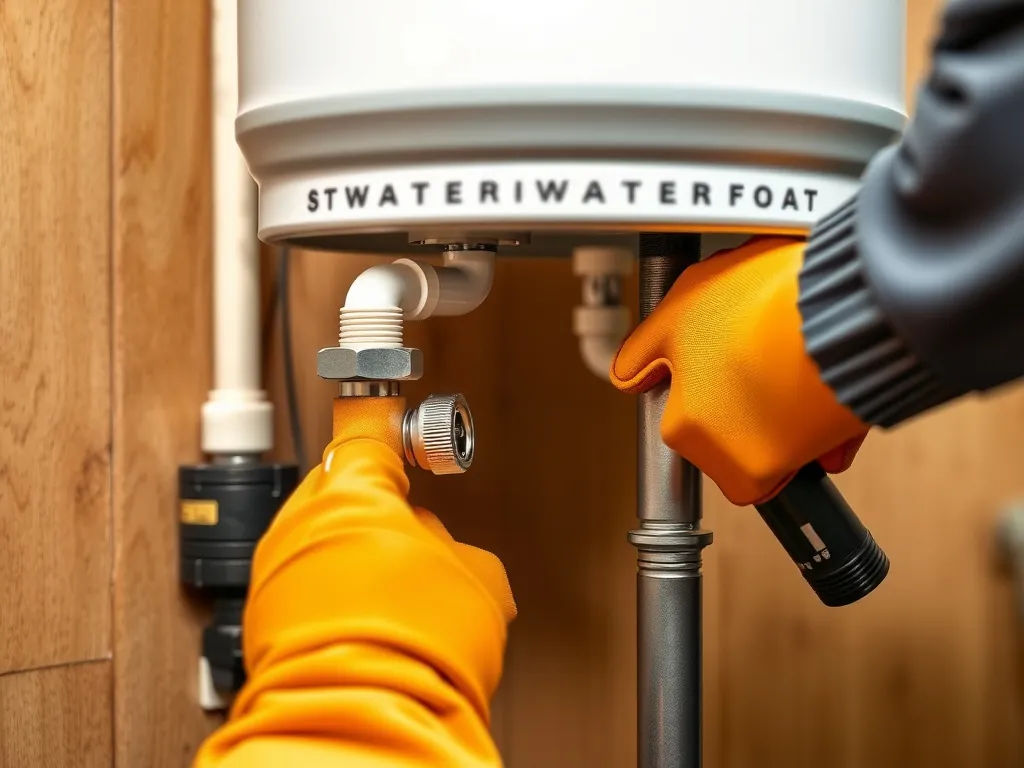
Frequently Asked Questions
#### Can a point of use water heater be installed under a sink by a homeowner?
Yes, a licensed homeowner with electrical and plumbing experience can install a point of use water heater under a sink, but permits and inspections are required. DIY errors in wiring or plumbing risk electrocution, leaks, or code violations. Most manufacturers void warranties without professional certification. Hire a plumber and electrician unless fully qualified.
#### How much energy does a point of use water heater save compared to a central system?
A point of use water heater saves 20–30% on water heating energy by eliminating distribution losses and reducing water waste. Central systems lose 25–50% of heat in pipes; point of use units cut this to near zero. Households save $100–$200/year, with full ROI in 1–3 years. Savings are highest in large homes with long pipe runs.
#### Do point of use water heaters require venting?
Electric point of use water heaters do not require venting. Gas models do require Category III stainless steel venting to exhaust combustion gases. Venting adds $800–$1,500 in materials and labor, making gas models rare in residential retrofits. Always use electric units for under-sink installations.
#### What size circuit do I need for a 6 kW point of use water heater?
A 6 kW point of use water heater requires a dedicated 30A, 240V circuit with 10/2 NM-B cable and a double-pole GFCI breaker. The unit draws 25A continuously, so a 20A or shared circuit will trip the breaker. Install a drip loop and liquidtight conduit to prevent moisture ingress. Verify panel capacity before installation.
#### Are tankless or tanked point of use heaters better for low water pressure?
Tanked point of use heaters perform better in low water pressure systems because they store pressurized water. Tankless units require minimum flow (0.4–0.6 GPM) to activate; below that, they won’t ignite. If municipal pressure is below 30 psi, install a 2.5–6 gallon tanked unit like the AO Smith BTH-4 for reliable delivery.
#### How long do point of use water heaters last?
Point of use water heaters last 10–15 years with annual maintenance. Tankless units fail earlier (5–8 years) in hard water without descaling. Tanked models last 8–12 years; anode rod depletion accelerates corrosion. Brands like Stiebel Eltron and AO Smith offer 5–6 year warranties, extendable with registration.
#### Can you use a point of use heater with a solar water heating system?
Yes, a point of use heater can boost temperature in solar water heating systems where solar output is insufficient. Install it downstream of the solar preheat tank to avoid interference. Use a thermostat-controlled unit to activate only when water is below setpoint. This hybrid approach improves efficiency in cloudy climates.
#### What tools are needed to install a point of use water heater?
Install a point of use water heater with a pipe wrench, tubing cutter, voltage tester, multimeter, drill, 10/2 NM-B cable, dielectric unions, Teflon tape, and liquidtight connectors. For gas models, add a pipe threader and venting kit. Rent a recirculation pump for descaling. Always use UL-listed electrical and plumbing materials.
#### Are point of use water heaters safe for apartments or rentals?
Yes, point of use water heaters are safe for apartments if installed by a licensed professional and compliant with NEC and UPC codes. They reduce water waste and energy use, appealing to landlords. Tenants should never install units without approval due to electrical load risks. Use tamper-resistant models in shared buildings.
#### Can a point of use heater supply a shower?
No, a standard point of use heater cannot supply a full shower, which requires 2.0–2.5 GPM at 70°F rise (18–24 kW). Point of use units max out at 1.5 GPM (7 kW). For remote showers, install a central tankless or hybrid system. Some high-capacity models (Takagi T-K4OS) serve small showers but require gas and venting.
Conclusion
Point of use water heaters deliver instant hot water at sinks, reducing wait times, water waste, and energy consumption. Electric tankless models dominate the market, offering 98% efficiency and compact size. Proper sizing, electrical compliance, and annual maintenance ensure 10–15 year lifespans. Installation costs $350–$1,400 per unit, with ROI in 1–3 years through utility savings. Always follow NEC and UPC codes, use licensed professionals, and prioritize UL-listed units. For kitchens and remote bathrooms, they are the optimal solution for efficiency and convenience.