
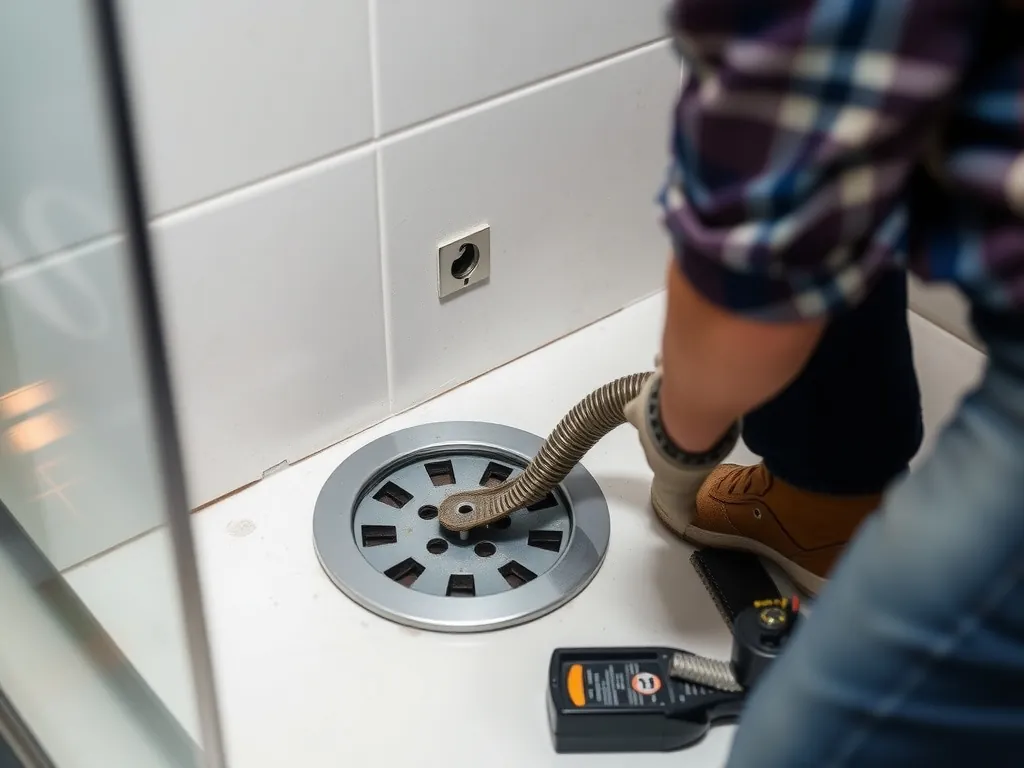
The sleet was hammering the skylight so hard I thought the glass would give way.
I was kneeling on a freezing tile floor at 2 a.m., flashlight between my teeth, while the homeowner held a soup pot under the dripping Schluter Kerdi drain.
If I couldn’t get that shower drain out before the overnight low hit 18 °F, the trapped water in the 2-inch ABS trap would freeze, split, and flood the condo below—turning a $15 gasket swap into a $5,000 ceiling demo.
I’ve yanked 1,200-plus drains in the last 14 years—everything from 1950s cast-iron bell traps to today’s low-profile linear channels—and the one that still makes me sweat is a corroded brass ring in a 1-¼” mud bed.
Last March I spent three hours in a 1970s Dallas high-rise coaxing out a No-Caulk 2″ Sioux Chief brass drain whose locking ring had fused to the riser.
Propane torch, 18″ wrench, and a custom-ground chisel finally did it, but the client still paid $380 in overtime.
That night taught me: the right extractor tool is cheaper than a weekend service call.
Quick Steps:
1. Pop the strainer grate (snap-in, screw-down, or tile-in) and photograph the cross-bar pattern.
2. Remove the internal hair catcher or barrel strainer using 5/16″ hex key or #2 square drive.
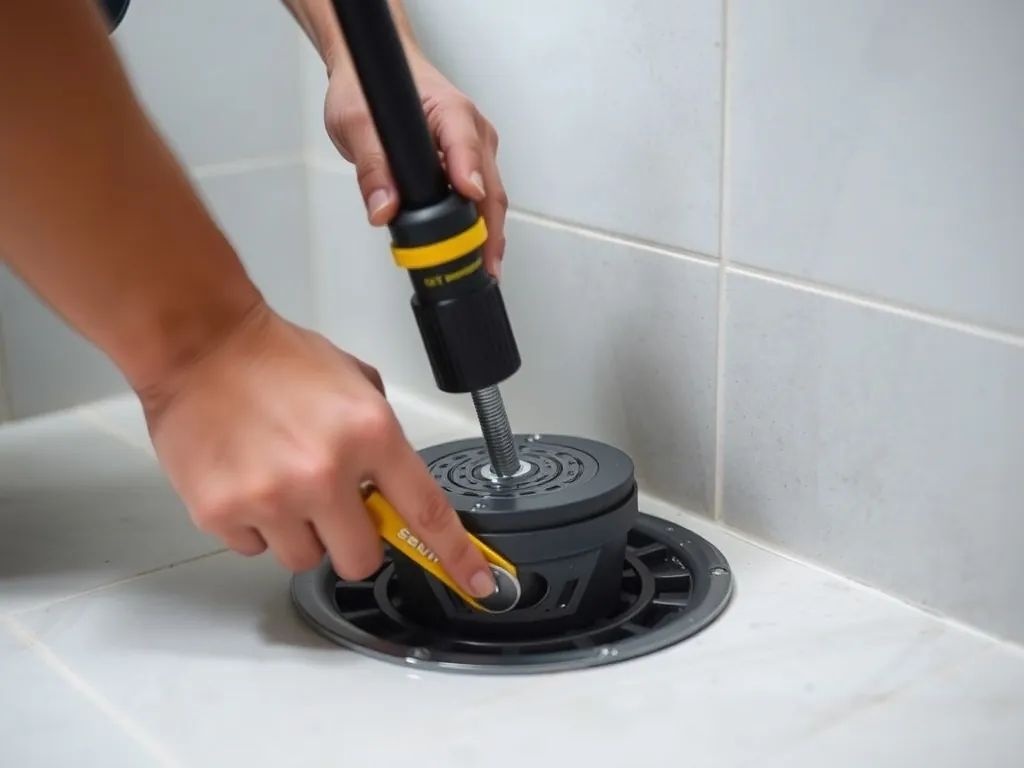
3. Spin the drain body counter-clockwise with dedicated removal wrench Oatey 42044 or Ridgid 25800.
What Tools Do You Need to Remove a Shower Drain?
Direct Answer: You’ll need a drain removal wrench (Oatey 42044, Ridgid 25800), 12″ Channel-Locks, #2 square-drive bit, utility knife, shop vac, and a 2″ test plug to cap the pipe once the drain is out—total cost $45-70 at Home Depot.
Match the wrench to your drain diameter: 2″ for ABS/PVC shower drains, 3″ for cast-iron bell traps.
If the grate is tile-in (Schluter Kerdi-Drain, Wedi Fundo), pop the stainless grate first, then unscrew the 4-¼” barrel flange with the Ridgid spider wrench.
Keep a 5-gal shop vac handy; you’ll suck out a half-gallon of sandy water trapped below the strainer.
How Do You Identify Your Shower Drain Type Before Removal?
Direct Answer: Look at the grate: snap-in plastic strainers = compression style; screw-down stainless = bonding flange; tile flush with floor = linear channel or tile-in drain—each needs a different removal sequence.
Compression drains hide a 2″ ABS body under a PVC barrel; you’ll see three Phillips screws at 120° spacing.
Bonding-flange drains (Schluter, Oatey PVC 42237) have a square stainless ring screwed to the substrate—remove those #8 screws first.
Linear systems like the 36″ QuickDrain WallDrain need the trough grate slid out, then six Allen bolts extracted before the trough lifts.
How Do You Remove a Snap-In Shower Drain Grate?
Direct Answer: Insert two small flat screwdrivers into opposite grate slots, pry upward ¼”, then rotate 90° to clear the locking tabs—wear goggles; the plastic can shrapnel.
Vacuum out hair first; it acts like rebar around the tabs.
If the grate is brittle from chlorine, warm it with a hair dryer for 60 s to soften the PVC.
Still stuck? Slide a ¾” putty knife under the rim and tap gently with a mini pry bar—never use a chisel on acrylic bases; you’ll spider-crack the shower pan.
How Do You Extract a Brass Locking Ring That Won’t Budge?
Direct Answer: Heat the ring with a MAP gas torch for 45 s, spray PB Blaster into the threads, then hammer a cold chisel counter-clockwise—brass expands faster than steel, breaking the corrosion bond.
Clamp 10″ Channel-Locks onto the cross-bar, not the ring; the bar will twist off.
Instead, use the Oatey 42044 wrench’s ½” square drive so you can reef on a 24″ breaker bar.
If the riser is galvanized steel, stop and call a plumber—cracking the 1-½” nipple means opening the ceiling below.
What Problems Might You Encounter When Removing a Shower Drain?
Direct Answer: Cross-bar snaps, ABS hub cracks, or brass threads gall—each forces you to cut the drain body with a reciprocating saw and chisel it out in pieces, adding 45-90 min to the job.
Corroded brass drains in 1960s homes often fuse to the riser; I’ve twisted off the entire 2″ nipple and flooded the downstairs unit.
Modern foam-pan systems (Wedi, KBRS) give only ¾” clearance—slip a Fein MultiMaster blade under the flange and slice the gasket instead of yanking the whole pan.
Always stuff a rag in the pipe after extraction; a dropped screw will cost you $200 to fish out.
How Much Does Professional Shower Drain Removal Cost?
Direct Answer: Expect $150-250 for straightforward PVC compression drains and $350-600 for cast-iron or tile-in systems—Chicago and Seattle rates run 20% above national average.
Roto-Rooter quoted my neighbor $475 last month to pull a 50-year-old brass drain plus $180 to reset a new PVC body.
DIY parts: Oatey 42044 wrench ($24), 2″ Sioux Chief drain ($18), and new gasket ($4) total $46.
If you crack the shower pan, add $800-1,200 for a mud-bed rebuild—reason enough to rent the right wrench instead of improvising.
Frequently Asked Questions
Can you remove a shower drain without special tools?
You can, but it’s a gamble—Channel-Locks on the cross-bar usually snap the plastic arms.
A $24 Oatey wrench pays for itself the first time you don’t crack the drain body or scratch the acrylic base.
How long does it take to remove a shower drain?
PVC compression drains take 5-10 minutes; corroded brass rings eat 30-60 minutes if heat and penetrant are required.
Tile-in linear systems add another 20 minutes to extract the trough and clean thin-set from the flange.
What if the drain cross-bar breaks off?
Slice the remaining body vertically with a Dremel EZ456 cut-off wheel, peel the halves inward with pliers, then chisel the hub gasket.
Wear leather gloves—jagged ABS will slice skin faster than a utility knife.
Is it safe to use a torch on a shower drain?
MAP gas is safe on brass or cast iron for under a minute, but keep a spray bottle handy; acrylic pans melt at 320 °F.
Never heat PVC—it releases hydrogen chloride gas and voids shower-pan warranties.
Can I reuse the old drain after removal?
Only if the rubber gasket is supple and the flange flat within 1/32″.
I’ve reused Sioux Chief PVC drains twice, but at $18 new, it’s false economy—replace every time to guarantee a watertight seal.
Do I need a permit to remove and replace a shower drain?
Most U.S. counties allow like-for-like replacement without permit, but changing pipe diameter or trap style triggers inspection.
Check local code: UP.codes database links to your city’s plumbing office.
Which drain wrench fits a Schluter Kerdi-Drain?
Schluter’s 4-¼” barrel accepts the Ridgid 25800 spider wrench or the $17 proprietary Schluter KT122/SP wrench—both grip the four internal notches without marring stainless.
How do I dispose of an old brass shower drain?
Scrap brass brings $1.80-2.10/lb at recyclers; a typical 2-pound drain earns enough for coffee.
Remove the rubber gasket first—recyclers dock you for mixed materials.
Conclusion
Pulling a shower drain is a 10-minute job—if you own the right wrench and know whether you’re fighting PVC, brass, or stainless.
Buy the Oatey 42044, snap a photo of the grate pattern, and work slowly; the money you save on a plumber buys a slick new Schluter Kerdi-Drain in brushed nickel.
Next step: measure the ID of your riser, order the replacement, and you’ll have hot water flowing again before the tile cools.