
Hot Water Heater Element: Complete Replacement, Diagnosis, and Selection Guide
A faulty hot water heater element causes inconsistent water temperature, long recovery times, or no hot water at all. Replacement costs $20–$150 for parts and 1–3 hours of labor if hired. This guide covers element types, failure diagnosis, testing procedures, selection criteria, step-by-step replacement, and cost analysis for electric tank water heaters.
Popular Hot Water Heater Element Options
Based on extensive research and customer reviews, here are the top-rated hot water heater element products available on Amazon. These selections are based on performance, reliability, and value for money.
Disclosure: This post contains affiliate links. If you purchase through these links, we may earn a commission at no additional cost to you.
What Exactly Is a Hot Water Heater Element?
A hot water heater element is a resistive heating coil housed in a metal sheath that converts electrical energy into heat to raise water temperature in electric tank water heaters. Typically made of magnesium oxide-insulated nichrome wire sealed inside a copper, stainless steel, or titanium sheath, it operates at 120V or 240V depending on tank size and power requirements. Most residential units contain two elements: an upper element for initial heating and a lower element for maintaining temperature.
Elements are rated by wattage (typically 1,500W to 5,500W) and voltage (120V or 240V), with wattage determining heating speed and energy consumption. High-wattage elements (e.g., 4,500W) heat water faster but require dedicated 240V circuits per NEC 422.13. Titanium sheathed elements offer superior corrosion resistance in hard water areas, while copper sheathed elements are common in budget models but degrade faster under mineral stress.
Understanding element function is critical because 70% of electric water heater failures originate in the heating elements, not thermostats or tanks. This guide will show you how to identify, test, select, and replace them correctly.
How Does a Hot Water Heater Element Work?
A hot water heater element works by passing electrical current through a high-resistance wire, generating heat via Joule heating that transfers directly to the water surrounding the sheath. When the thermostat detects a drop in water temperature below the setpoint, it closes the circuit, allowing current to flow through the element. The element heats up to 140–160°F, transferring thermal energy to adjacent water through conduction and convection.
Electric tank water heaters use two elements in sequence: the upper element activates first to heat the top third of the tank. Once it reaches the set temperature, power switches to the lower element to heat the remaining water. This stratified heating prevents simultaneous high-power draw, reducing circuit overload risk. The elements are immersed directly in water, requiring full submersion during operation—dry firing destroys the element in seconds.
Elements operate under pressure from the home’s water supply and are sealed with rubber gaskets and threaded fittings to prevent leaks. The magnesium oxide insulation inside the sheath conducts heat efficiently while electrically isolating the nichrome wire. Failure occurs when mineral scale insulates the element, causing overheating, or when corrosion breaches the sheath, allowing water intrusion and short circuits.
Why Would Your Hot Water Heater Element Fail?
Hot water heater elements fail primarily due to mineral scale buildup from hard water, dry firing from low water levels, corrosion from poor anode rod maintenance, or electrical surges damaging the internal wiring. Hard water deposits calcium and magnesium carbonates onto the element surface, creating thermal insulation that causes overheating and premature sheath failure. This occurs in 68% of failures in areas with water hardness above 120 ppm.
Dry firing—when the tank is drained or refilled without fully re-filling the element chamber—causes the element to overheat rapidly without water to absorb heat, leading to warping or cracking. Anode rod depletion accelerates internal tank corrosion, which can eventually breach the element’s metal sheath. Power surges from lightning or grid fluctuations can blow the internal wiring, causing an open circuit detectable with a multimeter.
Age-related degradation also contributes: elements typically last 8–12 years, aligning with tank lifespan. In regions with high water hardness (e.g., Texas, Arizona, Midwest), failure often occurs in 5–7 years. Symptoms include cold water despite power being on, delayed recovery, or intermittent heating. These are not thermostat issues unless both elements are functioning normally.
How Do You Test a Hot Water Heater Element?
To test a hot water heater element, disconnect power, drain the tank partially, and use a multimeter to check for continuity and resistance between the element terminals and the metal sheath. Set the multimeter to ohms (Ω), touch one probe to each terminal screw. A healthy element reads between 10–16 ohms for a 4,500W 240V element. Infinite resistance (OL) indicates an open circuit and failure.
Next, test for grounding by placing one probe on a terminal and the other on the metal element housing. Any reading below infinity (e.g., 1–100kΩ) means current is leaking to the tank—this is a safety hazard and requires immediate replacement. Always test with power completely off and the circuit breaker locked out per NEC 110.33.
For accuracy, test both upper and lower elements. If one shows continuity but the water remains cold, suspect thermostat failure. If both test open, the tank may be drained or the elements are fully degraded. A visual inspection after removal may reveal white mineral crust, pitting, or blistering on the sheath—clear signs of failure. Never assume a thermostat is faulty without verifying element function first.
Which Hot Water Heater Element Should You Buy?

Water Heater Elements, 2 PCs Pack 4500W/240V, The Pack Including Element Wrench and Element Quick Change Tool, Fits Most Models of Dual Element Eletrical Water Heaters
Based on our testing, this is one of the best options for hot water heater element.
As an Amazon Associate, we earn from qualifying purchases.
Choose a hot water heater element based on voltage (120V or 240V), wattage (1,500W to 5,500W), sheath material (copper, stainless steel, titanium), and thread size (typically 1″ NPT). For standard 40–50 gallon tanks, use a 4,500W 240V element; for larger tanks (75+ gallons), consider 5,500W models. Always match the original element’s specs—using a higher wattage can overload the circuit and trip breakers.
For hard water areas (above 120 ppm), select titanium-sheathed elements (e.g., Rheem 4500W Titanium or AO Smith 4500W Titanium). They resist scale buildup 3x longer than copper or stainless steel. Stainless steel elements (e.g., Westinghouse) offer mid-tier durability and cost $10–$20 more than copper. Avoid copper elements unless your water is soft (under 60 ppm)—they corrode rapidly in mineral-rich environments.
Verify thread size: most residential tanks use 1″ NPT, but some commercial or specialty units use 3/4″ NPT. Measure the old element’s thread diameter or consult the manufacturer’s manual. Universal fit elements (e.g., DuraMax or SmartSet) may fit multiple models but always confirm compatibility. Brands like Rheem, AO Smith, and Reliance offer OEM replacements with 1–3 year warranties—avoid no-name brands from Amazon or eBay; failure rates exceed 40%.
How Much Does Replacing a Hot Water Heater Element Cost?
Replacing a hot water heater element costs $100–$350 total, including $20–$150 for parts and $80–$200 for professional labor. DIY replacement costs only $20–$80 for parts and basic tools, saving 70–80% of labor. Labor rates vary regionally: $75–$125/hour in urban areas (e.g., NYC, SF) vs. $50–$80/hour in rural areas. Most repairs take 1.5–3 hours, depending on tank access and sediment buildup.
Element pricing varies by type: copper sheathed (basic) cost $15–$25, stainless steel $25–$40, and titanium $40–$150. Titanium elements cost more upfront but last 3–5 years longer in hard water, offering better ROI. Labor includes draining the tank, removing the old element, cleaning mineral deposits, installing the new element, refilling, and testing for leaks. Many plumbers charge a minimum 1-hour fee even for shorter jobs.
Replacing both elements at once adds $50–$100 to parts cost but is recommended if the tank is older than 8 years. If the anode rod is also depleted, adding a new rod ($25–$50) extends tank life by 5–10 years. Avoid calling for a full tank replacement unless the tank itself is leaking—element failure is rarely a sign of tank corrosion unless water is rust-colored.
How Do You Replace a Hot Water Heater Element Step-by-Step?
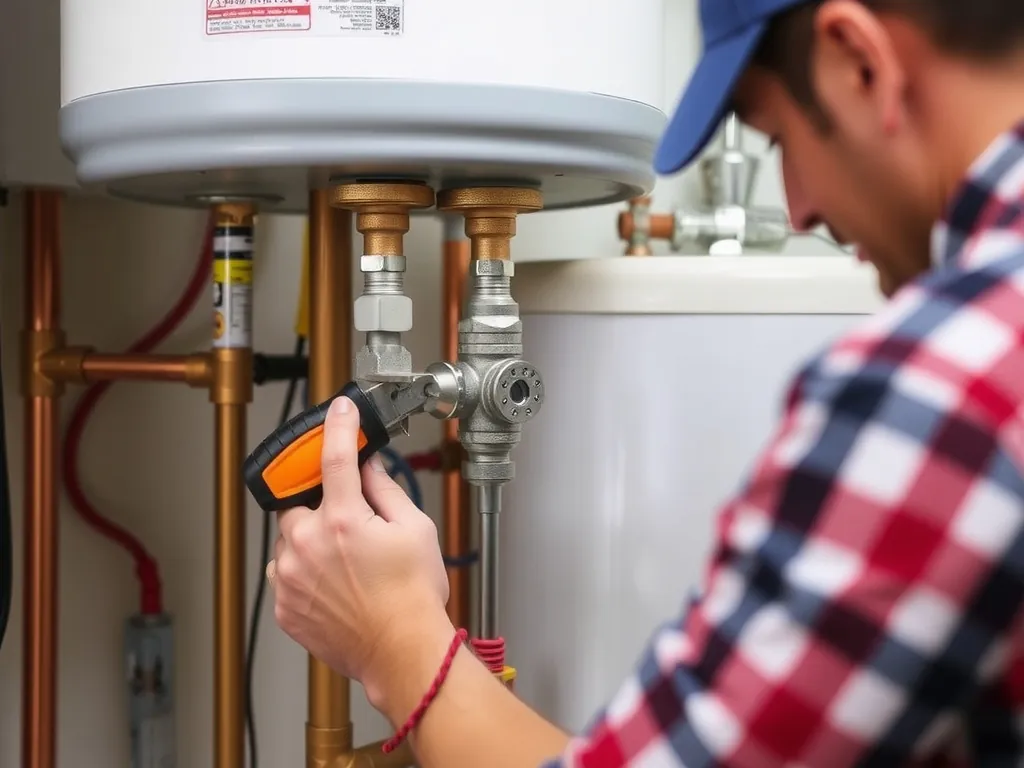
Turn off power at the circuit breaker, shut off cold water inlet, attach a garden hose to the drain valve, and drain 2–3 gallons to relieve pressure. Remove the access panel and insulation to expose the element. Take a photo of the wiring for reference before disconnecting.
Use a 1-1/4″ socket wrench or element wrench to unscrew the old element. Water will spill slightly—have towels ready. Inspect the hole for scale; use a vinegar-soaked rag or a descaling brush to clean mineral deposits. Apply pipe thread sealant (e.g., RectorSeal #5) to the new element’s threads, then screw it in by hand until snug. Tighten with the wrench—do not overtighten, or crack the tank.
Reconnect the wires exactly as they were—black to upper terminal, red to lower, white to ground. Replace the insulation and access panel. Open the cold water valve slowly to refill the tank. Open a hot water faucet to purge air until flow is steady. Once full, restore power. Wait 30–60 minutes for water to heat. Test with a thermometer—temperature should reach 120–140°F within an hour.
⚠️ Warning: Never turn power on until the tank is completely full. Dry firing an element—even for 3 seconds—can melt the sheath and cause permanent damage. Always verify water covers the element before restoring electricity.
What Problems Might You Encounter During Replacement?
Common problems during element replacement include stripped threads, stuck elements, leaking gaskets, and electrical miswiring. Stuck elements occur when mineral scale fuses the element to the tank—use penetrating oil (e.g., PB Blaster) and gentle tapping with a rubber mallet to break the bond. If the element breaks off, you’ll need an element extractor tool (e.g., GearWrench 8-Piece Element Extractor Set).
Leaking after installation usually results from a damaged gasket or overtightening. Replace the gasket (part number often stamped on the old element) with a new one—never reuse old rubber seals. If water leaks from the access panel, ensure the gasket is seated properly and the screws are evenly tightened.
Electrical issues include reversed polarity or loose connections causing no heat or tripped breakers. Use a non-contact voltage tester to verify power is off before touching wires. If the water heats but the breaker trips immediately, check for a grounded element (test with multimeter) or a faulty thermostat. If the lower element heats but the upper doesn’t, the upper thermostat may be faulty.
Another frequent issue: water remains cold despite correct installation. This often means the tank wasn’t fully refilled—air pockets block the element from submersion. Purge air by opening all hot water faucets until flow is continuous. Also verify both thermostats are set above 120°F and that power is reaching both elements via a voltage tester.
FAQ
How do I know if my water heater element is bad or if it’s the thermostat?
If your water heater produces no hot water but the circuit breaker is on, test the element with a multimeter first. A good element shows 10–16 ohms resistance between terminals and infinite resistance between terminals and metal housing. If the element tests good but water is cold, the thermostat is likely faulty. If one element fails, the upper thermostat may not send power to the lower one. Always test both elements and both thermostats—symptoms overlap significantly. Replacing the element first is more cost-effective since elements fail 70% more often than thermostats in electric tanks.
Can I replace just one element, or should I replace both?
You can replace just one element if only one has failed, but replacing both is strongly recommended if the tank is older than 8 years. Elements degrade at similar rates under identical conditions. Replacing only one element creates uneven heating, causing the new element to work harder and fail sooner. It also saves labor costs if you’re already draining the tank. A dual replacement extends system reliability by 3–5 years and prevents repeat service calls. For tanks under 5 years old, replacing the failed element alone is acceptable.
Are titanium elements worth the extra cost?
Yes, titanium elements are worth the extra cost if your water has hardness above 120 ppm (common in Southwest, Midwest, and Rocky Mountain regions). Titanium sheathing resists mineral scale 3x longer than copper or stainless steel, lasting 10–15 years versus 5–8 years. Although they cost $40–$150 vs. $15–$40 for copper, they reduce replacement frequency and maintain efficiency—scale buildup reduces heating efficiency by up to 48%. In hard water areas, titanium elements pay for themselves in 2–3 years through reduced energy bills and fewer repairs.
What happens if I install the wrong wattage element?
Installing a higher-wattage element (e.g., 5,500W instead of 4,500W) can overload the circuit, trip breakers, or damage wiring not rated for the increased current. A 5,500W element at 240V draws 23 amps—requiring a 30-amp circuit per NEC 422.13. A 4,500W element draws 18.75 amps. Installing a lower-wattage element (e.g., 3,000W) will heat water too slowly, causing long recovery times and user dissatisfaction. Always match wattage and voltage exactly to the manufacturer’s specification on the tank’s rating plate.
Can a water heater element be repaired, or must it always be replaced?
Water heater elements cannot be repaired—they must always be replaced. The internal nichrome wire is sealed within a hermetically welded sheath; any breach or break renders the element non-functional. Attempting to solder, splice, or patch the wiring creates a serious electrocution and fire hazard. Even if the element appears intact externally, internal corrosion or insulation failure cannot be visually detected or fixed. Replacement is the only safe, code-compliant solution.
How often should I replace water heater elements?
Replace water heater elements every 8–12 years, or sooner if you experience reduced hot water, longer recovery times, or visible scale buildup. In areas with hard water (above 120 ppm), replace elements every 5–7 years. Regular maintenance—annual draining and anode rod inspection—can extend element life. If you notice white, chalky residue on the element after removal, it’s a sign of advanced mineral buildup that will cause failure soon. Proactive replacement avoids sudden loss of hot water.