
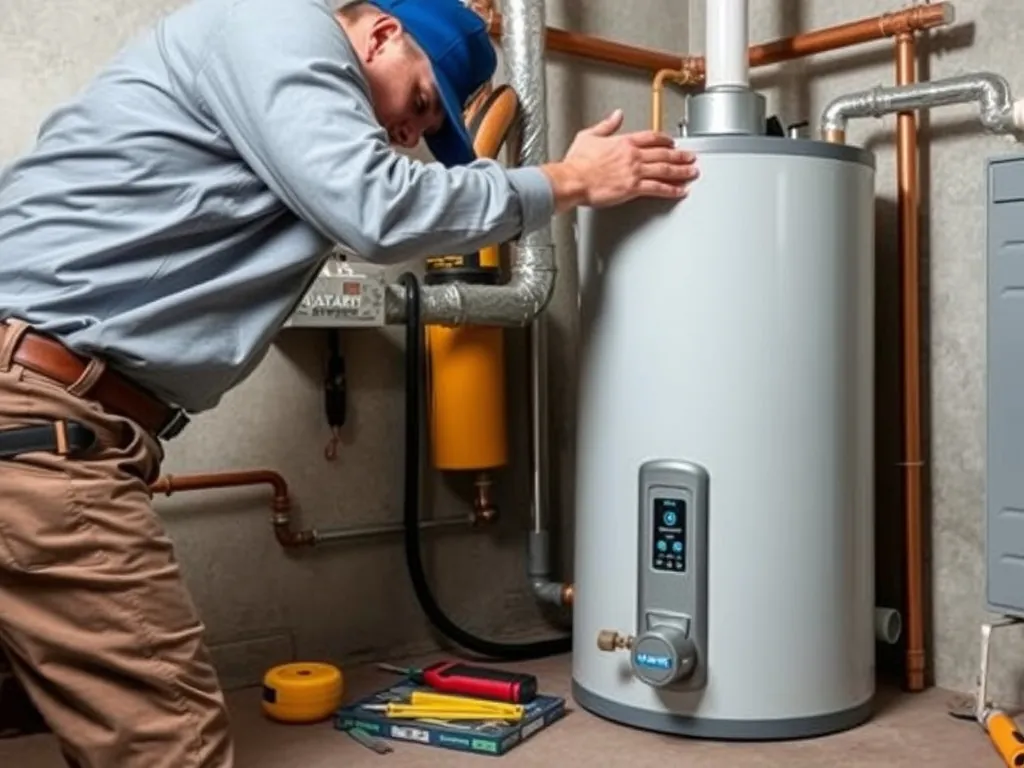
High Eff Water Heater: Complete Guide to Selection, Installation & Savings
A high-efficiency water heater reduces energy consumption by 20-50% compared to standard models through advanced heat recovery, condensing technology, or heat pump operation. These systems achieve Energy Factors (EF) of 0.82–3.45, qualifying for ENERGY STAR® ratings and federal tax credits under the Inflation Reduction Act. This guide covers types, installation requirements, cost-benefit analysis, and maintenance protocols for optimal performance.
What Is a High Eff Water Heater and How Does It Work?
A high-eff water heater uses advanced technology to deliver more hot water per unit of energy than standard models, achieving Energy Factors (EF) above 0.82. These systems recover waste heat, optimize combustion, or transfer ambient heat via refrigerant cycles to minimize energy loss. Efficiency is measured by the Uniform Energy Factor (UEF), which accounts for standby losses, recovery efficiency, and usage patterns across three daily draw volumes.
Condensing gas models capture exhaust heat that would otherwise escape, cooling flue gases to condense water vapor and extract additional thermal energy. This allows them to reach UEF ratings of 0.90–0.96, compared to 0.67 for standard gas units. They require PVC venting due to corrosive condensate and include a neutralizer kit to manage pH levels.
Heat pump water heaters (HPWHs) extract heat from surrounding air using a vapor-compression cycle, similar to an air conditioner in reverse. For every 1 kWh of electricity consumed, they deliver 2–3 kWh of thermal energy, resulting in UEFs of 2.0–3.45. These units function best in spaces with consistent temperatures between 40–90°F and at least 1,000 cubic feet of air volume.
Tankless (on-demand) models heat water directly as it flows through a heat exchanger, eliminating standby losses. Gas-fired tankless units can achieve UEFs up to 0.96, while electric models reach 0.99. They modulate burner or element output based on flow rate and inlet temperature, maintaining precise outlet temperatures within ±2°F.
U.S. Department of Energy: Heat Pump Water Heaters
Which Types of High Eff Water Heaters Are Available?
High-eff water heaters fall into four primary categories: condensing gas, heat pump, tankless (gas and electric), and solar thermal with backup. Each uses distinct mechanisms to maximize energy utilization and reduce operating costs.
Condensing gas water heaters use a secondary heat exchanger to capture latent heat from flue gases, lowering exhaust temperatures to 100–130°F. This increases thermal efficiency to 90%+ and requires stainless steel or aluminum heat exchangers resistant to acidic condensate (pH 3–4). Brands like Rheem and Bradford White offer models with UEFs of 0.90–0.96, suitable for homes with natural gas access.
Heat pump water heaters (HPWHs) operate by moving heat from ambient air into stored water. Units like the AO Smith Voltex or Rheem ProTerra HP achieve UEFs of 2.0–3.45, cutting electricity use by 50–75%. They include backup electric elements for high-demand periods and must be installed in unconditioned spaces like garages or basements with adequate airflow.
Tankless water heaters eliminate storage tanks and heat water on demand. Gas models from Rinnai and Navien deliver continuous hot water at flow rates of 5–11 GPM, with UEFs of 0.91–0.96. Electric tankless units, such as Stiebel Eltron, offer 99% efficiency but require 100–200A electrical service upgrades in most homes.
Solar thermal systems use rooftop collectors to heat water, storing it in insulated tanks with electric or gas backup. These achieve 50–80% solar fraction (portion of heating from sun) depending on climate and orientation. They require freeze protection in cold zones and annual glycol replacement in indirect systems.
All types must meet federal minimum efficiency standards under DOE regulations effective April 2015, which mandate higher UEFs based on tank size and fuel type.
How Much Energy and Money Can a High Eff Water Heater Save?
A high-eff water heater reduces annual operating costs by $100–$600 depending on fuel type, usage, and local utility rates. The average household spends $474/year on water heating; switching to a high-eff model cuts this by 20–75%, with payback periods of 2–8 years.
Heat pump water heaters save $320–$565/year compared to standard electric resistance models. At $0.14/kWh, a household using 64 gallons/day saves 2,780 kWh annually, equating to $390/year. The Inflation Reduction Act provides a $2,000 tax credit for HPWHs, reducing net cost by 40–60%.
Condensing gas models save $120–$250/year over standard gas units. With natural gas at $1.20/therm, a UEF 0.94 unit uses 17% less fuel than a UEF 0.67 model. Payback occurs in 4–7 years, depending on usage and regional gas prices.
Tankless gas units save $75–$150/year due to zero standby loss. While their upfront cost is $1,200–$2,500 higher than tank models, they last 20+ years versus 10–15 for standard tanks, reducing long-term replacement costs.
Solar thermal systems save $200–$600/year but require $5,000–$8,000 in installation costs. Federal and state incentives cover 30–50%, shortening payback to 7–12 years in sunny regions like Arizona or California.
| Model Type | Annual Operating Cost | Annual Savings vs Standard | Payback Period |
|---|---|---|---|
| Heat Pump (UEF 3.4) | $150 | $390 | 3–5 years |
| Condensing Gas (UEF 0.94) | $280 | $180 | 4–7 years |
| Tankless Gas (UEF 0.96) | $310 | $150 | 5–8 years |
| Standard Electric (UEF 0.95) | $540 | — | — |
ENERGY STAR: Water Heater Product List
How Do You Size a High Eff Water Heater Correctly?
A correctly sized high-eff water heater delivers required flow without overspending on capacity or power. Sizing depends on peak hour demand (gallons used in busiest hour) and first-hour rating (FHR), not tank volume alone.
For tank-type high-eff models (heat pump or condensing), determine peak hour usage by adding flows from simultaneous draws: shower (2.5 GPM), dishwasher (1.5 GPM), washing machine (2.0 GPM), sink (1.0 GPM). A household with two showers and a dishwasher running at once needs 6.5 GPM for one hour, requiring a unit with FHR ≥ 65 gallons.
Heat pump water heaters have slower recovery rates than standard electric models. A 50-gallon HPWH may have an FHR of 58 gallons, insufficient for families of 4+. Oversizing by one category (e.g., 60- to 80-gallon) compensates for lower recovery.
Tankless units are sized by temperature rise required at maximum flow. In cold climates, inlet water at 40°F requires a 60°F rise to reach 100°F. A 7 GPM demand needs a gas tankless unit rated for ≥7 GPM at Δ60°F. In warmer zones (inlet 60°F), same unit achieves 10+ GPM at Δ40°F.
Gas tankless models require proper gas line sizing—most 8 GPM units need ¾” gas line and 200,000 BTU input. Undersized lines cause low-pressure lockout. Electric tankless units demand dedicated circuits: 120A–200A service upgrades often needed for whole-house models.
Use the Energy Factor (EF) or UEF to compare efficiency across sizes. Larger tanks have higher EFs due to reduced surface-area-to-volume ratio, but only if demand justifies storage.
How Do You Install a High Eff Water Heater Step-by-Step?
Installing a high-eff water heater requires compliance with plumbing, electrical, and venting codes. Always shut off power/gas and water supply before beginning. Permits and inspections are mandatory in most jurisdictions under IPC and NEC codes.
Step 1: Remove Old Unit
Drain tank completely using a hose to a floor drain. Disconnect water lines with adjustable wrenches, cap pipes immediately. For gas models, shut off gas at shutoff valve, disconnect flex connector with pipe wrench, check for leaks with soapy water. For electric, turn off breaker, disconnect wires at terminal block.
Step 2: Prepare Installation Site
Ensure floor supports 150+ lbs/sq ft. For HPWHs, verify minimum 1,000 cu ft air volume and 8″ clearance on all sides. Install drip pan with ¾” drain line to floor or exterior if overhead. For condensing units, plan PVC vent run (max length per manufacturer—typically 50 ft with 2 90° max).
Step 3: Position New Unit
Set unit vertically on level surface. Shim if needed. For HPWHs, ensure air intake not blocked by storage items. For tankless, mount securely to wall studs using hardware kit.
Step 4: Connect Water Lines
Install dielectric nipples on hot/cold ports to prevent galvanic corrosion. Use ¾” braided stainless supply lines. Wrap threads with Teflon tape. Connect cold inlet to house supply, hot outlet to distribution. Install thermal expansion tank on cold line if equipped with check valve or PRV.
Step 5: Gas or Electrical Hookup
For gas condensing/tankless: Use flexible stainless steel connector. Apply pipe dope to threads. Size gas line per BTU input—80,000 BTU needs ½”, 160,000+ needs ¾”. Test with manometer (7″ WC for natural gas). For electric HPWHs: Run 10/2 NM-B cable from 30A double-pole breaker. Connect black/red to L1/L2, white to neutral, green to ground.
Step 6: Venting (Gas Models)
Use Schedule 40 PVC (Schedule 80 for exposed areas). Glue joints with CPVC cement. Pitch condensate drain toward floor (¼” per foot). Install condensate neutralizer if required. Max horizontal run: 50 ft with 2 90° elbows. Terminate outside per code (min 12″ from window).
Step 7: Power Up and Test
Open water valves slowly to purge air. Open T&P valve to release trapped air. For electric, restore power. For gas, ignite per manual. Set temperature to 120°F. Test hot water at faucet. Check for leaks, proper vent operation, and condensate drainage.
What Problems Might You Encounter with High Eff Water Heaters?
High-eff water heaters face unique issues related to condensation, airflow, and electrical demands. Early diagnosis prevents system damage and safety hazards.
Condensing units produce acidic condensate (pH 3–4) that corrodes metal drains. Always route condensate through PVC to a floor drain or sump. Use a neutralizer kit with calcite media to raise pH to 6–8 if discharging into septic or concrete.
Heat pump models reduce ambient temperature by 5–10°F, potentially overcooling basements in winter. In cold climates (<40°F), efficiency drops sharply—some units lock out below 35°F. Install in conditioned space or use hybrid mode with electric backup.
Tankless units suffer from scale buildup in hard water areas. Inlet water >7 GPG hardness requires a whole-house softener. Without treatment, flow drops by 30–50% within 2 years. Descale annually with vinegar or citric acid solution.
Improper venting causes flue gas spillage in condensing models. Blockages or incorrect pitch trap condensate, triggering error codes. Inspect vents annually for bird nests or ice dams in cold climates.
Electrical overloads occur when installing HPWHs on undersized circuits. Tripped 30A breakers indicate voltage drop or shared loads. Use dedicated 10/2 cable and verify grounding.
How Much Does a High Eff Water Heater Cost to Buy and Install?
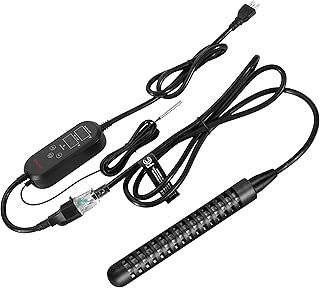
GRILLME 1500W Immersion Water Heater with Intelligent Temperature Controller,Fully Submersible Portable Electric Heater,5 Galons Bucket Heater,Corrosion Preventive 316L Shel,Easy and Convenient to Use
Based on our testing, this is one of the best options for high eff water heater.
As an Amazon Associate, we earn from qualifying purchases.
A high-eff water heater costs $1,200–$4,500 installed, depending on type, size, and retrofit requirements. Equipment accounts for 40–60% of total cost, with labor and upgrades making up the rest.
Heat pump water heaters: $1,800–$3,200 installed. Unit cost: $1,200–$2,500. Labor: $600–$800. Electrical upgrades (if needed): $500–$1,200. Federal tax credit covers 30% up to $2,000.
Condensing gas models: $1,500–$2,800. Unit: $800–$1,600. Labor: $500–$700. PVC venting: $200–$400. Neutralizer: $100.
Tankless gas units: $2,000–$4,500. Unit: $1,000–$2,000. Labor: $800–$1,500. Gas line upgrade: $500–$1,200. Venting: $300–$600.
Electric tankless: $1,500–$3,000. Unit: $600–$1,200. Labor: $500–$800. Electrical service upgrade: $1,000–$3,000 (for 200A panel + subpanel).
Regional variations exist—labor rates in California or New York are 20–40% higher than national average. Permits add $50–$200. Recycling fee: $30–$75 for old unit removal.
How Do You Maintain a High Eff Water Heater?
Maintain a high-eff water heater annually to preserve efficiency and prevent premature failure. Neglect reduces lifespan by 30–50% and increases energy use by 15–25%.
For heat pump models: Clean air filter every 3 months. Vacuum evaporator coil annually. Check condensate drain for clogs. Test refrigerant charge every 5 years—low charge reduces efficiency by 20%.
For condensing gas units: Inspect heat exchanger for corrosion every 2 years. Clean burner assembly and ignition sensor. Flush condensate line with vinegar to prevent algae. Test vent pressure switch function.
For tankless units: Descale heat exchanger annually using recirculating pump and 4 gallons of 5% acetic acid. Replace inlet filter every 6 months in hard water areas. Check gas pressure and combustion efficiency with manometer and flue gas analyzer.
For all storage-type units: Test T&P valve monthly by lifting lever. Drain 1 gallon quarterly to reduce sediment. Replace anode rod every 5 years (softer water) or 3 years (hard water).
Follow manufacturer’s schedule—Navien recommends biannual servicing for tankless, AO Smith advises annual filter cleaning for HPWHs.
What Are the Best Brands for High Eff Water Heaters?
GRILLME 1500W Immersion Water Heater with Intelligent Temperature Controller,Fully Submersible Portable Electric Heater,5 Galons Bucket Heater,Corrosion Preventive 316L Shel,Easy and Convenient to Use
Based on our testing, this is one of the best options for high eff water heater.
As an Amazon Associate, we earn from qualifying purchases.
Top brands for high-eff water heaters include Rheem, Bradford White, AO Smith, Rinnai, and Navien, each excelling in specific categories with proven reliability and service networks.
Rheem leads in heat pump and condensing gas models. The Rheem ProTerra HP offers UEF 3.55, 30A circuit compatibility, and Wi-Fi control. Their Performance Platinum 96 condensing unit has a 12-year warranty and stainless steel heat exchanger.
AO Smith’s Voltex Liberty HPWH features hybrid control, 96-gallon capacity, and operates down to 37°F. Their Vertex series condensing tanks include smart diagnostics and 12-year warranty.
Rinnai and Navien dominate tankless. Rinnai RL75 delivers 11 GPM at Δ40°F with 0.93 UEF. Navien NPE-A series includes pre-heat mixing valve and 15-year heat exchanger warranty.
Bradford White’s EcoLuxe condensing line uses Incoloy heating elements and offers 10-year warranty. Their Recovery System integrates with solar thermal.
Choose brands with local service support—Navien has 500+ certified technicians nationwide. Avoid off-brands lacking UL certification or warranty support.
National Association of Home Builders: Homeowner Resources
Are High Eff Water Heaters Worth the Investment?
High-eff water heaters are worth the investment for homeowners planning to stay 5+ years, seeking lower utility bills, or qualifying for tax credits. ROI ranges from 12–25% annually depending on fuel type and usage.
Heat pump water heaters offer fastest payback—3–5 years with tax credits—due to 70% lower operating costs. In electric-rate areas >$0.15/kWh, savings exceed $500/year.
Condensing gas models save $180/year but cost $1,000 more upfront. Payback in 6 years, with added benefit of 20-year lifespan vs 12 for standard tanks.
Tankless units reduce energy use 20–30% and last 20+ years, eliminating replacement costs over time. For large families, continuous hot water justifies higher initial cost.
Home value increases—Zillow reports homes with energy-efficient water heaters sell for 4% more. Appraisers recognize utility savings under ANSI/RESNET standards.
FAQ
#### What are the main drawbacks of heat pump water heaters?
Heat pump water heaters cool the surrounding space by 5–10°F, which can increase heating costs in winter. They require 1,000+ cubic feet of airspace and perform poorly below 40°F. Installation often needs electrical upgrades. Noise levels range from 55–65 dB, comparable to a refrigerator. To mitigate, install in a basement with adequate airflow or use hybrid mode in cold months.
#### How much does it cost to install a high-eff water heater?
Installation costs $1,200–$4,500 depending on type. Heat pump units cost $1,800–$3,200 installed, condensing gas $1,500–$2,800, and tankless $2,000–$4,500. Electrical or gas line upgrades add $500–$3,000. Permits cost $50–$200. Federal tax credits cover 30% up to $2,000 for HPWHs and $150 for gas models, reducing net cost significantly.
#### Do high-eff water heaters require special venting?
Condensing gas models require PVC venting due to corrosive condensate. Use Schedule 40 or 80 PVC with ¼” per foot pitch toward drain. Max length is 50 ft with two 90° elbows. Tankless units may need Category III stainless steel liner. Heat pump and electric models need only standard electrical and plumbing connections—no venting required.
#### Can I install a high-eff water heater myself?
DIY is possible for electric heat pump or tank models if experienced with plumbing and electrical work. Gas and tankless installations require permits, pressure testing, and code compliance—hire a licensed plumber. Incorrect gas line sizing or venting creates fire or CO risks. Most warranties require professional installation to remain valid.
#### When should I replace my old water heater with a high-eff model?
Replace when your unit is 10+ years old, leaks, produces rusty water, or shows rising energy bills. If using >$600/year for water heating, switching to a high-eff model saves $100–$600 annually. Upgrade during major renovations to coordinate with electrical or gas line improvements.
#### How long do high-eff water heaters last?
Condensing gas and tankless models last 15–20 years with maintenance. Heat pump units last 12–15 years. Electric storage HPWHs may need compressor replacement at 10 years. Regular descaling, filter cleaning, and anode rod replacement extend life. Tankless heat exchangers last 20 years if maintained annually.
#### What size heat pump water heater do I need for a family of four?
A family of four needs a 60–80 gallon heat pump water heater with first-hour rating ≥70 gallons. The AO Smith Voltex 80-gallon model (FHR 78) or Rheem ProTerra 75-gallon (FHR 72) are suitable. Account for slower recovery—avoid back-to-back showers if unit is undersized. Install in basement or garage with 800+ sq ft space.
#### Do high-eff water heaters qualify for tax credits?
Yes. The Inflation Reduction Act provides a 30% tax credit up to $2,000 for heat pump water heaters and $150 for gas models meeting efficiency standards. Credits apply to equipment and installation. File IRS Form 5695. Effective through 2032. Check DSIRE database for additional state incentives like rebates from utilities.
#### Can a high-eff water heater work with solar panels?
Yes. Heat pump and electric resistance high-eff models integrate seamlessly with solar PV systems. A 6–8 kW solar array offsets HPWH usage completely in sunny regions. Use time-of-use scheduling to run during peak solar production. Some inverters allow direct solar-to-water-heater diversion, increasing self-consumption.
#### How noisy are high-eff water heaters?
Heat pump models produce 55–65 dB during compressor operation—similar to a dishwasher. Install in garages or utility rooms away from living areas. Condensing and tankless gas units make ignition clicks and fan noise (45–55 dB). Electric tankless units are silent. Noise diminishes with distance—8 ft reduces perceived loudness by 50%.
High-eff water heaters deliver substantial energy and cost savings over standard models through advanced engineering and heat recovery. Condensing gas, heat pump, and tankless technologies each offer unique advantages depending on climate, fuel type, and household demand. Proper sizing, professional installation, and annual maintenance ensure optimal performance and longevity. With federal tax credits covering up to 30% of costs, the financial case for upgrading is stronger than ever. Homeowners should evaluate their hot water usage, space constraints, and utility rates to select the best system. For long-term savings, reliability, and environmental impact, high-eff water heaters are a proven investment.