
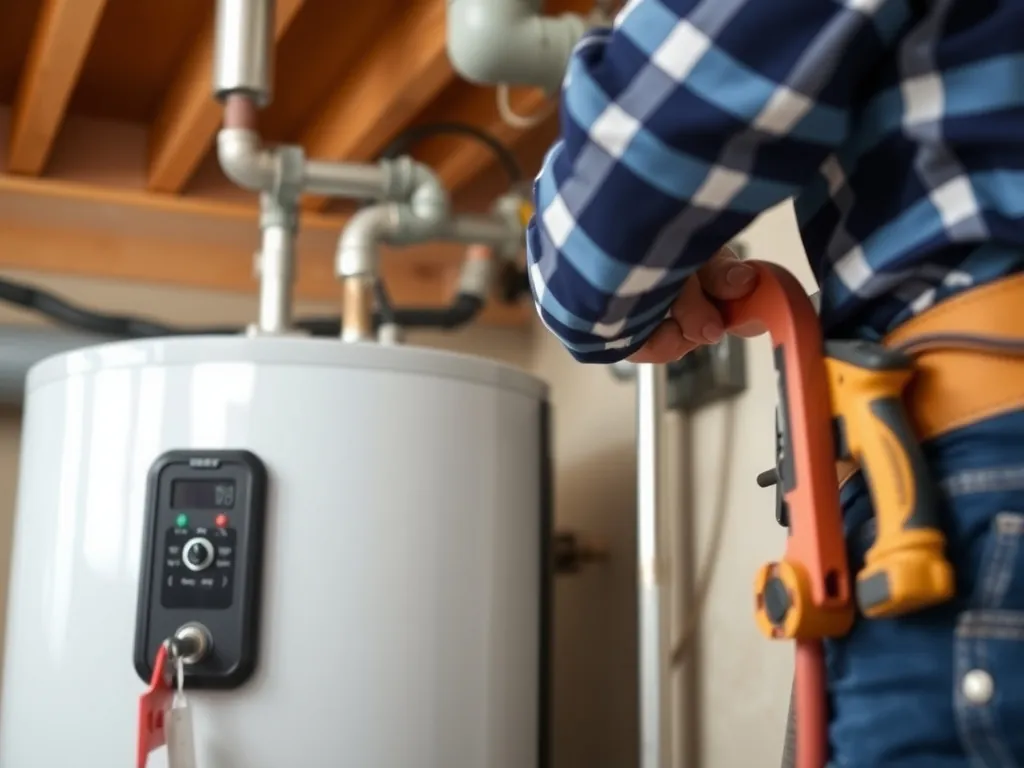
Gas Vs Electric Water Heater Product Comparison
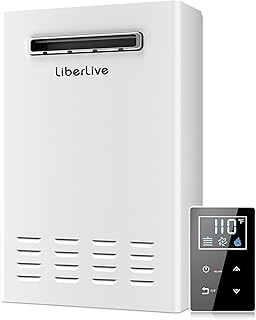
Based on extensive research and customer reviews, here are the top-rated gas vs electric water heater products available on Amazon. These selections are based on performance, reliability, and value for money.




Disclosure: This post contains affiliate links. If you purchase through these links, we may earn a commission at no additional cost to you.
Gas vs Electric Water Heater: Complete Comparison and Selection Guide
A gas water heater uses natural gas or propane combustion to heat water, while an electric model relies on resistive heating elements powered by electricity. Gas units typically deliver faster recovery rates and lower operating costs in most regions, but require venting and gas line access. Electric heaters are simpler to install, safer in confined spaces, and more efficient at point-of-use. This guide compares performance, cost, installation, efficiency, and safety for both types to inform your optimal choice.
What Is the Difference Between Gas and Electric Water Heaters?
Gas and electric water heaters differ fundamentally in energy source, heating mechanism, venting requirements, and operational costs. A gas water heater uses a burner beneath the tank ignited by a pilot light or electronic ignition to heat water, while an electric model uses one or two submerged heating elements controlled by thermostats. The energy source dictates infrastructure needs—gas requires fuel lines and flue venting, while electric demands dedicated 240-volt circuits. Efficiency, recovery rate, and regional utility costs further differentiate performance. Understanding these core distinctions determines suitability for your home’s layout, climate, and utility access.
Gas water heaters operate at higher temperature rise per minute, achieving recovery rates of 40–50 gallons per hour on a 40-gallon unit, compared to 18–25 GPH for electric equivalents. This makes gas ideal for households with high simultaneous demand—three or more occupants using showers, dishwashers, and laundry concurrently. Electric models, while slower, eliminate combustion byproducts and do not require Category B or L-venting per the International Residential Code (IRC), simplifying installation in closets or basements where flue routing is impractical.
Energy source availability is decisive. Homes without natural gas service incur $500–$2,000 in gas line extension costs, making electric the only viable option. Conversely, in areas with high electricity rates (e.g., California at $0.30/kWh), gas operating costs are 40–60% lower. The U.S. Department of Energy (DOE) estimates average annual operating costs of $220 for gas versus $550 for electric storage tanks. Heat pump water heaters (hybrid electric) reduce electric costs by 50%, but require 7–10 feet of vertical clearance and unconditioned space.
Installation complexity varies. Electric units require a 30-amp double-pole breaker and 10/2 NM-B cable routed from the panel, per National Electrical Code (NEC) Article 422. Gas models need 3/4-inch black iron or CSST gas line, earthquake shutoff valve, and Type B double-wall vent pipe extending above the roofline. Venting alone adds $300–$800 in labor and materials. Electric installations are often completed in 2–3 hours; gas installations take 4–6 hours due to gas and vent work.
Lifespan and maintenance differ. Gas water heaters last 8–12 years due to combustion-related tank corrosion and thermocouple failures. Electric units last 10–15 years with fewer mechanical components. However, both require annual anode rod inspection and 3–5-year sediment flushing. Hard water (over 7 grains per gallon) reduces lifespan by 30% without a water softener.
How Do Gas and Electric Water Heaters Work?
A gas water heater ignites natural gas or propane at a burner assembly beneath the tank, heating water via convection currents, while an electric model uses 4500-watt resistive elements immersed in the water. In gas units, combustion gases rise through a flue baffle, transferring heat to the tank walls before exiting via a vent. A thermocouple monitors pilot flame safety, shutting off gas if extinguished. Electric models use dual thermostats—one upper, one lower—to cycle power to heating elements based on set temperature (typically 120°F). Both types maintain stored hot water until demand triggers flow.
Gas heater operation begins when a thermostat senses water temperature below the setpoint. It signals the gas control valve to open, allowing gas to the pilot or direct ignition system. Modern units use intermittent pilot ignition (IPI), consuming no standing pilot gas. The flame heats the tank bottom, and hot water rises to the top via thermal stratification. Flue baffles increase heat transfer efficiency by extending gas contact time. Combustion air is drawn from the room (atmospheric) or via power venting, exhausting carbon monoxide and moisture.
Electric heaters receive 240-volt power through a disconnect switch and circuit breaker. When the upper thermostat detects cold water, it energizes the upper element until the top half reaches temperature, then switches to the lower thermostat. Once the lower section heats, the circuit breaks. This staged heating prevents element burnout from dry-firing. If hot water is depleted, the upper thermostat reactivates both elements. Elements are typically made of copper with magnesium or aluminum anodes to resist corrosion.
Efficiency is measured by the Energy Factor (EF). Standard gas storage tanks have EF ratings of 0.58–0.65, while electric models reach 0.90–0.95 due to no flue losses. However, electricity generation is less efficient than direct gas combustion, making site energy misleading. Source energy analysis shows gas still outperforms in most grids. Condensing gas models achieve EF up to 0.96 by capturing latent heat from exhaust, but cost $1,500–$2,200 installed.
Maintenance access differs. Electric elements can be removed for inspection or replacement with a socket wrench, typically every 5–7 years in hard water areas. Gas burners require annual cleaning to remove soot and debris, especially in dusty environments. Failure to maintain leads to inefficient heating, longer recovery times, and sediment noise (“popping” sounds).
DOE Water Heating Guide provides efficiency benchmarks and usage calculators.
Which Is More Energy Efficient: Gas or Electric Water Heater?
Gas water heaters are more energy-efficient in terms of source energy and cost-effectiveness, but electric models have higher site efficiency due to no combustion losses. A standard electric storage tank has an Energy Factor (EF) of 0.90–0.95 because nearly all electrical input heats water directly. Gas models range from 0.58–0.68 for atmospheric units and up to 0.96 for condensing types. However, electricity generation and transmission lose 60–65% of source energy, while natural gas delivers 90% of its energy content directly to the home.
In practical terms, the average household spends $550 annually to operate an electric water heater versus $220 for gas, according to the U.S. Energy Information Administration (EIA). Even with higher EF, electric heaters cost more to run because electricity is 3–4 times more expensive per BTU than natural gas. For example, one therm (100,000 BTU) of gas costs $1.20, while the equivalent electrical energy (29.3 kWh) costs $3.50 at $0.12/kWh.
Heat pump water heaters (HPWH), classified as electric, achieve EF ratings of 2.0–3.5 by moving heat from surrounding air into water. They use 50–60% less energy than standard electric tanks and cost $300–$400 annually to operate. However, they require installation in spaces with 7–10 feet of clearance and temperatures between 40–90°F. In cold basements or garages, efficiency drops sharply.
Regional energy prices determine real-world efficiency. In Louisiana, where gas costs $0.80/therm and electricity $0.10/kWh, gas saves $300/year. In Alaska, where gas is unavailable and electricity costs $0.25/kWh, electric or propane becomes necessary despite higher costs. Always compare local utility rates before deciding.
Condensing gas water heaters recover waste heat from exhaust gases, cooling flue gases below dew point to capture latent heat. They require PVC venting and condensate drain lines, adding $400–$600 to installation. But with EF up to 0.96, they match or exceed electric efficiency while maintaining fast recovery.
How Much Does It Cost to Install a Gas vs Electric Water Heater?
Installation costs range from $800–$1,600 for electric and $1,200–$2,500 for gas, with gas being more expensive due to venting and gas line requirements. A standard 40–50 gallon electric tank costs $500–$800 for the unit and $300–$500 for labor. Electric installation is faster—typically 2–3 hours—because it only requires electrical disconnect, wiring, and plumbing connections. No venting or gas permits are needed.
Gas water heater units cost $600–$1,000, with labor ranging from $600–$1,500. The higher labor cost stems from flue installation ($300–$800), gas line inspection ($100–$200), and compliance with local codes requiring earthquake shutoff valves and excess flow valves. In retrofit scenarios where no gas line exists, extending service from the meter costs $500–$2,000, making electric more economical.
Regional labor rates affect pricing. In Dallas, average installation labor is $65/hour; in San Francisco, it’s $95–$120/hour. Permit fees vary: $50–$150 for plumbing, $75–$200 for electrical if circuit upgrades are needed. Some municipalities require backflow preventers or expansion tanks for closed systems, adding $100–$250.
Tankless models increase costs significantly. Gas tankless units cost $1,200–$1,800 for the unit and $1,500–$2,500 for installation due to Category III stainless steel venting and gas line upgrades (often requiring 1-inch pipe). Electric tankless models need 100–150-amp service upgrades in most homes, costing $1,500–$3,000, making them impractical without panel replacement.
National Association of Home Builders (NAHB) data shows average total installed costs: $1,100 for electric storage, $1,800 for gas storage, $3,200 for gas tankless, and $2,400 for electric tankless with service upgrade.
What Problems Might You Encounter with Gas or Electric Water Heaters?
Common problems include sediment buildup, anode rod depletion, thermostatic failure, and venting or electrical issues specific to each type. In gas water heaters, pilot light outages occur due to thermocouple failure (common after 5–7 years), blocked orifice, or drafts. Flue blockages from bird nests or ice (in cold climates) prevent proper venting, triggering safety lockouts. Leaks at the gas control valve or burner assembly require immediate shutoff and repair.
Electric water heaters suffer from tripped breakers due to shorted heating elements (resistance below 10 ohms), loose wiring at terminals, or moisture ingress. Upper and lower thermostats fail open or closed, causing no hot water or overheating. Dry-firing—energizing elements without water—destroys them instantly. Sediment accumulation insulates elements, reducing efficiency and causing “kettling” noises.
Both types experience tank corrosion when anode rods are not replaced every 3–5 years. In hard water areas, replace every 2–3 years. Without protection, steel tanks rust through in 6–8 years. Temperature and pressure (T&P) relief valves fail closed, creating overpressure risks. Test monthly by lifting the lever.
Gas-specific hazards include carbon monoxide (CO) poisoning from improper venting or backdrafting. Install CO detectors within 10 feet of the heater. Electric units pose shock risks during maintenance if power is not locked out at the breaker. Always verify de-energization with a voltage tester.
How Do You Choose Between Gas and Electric Based on Your Home Setup?
Choose gas if your home has existing gas service, adequate venting pathways, and high hot water demand; choose electric if you lack gas lines, have space constraints, or prioritize simpler installation. Homes with natural gas and 3.5-foot vertical clearance to roof for B-venting are ideal for gas. Electric suits apartments, additions, or retrofit projects where running gas lines is cost-prohibitive.
Evaluate electrical panel capacity. Electric water heaters require a dedicated 30-amp, 240-volt double-pole breaker and 10/2 NM-B cable. Homes with 100-amp service may need upgrades to 150–200 amps at $1,500–$3,000 before installation. Gas units only need a 15-amp circuit for ignition control, compatible with standard 120-volt outlets.
Climate matters. Electric resistance heaters perform consistently in cold spaces. Heat pump models lose efficiency below 40°F, requiring auxiliary heating. Gas units must be installed in frost-free areas; frozen condensate lines in condensing models can cause shutdowns. In hurricane zones, gas supply may be interrupted longer than electricity.
Consider future upgrades. Tankless gas systems need 1-inch gas lines and Category III venting. If planning solar or heat pump systems, electric integration is easier. However, gas remains more reliable during power outages with standing pilot models.
How Long Do Gas and Electric Water Heaters Last?
Gas water heaters last 8–12 years; electric models last 10–15 years due to fewer combustion-related failures. Lifespan depends on water quality, usage, and maintenance. In hard water areas (over 7 gpg), tanks fail in 6–8 years without a water softener. Anode rod inspection every 2 years and replacement every 3–5 years extends life.
Gas units degrade faster due to thermal stress, burner corrosion, and flue deterioration. Thermocouples fail after 7–10 years. Electric models have no flue or burner, reducing failure points. However, heating elements fail in 5–7 years in hard water. Replacing elements costs $150–$250 but can extend tank life.
Manufacturers offer 6–12 year tank warranties. Extended warranties up to 15 years are available with registration. Properly maintained units exceed warranty periods. AO Smith, Rheem, and Bradford White offer models with powered anode rods that extend lifespan to 20 years.
How Do You Maintain Gas and Electric Water Heaters?
Flush sediment annually and inspect anode rods every 2 years to maintain efficiency and lifespan. For gas units, clean the burner assembly and check flue integrity yearly. Use a vacuum to remove debris from the combustion chamber. Verify pilot flame is blue, not yellow (indicates incomplete combustion). Test thermocouple by holding reset button; if flame goes out, replace.
Electric units require checking voltage at terminals (240V ±5%), tightening connections, and testing thermostats with a multimeter. Drain 5 gallons monthly to reduce sediment. Replace heating elements if resistance is below 10 ohms or shows continuity to ground.
Install expansion tanks in closed plumbing systems to prevent T&P valve leakage. Set water temperature to 120°F to reduce scaling and scald risk. Insulate hot water pipes to save 3–5% in energy.

FAQ
#### What are the safety risks of gas vs electric water heaters?
Gas water heaters pose carbon monoxide (CO) and gas leak risks if venting is blocked or connections leak; electric models risk electric shock during servicing. Install CO detectors within 10 feet of gas units and test monthly. Ensure gas shutoff valves are accessible. For electric, lock out the breaker and verify de-energization with a voltage tester before maintenance. Both require T&P relief valve testing monthly by lifting the lever to ensure discharge.
#### How much can I save with a gas water heater over electric?
You can save $300–$400 annually with gas, depending on local utility rates. At $0.12/kWh for electricity and $1.20/therm for gas, a household using 64 gallons daily spends $550/year on electric versus $220 on gas. Savings increase where gas is cheaper. In states like Ohio, savings exceed $350/year. Heat pump electric models reduce electric costs to $250/year, narrowing the gap.
#### Do I need a permit to replace a water heater?
Yes, most jurisdictions require plumbing and electrical permits for water heater replacement. Permit costs range from $50–$200 and ensure compliance with IPC, UPC, and NEC codes. Inspectors verify venting, gas line sizing, earthquake straps, and electrical grounding. Unpermitted work can void insurance and complicate home sales.
#### Can I switch from electric to gas water heater?
Yes, but only if natural gas service is available; expect $500–$2,000 for gas line extension and $300–$800 for venting. You’ll need a licensed plumber and HVAC technician. Retrofitting requires structural review for flue penetration and combustion air. In high-efficiency homes, power-vented models may be necessary to prevent backdrafting.
#### How long does installation take for each type?
Electric installation takes 2–3 hours; gas takes 4–6 hours due to venting and gas line work. Tankless models require 6–8 hours for gas (venting and gas upgrades) and 8–10 hours for electric (panel upgrade). Labor includes removal, disposal ($50–$100), and code compliance checks.
#### What tools are needed to install a water heater?
For electric: pipe wrench, channel locks, voltage tester, screwdrivers, Teflon tape, 10/2 NM-B cable, 30-amp breaker. For gas: same plus gas-rated pipe dope, tubing cutter, manometer for pressure testing, and venting materials. Use a floor pan with drain line in upstairs installations to prevent water damage.
#### Which brands are most reliable for gas and electric water heaters?
Rheem, AO Smith, and Bradford White are most reliable, with 90%+ five-year survival rates per Consumer Reports. Rheem offers best value; AO Smith excels in commercial-grade durability; Bradford White leads in commercial and high-efficiency models. Avoid builder-grade units with 6-year warranties.
#### How often should I replace the anode rod?
Replace the anode rod every 3–5 years, or every 2 years in hard water. Inspect by removing the hot water pipe or dedicated port. If the rod is less than 1/2 inch thick or heavily corroded, replace immediately. Powered anode rods last 20 years and eliminate replacement.
Gas and electric water heaters serve the same purpose but differ in efficiency, cost, safety, and installation. Gas offers lower operating costs and faster recovery but requires venting and gas infrastructure. Electric is simpler to install and safer in confined spaces but costs more to operate. Heat pump electric models bridge the gap with high efficiency. Choose based on your home’s setup, energy availability, and long-term savings. Always hire licensed professionals for installation and adhere to local codes.