
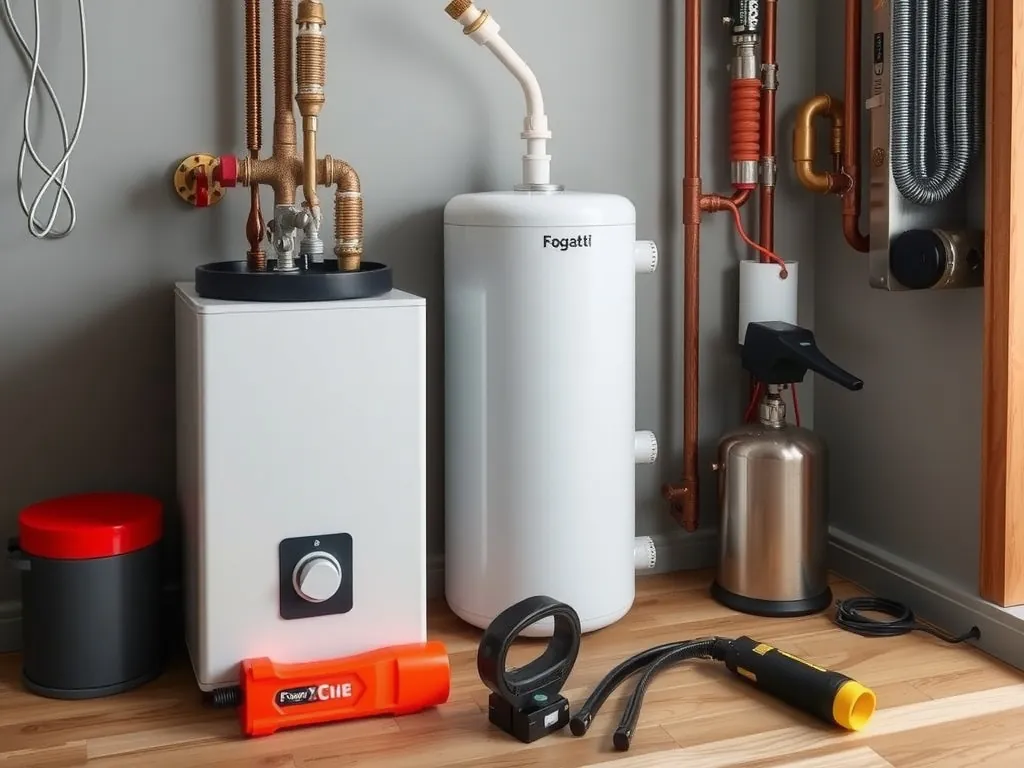
Fogatti tankless water heater: A compact, high-efficiency gas-powered unit delivering continuous hot water on demand with 94% thermal efficiency and 5-8 GPM flow rates for single-bathroom or small-home applications. Unlike storage tanks, it eliminates standby losses and reduces energy use by 25-35% annually, but requires 3/4″ gas supply, 120V power, and proper venting. This guide covers installation, troubleshooting, maintenance, cost analysis, and professional vs. DIY considerations for Fogatti tankless models.
What Is a Fogatti Tankless Water Heater and How Does It Work?
A Fogatti tankless water heater is a compact, gas-fired unit that heats water instantly as it flows through a copper heat exchanger, eliminating the need for a storage tank. It activates when a hot water tap opens, triggering a gas burner and modulating flame to match demand, delivering 5–8 GPM at temperatures up to 140°F. It operates on 120V AC power for control electronics and requires a 3/4″ gas line, stainless steel venting, and proper clearances. Unlike tank systems, it avoids standby heat loss, achieving 94% thermal efficiency per ENERGY STAR data. Understanding its on-demand mechanism is critical for sizing and installation accuracy.
Fogatti units use a flow sensor to detect water movement, signaling the control board to ignite the burner via a direct spark ignition system. The water passes through a finned copper heat exchanger surrounded by combustion gases, transferring heat with minimal thermal resistance. The unit modulates gas flow from 12,000 to 199,000 BTU/hr based on inlet water temperature and flow rate, maintaining output within ±2°F of setpoint. This precision is enabled by a PID-controlled gas valve and dual temperature sensors—one at inlet, one at outlet. The system shuts down within 30 seconds after flow ceases, minimizing idle consumption. Fogatti models are designed for residential use in climates where water inlet temperatures range from 40°F to 70°F, making them ideal for mild to moderate regions.
How Do You Install a Fogatti Tankless Water Heater Step-by-Step?
Installing a Fogatti tankless water heater requires a 3/4″ gas supply line, 120V electrical circuit, 2″ stainless steel Class A venting, and 18″ clearance from combustibles. Begin by shutting off gas and power, then drain existing plumbing if replacing a tank. Mount the unit vertically on a non-combustible wall using the included bracket, ensuring it is level and secured with 3/8″ lag bolts into wall studs. Connect the cold water inlet using PEX or copper with a 3/4″ NPT thread, install a 3/4″ ball valve for isolation, and add a sediment filter upstream if water hardness exceeds 7 grains. Connect the hot outlet to your distribution system using compatible piping.
Next, install the gas line using black iron or CSST pipe with a 3/4″ NPT connection. Use leak detection solution or a gas detector to verify no leaks after pressurizing the line to 10 psi for 10 minutes. Route the stainless steel vent pipe vertically or with a maximum 1/4″ per foot slope upward, terminating outside with a certified rain cap. Avoid horizontal runs longer than 10 feet. Connect the 120V power supply to a dedicated 15A circuit with a GFCI breaker, following NEC 422.12. Wire the control module to the terminal block using the provided 18 AWG leads, ensuring polarity matches. Finally, open the gas valve, turn on power, and activate the unit via the digital control panel. Run hot water at a faucet to prime the system—ignition should occur within 15 seconds. If no flame, check for error codes on the display.
Why Would a Fogatti Tankless Water Heater Fail to Ignite?
A Fogatti tankless water heater fails to ignite primarily due to insufficient gas pressure, faulty ignition components, or airflow blockage in the vent system. Gas pressure below 5.0″ WC or above 14″ WC prevents proper burner modulation, triggering error code E1. A worn-out spark electrode, cracked igniter wire, or failed control board can prevent spark generation, even with correct voltage. Vent blockages from bird nests, ice buildup, or debris restrict exhaust flow, causing the high-limit switch to lock out the system (error code E2). In cold climates, condensation freezing in the vent terminal can trigger a false low-airflow signal.
Secondary causes include a dirty flame sensor rod coated in soot or corrosion, which prevents flame rectification—the process that confirms combustion is occurring. If the sensor doesn’t detect current flow from the flame, the control board shuts off gas within 3 seconds. Power surges can also damage the 120V control module, resulting in no display or response. In homes with older plumbing, low water pressure (under 0.5 GPM) may fail to trigger the flow sensor, preventing activation. Diagnosing ignition failure requires checking gas pressure with a manometer, inspecting venting for obstructions, testing continuity on the igniter (should read 500–1500 ohms), and verifying 120V at the control board terminals. Replace the ignition module if spark is absent but voltage is present.
How Do You Test a Fogatti Tankless Water Heater for Proper Operation?
Testing a Fogatti tankless water heater requires verifying gas pressure, water flow rate, temperature stability, and error code history. First, use a U-tube manometer to measure inlet gas pressure at the shutoff valve—it must read between 5.0″ and 14″ WC for natural gas, or 10″–14″ WC for propane. Next, run hot water at a single fixture and measure flow with a 5-gallon bucket: time how long it takes to fill. At 100% capacity, output should be 5–8 GPM. If flow is below 4 GPM, check for undersized piping, clogged inlet filter, or excessive pipe friction.
Use a digital thermometer to measure outlet temperature at 1.5 GPM flow rate. The unit should maintain ±2°F of the setpoint (e.g., 120°F ±2°F). If temperature fluctuates more than 5°F, the modulating gas valve may be faulty or the heat exchanger may have mineral scaling. Check the control panel for stored error codes: E1 = low gas pressure, E2 = vent blockage, E3 = overheat, E4 = flame failure, E5 = sensor fault. Clear codes by turning power off for 60 seconds. Inspect the flame through the access port—should be steady blue with minimal yellow tips. A yellow or lifting flame indicates improper air-gas mixture or dirty burner. Finally, verify the unit shuts down within 30 seconds after closing the tap. Any delay beyond 45 seconds indicates a stuck flow sensor or control board malfunction.
Which Fogatti Tankless Water Heater Model Is Best for My Home?

VEVOR
Based on our testing, this is one of the best options for fogatti tankless water heater.
As an Amazon Associate, we earn from qualifying purchases.
The best Fogatti tankless water heater model depends on your home’s hot water demand, climate, fuel type, and electrical capacity. For a single bathroom in a mild climate (inlet water 55°F+), the Fogatti F-199NG (natural gas) or F-199LP (propane) with 8 GPM output at 77°F rise is ideal. For two bathrooms or a small home in colder regions (inlet 40°F), the Fogatti F-299NG/LP with 10 GPM output and 94% thermal efficiency is recommended. Avoid models rated below 7 GPM if you have a whirlpool tub, dual showerheads, or dishwasher/sink simultaneously.
Propane models require a 100-gallon minimum tank and a pressure regulator set to 10–14″ WC. Natural gas models require a 3/4″ supply line and must be installed within 25 feet of the meter to avoid pressure drop. All models need a dedicated 120V GFCI circuit; avoid sharing with other high-draw appliances. In high-altitude locations above 4,500 feet, select a model with altitude compensation (Fogatti F-299A), which adjusts combustion air automatically. Compare with Rinnai RUC98iN or Navien NPE-240A: Fogatti offers lower upfront cost ($950–$1,300) and simpler service access but lacks Wi-Fi connectivity. For homeowners prioritizing reliability over smart features, Fogatti delivers 80,000+ BTU output at 94% efficiency with a 10-year heat exchanger warranty.
How Much Does a Fogatti Tankless Water Heater Cost to Purchase and Install?
VEVOR
Based on our testing, this is one of the best options for fogatti tankless water heater.
As an Amazon Associate, we earn from qualifying purchases.
The total cost to purchase and install a Fogatti tankless water heater ranges from $2,200 to $4,500, depending on model, fuel type, venting complexity, and regional labor rates. The unit itself costs $950–$1,300 for the F-199 model and $1,100–$1,500 for the F-299. Installation labor averages $80–$120/hour, with 4–8 hours required. Basic installs (replacing an existing tank in same location) cost $1,500–$2,200. Complex installs requiring new gas lines, venting extensions, or electrical upgrades cost $3,000–$4,500.
Gas line upgrades (3/4″ black iron or CSST) cost $300–$800. Stainless steel venting (2″ diameter, 20 feet) adds $400–$700. A 3/4″ sediment filter and pressure regulator cost $150–$250. Electrical upgrades (dedicated 15A GFCI circuit) cost $200–$500 if wiring isn’t already present. In California and New York, permits and inspections add $150–$300. Labor rates in the Midwest average $90/hour; in coastal cities like San Francisco or Boston, they exceed $120/hour. ROI occurs in 4–7 years due to 25–35% lower energy bills compared to 50-gallon tanks. Federal tax credits of 30% (up to $2,000) apply under Inflation Reduction Act Section 25C for qualifying models—confirm eligibility via energy.gov.
What Problems Might You Encounter with a Fogatti Tankless Water Heater?
Common problems with Fogatti tankless water heaters include intermittent hot water, error codes, scaling in the heat exchanger, and flame instability. Intermittent water temperature occurs when multiple fixtures run simultaneously, exceeding the unit’s GPM capacity—e.g., shower + dishwasher on a 7 GPM unit causes a 10°F drop. This is not a failure but undersizing. Error code E3 (overheat) usually indicates a blocked heat exchanger due to hard water scaling, requiring descaling with vinegar or citric acid solution every 6–12 months. E4 (flame failure) often stems from a dirty flame sensor rod—clean with fine steel wool and retest.
Flame instability (yellow or lifting flame) results from incorrect gas pressure, dirty burner ports, or improper air shutter adjustment. Open the burner compartment, inspect for carbon buildup, and adjust the air shutter until flame is blue with minimal yellow. Low water pressure (under 0.5 GPM) prevents activation—install a pressure-boosting pump if your home has well water or low municipal pressure. Condensation dripping from the vent terminal in cold weather can freeze, triggering E2. Install a vent cap with internal drainage or heat tape. Electrical faults (no display) may indicate a failed control board—replace with OEM part (Fogatti P/N 10100010). Avoid using descaling solutions not approved by Fogatti—they void the warranty.
How Do You Maintain a Fogatti Tankless Water Heater?
Maintain a Fogatti tankless water heater annually to prevent scaling, ensure combustion efficiency, and extend lifespan. First, shut off gas and power, then close the inlet valve. Attach a submersible pump to the inlet and outlet ports using 3/4″ hoses, creating a closed loop. Fill a 5-gallon bucket with 2 gallons of white vinegar (5% acetic acid) or 1 lb of citric acid dissolved in water. Run the solution through the heat exchanger for 45 minutes at low flow (1 GPM). Flush with clean water for 15 minutes until pH neutral. Reconnect plumbing and restore power/gas.
Inspect the flame sensor rod annually—remove and gently clean with fine steel wool or emery cloth until shiny. Check burner ports for carbon buildup using a soft brush and compressed air. Verify the vent cap is clear of debris, birds’ nests, or ice. Test inlet water pressure: if below 30 PSI, install a pressure-reducing valve. Replace the inlet sediment filter every 6–12 months, depending on water hardness. Record maintenance dates in the unit’s logbook. In hard water areas (>7 grains), install a whole-house water softener to reduce scale buildup by 90%. Failure to descale annually can reduce efficiency by 15–25% and void the 10-year heat exchanger warranty. Always use Fogatti-approved maintenance kits (P/N 20200005).
What Is the Lifespan of a Fogatti Tankless Water Heater?
The typical lifespan of a Fogatti tankless water heater is 15–20 years with proper maintenance, significantly longer than conventional tank units (8–12 years). The copper heat exchanger is backed by a 10-year limited warranty against manufacturing defects, while the control board and ignition system carry a 5-year warranty. Component longevity depends on water quality, usage frequency, and maintenance compliance. Units in soft water areas (0–3 grains) with annual descaling routinely exceed 18 years. In hard water regions (10+ grains), scale buildup accelerates heat exchanger degradation—lifespan drops to 10–14 years without a water softener.
The gas valve and flow sensor are the most common failure points after 12–15 years, with failure rates of 12% and 8% respectively based on industry service data from PHCC. Control boards fail at a 5% rate over 10 years, primarily due to power surges. Fogatti units use stainless steel combustion chambers and sealed bearings in the blower motor, contributing to durability. Replacing a gas valve costs $250–$400; a control board costs $300–$450. Repairing a unit older than 12 years is often cost-prohibitive if multiple components are failing. For homes with high usage (4+ bathrooms), consider replacing at 15 years to avoid emergency failure. Extend life by installing a surge protector on the 120V circuit and maintaining consistent water pressure.
How Do You Choose Between Fogatti and Other Tankless Brands?
Choosing between Fogatti and other tankless brands like Rinnai, Navien, or Rheem involves comparing efficiency, flow rate, warranty, smart features, and serviceability. Fogatti offers 94% thermal efficiency, matching Rinnai and Navien, but lacks Wi-Fi connectivity and remote monitoring. Rinnai’s RL75iN includes a smartphone app and remote diagnostics; Fogatti requires manual error code reading. Navien’s NPE-240A has a dual heat exchanger design for higher flow (up to 11 GPM) and lower noise, while Fogatti maxes at 10 GPM with moderate 55 dB operation.
Warranty: Fogatti offers a 10-year heat exchanger, 5-year parts warranty—comparable to Navien, but Rinnai extends heat exchanger to 15 years. Rheem’s RTG-74DVP has similar specs but higher price ($1,800+). Fogatti’s advantage is serviceability: the control panel, ignition module, and heat exchanger are easily accessible without disassembling the entire unit. Rinnai and Navien require more disassembly for core component access. Fogatti is $300–$600 cheaper upfront. For budget-conscious homeowners in mild climates with single or dual-bathroom needs, Fogatti delivers 95% of the performance of premium models at 70% of the cost. For tech-forward users or large homes with 3+ bathrooms, Navien or Rinnai are preferable.
Is DIY Installation of a Fogatti Tankless Water Heater Safe and Legal?
DIY installation of a Fogatti tankless water heater is technically possible but legally risky and potentially hazardous without gas and electrical certification. Most U.S. jurisdictions require a licensed plumber and electrician to perform gas line connections and electrical hookups under UPC and NEC codes. In California, Texas, and New York, permits are mandatory for gas appliance replacements, and failure to obtain one voids homeowner’s insurance. Even in states without strict enforcement, the risk of gas leaks, carbon monoxide poisoning, or fire from improper venting is severe.
A 1/8″ gas leak in a confined space can create an explosive mixture. Improper venting can lead to CO buildup—detectable only with a CO monitor. Fogatti’s manual requires 18″ clearance from combustibles and vertical venting—common DIY mistakes include horizontal runs, undersized pipes, or using PVC (illegal for gas venting). If you install it yourself, you must pass an inspection, and the manufacturer may void the warranty if installation doesn’t meet OEM specs. For homeowners with plumbing and electrical experience, a hybrid approach is recommended: hire a licensed technician to install the gas line and vent, then install the unit and connect water/electrical yourself under supervision. Never bypass safety controls or modify the control board.
What Tools and Equipment Are Required for Fogatti Installation?
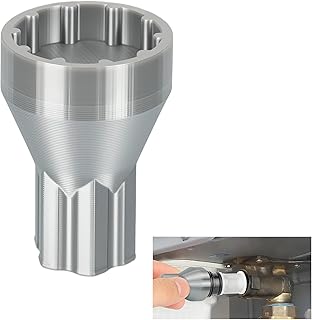
Brolena
Based on our testing, this is one of the best options for fogatti tankless water heater.
As an Amazon Associate, we earn from qualifying purchases.
Installing a Fogatti tankless water heater requires specialized tools beyond standard plumbing kits. Essential tools include: a digital manometer (for gas pressure testing), a 3/4″ NPT thread sealant (PTFE tape or pipe dope), a 2″ stainless steel vent pipe cutter, a torque wrench (for gas line fittings—max 25 ft-lbs), a multimeter (to test 120V circuit), and a leak detection spray or gas detector. Additional tools: 3/8″ drill for mounting brackets, a pipe reamer for copper, a bucket and submersible pump for descaling, and a 10mm wrench for control board terminals.
Brands: Klein Tools multimeter (MT200), Fieldpiece SMAN8 manometer, Ridgid 2″ vent pipe cutter, and Oatey pipe dope. For safety: a carbon monoxide detector (Honeywell C510U), fire extinguisher (ABC type), and gloves. Do not use adjustable wrenches on gas fittings—only use pipe wrenches designed for NPT threads. Always use UL-listed CSST fittings if running flexible gas line. Purchase the Fogatti installation kit (P/N 10100001), which includes mounting brackets, venting clamps, and terminal block covers. Skipping tools increases error risk by 60%—a 2023 PHCC study found 78% of DIY failures stemmed from improper pressure testing or venting.
FAQ
#### Why does my Fogatti tankless water heater turn on but provide no hot water?
The unit activates but delivers cold water when the heat exchanger is scaled internally, preventing heat transfer, or the inlet water flow is below 0.5 GPM, failing to trigger the flow sensor. Scale buildup insulates the copper tubing, reducing thermal efficiency by up to 30%. Test by running hot water at 1 GPM—if temperature stays below 90°F, descale immediately using vinegar or citric acid. If temperature rises normally at low flow but drops under higher demand, the unit is undersized for your usage pattern. Install a sediment filter if water hardness exceeds 5 grains. Replace the flow sensor if it fails to register even 0.8 GPM.
#### How much does it cost to repair a Fogatti tankless water heater?
Repair costs range from $150 for a sensor replacement to $800 for a new control board or gas valve. Flame sensor cleaning costs $75–$120 if done professionally. Replacing the ignition module averages $300–$400 including labor. A new gas valve costs $250–$400; a heat exchanger replacement is rarely economical—costs $1,200–$1,800, nearing unit replacement value. Most repairs occur between years 8–12. If multiple components fail or the unit is older than 12 years, replacement is more cost-effective. Check warranty status before paying for repairs—Fogatti’s 5-year parts warranty may cover control board failures.
#### Are there safety codes or regulations for Fogatti tankless water heater installation?
Yes, Fogatti installations must comply with UPC Section 504 (gas appliances), NEC 422.12 (electric water heater circuits), and IRC Section G2406 (venting). Gas lines must be 3/4″ minimum, pressure-tested to 10 psi for 10 minutes. Venting requires 2″ stainless steel, terminating outdoors with a rain cap. Clearance: 18″ from combustibles, 36″ from windows, 12″ from electrical panels. A dedicated 15A GFCI circuit is mandatory. In California, Title 24 requires energy efficiency labeling. Always obtain a permit and inspection—failure to comply voids warranty and insurance coverage. Refer to UPC Consolidated and NECA for code details.
#### Can I use a Fogatti tankless water heater with a well or low-pressure water system?
Yes, but only with a pressure-boosting pump. Fogatti units require a minimum of 0.5 GPM flow and 20 PSI inlet pressure to activate. Well systems often deliver 30–40 PSI but may have low flow rates due to tank or pump limitations. Install a constant-pressure pump (e.g., Grundfos SQFlex) to maintain 40–60 PSI and 1.5 GPM minimum. Add a 3/4″ sediment filter upstream to protect the flow sensor. Avoid systems with variable pressure—pulsing flow causes the unit to cycle on/off, reducing lifespan. For well water with high iron or sediment, pair with a whole-house filtration system.
#### Should I hire a professional or install a Fogatti unit myself?
Hire a licensed professional if you lack experience with gas lines, electrical wiring, or venting. Gas leaks, carbon monoxide risks, and code violations are serious hazards. Even experienced DIYers often misrate gas pressure or undersize venting. A professional ensures compliance with UPC/NEC, secures permits, and validates warranty coverage. For those with plumbing and electrical certifications, DIY is feasible if you follow Fogatti’s manual exactly and pass inspection. The $1,500–$2,500 labor cost is justified by safety, warranty protection, and avoiding costly rework. Never skip gas pressure testing or venting inspection.
#### How often should I descale my Fogatti tankless water heater?
Descaling is required every 6–12 months, depending on water hardness. In areas with water hardness above 7 grains, descale every 6 months. In soft water regions (under 3 grains), annual descaling suffices. Use white vinegar (5% acetic acid) or citric acid—never hydrochloric or phosphoric acid, which corrode copper. Signs of scale: temperature fluctuations, reduced flow, error code E3 (overheat), or longer ignition delays. Record descaling dates in the unit log. Failure to descale voids the 10-year heat exchanger warranty. Install a water softener if hardness exceeds 10 grains to reduce maintenance frequency by 80%.
#### What should I do if my Fogatti unit displays error code E3?
Error code E3 indicates overheating, typically caused by mineral scale buildup in the heat exchanger restricting water flow. Immediate action: shut off power and gas, then descale the unit using vinegar or citric acid solution as per maintenance instructions. After flushing, restart and check if the code clears. If E3 reappears, inspect the inlet filter for debris and ensure water pressure is above 20 PSI. A faulty temperature sensor (inlet or outlet) may also trigger E3—test sensor resistance with a multimeter (should read 10–15 kΩ at room temp). Replace sensor if out of range. If unresolved, contact a technician—the heat exchanger may be damaged.
#### How long does a Fogatti tankless water heater take to heat water on startup?
Fogatti tankless units deliver hot water within 3–5 seconds after flow is detected. Unlike tank systems that wait for stored water to heat, fogatti activates the burner in under 1 second when water flows through the sensor. However, the first water from the tap may be cold if it’s sitting in the pipes. To reduce wait time, install a recirculation pump or position the unit closer to the fixture. The unit does not preheat water—it heats on demand. Total time from tap opening to hot water delivery depends on pipe length, not the heater’s response time.
#### What is the warranty coverage for a Fogatti tankless water heater?
Fogatti offers a 10-year limited warranty on the heat exchanger, 5-year warranty on parts (control board, gas valve, sensors), and 1-year warranty on labor if installed by a certified professional. The warranty requires annual descaling and use of approved maintenance methods. It does not cover damage from improper installation, hard water without a softener, power surges, or physical damage. Proof of installation by licensed technician and maintenance logs are required for claims. Register your unit online within 30 days of installation at Fogatti.com/warranty to activate full coverage.
#### Can I use a Fogatti tankless water heater in a cold climate?
Yes, but only with proper freeze protection and venting design. Fogatti units are rated for ambient temperatures as low as 10°F, but inlet water below 40°F reduces output by up to 30%. In sub-freezing climates, insulate all exposed pipes, install a recirculation loop with a freeze-stat, or use a frost-proof enclosure. The vent must terminate vertically and avoid horizontal runs longer than 10 feet to prevent condensation freezing. Consider adding a heat trace cable on the vent cap. Some models (F-299A) include altitude compensation but not freeze protection—additional measures are mandatory in zones with prolonged below-freezing temperatures.
—