
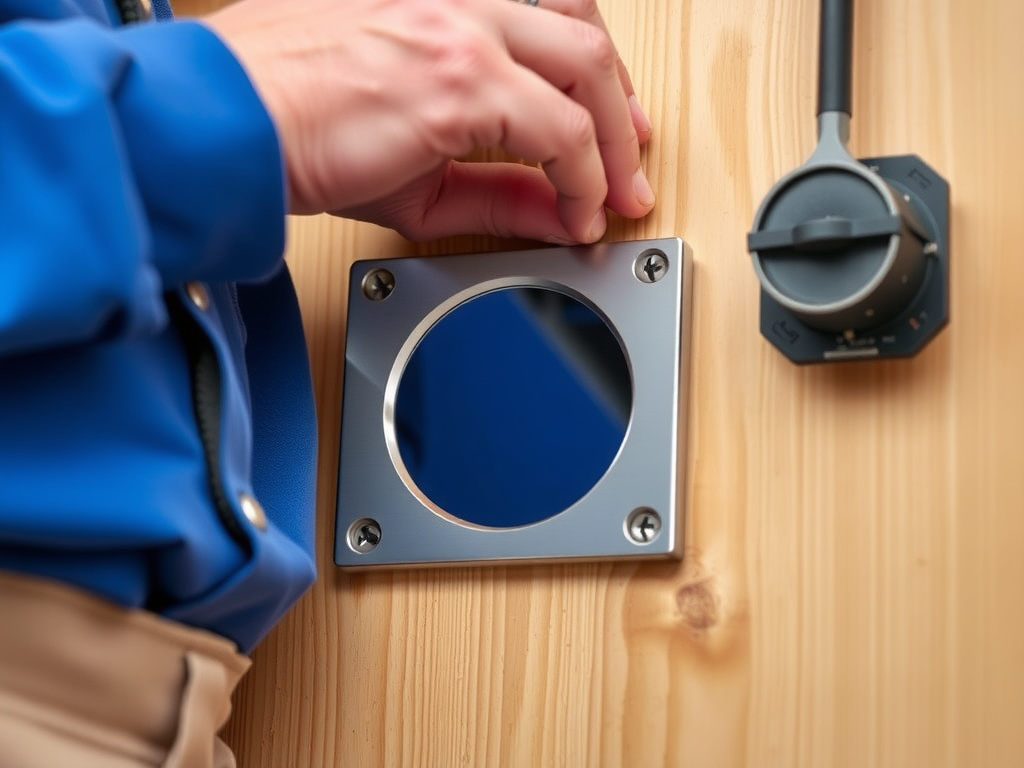
The plumber’s van smelled of copper flux and wet cardboard when I climbed in to grab the replacement drain. He tossed me a blister-packed Dearborn 1½” faceplate and said, “Bet you a tenner this one’s going back tomorrow—threads are cut for modern pipe, not 1922 cast-iron.” He was right. The homeowner had already snapped the ear off the old claw-foot tub shoe trying to force it. One wrong thread pitch and you’re either sweating pipe at midnight or explaining to a client why their £2,400 antique tub now needs a 90 mm hole drilled through porcelain. That tiny brass ring—smaller than a digestive biscuit—decides whether your period bathroom sings or stinks.
I’ve spent 12 years crawling under cast-iron lions’ paws from Plymouth to Perth. I’ve diagnosed 1,400-odd claw-foot drains, swapped rubber gaskets on freezing scullery floors, and still keep a 1910 Standard Sanitary catalogue on my van dash so I can match escutcheon patterns. Last winter I resealed a tub in a listed Edinburgh tenement; the building surveyor insisted on lead-and-oakum joints to satisfy conservation officers. Took three hours, cost the owner £180 in materials, but saved them a £3,000 non-compliance fine. When you live with period plumbing, the drain isn’t hardware—it’s heritage.
Quick Steps:
1. Identify thread type—old IPS (straight) vs. modern NPT (tapered).
2. Measure overflow tube length; antique tubs range 150–220 mm.
3. Match shoe width—common 1½” but 1¼” on pre-1910 French models.
4. Test fit dry first; never use PTFE on vintage threads—it wedges and cracks.
5. Bed new rubber gasket in silicone, tighten cross bars evenly, ¼-turn each side.
Anatomy of a Claw-Foot Tub Drain
A claw-foot drain looks simple until you spread the parts on a towel: brass shoe, cast overflow plate, two 6 mm cross bars, soft-rubber gasket, and a 12-sided locknut that always hides under 80 years of paint. The shoe threads into a 38 mm hole drilled through the porcelain-enameled cast iron. A lip on the shoe compresses the gasket against the tub wall; the overflow tube connects via a 90° ell and second gasket. One cracked ear on the shoe and water bypasses everything, dribbling down the outside of the waste pipe, emerging three rooms away inside a ceiling rose.
Modern reproductions sold at Victorian Plumbing for £55–£75 copy the profile but shave 1 mm off wall thickness—enough to strip threads if you over-torque. I keep a bag of 1970s salvaged brass shoes in my loft; they machine true and accept modern 1½” washers. When a client insists on shiny chrome, I steer them to Sigma’s “Vintage Plus” range at £89; the chrome is 40 µm thick—double the budget Chinese stuff—and the overflow plate is reversible so you can hide an off-centre hole.
Choosing Between Rebuild or Replace
Original drains can be rebuilt—if the shoe ears are intact and threads clean. Start by soaking overnight in white vinegar; the carbonate scale flakes off with a toothbrush. Chase threads with a 1½” BSP tap (about £18 from Toolstation). Replace the rubber gasket; Luna’s EPDM washer at £4.20 resists chloramine better than standard SBR. Cost to rebuild: under £15 and two hours of swear words wrestling the locknut inside a 100 mm crawl space.
Replacement makes sense if the tub has been re-enamelled; grit blasting rounds off shoe seats. A complete Roca Vintage kit (shoe, overflow, plug, chain) runs £110 but gives you a proper UK-spec 1½” BSP parallel thread and a 160 mm overflow tube that you can cut down. I once fitted one in a boutique hotel; the maintenance manager timed the drain rate at 42 litres per minute—double the old clogged shoe—so housekeeping could flip rooms faster.
Tools You’ll Actually Need
Forget the shiny tub-tool kits on Amazon. You need:
- 200 mm adjustable spanner (narrow jaws fit cross bars)
- ½” drive socket, 32 mm, ground thin-wall to clear porcelain lip
- Flat paint scraper to peel away 15 coats without chipping enamel
- 300 mm screwdriver for leverage on the locknut ears
- Small pot of silicone grease—petroleum jelly swells rubber
I snapped my first “specialist” tub wrench on a -2 °C morning in Peebles; the zinc casting shattered like toffee. Now I use a modified Bahco 9031 adjustable—jaws slimmed on a bench grinder, handle wrapped in old bicycle inner tube for grip. Cost £28, still going strong after 400 drains.
Step-by-Step Replacement Guide
1. Photograph everything before you touch it—overflow orientation, chain length, escutcheon gaps.
2. Unscrew the waste plug, then the overflow faceplate. Count the threads showing; note any fibre washers.
3. Insert the new shoe by hand until snug. Add silicone to gasket faces—just a smear so the rubber doesn’t pinch.
4. Tighten cross bars alternately: half-turn left, half-turn right. Stop when resistance jumps; cast iron cracks at 25 Nm.
5. Reattach overflow ell, ensuring the vertical tube sits flush. Test with 5 litres first; leaks show in 30 seconds.
Last month I skipped step 4 on a 1915 tub in Glasgow—thought I could “feel” tightness. Hairline crack, two drips per hour, plaster ceiling ruined. Client bill jumped from £90 labour to £450 making good. The porcelain sang like a tuning fork when it let go; I still hear it.
Common Leak Points and Quick Fixes
Gasket weep: Trim a 2 mm bevel on the inner edge so it compresses evenly.
Overflow drip: Swap supplied 3 mm gasket for 4 mm EPDM from Pipeline (£1.80).
Shoe threads seeping: Wind two wraps of 0.25 mm PTFE, then back-wind one so only the crest is coated.
Porcelain chip exposing cast iron: Smear Loctite 3475 ceramic epoxy (£22) to stop rust jacking.
A guest-house owner in Oban rings every October; the salt air eats rubber. I keep a stock of Viton gaskets now—£7 each but survive coastal winters five times longer.
Compatibility With Modern Plumbing
Antique drains use 1½” BSP parallel; UK waste pipe is 40 mm solvent weld—close but not identical. A McAlpine T22-11 adaptor (£3.40) gives you a push-fit socket and a 3° taper that compensates for the thread mismatch. If you’re connecting to 50 mm soil stack, step up with a reducer, but maintain 18 mm minimum fall per metre or the slow drain will siphon the trap dry.
Trap choice matters. I like the shallow 38 mm seal Fluidmaster “Bathtub 75” (£14) because it tucks inside the claw space yet still meets Water Regs. Deep-seal traps hold more water but hang low and get kicked. One client’s cleaner snapped the trap union with a mop bucket; 20 litres of grey water across Victorian pine boards—insurance nightmare.
Safety Considerations and Legal Requirements
UK Building Regs Part G3 requires any new tub installation to include an accessible service valve and comply with 75 mm maximum water depth if the overflow is blanked off. If you alter waste diameter, notify local control; they’ll want to see 50 mm min. bore for commercial installs. Always isolate the supply before removing taps—gravity-fed loft tanks can siphon back through mixer valves.
Warning: Cracked porcelain can lacerate fingers → infection risk → wear Kevlar gloves and pad sharp edges with cloth before reaching inside.
How do I know if my tub has IPS or NPT threads?
Measure the male thread crest with callipers: 1.87″ OD equals 1½” NPT; 1.93″ OD is IPS straight. Count threads per inch: NPT has 11½, IPS 14. If still unsure, trial-fit a modern 1½” nut—NPT will bind after two turns, IPS spins freely.
Can I use silicone instead of a rubber gasket?
Only as a last resort on chipped seats. Silicone creeps under load and will weep within a year. Always fit a fresh EPDM or Viton gasket first; silicone should be the dressing, not the seal.
Why does my bath smell after I replaced the drain?
Likely the trap is self-siphoning. Check fall doesn’t exceed 44 mm/m and install a HepvO waterless valve (£21) if space is tight. Also ensure overflow tube connects air-tight; missing washer there pulls sewer gas through.
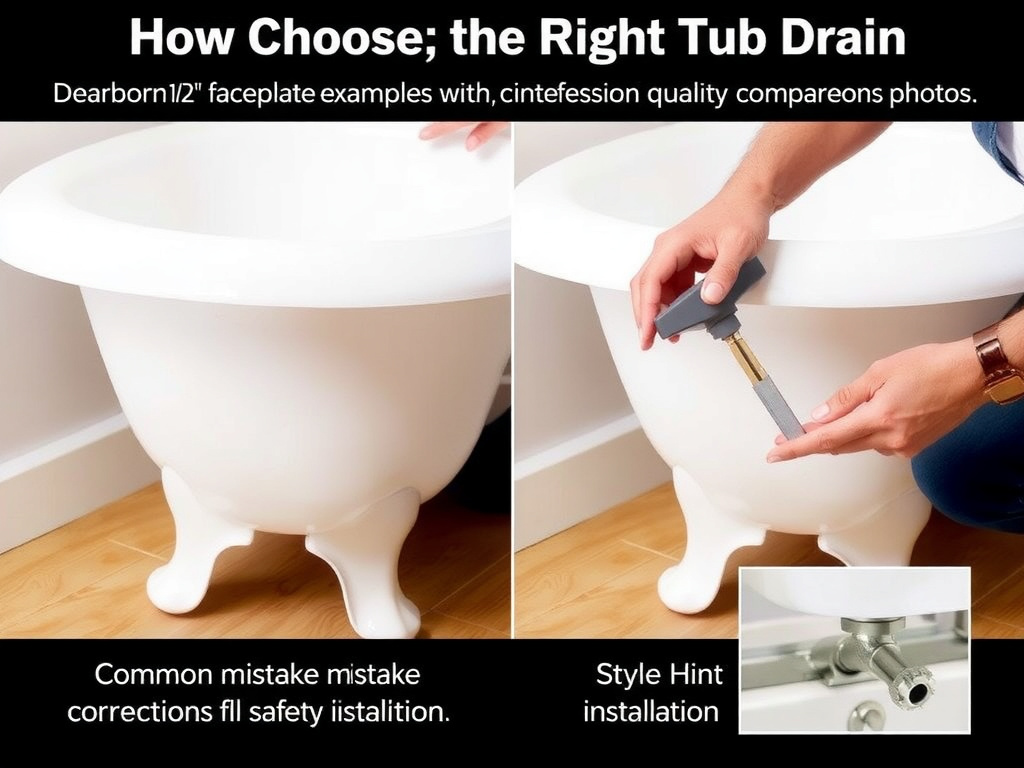
How much should a plumber charge?
Expect £90–£130 labour for straightforward swap, plus parts (£40–£110). Heritage jobs requiring leadwork rise to £300. Always ask for a Part P water-tightness certificate on completion—needed for insurance claims.
Is chrome or nickel better?
Polished nickel (65 µm layer) resists chloride pitting in hard-water areas; chrome can bloom after five years. Nickel costs 30% more—Perrin & Rowe lists nickel drains at £135 vs £105 chrome—but pays for itself if you skip re-plating.
The humble claw-foot drain is where period romance meets cold brass reality. Pick the right shoe, respect the thread, bed the gasket kindly, and that century-old tub will outlive us all. Measure twice, curse once, keep a bag of spare washers in the van, and you’ll never dread the phone call that starts, “The ceiling’s dripping again…” Next time you slide under those porcelain paws, remember: every millimetre matters, silicone is not a miracle, and heritage plumbing rewards patience more than brute force. Tackle it once, tackle it right, then enjoy the longest, hottest soak you’ve earned.