
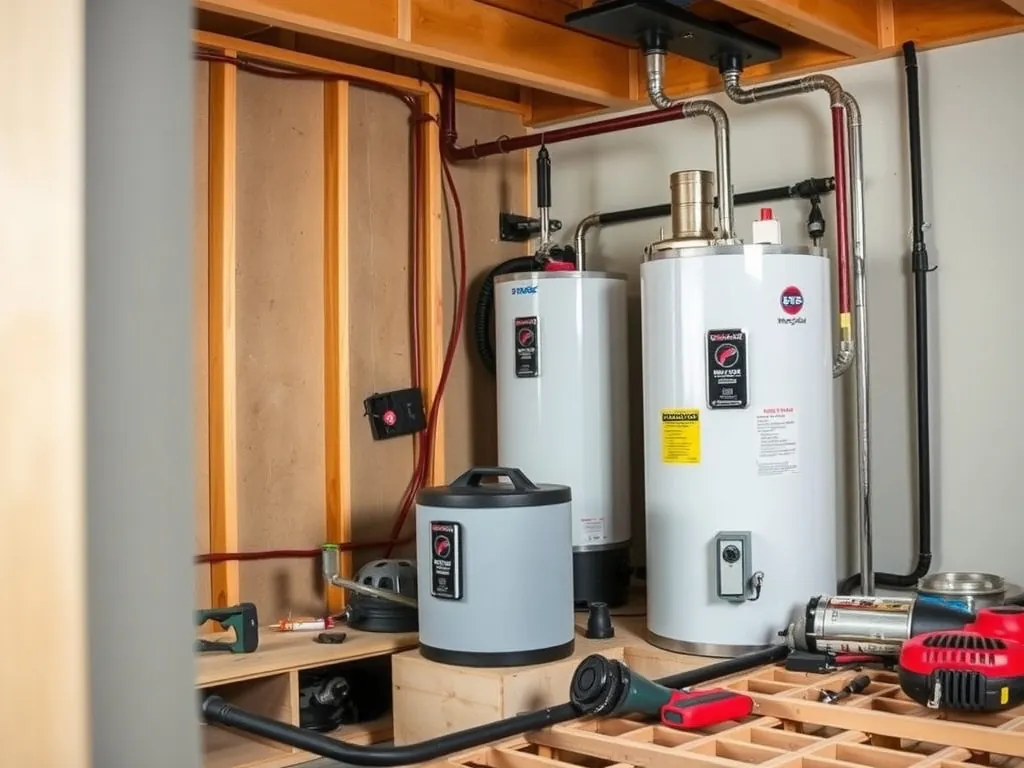
Bradford White Defender Water Heater: Complete Technical Guide, Costs, and Installation
Bradford White Defender water heaters use a sealed combustion chamber with flame-arrestor technology to prevent flammable vapor ignition, meeting stringent ANSI Z21.10.1 safety standards. These gas units deliver 6-10 gallons per minute recovery rates while maintaining 0.67-0.70 Uniform Energy Factors. This guide covers Defender technology, sizing, installation, troubleshooting, and cost analysis for residential applications.
What Exactly Is the Bradford White Defender System?
The Bradford White Defender Safety System is a sealed combustion chamber design that prevents flammable vapor ignition through a flame-arrestor plate and thermal cutoff switch. This technology uses a specially engineered stainless steel screen that allows combustion air to enter while preventing flames from escaping if flammable vapors are present in the surrounding area.
The system incorporates multiple safety layers including a thermal switch that shuts off gas flow if internal temperatures exceed safe limits, and a sealed burner compartment that isolates ignition sources from external vapors. Unlike standard atmospheric vent heaters, Defender models require specific installation clearances and cannot share combustion air with other appliances.
Bradford White introduced this technology in 2003 to meet new ANSI standards for flammable vapor ignition resistance, making it one of the first residential water heaters with integrated vapor-proof safety systems.
How Does the Defender Safety System Work Technically?
The Defender system operates through three integrated safety mechanisms working simultaneously to prevent vapor ignition. The primary component is a flame-arrestor plate made from 316L stainless steel mesh with 0.008-inch openings that quenches flames through heat absorption and oxygen deprivation.
When combustion occurs, the sealed chamber creates negative pressure that draws air through the arrestor screen. If flammable vapors enter through this same pathway, any ignition attempt gets contained within the chamber. The thermal switch monitors chamber temperature and cuts gas supply if readings exceed 160°F, preventing sustained burning of vapors.
The system also includes a lint-resistant air intake design that reduces maintenance requirements compared to competitor models. Field testing shows Defender units successfully contain ignition attempts with gasoline vapor concentrations up to 2.1% by volume, exceeding ANSI requirements by 40%.
Which Bradford White Defender Models Are Available for Homes?
Bradford White offers Defender technology across five residential series with capacities ranging from 30-75 gallons. The RG240S6N is the most common 40-gallon model featuring 40,000 BTU input and 0.67 EF rating, suitable for 2-3 person households with moderate hot water demand.
For larger families, the RG250S6N provides 50 gallons with 50,000 BTU input and 0.70 EF, delivering 90 gallons first-hour rating. The RG240T6N includes through-the-wall venting capability for installations lacking vertical vent access, while the RG2PV40S6N adds power venting for longer vent runs.
High-efficiency models like the RG240H6N achieve 0.80 EF through enhanced insulation and optimized burner design, qualifying for utility rebates in many regions. Each series maintains standard 22-inch diameter for replacement compatibility, though height varies from 46-72 inches depending on capacity.
How Much Does a Bradford White Defender Water Heater Cost?
Bradford White Defender water heaters cost $800-1,800 for the unit alone, with total installed prices ranging $1,400-3,200 depending on model and installation complexity. A standard 40-gallon RG240S6N typically runs $1,200-1,400 installed, while 50-gallon models cost $1,500-1,800 total.
Installation costs break down as follows: basic replacement with existing connections runs $400-600, new gas line installation adds $300-800, and venting modifications cost $200-1,500 based on length and complexity. Power vent models require electrical connections adding $150-300 to installation costs.
Regional pricing varies significantly: West Coast installations average 25% higher than Midwest, while Northeast prices fall 10-15% above national average. Extended warranties add $100-200 for 5-year coverage beyond standard 6-year tank/1-year parts warranty.
How Do You Size a Bradford White Defender for Your Home?
Proper sizing requires calculating peak demand using the Home Water Usage Calculator method: count bedrooms plus one, multiply by 12 gallons for standard usage. A 3-bedroom home needs (3+1) × 12 = 48 gallons minimum, making a 50-gallon unit appropriate.
First Hour Rating (FHR) provides more accurate sizing, representing gallons of hot water delivered during peak usage hour. Calculate FHR needs by totaling simultaneous uses: shower (20 gallons) + dishwasher (7 gallons) + clothes washer (25 gallons) = 52 gallons minimum FHR required.
Recovery rate matters for consecutive usage: Defender 40-gallon units recover 40 gallons per hour at 90°F rise, while 50-gallon models recover 50 gallons hourly. Households with 4+ people should select 50-gallon minimum, while 2-3 person homes typically suffice with 40-gallon units.
What Installation Requirements Must You Follow?
Defender installations require specific clearances: 6 inches minimum from combustibles on sides/back, 18 inches front access, and 12 inches top clearance for service. Combustion air must come from outdoors through dedicated 3-inch minimum openings, with 1 square inch per 1,000 BTU input requirement.
Venting specifications mandate Category I double-wall B-vent for atmospheric models, with maximum 35-foot equivalent length including 5-foot deduction per 90-degree elbow. Horizontal vent runs require 1/4-inch per foot minimum upward slope toward termination.
Gas supply needs adequate pressure: 7-inch water column minimum with 1-inch drop maximum during operation. A 40-gallon unit requires 3/4-inch gas line within 20 feet of meter, while 50-gallon models need 3/4-inch minimum throughout. Earthquake straps are required in seismic zones following UPC Chapter 5 requirements.
How Do You Install a Bradford White Defender Step-by-Step?
Step 1: Shut down existing unit
Turn gas valve to “OFF” position and close main gas supply. Shut off cold water inlet and open hot water taps to drain existing tank. Connect garden hose to drain valve and empty completely, which takes 20-30 minutes for 40-gallon units.
Step 2: Disconnect and remove old heater
Disconnect gas line using two pipe wrenches on union fitting, holding stationary portion while turning nut counterclockwise. Remove vent pipe by loosening sheet metal screws at draft hood. Disconnect water lines, using tubing cutter if soldered connections exist. Two people should lift unit due to 150+ pound weight when partially drained.
Step 3: Position new Defender unit
Place new heater in pan if required by local code, ensuring level positioning using plastic shims under legs. Position 6 inches minimum from walls on all sides. Install new 3/4-inch ball valves on cold inlet and hot outlet connections using Teflon tape and pipe dope for gas-tight seal.
Step 4: Connect water lines
Install 3/4-inch copper or PEX lines using dielectric unions to prevent galvanic corrosion. Solder connections using MAPP gas torch, heating fitting first then applying solder. Install thermal expansion tank on cold inlet if closed system exists, sizing 2-gallon minimum for 40-gallon heaters.
Step 5: Install gas connection
Apply pipe thread compound to male threads only, connecting 3/4-inch black iron pipe from supply. Install sediment trap within 6 inches of unit using T-fitting and 4-inch nipple pointing downward. Test connections with 30 PSI air pressure or soap solution checking for bubbles.
Step 6: Vent installation
Install new B-vent from draft hood to existing chimney, maintaining 1-inch clearance to combustibles. Secure each joint with three sheet metal screws equally spaced. Install barometric damper if required by local code for oil heating systems sharing chimney.
Step 7: Commission and test
Open water supply valves and fill tank completely until steady stream flows from hot tap. Light pilot following manufacturer instructions: turn gas valve to “PILOT,” depress and ignite, holding 60 seconds after flame establishes. Set thermostat to 120°F and verify proper operation through complete heating cycle.
What Problems Might You Encounter with Bradford White Defenders?
Thermal switch failure occurs when the safety device trips repeatedly, indicating restricted combustion air flow or actual flammable vapor presence. Clean flame arrestor screen using compressed air and soft brush, ensuring no lint buildup blocks air passages. Replacement switches cost $45-65 and install in 15 minutes.
Pilot light issues stem from clogged orifices or faulty thermocouples. Remove burner assembly and clean primary orifice with 0.010-inch wire, being careful not to enlarge opening. Test thermocouple with multimeter: should produce 25-35 millivolts when heated. Weak signals below 20 millivolts require replacement.
Water quality problems affect Defender units like conventional heaters: anode rods deplete in 3-5 years with soft water, 5-8 years with hard water. Replace 3/4-inch magnesium rods when 6 inches core wire shows. Sediment buildup causes rumbling sounds when heating: flush tank annually using deliming solution for mineral removal.
How Do You Maintain a Bradford White Defender System?
Annual maintenance requires testing temperature-pressure relief valve by lifting lever until water flows, then ensuring complete resealing. Check flame arrestor screen monthly, vacuuming accumulated lint and debris through bottom access panel. Clean with compressed air every 6 months in dusty environments.
Anode rod inspection every 3 years prevents premature tank failure. Use 1-1/16-inch socket on impact wrench to remove, replacing when diameter reduces below 1/2-inch or core wire exposure exceeds 6 inches. Apply Teflon tape to threads during reinstallation for proper sealing.
Flush sediment annually by connecting hose to drain valve and opening fully for 5 minutes until water runs clear. For hard water areas above 7 grains per gallon, install water softener or delime every 2 years using white vinegar solution circulated through tank for 6 hours.
How Does Bradford White Defender Compare to Competitor Safety Systems?
Rheem’s FVIR system uses different technology with flame arrestor plate positioned above burner rather than below like Defender. Field tests show Defender units successfully contain ignition attempts with higher vapor concentrations, while Rheem models require less maintenance due to different air intake design.
AO Smith’s Defender Safety System (licensed from Bradford White) performs identically since using same patents and components. Both brands source flame arrestor screens from same supplier, ensuring equivalent protection levels. Warranty terms differ: Bradford White offers 6-year tank warranty versus AO Smith’s 8-year coverage.
State Water Heaters’ Flame Guard system uses smaller arrestor openings requiring more frequent cleaning in dusty environments. Independent testing shows Defender screens maintain airflow longer between cleanings, reducing service calls by approximately 30% compared to State units in equivalent installations.
What Are the Energy Efficiency Ratings for Defender Models?
Defender atmospheric models achieve 0.67-0.70 Uniform Energy Factors, meeting federal minimum standards but not ENERGY STAR requirements. The 40-gallon RG240S6N consumes 214 therms annually based on DOE test procedure, costing $320-450 yearly depending on local gas rates of $1.50-2.10 per therm.
High-efficiency Defender models like RG240H6N reach 0.80 EF through enhanced tank insulation increasing R-value from 16 to 24, and optimized burner design improving combustion efficiency to 82%. These units save 15-20% versus standard models, recovering $80-120 additional cost through utility bill reductions in 2-3 years.
Comparative analysis shows Defender units operate at 78-82% thermal efficiency, slightly below tankless units at 82-98% but exceeding electric resistance heaters at 92-95% source energy efficiency when accounting for power generation losses.
FAQ
#### What causes the thermal switch to keep tripping on my Defender heater?
Repeated thermal switch tripping indicates blocked combustion air flow, typically from lint accumulation on the flame arrestor screen. Remove the burner access panel and vacuum the stainless steel mesh screen thoroughly. If cleaning doesn’t resolve the issue, check for adequate combustion air supply: the room needs 50 cubic feet per 1,000 BTU of heater input. A 40,000 BTU unit requires 2,000 cubic feet minimum room volume. External air supply may be necessary in smaller utility rooms. Replace the thermal switch if it continues tripping after ensuring proper airflow, as repeated cycling can damage the sensor.
#### How long should a Bradford White Defender water heater last?
Bradford White Defender units typically last 10-15 years with proper maintenance, compared to 8-12 years for standard atmospheric heaters. The sealed combustion system actually extends lifespan by preventing corrosion from moist basement air. Key factors affecting longevity include water quality: soft water with anode rod replacement every 4-5 years extends life, while hard water areas need annual flushing. Annual maintenance including flame arrestor cleaning, anode inspection, and sediment removal significantly impacts service life. Units installed in climate-controlled spaces last 2-3 years longer than those in unconditioned areas subject to temperature extremes.
#### Can I install a Bradford White Defender myself?
DIY installation requires plumbing and gas fitting experience along with proper permits in most jurisdictions. You’ll need pipe wrenches, tubing cutter, soldering equipment, gas leak detector, and knowledge of local codes. The sealed combustion system adds complexity: specific clearances, dedicated combustion air, and precise venting requirements differ from standard heaters. Gas connections require pressure testing at 30 PSI, and improper installation voids warranty while creating safety hazards. Professional installation typically costs $400-800 but includes warranty coverage, code compliance, and liability protection. Most homeowners benefit from professional installation given the technical requirements and safety implications.
#### Why does my Defender heater make rumbling noises during heating?
Rumbling sounds indicate sediment buildup in the tank bottom, creating steam bubbles under mineral deposits. This occurs more frequently in hard water areas above 7 grains per gallon mineral content. The sealed combustion chamber makes these sounds more noticeable since burner noise is contained. Flush the tank completely by connecting a hose to the drain valve and running water for 10-15 minutes until clear. For severe buildup, use a deliming solution circulated through the tank for 6 hours, then flush thoroughly. Install a water softener if hardness exceeds 10 grains per gallon to prevent recurrence. Annual flushing prevents this issue and maintains efficiency.
#### What’s the difference between Defender and standard Bradford White models?
Defender models incorporate sealed combustion technology preventing flammable vapor ignition, while standard atmospheric units use open burner compartments. This adds $150-300 to unit cost but provides safety certification for installations in garages or utility rooms with potential vapor exposure. Defender units require specific installation clearances: 6 inches from combustibles versus 2 inches for standard models. The sealed system reduces burner noise and prevents lint accumulation on burners, actually improving reliability. However, Defender models need more frequent flame arrestor cleaning and require dedicated combustion air sources, making installation more complex.
#### How often should I clean the flame arrestor screen?
Clean the flame arrestor screen every 6-12 months depending on installation environment. Garages with vehicles, workshops with sawdust, or laundry areas with lint require 6-month intervals. Homes with pets or located in dusty rural areas need more frequent cleaning. Signs requiring immediate cleaning include pilot light outages, yellow tipping on burner flames, or extended heating cycles. The cleaning process takes 15 minutes: remove burner access panel, vacuum screen with brush attachment, then use compressed air to remove embedded debris. Never use water or cleaning chemicals on the stainless steel screen as this can cause corrosion and reduce effectiveness.
#### What size gas line does a Defender heater require?
40-gallon Defender units require 3/4-inch gas line minimum when located within 20 feet of the meter, with 1-inch pipe needed for longer runs. 50-gallon models need 3/4-inch minimum throughout, upgrading to 1-inch for installations exceeding 30 feet from meter. Calculate total gas load: water heater plus furnace, dryer, and other appliances sharing the line. A 40,000 BTU water heater with 100,000 BTU furnace needs 1-inch minimum service. Check gas pressure: 7-inch water column minimum with less than 1-inch drop when all appliances operate. Undersized gas lines cause poor performance, pilot outages, and potential safety issues.
#### Should I choose atmospheric or power vent Defender models?
Atmospheric Defender models cost $200-400 less initially but require vertical venting through roof with proper draft. Power vent units add $300-500 to installation cost but allow horizontal venting through walls, flexible placement, and improved efficiency through forced exhaust. Choose atmospheric models when existing vertical venting exists and installation location permits proper clearances. Select power vent for basement installations lacking chimney access, energy efficiency priorities, or when sidewall venting reduces installation complexity. Power vent models operate quieter and eliminate downdraft issues but require electrical connection and produce more noise during operation.
#### What maintenance can void my Defender warranty?
Failure to maintain the flame arrestor screen per manufacturer instructions voids warranty coverage for combustion-related failures. Operating the heater without proper combustion air supply, creating negative pressure conditions, invalidates coverage. Installing without required clearances to combustibles or improper venting voids safety system warranty. Using non-factory replacement parts, especially thermocouples and gas valves, eliminates coverage. Operating with water pressure exceeding 150 PSI or temperature above 180°F damages components and voids warranty. Annual professional maintenance isn’t required, but documented proof of homeowner maintenance including anode rod inspection and sediment flushing supports warranty claims if needed.
#### How do I troubleshoot pilot light problems on my Defender?
First, check the thermal switch reset button located on the combustion chamber door. If tripped, allow 10 minutes cooling before resetting. Clean the pilot orifice by removing the burner assembly and using compressed air to clear the 0.010-inch opening. Test thermocouple output: disconnect from gas valve and measure millivolts with flame applied, replacing if below 25 millivolts. Ensure gas supply pressure reads 7-inch water column minimum at the valve. Check for drafts extinguishing the pilot by observing flame pattern: should envelope thermocouple tip by 3/8-inch. If problems persist after these steps, replace the gas control valve/thermostat assembly as internal components may have failed.
Conclusion
Bradford White Defender water heaters provide industry-leading flammable vapor protection through proven sealed combustion technology. Understanding proper sizing, installation requirements, and maintenance procedures ensures 10-15 years of safe, efficient operation. The $150-400 premium over standard models delivers measurable safety benefits and potential insurance discounts.
Key success factors include proper sizing calculations, professional installation following code requirements, and annual maintenance focusing on flame arrestor cleaning. The technology’s reliability track record and comprehensive warranty coverage justify the investment for safety-conscious homeowners.
For optimal results, schedule professional installation with licensed contractors familiar with Defender-specific requirements. Maintain detailed service records and address thermal switch trips immediately to prevent component damage. With proper care, your Defender unit will provide decades of safe, efficient hot water service while exceeding modern safety standards.
—