
Heated Dog Water Bowl: Complete Cost, Selection, and Safety Guide
A heated dog water bowl prevents freezing in temperatures below 32°F using integrated heating elements that maintain water at 40-50°F. These bowls cost $25-150 depending on capacity and safety features, consuming 25-60 watts of electricity daily. This guide covers selection criteria, installation methods, operating costs, and safety protocols for reliable winter hydration.
What Is a Heated Dog Water Bowl and How Does It Work?
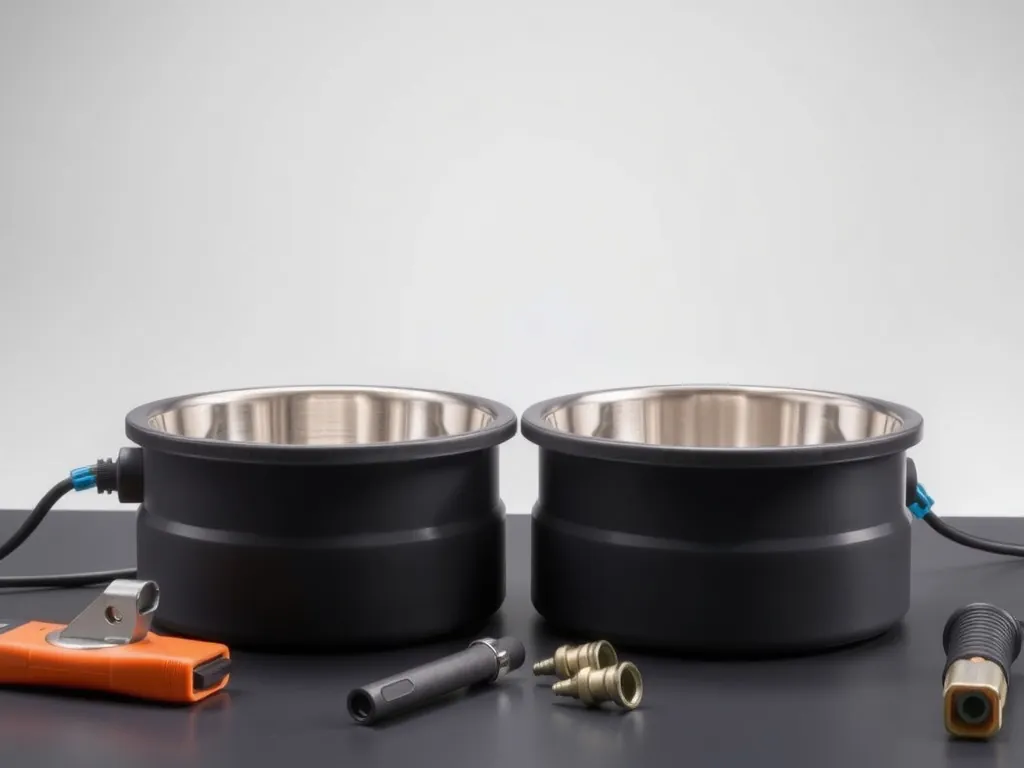
A heated dog water bowl contains an integrated heating element beneath the stainless steel or plastic bowl that automatically activates when ambient temperature drops below 38-42°F. The thermostat-controlled heating system maintains water temperature at 40-50°F using 25-60 watts of power, preventing ice formation while keeping water cool enough for safe drinking. Advanced models include chew-resistant cords, automatic shut-off mechanisms, and energy-efficient thermostats that cycle power based on external temperature conditions.
The heating element consists of a sealed electrical coil embedded in the bowl’s base, connected to a thermostat that monitors both water and air temperature. When temperatures approach freezing, the thermostat completes the electrical circuit, activating the heating element. Most quality bowls reach operating temperature within 15-30 minutes and maintain consistent warmth through insulated construction that prevents heat loss to surrounding cold air.
Which Types of Heated Dog Water Bowls Are Available?
Three primary heated dog water bowl designs dominate the market: standard electric bowls with integrated heating, thermal battery-powered units, and heated base systems for existing bowls. Electric models offer the most reliable performance with 1-5 gallon capacities, stainless steel or BPA-free plastic construction, and power consumption ranging from 25-60 watts depending on bowl size and insulation quality.
Standard electric bowls like the K&H Pet Products Thermal-Bowl consume 25 watts for 96-ounce capacity, costing approximately $3-5 monthly to operate in freezing climates. Battery-powered units provide 8-12 hours of heating using rechargeable lithium batteries, ideal for locations without electrical access but requiring daily battery management. Heated base systems, such as the Farm Innovators Model SB-60, support existing bowls up to 2 gallons while using 60 watts to maintain temperature through conductive heating from below.
How Much Do Heated Dog Water Bowls Cost to Buy and Operate?

Heated Water Bowl for Outdoor Dog & Cat, Large Heated Dog Bowl Provides Drinkable Water in Winter, Outside Heated Pet Bowl with 78.7in Anti Chew Cord for Dogs Cat Bird Chicken Duck,108 OZ/30W
Based on our testing, this is one of the best options for heated dog water bowl.
As an Amazon Associate, we earn from qualifying purchases.
Heated dog water bowls cost $25-150 initially, with operating expenses adding $25-60 annually depending on local electricity rates and climate severity. Entry-level 32-ounce plastic models start at $25-35, while premium 5-gallon stainless steel units with chew-resistant cords and automatic shut-offs reach $120-150. Monthly electricity consumption averages 18-43 kWh during winter months, translating to $2-7 monthly in most regions.
Regional electricity rates significantly impact operating costs: Pacific Northwest users pay $1.50-3 monthly at $0.08/kWh, while Northeast customers face $4-7 monthly at $0.18/kWh. Professional installation adds $150-300 if outdoor-rated electrical circuits are required, though most homeowners simply plug into existing GFCI-protected outlets. Total first-year costs including purchase and operation range from $55 for basic models to $220 for premium units in high-rate electricity markets.
How Do You Select the Right Heated Dog Water Bowl for Your Climate?
Climate severity determines necessary bowl capacity, heating power, and safety features for reliable winter operation. Regions experiencing extended periods below 10°F require 60-watt heating elements with 1.5-5 gallon capacity to prevent rapid freezing during power cycling, while moderate climates above 20°F can utilize 25-watt units with 32-96 ounce capacity for adequate protection.
Wind exposure significantly impacts selection: outdoor kennels in windy areas need bowls with wind shields or insulated housings to prevent heat loss, while sheltered locations allow standard open designs. For households with multiple dogs, calculate 8-12 ounces of water per dog per day minimum, then double capacity to account for heating inefficiencies and spillage. Stainless steel models provide superior durability in extreme cold compared to plastic, which can become brittle at -20°F and below.
What Safety Features Must Heated Dog Water Bowls Include?
Essential safety features include GFCI protection, chew-resistant cords, automatic shut-off mechanisms, and UL or ETL certification for outdoor electrical devices. GFCI protection prevents electrocution hazards from damaged cords or water exposure, while 18-gauge steel-jacketed cords resist chewing damage that could expose live electrical connections. Automatic shut-off systems deactivate heating when bowls run dry, preventing fire hazards and equipment damage.
Quality heated bowls carry UL 499 or ETL certification for heating appliances, ensuring compliance with electrical safety standards for outdoor use. Look for models with sealed electrical connections rated IPX4 or higher for water resistance, and thermostat controls that maintain 40-50°F to prevent scalding while ensuring freeze protection. Grounded three-prong plugs provide additional protection against electrical faults, particularly important in damp outdoor environments where dogs drink.
How Do You Install and Set Up a Heated Dog Water Bowl?
Installation requires positioning the bowl within 6 feet of a GFCI-protected outlet, ensuring level placement on a stable surface, and routing the cord to prevent chewing or tripping hazards. Secure the cord using weatherproof cable staples or conduit, maintaining 6-inch clearance from kennel walls or fencing where dogs might reach chewing distance. Test GFCI functionality monthly using the test/reset button to verify protection remains active.
For locations lacking convenient outlets, install weatherproof boxes with in-use covers and outdoor-rated extension cords rated for 15 amps minimum. Position bowls away from bedding areas to prevent spillage from creating damp conditions, and elevate 2-4 inches using pavers or pressure-treated wood to improve drainage underneath. Secure bowls using attached mounting brackets or place inside protective housings to prevent tipping by active dogs.
What Maintenance Do Heated Dog Water Bowls Require?
Daily maintenance includes water level checks, debris removal, and cord inspection for damage or chewing marks. Clean bowls weekly using mild detergent and warm water, avoiding harsh chemicals that might contaminate drinking water or damage heating elements. Monthly tasks include GFCI testing, heating element verification by feeling for warmth during freezing weather, and thorough inspection of electrical connections for corrosion or moisture intrusion.
Winterize heated bowls by checking thermostat accuracy using a thermometer in ice water – the heating element should activate when water temperature drops below 40°F. Replace worn gaskets or seals annually to maintain water resistance, and store spare cords for quick replacement if damage occurs. Document serial numbers and purchase dates for warranty claims, as most manufacturers cover heating elements for 1-2 years while excluding cord damage from chewing.
Which Problems Might You Encounter with Heated Dog Water Bowls?
Common failures include heating element burnout indicated by ice formation despite power connection, thermostat malfunction causing continuous operation or failure to activate, and cord damage from chewing or environmental exposure. Heating elements typically fail after 3-5 years of continuous winter use, showing gradual performance decline before complete failure. Test by unplugging for 30 minutes in freezing weather – properly functioning units should produce noticeable warmth within 15 minutes of reconnecting power.
Thermostat problems manifest as water that’s too hot (above 60°F) or failure to prevent freezing, requiring bowl replacement since thermostats are sealed components. Chewed cords require immediate replacement – never attempt electrical tape repairs on heating appliances. Circuit breaker trips indicate either cord damage creating ground faults or overloaded circuits from multiple heating devices. Install dedicated 15-amp circuits for large installations to prevent nuisance tripping during peak winter demand.
How Do Heated Dog Water Bowls Compare to Alternative Winter Hydration Methods?
Heated water bowls provide superior convenience compared to manual water replacement every 2-4 hours during freezing weather, while costing 60-80% less than installing heated automatic water systems with underground plumbing. Insulated but unheated bowls delay freezing by 2-6 hours but require frequent monitoring and replacement, making them impractical for working households away 8+ hours daily.
Floating de-icers for stock tanks cost $40-80 but require larger water volumes and create electrocution risks if dogs can reach heating elements. Heated pet fountains circulate water to delay freezing while providing filtration, but cost $80-200 and require weekly filter replacement at $5-8 monthly. For single-dog households in moderate climates, bringing bowls indoors overnight provides adequate freeze protection, while multi-dog kennels or sub-zero climates justify heated bowl investment for reliable hydration access.
What Energy Efficiency Features Reduce Operating Costs?
Energy-efficient heated bowls utilize 25-watt heating elements with precise thermostats cycling power 40-60% less than basic models, saving $15-30 annually in electricity costs. Insulated double-wall construction reduces heat loss by 30-50% compared to single-wall designs, while thermal mass from larger water volumes (1+ gallons) maintains temperature stability with less frequent heating cycles. Smart thermostats with ambient temperature sensors prevent unnecessary heating during warmer daylight hours.
Timer controls can reduce operation to 12-16 hours daily during moderate freezing conditions, cutting electricity use by 25-40% while maintaining freeze protection during critical overnight hours. Solar-assisted models combine 10-watt solar panels with battery backup, reducing grid electricity consumption by 60-80% in sunny climates despite $150-200 initial cost premium. Calculate payback periods by comparing 25-watt efficient models ($30-40/year operation) versus 60-watt standard units ($70-90/year) in your local climate zone.
How Long Do Heated Dog Water Bowls Typically Last?
Quality heated dog water bowls last 5-8 years with proper maintenance, though heating elements typically require replacement after 3-5 years of continuous winter operation. Stainless steel bowls outlast plastic models by 2-3 years in harsh climates, resisting UV degradation and temperature cycling damage. Chew-resistant cords extend lifespan by preventing the most common failure mode, while units with replaceable heating elements provide longer service life despite higher initial costs.
Warranty coverage varies significantly: budget models offer 90-day to 1-year coverage excluding cord damage, while premium units provide 2-3 year comprehensive warranties including heating elements. Document purchase dates and register products for warranty claims, keeping receipts for units costing $75+ where replacement makes economic sense. Factor replacement costs into long-term ownership – a $100 bowl lasting 7 years costs $14 annually versus $25 annually for a $50 bowl requiring replacement every 2 years.
FAQ
#### Can heated dog water bowls cause electrocution if chewed?
Chewed cords create serious electrocution risks, though quality bowls include safety features minimizing danger. GFCI protection should trip within 1/40th second when cords are damaged, preventing fatal shocks but still causing painful jolts. Steel-jacketed cords resist chewing damage, while proper installation routing cords through protective conduit eliminates access. Never use extension cords not rated for outdoor use, and inspect cords weekly for damage. If chewing occurs, immediately disconnect power and replace the entire unit – never attempt electrical repairs on heating appliances.
#### What’s the monthly electricity cost for running a heated bowl 24/7?
Monthly costs range $1.50-7 depending on local electricity rates and bowl wattage. A 25-watt bowl consumes 18 kWh monthly, costing $1.44 at $0.08/kWh (Northwest rates) or $3.24 at $0.18/kWh (Northeast rates). Larger 60-watt bowls use 43 kWh monthly, doubling costs to $3.44-7.74 respectively. Actual consumption runs 60-75% of maximum since thermostats cycle power based on temperature, reducing real-world costs by 25-40% from calculated maximums. Track usage with a Kill-A-Watt meter for precise measurements.
#### Do heated bowls work in extreme cold below -20°F?
Quality heated bowls maintain liquid water to -40°F when properly sized for local conditions. Select 60-watt minimum heating power for sub-zero climates, with 1+ gallon capacity providing thermal mass stability. Position bowls in sheltered locations blocking wind, which accelerates heat loss dramatically. Elevate bowls 2-4 inches to prevent ground contact cooling, and check twice daily during extreme cold since consumption increases while heating efficiency decreases. Stainless steel models perform better than plastic in extreme cold, resisting brittleness while conducting heat more efficiently to water.
#### Should I choose battery-powered or electric heated bowls?
Battery-powered bowls suit temporary situations or locations lacking electrical access, providing 8-12 hours operation before requiring recharge. Lithium battery models cost $80-150 initially plus $20-40 annually for battery replacement, making electric models more economical for permanent installations. Electric bowls provide unlimited runtime with $2-7 monthly electricity costs versus daily battery management hassles. Choose battery power for emergency backup, camping, or rental properties where electrical modifications aren’t possible – otherwise electric models offer superior convenience and lower operating costs.
#### How do I prevent my dog from chewing the heating cord?
Prevent chewing by routing cords through ½-inch galvanized conduit or using commercial cord protectors rated for outdoor use. Position bowls maximizing distance from kennel walls or fencing where dogs might reach cords – minimum 18 inches prevents most chewing attempts. Apply bitter apple spray or commercial anti-chew preparations weekly, reapplying after rain or snow. Provide appropriate chew toys near water stations to redirect chewing behavior, and consider bitter-coated cords specifically designed for pet applications. Supervise initially to correct chewing attempts before habits form.
#### Are heated bowls safe for indoor use?
Heated bowls work safely indoors but provide unnecessary freeze protection while creating minor safety risks. Indoor models consume electricity continuously since thermostats activate below 40°F, warming water above comfortable drinking temperature (60-70°F) in heated homes. Use only if home temperatures drop below 45°F regularly, positioning on waterproof surfaces since condensation forms on heated surfaces. Never use outdoor-rated GFCI cords indoors – plug directly into standard outlets, and expect $3-8 monthly electricity costs from unnecessary heating in climate-controlled environments.
#### What size heated bowl do I need for multiple dogs?
Calculate minimum 12 ounces daily per dog, then double capacity to account for heating inefficiencies and spillage. Two medium dogs need 48-64 ounce minimum capacity, while four large dogs require 1.5-2 gallons for adequate supply between refills. Larger volumes maintain temperature more efficiently, reducing heating cycles and electricity costs. Multiple smaller bowls prevent crowding and provide redundancy if one fails – particularly important in extreme cold where single-bowl failure could cause dehydration before discovery.
#### How do I test if my heated bowl is working properly?
Test functionality during freezing weather by unplugging for one hour, then reconnecting while feeling the bowl’s exterior for warmth developing within 15 minutes. Place a thermometer in the water – properly functioning units maintain 40-50°F regardless of ambient temperature. Monitor overnight ice formation – any ice indicates heating failure requiring immediate replacement. Test GFCI protection monthly using test/reset buttons, and verify thermostat operation by observing heating cycles every 30-60 minutes during cold weather.
#### Can I use a heated bowl for other pets like cats or chickens?
Heated bowls work safely for cats, chickens, rabbits, and livestock when sized appropriately for species needs. Cats prefer shallower 16-32 ounce bowls preventing whisker fatigue, while chickens need 1-3 gallon capacity serving 6-12 birds. Position chicken bowls to prevent roosting contamination, and elevate cat bowls 4-6 inches reducing neck strain. All species benefit from 40-50°F water temperature maintained by heated bowls, increasing winter water consumption essential for health and egg production in poultry.
#### Do heated bowls require special winter storage?
Store heated bowls indoors during off-season after thorough cleaning and complete drying to prevent mold growth. Coil cords loosely avoiding sharp bends that damage internal wires, and store in original packaging preventing physical damage. Test functionality before winter storage by plugging in briefly – discovering failures in October prevents emergency purchases during first freeze. Document purchase dates for warranty tracking, and replace units showing cord wear, heating element discoloration, or thermostat malfunctions before depending on them during freezing weather.
Conclusion
Heated dog water bowls provide reliable freeze protection for $25-150 initially plus $25-60 annually in operating costs, eliminating manual water replacement during freezing weather. Select models with GFCI protection, chew-resistant cords, and appropriate capacity for your climate and dog count. Install near protected outlets, route cords safely, and maintain weekly during winter months. Quality units last 5-8 years, making them cost-effective compared to alternative hydration methods requiring constant monitoring and replacement.
Evaluate your specific climate, dog count, and electrical access to determine optimal bowl size and features. Calculate total first-year costs including purchase and operation before deciding, and choose models with replaceable heating elements for maximum longevity. Test functionality before first freeze, establish maintenance routines, and keep spare units for critical applications where water access cannot be interrupted. With proper selection and care, heated bowls provide worry-free winter hydration for dogs in any climate.
—