
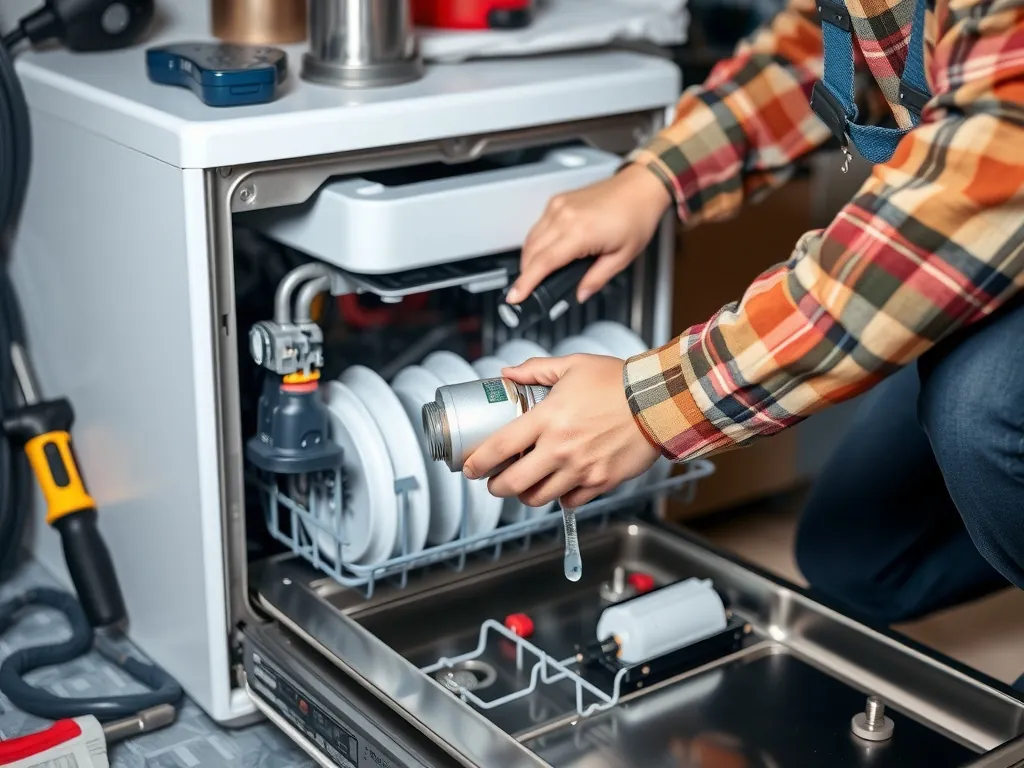
Do Dishwashers Heat the Water: Complete Guide to Operation, Efficiency, and Troubleshooting
Dishwashers heat the water internally using built-in heating elements to reach cleaning temperatures of 120–160°F, even when connected to a standard cold water supply. Most models boost incoming water temperature by 20–40°F during the wash and rinse cycles for effective cleaning and sanitization. This guide covers how dishwasher heating systems work, performance factors, energy use, installation requirements, troubleshooting, and cost implications.
What Is a Dishwasher’s Water Heating System and How Does It Work?
A dishwasher heats water using an internal electric heating element located at the bottom of the tub, raising the temperature to 120–160°F for effective cleaning and sanitization. The machine draws in cold water through the household supply line, then activates the heating element during the wash and rinse phases to achieve optimal cleaning performance.
The heating cycle typically begins after water fills the sump, monitored by a thermostat or thermistor that regulates temperature. When the sensor detects water below the target—usually 120°F for washing and 140–160°F for rinsing—the control board activates the heating element. This process takes 10–20 minutes depending on initial water temperature and dishwasher model.
Heating occurs in two stages: first during the main wash to dissolve detergent and break down food soils, then again in the final rinse to improve drying and meet NSF/ANSI 3 standard for residential sanitization (minimum 150°F rinse temperature). Some high-end models include a third booster heater to ensure consistent temperatures regardless of inlet water conditions.
Dishwashers do not rely solely on hot water from the home’s water heater. While connecting to a hot water line can reduce cycle time and energy use, all modern dishwashers are designed to operate on cold water input and heat it internally. This ensures cleaning efficacy even if household hot water fluctuates or runs out.
The heating element is typically a 1,200–2,400-watt resistive coil sealed in a stainless steel or ceramic housing. It is immersed in the standing water at the tub base and controlled by the dishwasher’s electronic control board. If the element fails, cleaning performance drops significantly due to insufficient water temperature.
Thermal efficiency varies by model and insulation. Fully integrated, front-control dishwashers with foam insulation retain heat better than basic top-control units, reducing reheating frequency and energy consumption. ENERGY STAR certified models use 12% less energy on average than standard units, largely due to improved heating system design and cycle optimization.
Learn more about ENERGY STAR dishwasher performance standards from the U.S. Department of Energy.
How Do Dishwashers Heat Water Without a Direct Hot Water Connection?
Dishwashers heat water without a direct hot water connection by using an internal electric heating element to raise cold supply water from 50–70°F up to 120–160°F during the wash and rinse cycles. This allows them to function effectively even when plumbed only to a cold water line, which is standard in most U.S. installations.
The heating process starts when the dishwasher fills with cold water from the household supply. A flow valve opens for 10–30 seconds, delivering 2–5 gallons depending on cycle type. Once water reaches the sump, a temperature sensor checks the level. If below the setpoint—typically 120°F—the control board activates the heating element.
Heating time ranges from 8–20 minutes, consuming 1.2–2.4 kWh depending on element wattage and starting temperature. For example, raising 3 gallons of water from 60°F to 140°F requires approximately 1.1 kWh of energy. This is why ENERGY STAR models optimize heating duration and insulation to reduce consumption.
Cold water connection is standard because it prevents premature detergent activation. Dishwasher detergents are formulated to release at higher temperatures. If hot water entered the dispenser too early, it could dissolve the detergent before the main wash, reducing cleaning efficiency.
Connecting to hot water is optional but can shorten cycle times by 10–15 minutes by reducing the heating load. However, this only provides benefit if the household water heater delivers consistent 120°F+ water. In homes with long pipe runs or tankless heaters, hot water may arrive too cool to matter.
Some models, like Bosch’s “Extra Heat” or Whirlpool’s “Heated Dry with Fan Assist,” include advanced heating algorithms that monitor incoming water and adjust heating duration automatically. These systems improve reliability in variable water conditions.
Cold water supply also reduces the risk of damaging plastic dishes or warping containers during pre-wash stages. By controlling heating internally, the dishwasher ensures precise temperature management throughout the cycle.
Why Does Your Dishwasher Need to Heat Water to Clean Effectively?
Dishwashers must heat water to 120–160°F to dissolve food soils, activate detergent enzymes, sanitize dishes, and enable effective drying through evaporation. Below 110°F, grease remains solid, detergents underperform, and bacteria survive, leading to poor cleaning and potential health risks.
Detergent chemistry depends on temperature. Enzymatic detergents break down proteins and starches most efficiently at 120–140°F. Below this range, cleaning agents remain inactive or partially effective. For example, gel-based detergents may not dissolve fully below 110°F, leaving residue on dishes.
Sanitization requires a final rinse of at least 150°F to kill 99.999% of bacteria like E. coli and Salmonella, meeting NSF/ANSI 3 standards for residential dishwashers. Without adequate heating, especially in rinse cycles, dishes may appear clean but still harbor pathogens.
High water temperature improves grease emulsification. Fats and oils liquefy above 118°F and are suspended in water more effectively at 140°F. Cold water leaves greasy films on glasses and plates, particularly after washing items like baked-on cheese or oily pans.
Heated drying relies on residual heat from dishes after the final rinse. When water temperature exceeds 140°F, moisture evaporates rapidly, especially when combined with a fan (in models like Miele G7000 series). Without sufficient heating, drying performance drops by up to 70%, requiring towel drying.
In hard water areas, heating increases mineral scaling risk on the heating element and spray arms. However, modern units include water softeners and anti-scale rinses to mitigate this. Regular maintenance with citric acid descaling every 3–6 months prevents buildup.
Temperature also affects cycle duration. Units that heat from cold take longer but offer consistent results. Those connected to hot water may start cleaning faster but are vulnerable to supply fluctuations.
How Much Energy Does a Dishwasher Use to Heat Water?
A dishwasher uses 1.0–2.5 kWh per cycle to heat water, accounting for 70–80% of its total energy consumption, with most energy going toward raising water temperature from 60°F to 140°F during wash and rinse phases. The exact usage depends on incoming water temperature, heating element wattage, and cycle selection.
For a typical 3-gallon load, heating from 60°F to 140°F requires about 1.1 kWh. Add a second heat-up in the rinse cycle, and total heating energy reaches 1.8–2.2 kWh. ENERGY STAR models reduce this by 12–15% through better insulation, optimized heating algorithms, and efficient pumps.
Heating element wattage ranges from 1,200W (entry-level) to 2,400W (premium models). Higher wattage reduces heating time but increases peak electrical load. A 2,400W element draws 20 amps at 120V, requiring a dedicated circuit in some installations per NEC Article 210.52.
Electricity cost varies regionally. At $0.15/kWh, a standard cycle costs $0.25–$0.35 in energy, with heating responsible for $0.20–$0.28. Over a year (300 cycles), this totals $75–$105, making heating the largest operational cost.
Gas water heaters can reduce dishwasher energy use if connected to hot water supply. Pre-heating water to 120°F at $0.04 per therm saves ~0.8 kWh per cycle, cutting dishwasher electricity use by 40%. However, this only works with consistent delivery and short pipe runs.
Heat pump dry systems, found in Bosch and Miele models, recover waste heat to dry dishes, reducing reliance on the heating element. These can cut total energy use by 25%, qualifying for utility rebates in some states.
See energy use comparisons for standard vs. ENERGY STAR dishwashers.
How Do You Test If Your Dishwasher Is Heating Water Properly?
Test dishwasher water heating by measuring rinse cycle temperature with a waterproof thermometer, checking for poor cleaning or drying, and inspecting the heating element and thermostat for continuity using a multimeter. A functioning unit should reach 140–160°F in the final rinse.
Start with a temperature test: run a normal cycle with heated dry. After the final rinse begins (usually 5–10 minutes before cycle end), open the door carefully and insert a food-safe thermometer into standing water. Readings below 140°F indicate a heating issue.
Next, perform a visual inspection. Remove lower rack and locate the heating element along the tub base. Look for visible damage—cracks, blistering, or white mineral crusts. Severe scaling reduces efficiency by up to 50%.
Use a multimeter to test continuity. Disconnect power, remove access panel, and detach wires from the heating element. Set multimeter to ohms and touch probes to terminals. A reading of 10–30 ohms indicates function; infinite resistance means failure.
Test the high-limit thermostat and aqua sensor (if equipped). These safety devices cut power if overheating or low-water conditions occur. A failed thermostat reads open circuit (OL) on multimeter. Replacement parts cost $20–$60 and require 30–60 minutes to install.
Check control board error codes. Many models flash LED patterns for heating faults. For example, a Frigidaire with three flashes indicates heating element failure. Consult the manual or manufacturer’s website for code lookup.
Cold rinse water despite normal wash heat may point to a failed rinse booster or circulation pump issue. If only drying is weak, the problem may be the vent fan or lack of rinse aid, not heating.
Which Dishwasher Models Have the Most Efficient Water Heating Systems?
Bosch 800 Series, Miele G7000, and LG Studio LDF777 have the most efficient water heating systems due to triple filtration, heat pump drying, premium insulation, and adaptive temperature controls that minimize energy use while maintaining 150°F+ rinse temperatures.
The Bosch 800 Series uses a Zeolith® heat exchange system that absorbs moisture and releases heat during drying, reducing reliance on the electric heating element. This cuts drying energy by 40% compared to standard condensation drying.
Miele G7000 models feature PowerDisk technology with a separate rinse water heater and variable-speed pump that adjusts flow based on load. Their foam-insulated tubs retain heat 30% longer than standard units, reducing reheating cycles.
LG Studio LDF777 includes a Hybrid Condensation Dry system with a reheating coil and exhaust fan. It maintains rinse temperatures up to 161°F, exceeding NSF sanitization standards, while using only 2.8 kWh per cycle (ENERGY STAR certified).
These models use sensors to measure incoming water temperature and adjust heating duration accordingly. For example, if inlet water is 110°F, the system shortens heating time by 5–7 minutes, saving 0.3–0.5 kWh per cycle.
Mid-range options like Samsung DW80R9950 and Whirlpool WDT750 include soil sensors and “Heated Dry” modes but lack advanced heat recovery. They consume 3.0–3.5 kWh per cycle—15–20% more than premium models.
For budget buyers, Whirlpool WDTA50 and GE GDP645 offer basic heating elements (1,350W) and condensation drying. They meet minimum cleaning standards but use 3.6+ kWh per cycle and lack temperature feedback systems.
Explore Bosch’s advanced heating and drying technologies.
What Problems Might You Encounter with Dishwasher Water Heating?
Common dishwasher water heating problems include failed heating elements, faulty thermostats, mineral scaling, inadequate inlet temperature, and control board errors, leading to poor cleaning, wet dishes, and error codes indicating thermal faults.
A failed heating element—caused by age (8–12 year lifespan), power surges, or dry firing—results in lukewarm water and greasy residue. Replacement costs $150–$250 with labor and requires 1–2 hours for a technician.
Thermostat or thermistor failure causes uncontrolled heating or no heating. Symptoms include overheating (warping plastics) or no temperature rise. Sensor replacement costs $50–$100 and is often bundled with control board diagnostics.
Mineral scaling from hard water insulates the heating element, reducing efficiency by up to 60%. Descaling with citric acid every 3–6 months prevents this. In areas with >7 gpg hardness, install an inline water softener ($120–$200).
Inadequate inlet water temperature—below 110°F—forces the dishwasher to work harder. This occurs with long pipe runs, undersized water heaters, or shared hot water demand. Solution: connect to hot water line or raise water heater setting to 120°F.
Control board failure disrupts heating sequence. No error code may appear, but heating doesn’t initiate. Diagnose with multimeter and error code scan. Board replacement costs $200–$350 and requires professional installation.
Some models falsely detect heating faults due to voltage drops. A dedicated 15–20 amp circuit per NEC 210.52 prevents this. Shared circuits with garbage disposals or microwaves can cause brownouts.
How Do You Install a Dishwasher with Optimal Water Heating Performance?
Install a dishwasher with optimal water heating performance by connecting to a dedicated 120V/15–20A circuit, using a hot water feed if available, ensuring minimum 120°F inlet temperature, and verifying proper grounding and water pressure (20–120 psi).
Use 12/2 NM-B cable for 20A circuits or 14/2 for 15A, routed from a dedicated breaker in the main panel. Avoid GFCI outlets unless required by local code (IRC E3901.3), as moisture can trigger nuisance tripping.
Plumb to a hot water line if the water heater delivers 120°F+ within 20 feet. Use 3/8-inch flexible braided stainless supply lines with shut-off valves. Insulate hot water pipes to prevent heat loss in unconditioned spaces.
Set water heater to 120°F minimum. Higher settings (130–140°F) improve dishwasher efficiency but increase scald risk. Install anti-scald valves if children or elderly are present.
Ensure drain loop is 18–30 inches above floor to prevent backflow. Secure with a high-loop bracket or air gap per UPC Section 608.10. Use a garbage disposal inlet if provided.
Level the unit within 1/4 inch front-to-back and side-to-side to ensure proper water distribution and pump function. Test cycle with rinse aid and detergent to verify heating and drying.
How Much Does It Cost to Repair a Dishwasher Heating System?
Repairing a dishwasher heating system costs $150–$400, including $80–$200 for parts (heating element, thermostat, control board) and $100–$200 for labor (1–2 hours at $100/hour). Costs vary by brand, part availability, and labor rates.
Heating element replacement: $150–$250. Elements cost $60–$120 (Whirlpool, GE, Bosch). Labor: 1–1.5 hours. Premium brands like Miele charge 20–30% more for parts.
Thermostat or thermistor: $120–$200 total. Sensor cost: $40–$80. Diagnosis time increases cost if multiple components are tested.
Control board: $250–$400. Board cost: $150–$250 (Samsung, LG, KitchenAid). Programming or calibration may be required.
DIY savings: Replace heating element for $60–$120 with tools (wrench, multimeter, screwdrivers). Risk of water damage or electrical shock if improperly installed.
Consider replacement if dishwasher is over 10 years old. New ENERGY STAR models cost $800–$1,600 but save $50–$100/year in energy and water.
FAQ
#### Can a dishwasher clean effectively with only cold water?
Yes, dishwashers clean effectively with cold water because they heat it internally to 120–160°F. Cold water prevents premature detergent activation and allows precise temperature control. All modern units are designed for cold water supply, though hot water can reduce cycle time.
#### How hot does a dishwasher rinse cycle get?
A dishwasher rinse cycle reaches 140–160°F, with most models using a booster heater to achieve 150°F minimum for sanitization. This meets NSF/ANSI 3 standards, killing 99.999% of bacteria. Temperature depends on inlet water and heating element function.
#### Is it safe to connect a dishwasher to a hot water line?
Yes, it’s safe to connect a dishwasher to a hot water line up to 120°F. Higher temperatures can damage components or warp plastics. Use a dedicated shut-off valve and ensure water pressure is below 120 psi to prevent leaks.
#### Which is better: heat dry or air dry in a dishwasher?
Heat dry uses the heating element to evaporate moisture, improving drying but increasing energy use. Air dry relies on residual heat and condensation, saving energy but leaving some moisture. Heat pump dry (Bosch, Miele) is most efficient, using 40% less energy.
#### Do all dishwashers have a heating element?
Yes, all electric dishwashers have a heating element for washing and drying. Portable and under-counter models include them. The only exception is some commercial units connected to centralized hot water systems, but residential models always have internal heaters.
#### Why are my dishes still wet after the cycle?
Dishes remain wet due to low rinse temperature, lack of rinse aid, clogged filters, or failed heating element. Ensure rinse temp exceeds 140°F, use rinse aid, clean filter monthly, and check heating function with a thermometer.
#### How often should I descale my dishwasher’s heating element?
Descaling every 3–6 months prevents mineral buildup, especially in hard water areas (>7 gpg). Use citric acid or manufacturer-approved cleaner. Neglecting this reduces heating efficiency by up to 60% and shortens element life.
#### Can a power surge damage the dishwasher’s heating system?
Yes, power surges can fry the control board or heating element. Use a whole-house surge protector ($200–$500) or plug into a surge-protected outlet. Failed components show no heating and may trigger error codes.
#### Does using hot water from the tap save dishwasher energy?
Yes, if your water heater delivers 120°F+ water, it reduces dishwasher heating time by 10–15 minutes, saving 0.3–0.8 kWh per cycle. However, long pipe runs or tankless delays may negate the benefit.
#### How long does a dishwasher heating element last?
A heating element lasts 8–12 years with regular maintenance. Hard water, dry firing, or voltage spikes shorten lifespan. Test annually with a multimeter and descale every 6 months to maximize longevity.
Conclusion
Dishwashers heat water internally using electric elements to achieve 120–160°F for effective cleaning, sanitization, and drying. All modern units operate on cold water supply but can use hot water to reduce cycle time. Heating consumes 70–80% of total energy, making efficiency a key factor.
Proper installation, maintenance, and component function ensure reliable performance. Test heating with a thermometer, descale regularly, and verify electrical supply. Repair costs range from $150–$400, but replacement may be better for units over 10 years old.
Choose ENERGY STAR models with heat pump drying and adaptive controls for best efficiency. Monitor rinse temperatures and use rinse aid to maximize drying. Follow NEC and UPC codes for safe electrical and plumbing connections.
Placement: After section “How Do You Test If Your Dishwasher Is Heating Water Properly?”