
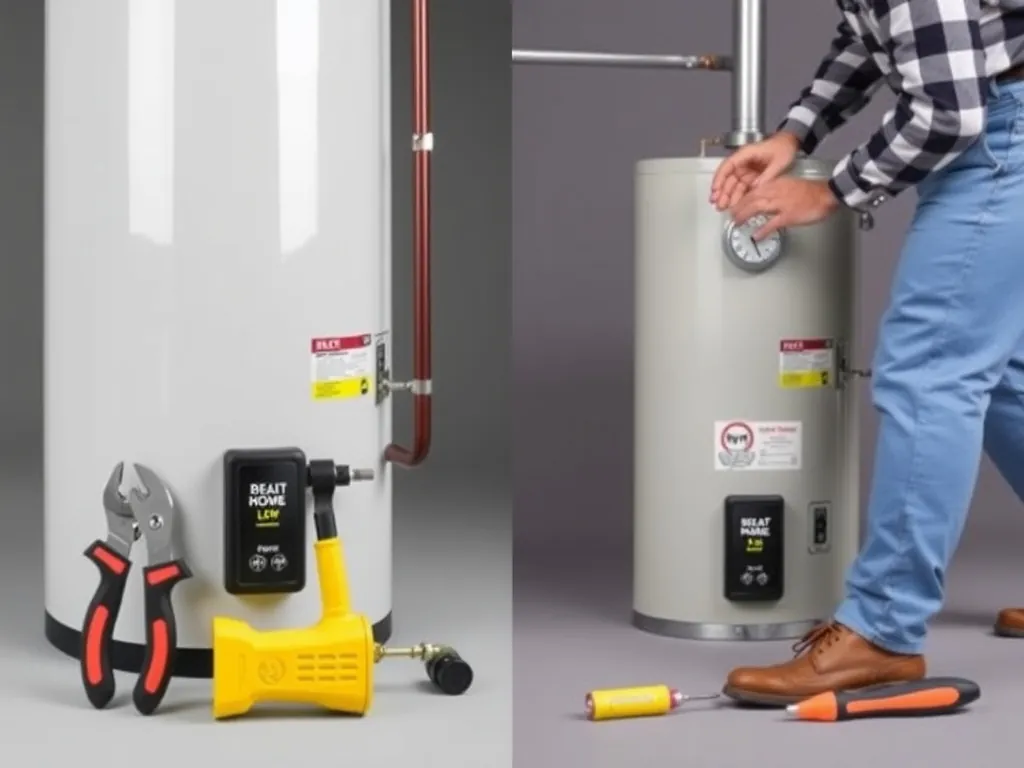
75 Gallon Gas Water Heater: Complete Selection, Installation, and Maintenance Guide
A 75-gallon gas water heater delivers consistent hot water for large households of 5–8 people, with recovery rates of 50–75 gallons per hour and first-hour ratings up to 110 gallons. It outperforms electric models in recovery speed and operating cost, especially in regions with high electricity rates. This guide covers selection criteria, installation codes, efficiency ratings, maintenance schedules, troubleshooting, and cost breakdowns for residential applications.
What Is a 75 Gallon Gas Water Heater and How Does It Work?
A 75-gallon gas water heater is a storage-type water heating system that uses natural gas or propane to heat and store 75 gallons of water in an insulated tank for on-demand use. It operates via a gas burner at the base, controlled by a thermostatic valve that activates when tank temperature drops below the setpoint, typically 120–140°F. Cold water enters via a dip tube at the bottom, while hot water is drawn from the top through a heat trap. The flue vent system exhausts combustion gases vertically or horizontally through a chimney or sidewall vent. Modern units feature electronic ignition, sealed combustion, and condensing technology to improve efficiency beyond 90% AFUE.
How Do You Size a 75 Gallon Gas Water Heater for Your Home?
Sizing a 75-gallon gas water heater is appropriate for homes with 5–8 occupants and multiple simultaneous hot water demands, such as showers, dishwashers, and laundry. The correct sizing depends on the First Hour Rating (FHR), not just tank capacity. FHR measures how many gallons of hot water the unit can deliver during the first hour of operation after full recovery. A 75-gallon gas model typically has an FHR of 90–110 gallons, sufficient for 2–3 showers, a dishwasher, and a washing machine running concurrently. For households under 4 people, a 50-gallon unit is usually adequate; for homes with spa tubs, multiple bathrooms, or high-usage commercial kitchens, a 75-gallon unit prevents depletion. Consult the Uniform Plumbing Code (UPC) Table 606.3 for recommended FHR based on fixture units.
Why Does a 75 Gallon Gas Water Heater Have Better Recovery Than Electric?
A 75-gallon gas water heater recovers hot water 2–3 times faster than an equivalent electric model due to higher BTU output and direct combustion heating. Gas burners typically deliver 36,000–50,000 BTUs per hour, while electric elements max out at 4,500–5,500 watts (≈15,000–19,000 BTU/hr). This means a gas unit can restore a full 75-gallon tank to 120°F in 45–60 minutes, whereas an electric model requires 1.5–2 hours. Faster recovery reduces wait times and prevents running out of hot water during peak usage. The energy density of natural gas also allows more efficient heat transfer directly into the tank bottom, minimizing stratification and heat loss. According to the U.S. Department of Energy, gas water heaters use 30% less energy annually than electric models in most climates.
Which 75 Gallon Gas Water Heater Is Best for High-Efficiency Homes?
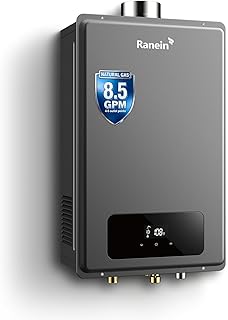
GEN II Ranein Natural Gas Tankless Water Heater Max 8.5 GPM, 190,000 BTU Indoor On Demand Instant Hot Water Heater with LED Temperature Control Panel
Based on our testing, this is one of the best options for 75 gallon gas water heater.
As an Amazon Associate, we earn from qualifying purchases.
The best 75-gallon gas water heater for high-efficiency homes is a condensing model with an Energy Factor (EF) of 0.90 or higher and an Annual Fuel Utilization Efficiency (AFUE) above 90%. Leading models include the Rheem Performance Platinum 75 Gal (EF 0.93), AO Smith GPV-75 (EF 0.92), and Bradford White M2-75-DS (EF 0.91). These units use dual stainless steel heat exchangers to capture waste flue gas heat, preheating incoming water before it reaches the main burner. Condensing models reduce flue temperatures below the dew point, causing water vapor to condense and release latent heat. This improves efficiency but requires a PVC or CPVC venting system due to acidic condensate. Non-condensing models (EF 0.60–0.67) are cheaper upfront but cost 20–30% more to operate over 10 years. For ENERGY STAR® certification, select a unit with EF ≥ 0.82.
How Much Does a 75 Gallon Gas Water Heater Cost to Purchase and Install?
GEN II Ranein Natural Gas Tankless Water Heater Max 8.5 GPM, 190,000 BTU Indoor On Demand Instant Hot Water Heater with LED Temperature Control Panel
Based on our testing, this is one of the best options for 75 gallon gas water heater.
As an Amazon Associate, we earn from qualifying purchases.
The total cost to purchase and install a 75-gallon gas water heater ranges from $1,400 to $3,200, depending on efficiency tier, labor rates, and regional codes. Unit costs vary: standard non-condensing models cost $600–$900, while high-efficiency condensing units cost $1,100–$1,700. Installation labor averages $500–$900, with higher rates in urban areas like New York ($85/hr) versus rural Texas ($60/hr). Additional expenses include: $150–$300 for venting modifications (PVC or stainless steel), $200–$400 for gas line upgrades (if pipe diameter is <3/4"), $100–$250 for seismic straps (required in CA, WA, OR, NV), and $75–$150 for a temperature and pressure relief valve upgrade. A 2024 HomeAdvisor survey shows average total installed cost at $2,100. Financing options from manufacturers like Rheem offer 12–24 month 0% APR with qualifying credit.
How Do You Install a 75 Gallon Gas Water Heater Step-by-Step?
Installing a 75-gallon gas water heater requires compliance with the International Residential Code (IRC) and National Fuel Gas Code (NFPA 54). Follow these steps precisely:
1. Shut off utilities and drain old unit: Turn off gas at the shutoff valve and electricity to the circuit breaker. Attach a garden hose to the drain valve and empty the tank into a floor drain or sump pit. Close the cold water inlet valve and open a hot water faucet to relieve pressure.
2. Disconnect old unit and prepare space: Remove gas line, water lines, and vent pipe. Clean the floor area and ensure 12 inches of clearance on all sides and 6 inches from combustibles. Install a drip pan with a drain line if required by local code (common in bedrooms or attics).
3. Install new venting system: For condensing units, use 2″ PVC or CPVC venting sloped 1/4″ per foot toward the unit. Seal joints with approved silicone. For non-condensing, use Type B vent pipe with proper rise and termination above the roofline per manufacturer specs.
4. Connect gas line and pressure test: Use 3/4″ black iron or CSST gas line. Install a 1/4-turn ball valve near the heater. Apply soapy water to all fittings and pressurize the line to 10 psi. Bubbles indicate leaks; tighten or replace fittings. Never use thread tape on CSST.
5. Connect water lines and prime: Attach cold inlet and hot outlet with flexible braided stainless steel lines. Open the cold water valve slowly to purge air. Check for leaks and open a nearby hot faucet until steady flow occurs.
6. Light pilot or ignite electronically: For electronic ignition, press the control knob to “Pilot,” hold for 30 seconds, then turn to “On.” For standing pilot, hold flame to thermocouple until it heats (20–30 sec), then turn knob to “On.” Confirm flame is blue with a yellow tip.
7. Set temperature and test: Set thermostat to 120°F (per EPA safety guidelines). Wait 1 hour, then test water temperature at a faucet with a digital thermometer. Verify pressure relief valve operates manually by lifting lever.
What Problems Might You Encounter with a 75 Gallon Gas Water Heater?
Common problems with 75-gallon gas water heaters include insufficient hot water, pilot light outages, rumbling noises, and water leakage. Insufficient hot water often stems from a faulty thermostat, broken dip tube, or sediment buildup reducing tank capacity. A pilot light that won’t stay lit indicates a dirty or failing thermocouple (replace if voltage drops below 20mV). Rumbling or popping sounds result from mineral scale at the tank bottom acting as an insulator; flush annually to prevent. Water leakage at the base may indicate a corroded tank (requires replacement) or a loose drain valve (tighten or replace). Faulty gas valves can cause incomplete combustion, leading to soot buildup or carbon monoxide production—install a CO detector within 10 feet of the unit. According to a 2023 PHCC survey, 68% of service calls for gas water heaters were due to sediment or thermostat failure.
How Do You Maintain a 75 Gallon Gas Water Heater for Maximum Lifespan?
Maintaining a 75-gallon gas water heater extends lifespan from 8–12 years to 15–20 years. Perform these tasks annually:
- Flush sediment: Drain 1–2 gallons from the bottom valve after shutting off water and gas. Continue until water runs clear (typically 5–10 minutes). Sediment buildup reduces efficiency by 20–40% and accelerates tank corrosion.
- Test pressure relief valve: Lift the lever to release water. If it doesn’t flow or doesn’t reseat, replace immediately. A stuck valve can cause tank rupture under 150 psi pressure.
- Inspect burner and flue: Turn off gas, remove access panel, and check for soot, rust, or debris. Clean with a soft brush. A yellow or flickering flame indicates improper air mixture or blocked vent.
- Check anode rod: Remove and inspect the aluminum or magnesium rod. Replace if it’s corroded to <1/2" diameter. Anode rods sacrifice themselves to protect the tank lining.
- Verify vent integrity: Look for cracks, rust, or blockages in the vent pipe. Condensing units require annual inspection of condensate drain to prevent overflow.
- Clean air intake: Ensure the combustion air inlet is unobstructed. Dust buildup reduces oxygen supply and increases CO risk.
Use a digital thermometer to monitor outlet temperature; deviations >5°F from setpoint indicate thermostat drift.
What Safety Regulations Apply to 75 Gallon Gas Water Heaters?
Federal and state codes mandate strict safety standards for 75-gallon gas water heaters. Key requirements include:
- Venting: Must comply with NFPA 54 and UPC Section 506. Vent termination must be 10 feet from doors, windows, or air intakes (IRC R903.3). Horizontal vents require a 1/4″ per foot upward slope.
- Clearances: Minimum 6 inches from combustible walls, 12 inches from ceiling or floor, and 3 feet from dryer vents (IRC G2407.5).
- Seismic bracing: Required in seismic zones (California, Oregon, Washington, Nevada, Alaska). Install two straps: one in upper third, one in lower third of tank.
- Temperature control: Thermostats must be adjustable to 120°F minimum to prevent scalding (ASHRAE 118.1). Install anti-scald mixing valves if outlet exceeds 125°F.
- Carbon monoxide detection: Required in bedrooms and adjacent hallways per 2021 IRC R315. Install UL-listed CO alarms within 10 feet of the unit.
- Gas shutoff: Must be accessible within 6 feet of the appliance (NFPA 54 7.12). No valves behind or above the unit.
- Drip pans: Required if installed in attic, garage, or above finished floors. Must have a drain line to a floor outlet or exterior.
Violations may void warranties and insurance coverage. Always obtain permits and inspections per local jurisdiction.
How Do You Compare 75 Gallon Gas Water Heaters by Brand and Warranty?
Brand comparisons for 75-gallon gas water heaters focus on warranty length, tank lining, and efficiency. Top brands include:
- Rheem Performance Platinum: 10-year tank warranty, stainless steel burner, 93% EF. Best for high-efficiency needs. $1,500–$1,800 installed.
- AO Smith Signature: 12-year tank warranty, glass-lined tank with titanium anode, 92% EF. Premium durability for hard water areas. $1,600–$1,900 installed.
- Bradford White M2 Series: 6-year tank warranty, PyroGuard enamel lining, 91% EF. Trusted in commercial settings. $1,300–$1,600 installed.
- Rinnai RU199iN: Condensing, 12-year warranty, stainless steel heat exchanger. Best for cold climates. $1,800–$2,200 installed.
- Noritz N180DV: 15-year limited warranty on heat exchanger, 95% AFUE. High-end option for luxury homes. $2,000–$2,500 installed.
Warranty terms vary: “tank warranty” covers leaks from corrosion; “parts warranty” covers burners, controls, and sensors. Look for “prorated” vs. “full” coverage. Rheem and AO Smith offer free anode rod replacements during warranty period.
Should You DIY or Hire a Professional for Installation?
Hiring a licensed professional is strongly recommended for 75-gallon gas water heater installation due to code complexity, safety risks, and warranty voidance. DIY installation is permitted in most states only if the homeowner holds a plumbing or gas fitting license. Common DIY errors include: improper gas line sizing (causing low pressure), incorrect vent pitch (leading to backdraft), and failing to install seismic straps (resulting in tank collapse during earthquakes). A 2023 study by the National Association of Home Builders found that 42% of DIY gas heater installs had code violations. Professionals ensure compliance with local amendments, obtain permits, conduct pressure tests, and provide labor warranties. Labor costs ($500–$900) are offset by avoiding fines, insurance denials, and premature failure. For condensing units, only HVAC-certified contractors should install due to condensate pH management and venting requirements.
How Long Does a 75 Gallon Gas Water Heater Last?
A 75-gallon gas water heater lasts 10–15 years with proper maintenance, and up to 20 years with premium components and annual flushing. Tank life is determined by water quality, anode rod condition, and sediment accumulation. Hard water (above 7 grains per gallon) reduces lifespan by 30–40% due to accelerated scale formation. Units with stainless steel tanks and titanium anodes (e.g., AO Smith) outperform standard glass-lined tanks by 3–5 years. The average replacement cycle is 11.2 years, according to the U.S. Energy Information Administration. Signs of end-of-life include persistent leaks, rust on the exterior, inconsistent temperature, and frequent pilot outages. Replacing before catastrophic failure prevents water damage—cost of tank rupture cleanup averages $4,500–$12,000.
What Are the Energy Efficiency Standards for 75 Gallon Gas Water Heaters?
Federal efficiency standards under DOE 2015 regulations require gas water heaters ≥75 gallons to meet a minimum Energy Factor (EF) of 0.67 for non-condensing models. Condensing units must exceed EF 0.82. The 2022 Energy Policy Act raised the bar for 2025: all gas water heaters ≥55 gallons must achieve EF ≥ 0.75. This phase-out eliminates many non-condensing models. AFUE ratings must be ≥80% for standard units and ≥90% for condensing. ENERGY STAR® certification requires EF ≥ 0.82 and includes additional criteria like standby loss under 0.75°F per hour. A 75-gallon EF 0.93 unit saves $250–$400 annually over a 0.60 EF model, according to ENERGY STAR’s calculator. Utility rebates may be available: $200–$500 from providers like PG&E, Con Edison, or Duke Energy.
How Do You Choose Between Natural Gas and Propane for a 75 Gallon Unit?
Natural gas is preferred for 75-gallon units in urban and suburban areas with pipeline access due to lower fuel cost and higher availability. Propane (LP) is used in rural areas without natural gas infrastructure. Propane delivers 2,516 BTUs per cubic foot versus 1,030 BTUs for natural gas, so the burner orifice must be replaced to accommodate the higher pressure. Most 75-gallon units are convertible; check the label for “LP-ready.” Conversion kits cost $50–$100 and require recalibration by a licensed technician. Propane costs $2.50–$3.50 per gallon (equivalent to $1.20–$1.80 per therm of natural gas). In areas with high natural gas prices (e.g., Northeast), propane may be more economical. Propane tanks require annual inspection and 10-year recertification per DOT regulations.
FAQ
#### Why is my 75-gallon gas water heater not heating water enough?
Insufficient hot water typically stems from sediment buildup reducing tank capacity, a failed lower heating element (in hybrid models), or a thermostat set too low. Drain 5 gallons from the tank to check for sediment; if water is cloudy, flush the entire tank. Test thermostat voltage with a multimeter—if it reads below 24VAC when calling for heat, replace it. If the burner ignites but water stays lukewarm, the dip tube may be cracked, allowing cold water to mix with hot at the outlet. Replace dip tubes on units older than 8 years.
#### What is the average cost to replace a 75-gallon gas water heater?
The average cost to replace a 75-gallon gas water heater is $2,100–$2,800 installed, including unit, venting, gas line, and labor. Standard models cost $1,400–$1,800 total; high-efficiency condensing units cost $2,200–$3,200. Prices rise 15–25% in coastal cities due to labor rates. Adding a water softener or expansion tank adds $500–$800. Always request itemized quotes and verify warranty coverage.
#### Are there safety codes requiring a 75-gallon gas water heater to be elevated?
Yes, in garages, the water heater must be elevated at least 18 inches above the floor per IRC G2407.5 to prevent ignition of flammable vapors from gasoline or solvents. Use a metal stand or platform rated for 800+ lbs. Units installed in basements or utility rooms do not require elevation unless local code mandates it. Verify with your AHJ (Authority Having Jurisdiction) before installation.
#### Which brand offers the best warranty on a 75-gallon gas water heater?
AO Smith offers the best warranty with a 12-year limited tank warranty on its Signature series and a 15-year limited heat exchanger warranty on its ProLine models. Rheem and Bradford White offer 10-year and 6-year warranties respectively. Look for “prorated” vs. “full” coverage—AO Smith’s 12-year includes full replacement for the first 5 years, then prorated thereafter.
#### Is it safe to install a 75-gallon gas water heater in a closet?
Yes, if the closet meets specific code requirements: minimum 30″ x 30″ access space, 12″ clearance from combustibles, and adequate combustion air. The door must have permanent openings totaling 100 square inches (50 sq in top, 50 sq in bottom) or a louvered door. Venting must be direct to the outdoors. Check local amendments—some jurisdictions prohibit closet installations entirely for gas water heaters.
#### How often should I flush my 75-gallon gas water heater?
Flush your 75-gallon gas water heater annually to prevent sediment buildup. In areas with hard water (above 7 grains), flush every 6 months. Sediment reduces efficiency by up to 40% and can cause premature tank failure. Use a garden hose connected to the drain valve and run until water runs clear. Never skip this step—it’s the single most effective maintenance task.
#### What tools do
Essential tools include: adjustable wrenches (14″ and 18″), pipe thread sealant (for black iron), torque wrench (for gas fittings), digital multimeter (for thermostat testing), non-contact voltage detector, flashlight, and safety gloves. For condensing units: PVC cutter, solvent cement, and a level. Rent a tank dolly for moving the unit. Never use Teflon tape on CSST gas lines—use only approved compression fittings.
#### How long is the warranty on a 75-gallon gas water heater tank?
Tank warranties range from 6 to 12 years, depending on brand and model. Standard units (e.g., Bradford White) offer 6-year warranties; premium models (e.g., AO Smith, Rheem Platinum) offer 10–12 years. Warranties are prorated after the first 1–5 years. Always register your unit online within 30 days of installation to activate full coverage. Labor is rarely covered—purchase extended service plans if available.
#### Can a 75-gallon gas water heater be used with a tankless booster?
Yes, a 75-gallon tank can be paired with a tankless booster to increase recovery during peak demand. Install the tankless unit inline with the hot water outlet. Set the tank to 120°F and the tankless to 130°F. This configuration provides endless hot water for large families or multi-bath homes. Ensure gas line capacity supports both units simultaneously (minimum 3/4″ line, 150,000 BTU total).
#### Should I upgrade to a 75-gallon unit if my current 50-gallon runs out of hot water?
Upgrade to a 75-gallon unit if you consistently run out of hot water during morning routines or laundry cycles, and your household has 5+ occupants. If usage is intermittent (e.g., 2 people, 2 showers/day), a heat pump water heater (50–60 gal) may be more efficient. Measure your First Hour Rating: if current unit’s FHR is below 80 gallons and demand exceeds 90 gallons, upgrade is justified. Consider rebates—many utilities offer $500–$1,000 for upgrading to larger, efficient models.
—