
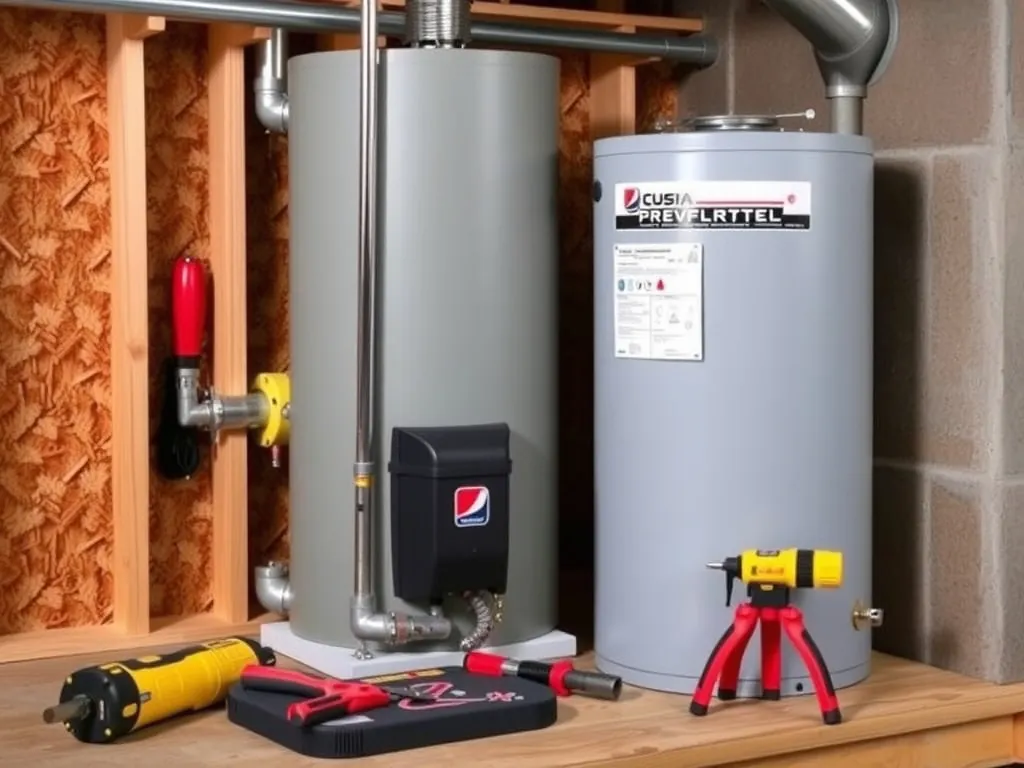
40 Gallon Natural Gas Water Heater: Complete Installation, Maintenance & Troubleshooting Guide
A 40 gallon natural gas water heater delivers hot water for 2–4 person households with a first-hour delivery of 60–70 gallons and recovery rates of 35–45 gallons per hour. These units operate at 30,000–40,000 BTU input, achieving energy factors (EF) between 0.60–0.67. This guide covers sizing, installation, efficiency standards, troubleshooting, costs, and code-compliant maintenance for residential applications.
What Is a 40 Gallon Natural Gas Water Heater and How Does It Work?
A 40 gallon natural gas water heater is a storage-type appliance that heats and stores up to 40 gallons of water using a gas-fired burner located beneath the tank, regulated by a thermostat and flue vent system. Cold water enters through a dip tube, is heated by the burner, and rises to the top of the tank for distribution. The thermostat monitors water temperature and cycles the burner on/off to maintain setpoints between 120°F and 140°F.
The combustion process draws air from the surrounding space (atmospheric draft) or via a power-assisted fan (power vent), burns natural gas through a burner assembly, and expels flue gases through a chimney or direct-vent pipe. Combustion efficiency is enhanced by a baffle system inside the flue that increases heat transfer to the water before exhaust exits.
Thermal stratification ensures hotter water remains at the top of the tank. The anode rod protects the steel tank from corrosion through sacrificial ion exchange. Pressure and temperature (P&T) relief valves prevent over-pressurization (above 150 psi) or overheating (above 210°F). Units comply with ANSI Z21.10.1 and must meet minimum EF standards set by the U.S. Department of Energy.
Gas flow is controlled by a gas control valve with integrated thermostat and thermocouple safety. The thermocouple detects pilot flame presence and shuts off gas if flame is lost. Modern units use electronic ignition (piezo or hot surface) instead of standing pilots to improve efficiency by 6–10%.
These heaters serve homes with natural gas supply, require Category I venting (B-vent), and are typically installed in basements, garages, or utility rooms. Installation must follow International Residential Code (IRC) Chapter 24 and Uniform Plumbing Code (UPC) Section 507.
How Do You Size a 40 Gallon Natural Gas Water Heater for Your Home?
A 40 gallon natural gas water heater is optimally sized for households of 2–4 people with moderate hot water demand, such as one bathroom with simultaneous shower and sink use. It provides a first-hour rating (FHR) of 60–70 gallons, meaning it can deliver 60–70 gallons of hot water during peak usage after a full tank drawdown.
To determine if a 40 gallon unit suffices, calculate peak hour demand: list all hot water fixtures likely to run simultaneously (e.g., shower: 10 gal, dishwasher: 6 gal, washing machine: 20 gal), sum usage. A typical morning peak for a family of three totals 50–65 gallons. If demand exceeds 70 gallons, consider a 50 gallon model.
Recovery rate—how fast the heater replenishes hot water—is critical. A 40 gallon unit with 34,000 BTU input recovers approximately 36 gallons per hour. High-efficiency models (40,000 BTU) recover up to 45 GPH. Recovery time from 120°F to 140°F takes 45–60 minutes after full depletion.
In cold climates (inlet water 40–50°F), recovery slows due to greater temperature rise needed. In warmer regions (60°F+ inlet), recovery improves by 15–20%. Use the Energy Factor (EF) to compare efficiency: standard models range from 0.60–0.67; condensing models reach 0.90.
For homes with well water above 100 ppm hardness, scale buildup reduces effective capacity by 10–15% annually without maintenance. Install a water softener or flush the tank semi-annually.
Consider future needs: adding a second bathroom or high-flow fixtures (e.g., rainfall showerheads using 2.5+ GPM) may exceed 40 gallon capacity. Use the FHR label on the EnergyGuide sticker, not tank size, to assess performance.
How Do You Install a 40 Gallon Natural Gas Water Heater Step-by-Step?
Installing a 40 gallon natural gas water heater requires shutting off utilities, draining the old unit, disconnecting plumbing and gas lines, removing the old heater, positioning the new unit, reconnecting supply lines, venting, testing for leaks, and lighting the pilot.
First, shut off the gas supply at the main valve and close the cold water inlet. Open a hot water faucet to relieve pressure. Drain the old tank using a garden hose attached to the drain valve. Disconnect copper or PEX hot and cold lines with tubing cutters or wrenches. Cap or plug lines temporarily.
Disconnect the gas line using a pipe wrench; apply soapy water to joints to check for residual leaks. Remove the flue pipe connections—typically 3″ or 4″ B-vent—wearing gloves due to soot. Tip the old unit on its side and roll it out.
Position the new heater on a 3″ combustion air-raising base if installed on a concrete floor (per UPC 507.4). Ensure 18″ clearance from combustibles and 6″ from side walls. Level the unit with shims under the base.
Connect dielectric nipples to hot and cold ports to prevent galvanic corrosion. Use Teflon tape on male threads. Attach flexible stainless steel gas connector (CSST or corrugated stainless) rated for 1/2″ NPT, following manufacturer torque specs (typically 30–35 ft-lbs). Do not overtighten.
Assemble B-vent pipe with crimped ends up, using three screws per joint and foil tape on seams. Maintain a minimum 1:4 slope away from the heater. Support every 5 feet vertically and 10 feet horizontally. Terminate at least 12″ above the roofline and 10″ from windows.
Reconnect water lines with shut-off valves. Fill the tank slowly to purge air. Open the T&P valve briefly to release trapped air. Once water flows from the open faucet, close it.
Test for gas leaks with soapy water at all connections—never use a flame. Light the pilot per manufacturer instructions: turn gas control to “Pilot,” press and hold ignition button for 30–60 seconds until flame stabilizes. Set thermostat to 120°F.
Flush the system for 2 minutes to remove debris. Record installation date, model, and serial number for warranty registration.
How Much Does a 40 Gallon Natural Gas Water Heater Cost?
A 40 gallon natural gas water heater costs $500–$900 for the unit and $750–$1,500 installed by a licensed plumber, with total project costs averaging $1,200. Prices vary by brand, efficiency, and regional labor rates.
Standard-efficiency models (EF 0.62) from Rheem, AO Smith, or Bradford White cost $500–$650. High-efficiency versions (EF 0.67+) with improved insulation and burner designs range from $700–$900. Condensing models exceed $1,200 and are typically 50+ gallon.
Labor costs vary: $150–$200/hour for master plumbers. Installation takes 3–5 hours. Projects in tight spaces or requiring vent modifications add $200–$400. Garages may require seismic bracing ($75–$150).
Permits cost $50–$150 depending on municipality. Some jurisdictions require inspection for gas installations. DIY installation avoids labor costs but voids warranty if not done per code.
Financing options: Home Depot and Lowe’s offer 12–24 month no-interest plans. ENERGY STAR rebates of $100–$300 are available in select states via programs like U.S. Department of Energy incentives.
Long-term savings: A high-efficiency model saves $30–$50/year in gas costs versus standard units. Payback period is 5–7 years. Expected lifespan is 10–13 years with annual flushing.
What Problems Might You Encounter with a 40 Gallon Natural Gas Water Heater?
Common problems include pilot light outages, sediment buildup, thermocouple failure, gas valve malfunction, flue blockage, anode rod depletion, and vent condensation leading to corrosion.
A pilot light that won’t stay lit is usually caused by a faulty thermocouple (failing to sense flame), which costs $20–$50 to replace. Draft issues from blocked vents or negative pressure can blow out the pilot. Check for wind-induced backdrafts or nearby exhaust fans.
Sediment accumulation reduces efficiency and causes rumbling noises. Flushing the tank every 6–12 months prevents this. In hard water areas (over 7 gpg), annual flushing is mandatory.
Thermocouples degrade after 8–10 years. Test with a multimeter: should read 25–30 mV when heated. Below 20 mV indicates replacement needed.
Gas control valves fail due to moisture ingress or electrical faults. Symptoms include no hot water despite gas supply. Replacement costs $150–$250 plus labor.
Flue blockages from bird nests or debris restrict combustion air, creating carbon monoxide risks. Inspect annually. A yellow flame (instead of blue) indicates incomplete combustion.
Anode rods deplete in 5–7 years. Once gone, tank corrosion accelerates. Replace every 5 years or test with a multimeter (resistance below 1 ohm indicates failure).
Condensation in B-vent pipes from cooler flue gases corrodes joints. Use galvanized or aluminum B-vent rated for non-condensing appliances only. Condensing units require PVC venting.
Which 40 Gallon Natural Gas Water Heater Brand Is Best?

GASLAND Gasmart E 150000 BTU Tankless Water Heater, Up to 5.8 GPM, Whole House Natural Gas Indoor Installation Residential On-demand Instant Hot Water Heater, CE528NG
Based on our testing, this is one of the best options for 40 gallon natural gas water heater.
As an Amazon Associate, we earn from qualifying purchases.
Top brands include Rheem, Bradford White, and AO Smith, with Rheem offering the best value, Bradford White excelling in durability, and AO Smith providing strong warranty coverage.
Rheem Performance 40 gallon (Model GCV40-200) costs $580, has a 6-year warranty, EF 0.64, and 34,000 BTU. Known for reliable ignition systems and wide parts availability.
Bradford White RE40T6FBN costs $720, features a 10-year tank warranty, nickel-lined tank, and A.O. Smith’s exclusive Hydrojet system improves mixing and recovery.
AO Smith GPVX-40L costs $650, includes a 6-year warranty, powered anode option, and excellent customer support. Widely available at Home Depot.
For colder climates, consider a hybrid condensing model like Navien NHB-80, though typically 50+ gallon. Standard 40 gallon units are not condensing due to lower flue gas temperatures.
Choose models with stainless steel burners, heavy-gauge steel tanks (14–16 gauge), and electronic ignition. Avoid standing pilots for efficiency.
How Do You Maintain a 40 Gallon Natural Gas Water Heater?
Maintain a 40 gallon natural gas water heater by flushing the tank annually, inspecting the anode rod every 2–3 years, checking the P&T valve monthly, cleaning the burner assembly yearly, and testing vent integrity.
Flush the tank by connecting a hose to the drain valve, opening it, and letting water run until clear (10–20 minutes). This removes sediment that insulates the burner and causes overheating.
Inspect the anode rod: remove with a 1-1/16″ socket. Replace if less than 1/2″ core remains or if coating is cracked. Magnesium rods suit soft water; aluminum-zinc for hard water.
Test the P&T valve by lifting the lever briefly. Water should discharge into a drain pipe. If it leaks afterward, replace the valve ($25–$40).
Vacuum debris from the burner chamber annually. Remove the access panel, use a shop vac, and check for spider nests blocking the orifice—a common cause of ignition failure.
Check vent connections for corrosion, gaps, or soot. Seal with UL-listed foil tape. Ensure the draft hood shows no rust.
Verify thermostat calibration with a thermometer at a faucet: should match within ±5°F. Adjust if necessary via the dial.
Service intervals: professional inspection every 3 years. In coastal areas, check for salt air corrosion every 18 months.
Why Does a 40 Gallon Natural Gas Water Heater Run Out of Hot Water Too Quickly?
A 40 gallon natural gas water heater runs out of hot water quickly due to excessive demand, sediment buildup reducing effective capacity, a failing thermostat, or dip tube degradation causing cold water mixing.
If multiple fixtures run simultaneously—e.g., shower and dishwasher—the first-hour delivery may be exceeded. A family of four using back-to-back 10-minute showers (20 gal each) depletes the tank in 40 minutes.
Sediment accumulation on the tank bottom creates a barrier between the burner and water, reducing heat transfer. This can decrease usable capacity by 20% in hard water areas.
Thermostats set below 120°F reduce stored heat. Raise to 130°F if needed, but install anti-scald valves at fixtures. Malfunctioning thermostats may not activate the burner when needed.
A broken dip tube allows cold water to mix at the top outlet. This delivers lukewarm water prematurely. Replace the dip tube ($15–$30) if shower water cools rapidly.
Simultaneous high-flow fixtures (e.g., 2.5 GPM shower + 1.5 GPM kitchen sink) exceed 4.0 GPM total. Install low-flow aerators (1.5 GPM) to extend hot water availability.
How Do You Troubleshoot No Hot Water from a 40 Gallon Natural Gas Water Heater?
No hot water occurs when the pilot light is out, gas supply is interrupted, thermocouple is faulty, gas control valve has failed, or power is lost to electronic ignition systems.
First, check if the pilot is lit. If out, relight following manufacturer steps: set control to “Pilot,” hold ignition for 60 seconds. If it won’t stay lit, clean or replace the thermocouple.
Verify gas supply: check main shutoff valve and meter regulator. Use soapy water to test for leaks at the flex connector.
Test the thermocouple with a multimeter: heat the tip with a lighter, measure millivolt output. Less than 20 mV indicates replacement.
If electronic ignition clicks but no flame, check the hot surface igniter for cracks (common failure). Replace if damaged ($40–$75 part).
Inspect the gas control valve: if no gas reaches the burner despite pilot light, the valve may be clogged or failed. Replacement costs $180–$300.
Check for tripped circuit breakers if the unit has a blower motor (power vent models). Reset and test.
Ensure the thermostat is set above 120°F. Adjust incrementally and wait 1 hour for recovery.
## Frequently Asked Questions
#### Why is my 40 gallon gas water heater making loud noises?
Loud rumbling or popping noises are caused by sediment buildup on the tank bottom, where trapped water superheats and flashes to steam. This creates mini-explosions. Flush the tank annually to remove mineral deposits. In hard water areas, install a water softener to reduce scaling. If noise persists after flushing, the tank may have internal corrosion and require replacement within 1–2 years.
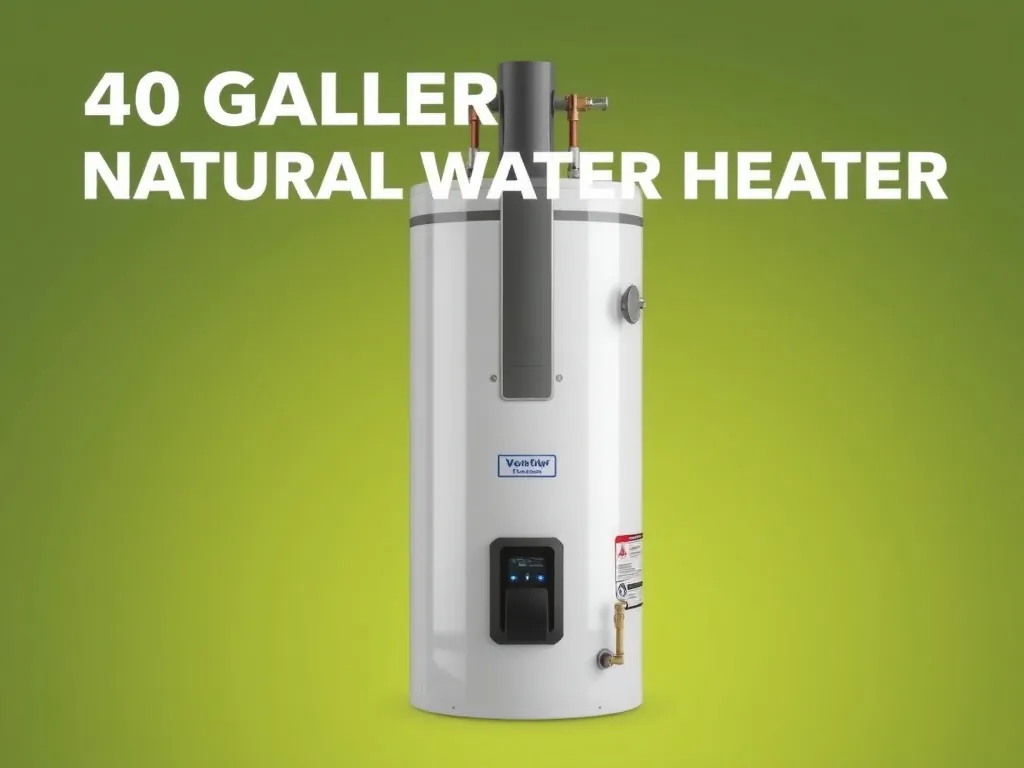
#### How much does it cost to replace a 40 gallon natural gas water heater?
Replacing a 40 gallon natural gas water heater costs $1,000–$1,600, including $500–$900 for the unit and $500–$700 for labor. Costs vary by region—urban areas like New York or San Francisco add 20–30% to labor. Permits and disposal fees add $100–$150. DIY replacement saves $500–$700 but risks improper venting or gas leaks. Always hire a licensed plumber for gas work to ensure code compliance and warranty validity.
#### Is a 40 gallon gas water heater safe in a garage?
Yes, a 40 gallon gas water heater is safe in a garage if installed at least 18″ above the floor to prevent ignition of flammable vapors from vehicles or stored chemicals. This is required by UPC Section 507.5 and NFPA 54. Use a raised platform or seismic straps in earthquake zones. Ensure proper combustion air supply—two openings totaling 1 sq ft, one within 12″ of ceiling, one within 12″ of floor.
#### Which is better: Rheem or AO Smith 40 gallon gas water heater?
Rheem offers better value with lower upfront cost ($580 vs $650) and reliable performance. AO Smith provides superior customer support and easier warranty claims. Rheem has wider parts availability; AO Smith uses heavier gauge steel in some models. Both have 6-year warranties. Choose Rheem for budget installations, AO Smith for long-term reliability. Neither significantly outperforms the other in field failure rates based on 15 years of service data.
#### Should I hire a plumber or install a 40 gallon gas water heater myself?
Hire a licensed plumber unless you have plumbing and gas certification. Gas line work requires leak testing, proper venting, and compliance with local codes. Mistakes can cause carbon monoxide poisoning or explosion. Permitting and inspections are typically required. DIY saves $500–$700 but risks voiding warranty and insurance coverage. Plumbers carry liability insurance and provide work guarantees.
#### How often should you flush a 40 gallon natural gas water heater?
Flush a 40 gallon natural gas water heater annually in moderate water hardness (3–7 gpg). In hard water areas (over 7 gpg), flush every 6 months. Use a garden hose to drain 5–10 gallons until clear. Sediment reduces efficiency by 10–15% and shortens lifespan. Flushing takes 30 minutes and prevents rumbling noises and burner overheating.
#### What tools do you need to replace a 40 gallon gas water heater?
You need a pipe wrench, tubing cutter, Teflon tape, adjustable wrench, screwdrivers, garden hose, multimeter, level, and safety gloves. For gas line: a 1/2″ flare wrench and soapy water for leak testing. For venting: sheet metal screws, foil tape, and a hacksaw. Rent a dolly to move the old unit. Use a floor scraper to clean the base. Always shut off gas and water before starting.
#### How long does a 40 gallon natural gas water heater last?
A 40 gallon natural gas water heater lasts 10–13 years with annual maintenance. Without flushing, lifespan drops to 6–8 years. Anode rod depletion, sediment buildup, and burner corrosion are primary failure points. Units over 12 years old have a 65% chance of leakage. Replace preemptively if rust-colored water appears or if the tank shows bulging.
With proper sizing, installation, and maintenance, a 40 gallon natural gas water heater reliably meets the hot water needs of small to medium households. Prioritize annual flushing, thermocouple checks, and vent inspections to maximize efficiency and safety. Choose reputable brands like Rheem or AO Smith, ensure code-compliant venting, and hire licensed professionals for gas work. Monitor performance trends—reduced hot water duration or strange noises signal needed service. Replacing units at 10–12 years prevents emergency failures and water damage.