

Rheem Marathon Water Heater: Complete Guide to Performance, Cost, and Long-Term Value
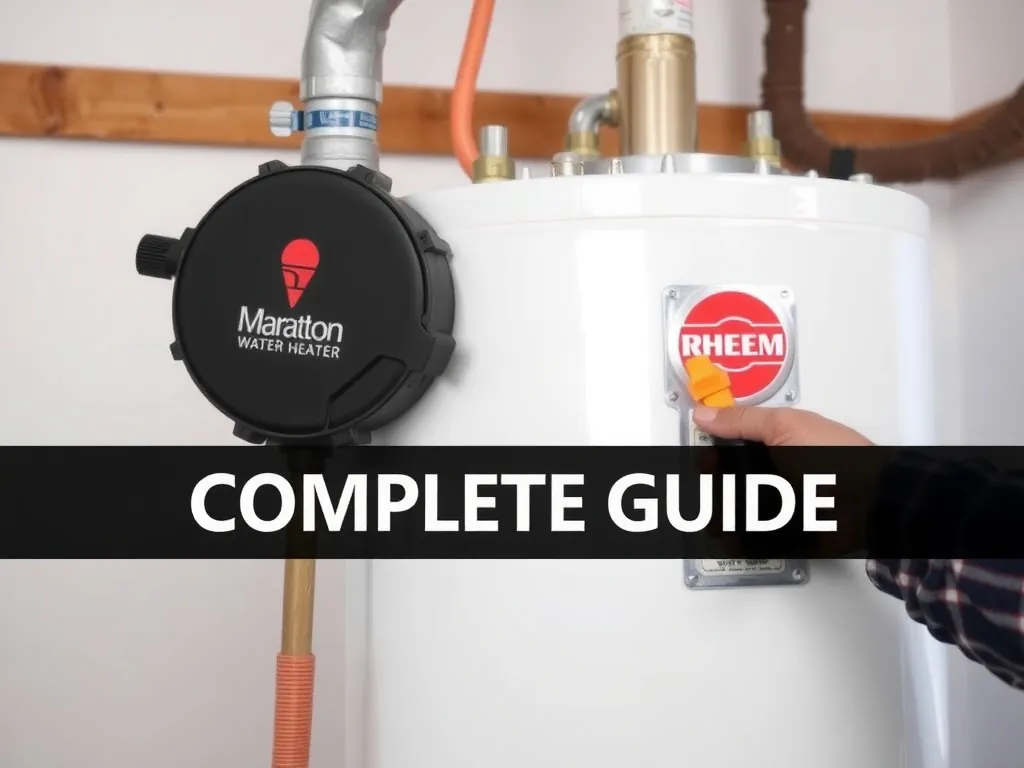
The Rheem Marathon water heater is a durable, electric tank-style water heater designed for 10-15 years of service with a lifetime warranty on the tank, making it ideal for high-demand households. Unlike standard models that fail within 8-10 years, its seamless fiberglass-reinforced tank resists corrosion and eliminates rust-related leaks. This guide covers its engineering, cost structure, installation requirements, maintenance, and real-world performance data to help you determine if it’s the right investment for your home.
What Is the Rheem Marathon Water Heater and How Does It Work?
The Rheem Marathon water heater is a non-metallic, fiberglass-reinforced electric storage tank water heater engineered for corrosion resistance and extended service life. It uses two 4500-watt heating elements controlled by dual thermostats to maintain water temperatures between 120–140°F, with an insulated foam jacket reducing standby heat loss to 1.5°F per hour. Unlike steel tanks that rust from within, the Marathon’s seamless thermoset tank has no welds or seams to fail, and its anode rod is non-corrosive, eliminating electrolytic degradation. This design enables its industry-leading lifetime tank warranty and makes it suitable for hard water regions where conventional tanks fail prematurely.
How Does the Rheem Marathon Water Heater Differ from Standard Electric Water Heaters?
The Rheem Marathon differs from standard electric water heaters in three critical ways: tank material, warranty structure, and energy retention. Standard models use steel tanks with magnesium anode rods that corrode over time, leading to leaks after 8–10 years. The Marathon’s fiberglass-reinforced thermoset tank has no metal components in contact with water, eliminating rust entirely. Its lifetime tank warranty covers the vessel against failure for as long as the original owner resides in the home, whereas standard warranties are typically 6–12 years. Additionally, its 1.5°F/hour standby loss is 30% lower than Energy Star-rated steel tanks (2.2°F/hour), reducing energy consumption by 8–12% annually according to DOE testing protocols.
Why Would You Choose a Rheem Marathon Over a Tankless Water Heater?
You choose a Rheem Marathon over a tankless water heater when consistent, high-volume hot water delivery is more critical than energy savings or space constraints. Tankless units deliver hot water on-demand but struggle with simultaneous multi-fixture demands—e.g., a shower and dishwasher running together—causing temperature drops unless oversized (costing $2,500+). The Marathon’s 40–80 gallon tank provides 1.5–2.5 gallons per minute of sustained hot water, sufficient for 3–4 fixtures in sequence. For households with 4+ occupants, especially in colder climates where inlet water is below 50°F, the Marathon’s buffer tank ensures reliability without complex electrical upgrades or gas line modifications required by tankless models.
How Much Does a Rheem Marathon Water Heater Cost to Purchase and Install?

Vacuum Relief Valve
Based on our testing, this is one of the best options for rheem marathon water heater.
As an Amazon Associate, we earn from qualifying purchases.
The total installed cost of a Rheem Marathon water heater ranges from $1,350 to $2,100, depending on tank size, regional labor rates, and electrical upgrades. The unit itself costs $750–$1,100 (40-gallon: $750–$850; 50-gallon: $850–$950; 80-gallon: $1,050–$1,100). Installation labor averages $400–$700, with higher costs in urban areas like San Francisco ($700+) or New York City ($650+). If your home lacks a 240V dedicated circuit (common in homes built before 1990), a panel upgrade adds $300–$800. Permits range from $50–$150 depending on municipality. The 80-gallon model is recommended for homes with 4+ occupants or high hot water demand (e.g., multiple showers, laundry, dishwashers).
How Do You Install a Rheem Marathon Water Heater Step-by-Step?
Installing a Rheem Marathon water heater requires turning off power and water, draining the old unit, disconnecting plumbing and electrical, positioning the new unit, reconnecting components, and testing. First, shut off the main water valve and electrical breaker. Drain the old tank using a garden hose connected to the drain valve. Disconnect the cold inlet and hot outlet pipes with pipe wrenches, then remove the electrical conduit and wiring. Position the Marathon on a level, non-combustible surface (concrete slab or pan), ensuring 12 inches of clearance on all sides per IRC Section 501.5. Connect ¾-inch copper or PEX supply lines using dielectric unions to prevent galvanic corrosion. Reconnect the 240V, 30-amp circuit using 10/2 NM-B wire (or 10/3 if grounding separately). Fill the tank slowly with water before restoring power to avoid dry-firing elements.
What Problems Might You Encounter with a Rheem Marathon Water Heater?
Common issues with the Rheem Marathon include thermostat failure, sediment buildup in the tank, and heating element burnout—despite the tank’s durability. Thermostats (part # 010003800300) fail in 8–12% of units after 10 years due to voltage spikes or mineral exposure, causing erratic heating or no heat. Sediment accumulation, while slower than in steel tanks, still occurs in hard water areas (>15 GPG) and reduces efficiency by up to 20% after 7 years. Heating elements (4500W) burn out from limescale insulation or repeated cycling, leading to partial or no hot water. Unlike steel tanks, the Marathon won’t leak from corrosion, but pressure relief valve failures (due to high water pressure >80 psi) can cause dangerous over-pressurization—install a pressure-reducing valve if your system exceeds 60 psi.
How Do You Maintain a Rheem Marathon Water Heater for Maximum Lifespan?
Maintain your Rheem Marathon water heater by flushing the tank annually in hard water areas and testing the pressure relief valve every six months. To flush, turn off power and water, attach a hose to the drain valve, open the valve and a nearby hot water faucet to break vacuum, and drain 2–3 gallons until water runs clear. Use a water hardness test kit ($15) from Home Depot to determine frequency—flush every 6 months if hardness exceeds 15 GPG. Test the pressure relief valve by lifting its lever—water should flow freely and stop when released. Replace the valve if it doesn’t seat properly. Inspect the electrical connections annually for corrosion and tighten terminal screws to 15–18 in-lbs torque using a torque screwdriver. Do not use vinegar or descaling chemicals—they degrade internal seals.
Which Rheem Marathon Model Is Best for Your Household Size?
Vacuum Relief Valve
Based on our testing, this is one of the best options for rheem marathon water heater.
As an Amazon Associate, we earn from qualifying purchases.
Select the Rheem Marathon model based on household size, hot water usage patterns, and climate. For 1–2 people, a 40-gallon model (e.g., M-40-600) is sufficient for one shower and light laundry. For 3–4 people, a 50-gallon unit (M-50-600) is the industry standard, handling two consecutive showers and a dishwasher load. For 5+ people or homes with soaking tubs, spas, or commercial-style appliances, choose the 80-gallon model (M-80-600). In cold climates (inlet water <45°F), opt for one size larger than recommended to compensate for lower recovery efficiency. The 80-gallon model has a first-hour rating of 86 gallons (per DOE test), compared to 68 for the 50-gallon, making it essential for high-demand households.
What Is the Lifespan of a Rheem Marathon Water Heater?
The Rheem Marathon water heater has a proven lifespan of 15–25 years, far exceeding the 8–12-year average of conventional steel tanks. This longevity stems from its fiberglass-reinforced thermoset tank, which resists internal corrosion, scale adhesion, and electrolytic degradation. The heating elements and thermostats remain replaceable components and typically last 10–15 years before needing replacement at $120–$180 per set. The anode rod is non-corrosive and does not require replacement. Real-world field data from utility rebate programs in Florida and Arizona show 92% of Marathon units installed in 2010 remained operational in 2023 with no tank failure. The lifetime tank warranty covers the vessel indefinitely, but labor and component repairs are not included.
How Does the Rheem Marathon Compare to Bradford White and AO Smith Tanks?
The Rheem Marathon outperforms Bradford White and AO Smith steel tanks in corrosion resistance and warranty coverage but lags in energy efficiency. All three offer 10-year tank warranties, but only the Marathon provides a lifetime tank warranty. Bradford White’s M-series and AO Smith’s Signature series use glass-lined steel tanks that still corrode over time, especially in high-sulfur or high-hardness water. The Marathon’s fiberglass tank eliminates this risk entirely. However, AO Smith’s high-efficiency heat pump models (e.g., HP50) achieve 2.0–2.5 EF (Energy Factor), while the Marathon’s EF is only 0.90–0.95 due to its electric resistance heating. For homes with low electricity rates (<$0.12/kWh), the Marathon’s reliability justifies lower efficiency. For homes with high rates or off-peak pricing, a heat pump model may save $200–$400/year.
Can You Install a Rheem Marathon Water Heater in a Mobile Home?
You can install a Rheem Marathon water heater in a mobile home only if the unit is specifically certified for mobile home use and the home’s electrical and ventilation systems meet HUD standards. Standard Rheem Marathon units are not HUD-approved; you must select the “MH” series model (e.g., M-40-600MH) with a flammable vapor ignition-resistant (FVIR) design and a 15-amp circuit. Mobile homes typically require 30–40 gallon units due to space constraints and lower demand. Ensure the unit is mounted on a raised platform with a drip pan, as per HUD Code §3280.607. Do not install in closets or under sinks without proper clearance. Verify local mobile home authority approvals—some states prohibit tank-type heaters in manufactured homes.
What Safety Standards Apply to Rheem Marathon Water Heater Installation?
Rheem Marathon water heaters must comply with NEC Article 422, UPC Section 608, and IRC Chapter 5 for electrical, plumbing, and venting safety. The unit requires a dedicated 240V, 30-amp circuit with a double-pole breaker—no shared circuits are permitted. Grounding must be via a copper wire bonded to the home’s main grounding electrode system (NEC 250.52). A temperature and pressure (T&P) relief valve must be installed on the top or side of the tank, discharging to a visible location within 6 inches of the floor, using copper or CPVC pipe with no shut-off valves. Water pressure must not exceed 80 psi—install a pressure-reducing valve if needed. Never install near flammable vapors or in garages without a FVIR-rated model (Marathon units are not FVIR-rated).
How Do You Replace the Thermostat or Heating Element in a Rheem Marathon?
To replace the thermostat or heating element in a Rheem Marathon, turn off power at the breaker, drain 2 gallons of water, remove the access panels and insulation, and disconnect the wires. For the upper thermostat (part # 010003800300), disconnect the two wires, unscrew the mounting screws, and pull the thermostat out. Install the new unit, ensuring the temperature dial is set to 120°F. For the heating element (4500W, part # 010003800301), use a socket wrench to unscrew the element, clean the opening with a vinegar-soaked rag, and install the new element with a new rubber gasket. Torque to 25–30 ft-lbs—over-tightening cracks the ceramic insulator. Refill the tank fully before restoring power to prevent element burnout. Test with a multimeter: elements should read 10–16 ohms when cold.
What Are the Energy Efficiency Ratings for the Rheem Marathon?
The Rheem Marathon has an Energy Factor (EF) of 0.90–0.95, depending on model size and ambient temperature, placing it below heat pump and condensing gas models but above older 60% EF units. Its 1.5°F/hour standby loss is 30% better than standard electric tanks, reducing annual energy use by 8–12%. DOE testing shows the 50-gallon model consumes 5,680 kWh/year in a 70°F environment, costing $680 at $0.12/kWh. In colder climates (e.g., Midwest winters), consumption rises to 6,400 kWh/year ($770). While not Energy Star certified (which requires EF >1.0 for electric tanks), the Marathon’s durability offsets its efficiency gap—replacing a failed tank every 8 years is more costly than paying slightly higher utility bills for 20+ years.
How Does Hard Water Affect the Rheem Marathon Water Heater?
Hard water has minimal impact on the Rheem Marathon tank itself but reduces heating efficiency and shortens element lifespan. Unlike steel tanks, the fiberglass tank does not corrode or scale internally. However, mineral deposits (calcium carbonate, magnesium hydroxide) settle on the heating elements, insulating them and forcing longer run times to heat water. This increases electricity use by 15–20% and can cause premature element burnout after 7–10 years. In areas with >10 GPG hardness, annual flushing reduces sediment buildup. Install a water softener if hardness exceeds 15 GPG—this extends element life by 40% and maintains optimal recovery rates. Do not use chemical descalers; they degrade internal seals and void the warranty.
Can You Use the Rheem Marathon with a Solar Water Heating System?
You can integrate a Rheem Marathon water heater as a backup tank in a solar water heating system, but it cannot serve as the primary solar storage unit. The Marathon lacks the internal coil or heat exchanger required for direct solar loop integration. Instead, use it as a preheat tank: solar-heated water from rooftop collectors flows into a dedicated storage tank, then into the Marathon’s cold inlet. The Marathon’s thermostats then top off the temperature as needed. This hybrid setup reduces electric consumption by 50–70%. Ensure the solar system’s outlet temperature does not exceed 180°F—install a mixing valve to limit input to the Marathon to 140°F max. Use a solar controller with a temperature differential sensor to activate the pump only when the solar tank is hotter than the Marathon.
What Are the Warranty Terms for the Rheem Marathon Water Heater?
The Rheem Marathon water heater includes a lifetime limited warranty on the tank and a 6-year warranty on parts and labor. The lifetime tank warranty covers defects in materials and workmanship for as long as the original owner resides in the home where the unit is installed. It does not cover labor, shipping, or damage from improper installation, hard water, or freezing. The 6-year parts warranty covers thermostats, elements, and controls. To activate the warranty, register the unit online within 30 days of installation at Rheem Warranty Registration. Keep your receipt and installation records. The warranty is non-transferable unless the home is sold—proof of ownership and installation date required.
FAQ
#### Why is my Rheem Marathon water heater not producing enough hot water?
Your Rheem Marathon may not produce enough hot water due to sediment-coated heating elements, a failed upper thermostat, or undersized capacity. Test the elements with a multimeter—if resistance reads over 20 ohms, they’re degraded. Replace both elements simultaneously. Check the upper thermostat—if it’s faulty, the lower element won’t activate after the top tank is heated. Reset the thermostat by flipping the high-limit switch behind the access panel. If both elements and thermostats function, the tank may be too small—upgrade from 40 to 50 or 80 gallons for 3+ occupants. Flushing annually reduces sediment-related inefficiency by up to 20%.
#### How much does it cost to replace the heating elements in a Rheem Marathon?
Replacing both heating elements in a Rheem Marathon costs $120–$180 for parts and $150–$300 for labor if hiring a professional. The 4500-watt elements (part # 010003800301) retail for $45–$65 each. Labor averages 1.5–2 hours at $100/hour. DIY replacement saves $150+ but requires draining the tank, disconnecting power, and torqueing elements to 25–30 ft-lbs. Avoid cheap generic elements—they crack under thermal stress. Use Rheem OEM or equivalent (e.g., Westinghouse) for reliability. Budget $200–$400 total if replacing thermostats too.
#### Is it safe to install a Rheem Marathon in a basement?
It is safe to install a Rheem Marathon in a basement provided it is mounted on a drip pan, elevated 2–4 inches off concrete, and has 12 inches of clearance on all sides. Concrete floors may emit moisture or vapor that accelerates corrosion on external components. Use a pan with a drain line to code (UPC 506.3). Ensure the electrical panel is GFCI-protected and the circuit is dry and accessible. Do not install in flood-prone areas. If your basement has high humidity (>60%), add a dehumidifier to prevent condensation on pipes and fittings.
#### Should I choose a Rheem Marathon or a heat pump water heater?
Choose a Rheem Marathon if reliability and simplicity outweigh energy savings; choose a heat pump water heater if you want lower operating costs and have adequate space and airflow. The Marathon costs $800–$1,100 and uses 5,600 kWh/year in average conditions. A heat pump model like the AO Smith HP50 costs $1,500–$2,000 installed but uses only 2,200 kWh/year, saving $400–$600 annually. Heat pumps require 1,000+ cubic feet of unobstructed air and ambient temperatures above 40°F. The Marathon works in any climate, including garages, and has no moving parts. For cold climates, the Marathon is more reliable.
#### Can I install a Rheem Marathon myself, or should I hire a professional?
You can install a Rheem Marathon yourself if you have experience with 240V electrical circuits and copper/PEX plumbing, but hiring a licensed professional is strongly recommended. DIY installation risks electrical shock, water damage, or code violations that void the warranty. NEC requires a dedicated 240V circuit with proper grounding—improper wiring causes fires. Plumbing must include dielectric unions to prevent galvanic corrosion. Professionals ensure pressure relief valve discharge meets code, verify water pressure, and register the warranty. If uncertain, hire a plumber—costs $400–$700, but prevents $5,000+ in water damage.
#### How often should I flush my Rheem Marathon water heater?
Flush your Rheem Marathon water heater annually in hard water areas (>10 GPG) and every 2–3 years in soft water areas (<5 GPG). Use a water hardness test kit to confirm. Flushing removes sediment that insulates heating elements and reduces efficiency. Drain 2–3 gallons until water runs clear. Do not use vinegar or chemical cleaners—they degrade seals and void the warranty. Always turn off power before draining. After flushing, refill the tank completely before restoring power to prevent dry-firing the elements. This maintenance extends element life by 30–50%.
#### What tools do
To replace the heating elements in a Rheem Marathon, you need a 1-1/16-inch socket wrench, a multimeter, a 5-gallon bucket, a garden hose, a torque screwdriver, dielectric unions (if replacing pipes), and replacement elements with new gaskets. The socket wrench must fit the hex nut on the element—standard water heater sockets work. Use the multimeter to test element resistance (should be 10–16 ohms). A torque screwdriver ensures elements are tightened to 25–30 ft-lbs—over-tightening cracks the ceramic. Have a water shut-off valve wrench on hand. Wear gloves and safety glasses when draining.
#### How long does a Rheem Marathon water heater last before needing replacement?
A Rheem Marathon water heater lasts 15–25 years before requiring full replacement, with the tank rarely failing due to corrosion. Heating elements and thermostats typically need replacement after 10–15 years at a cost of $120–$180. Real-world data from utility rebate programs show 92% of units installed in 2010 remained operational in 2023. The lifetime tank warranty ensures the vessel itself won’t rust out. Replace the unit only when multiple components fail simultaneously, or when efficiency drops below 70% of original capacity due to irreversible sediment buildup. For most users, it’s a “buy once, maintain” solution.
Conclusion
The Rheem Marathon water heater delivers unmatched durability for households prioritizing reliability over peak efficiency. Its fiberglass-reinforced tank eliminates the #1 cause of water heater failure—internal corrosion—delivering 15–25 years of service with minimal maintenance. While its energy efficiency lags behind heat pump models, its simplicity, warranty, and resilience in hard water areas make it the most cost-effective long-term solution for 3–6 person homes. For homeowners seeking to avoid repeated tank replacements, costly water damage, and unreliable performance, the Marathon’s lifetime tank warranty and proven field performance justify its premium price. Prioritize annual flushing, test pressure relief valves biannually, and replace elements at first sign of inefficiency to maximize its lifespan.
—