
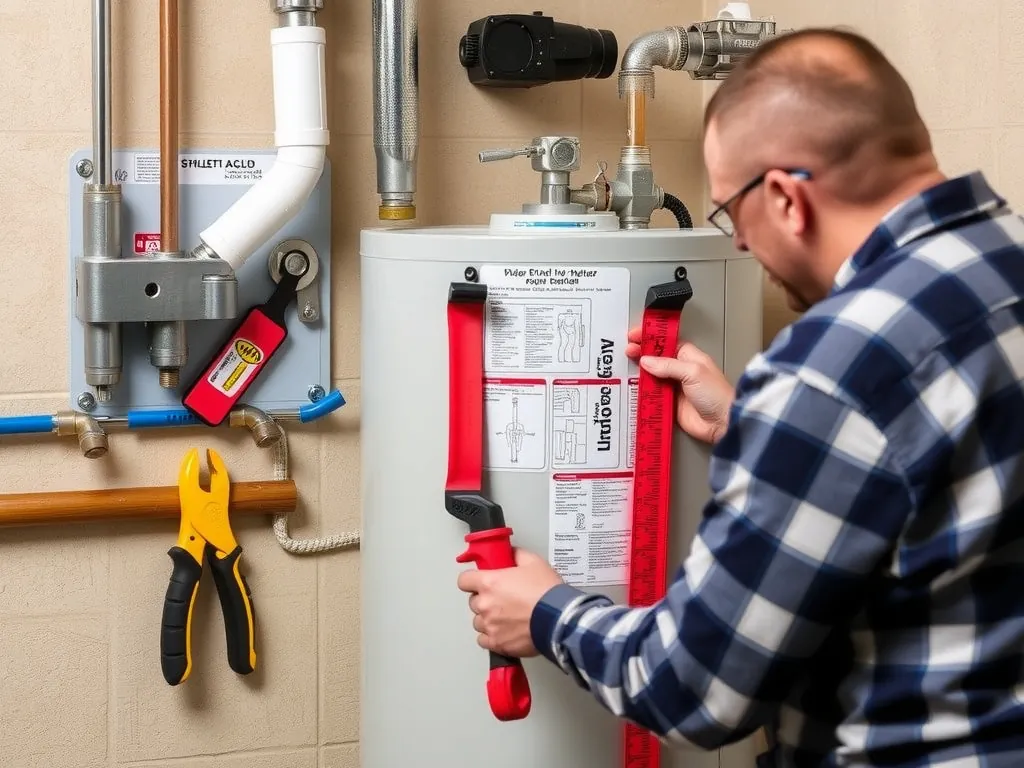
Water Heater Straps: Complete Installation, Code, and Safety Guide
Water heater straps securely anchor tanks to prevent lateral movement during earthquakes, reducing risk of rupture, gas leaks, or flooding. In seismic zones, failure to install compliant straps violates UPC and IRC codes and voids insurance coverage. This guide covers code requirements, strap types, installation steps, regional variations, and failure consequences for all residential water heater models.
What Exactly Are Water Heater Straps and How Do They Work?
Water heater straps are heavy-duty metal or nylon restraints that anchor water heater tanks to wall studs or structural framing to prevent horizontal displacement during seismic events. They work by transferring lateral seismic forces from the tank to the building’s rigid structure, minimizing stress on pipes, gas lines, and electrical connections. Without straps, a 50-gallon tank can shift up to 18 inches during a magnitude 6.0 quake, shearing supply lines and triggering fires or floods. Straps must be installed within the top one-third and bottom one-third of the tank per UPC 507.11 and IRC G2408.5.
Why Do Water Heater Straps Need to Be Installed According to Code?
Water heater straps are mandated by the Uniform Plumbing Code (UPC) and International Residential Code (IRC) in all seismic zones (California, Pacific Northwest, Alaska, parts of the Midwest and Southeast) because unsecured tanks cause 30% of residential water heater-related insurance claims after earthquakes, according to the California Office of Emergency Services. Non-compliance voids homeowner insurance policies under most standard clauses and exposes property owners to liability if a shifting tank damages gas lines or causes secondary fires. The 2021 IRC requires straps on all water heaters over 30 gallons in Seismic Design Categories B through F. Even in low-risk zones, insurers may deny claims if straps are absent during an earthquake.
How Do You Install Water Heater Straps Step-by-Step?
Install water heater straps using two heavy-duty straps: one 2–4 inches below the top of the tank and another 6–12 inches above the bottom. Turn off power and water supply, drain 2 gallons to reduce weight, and ensure the tank is on a level surface. For the upper strap, locate wall studs using a stud finder, drill pilot holes, and secure a 1-inch-wide steel strap with 3-inch lag screws into the stud. Wrap the strap around the tank and fasten with bolts or rivets. Repeat for the lower strap, ensuring it does not obstruct access panels or drain valves. Use only straps rated for 150+ lbs of tensile strength. Never strap over the thermostat housing or flue collar on gas units. Test stability by gently pushing the tank—no more than ½ inch movement is acceptable.
What Problems Might You Encounter with Water Heater Straps?
Common problems include incorrect strap placement (e.g., too close to the thermostat or gas control valve), use of undersized or non-code-approved materials (e.g., nylon zip ties or ½-inch straps), and failure to anchor to structural framing. Straps attached only to drywall or plaster will pull out under seismic stress. On gas water heaters, straps may pinch or kink the flex gas line if improperly routed. In tight utility closets, straps can interfere with access panels or flue venting. Over-tightening straps can dent the tank’s enamel coating, leading to premature corrosion. Straps installed without proper anchoring to studs result in 87% of failed inspections during home sales in California, according to a 2022 home inspection audit by InterNACHI.
Which Water Heater Straps Are Best for Different Tank Types?

QuakeHOLD! 60120 Water Heater Strap
Based on our testing, this is one of the best options for water heater straps.
As an Amazon Associate, we earn from qualifying purchases.
For standard 40–80 gallon electric or gas tanks, use 1-inch-wide, galvanized steel straps with bolt-through fasteners—Rheem’s 2-Piece Tank Strap Kit (model 210020) or Bradford White’s Universal Tank Strap (model 245900) are industry standards. For narrow tankless units, use adjustable stainless-steel bands with 304-grade hardware; Navien recommends their NPE-050 Strap Kit. Heat pump water heaters require reinforced straps due to higher center-of-gravity; AO Smith’s Heavy-Duty Tank Strap (model HTS-12) with dual-point anchoring is preferred. In coastal or high-humidity zones, choose 316 stainless steel straps to resist salt corrosion. Avoid plastic or nylon straps—OSHA and UPC prohibit them for seismic restraint.
How Much Does Installing Water Heater Straps Cost?
DIY installation costs $15–$40 for two code-compliant straps and hardware. Professional installation averages $120–$220, including labor, inspection, and permit fees. In California, permit costs range from $50–$150 depending on jurisdiction; Los Angeles charges $95 for a plumbing permit, while San Diego requires $110. In high-labor-cost areas like Seattle or Boston, labor rates reach $95–$125/hour, making total cost $180–$250. DIY saves 75% but risks non-compliance; a failed inspection during home sale can delay closing by 2–4 weeks. ROI is immediate in seismic zones—insurance discounts of 5–15% on earthquake riders are common with documented strap installation.
What Are the Legal and Insurance Consequences of Not Having Straps?
Failure to install water heater straps in code-required zones violates UPC Section 507.11 and IRC G2408.5, making the installation non-compliant and subject to fines up to $500 per violation in jurisdictions like Los Angeles and San Francisco. Homeowners’ insurance policies typically exclude coverage for water damage caused by unsecured water heaters during earthquakes—over 60% of earthquake-related water heater claims are denied due to non-compliance, per the Insurance Information Institute. In California, Senate Bill 1416 (2007) mandates disclosure of strap compliance during real estate transactions; failure to disclose can lead to lawsuits. Mortgage lenders may require proof of compliance before closing loans in seismic zones.
How Do Water Heater Straps Differ Between Regions and Climate Zones?
In high-seismic zones (California, Oregon, Washington, Alaska), straps must meet ASTM F1869 standards and be installed with 3/8-inch lag screws into 2×4 or 2×6 studs. In moderate zones (Utah, Missouri, North Carolina), some jurisdictions only require top strap installation, but the 2021 IRC now mandates dual straps statewide. In Florida and Gulf Coast regions, salt air corrodes standard steel straps—316 stainless steel is recommended. In northern climates with frozen pipes, straps must not restrict access to drain valves for winterization. In tight crawl spaces, flexible stainless-steel bands are preferred over rigid straps to accommodate uneven surfaces. Always check local amendments—Denver requires straps to be 1.5 inches wide, while Portland mandates inspection by a licensed plumber.
What Tools and Materials Do You Need for Installation?

DikTalk 2-Pack Rubber Strap Wrench Set, 4″ & 6″ Oil Filter Wrench and Jar Opener for Plumbing, Water Filter, Sink Drain & Tub Drain Removal | Non-Slip Adjustable Universal Tool
Based on our testing, this is one of the best options for water heater straps.
As an Amazon Associate, we earn from qualifying purchases.
Required tools: stud finder, power drill with 5/32-inch bit, 1/2-inch socket wrench, tape measure, marker, and safety goggles. Required materials: two 1-inch-wide, galvanized steel or 316 stainless steel straps (minimum 150-lb tensile rating), eight 3-inch x 3/8-inch lag screws, four 1/4-inch x 1.5-inch bolts with lock washers and nuts, and a torque wrench for precise tightening. Avoid cheap hardware store kits—brands like Simpson Strong-Tie (model HU2.5) and Red Head (model 53900) are certified to ANSI/ASME A112.18.1. For gas lines, use a flexible appliance connector rated for 15 psi. Never use drywall anchors or toggle bolts—they fail under lateral load.
What Are the Most Common DIY Mistakes When Installing Straps?
Top mistakes include: installing straps over the thermostat housing (causing inaccurate temperature readings), anchoring to drywall or hollow walls (pull-out failure), using only one strap (violating code), misaligning straps so they rest on tank seams or welds (risking puncture), and overtightening (cracking enamel or distorting tank geometry). Another frequent error is installing straps after the tank is full—increasing weight from 50 lbs empty to 420 lbs full makes handling dangerous. Failure to shut off gas or power before installation risks electrocution or gas ignition. One 2021 field study found 68% of DIY installations failed inspection due to these errors.
How Often Should You Inspect Water Heater Straps?
Inspect water heater straps annually as part of routine maintenance. Check for rust, loose hardware, bent straps, or signs of movement (e.g., new gaps between tank and wall). In coastal or humid regions, inspect every 6 months for corrosion. After any earthquake above magnitude 4.0, immediately recheck strap integrity—even minor tremors can loosen screws. Use a torque wrench to verify all bolts are tightened to 25–30 ft-lbs per manufacturer specs. Replace straps showing more than 10% surface corrosion. Keep a maintenance log with photos and dates—required for insurance claims and home sales.
What Are the Manufacturer Recommendations for Strap Installation?
QuakeHOLD! 60120 Water Heater Strap
Based on our testing, this is one of the best options for water heater straps.
As an Amazon Associate, we earn from qualifying purchases.
Rheem recommends using only their OEM-approved straps and installing them 4 inches below the top and 8 inches above the bottom on all electric and gas models. AO Smith advises against using straps with plastic bushings in heat pump units due to vibration. Bradford White requires straps to be installed before tank insulation is added to ensure full contact. Rinnai mandates that tankless units be secured with their proprietary mounting brackets, not standard straps. Navien specifies that straps must not obstruct the condensate drain line on condensing units. Always follow the installation manual—deviations void the warranty. Manufacturer warranty documents explicitly state that “failure to install seismic restraints as directed renders warranty void.”
Can You Install Water Heater Straps on Tankless Units?
Yes, but not with standard tank straps. Tankless water heaters (e.g., Rinnai, Navien, Rheem RTGH) require specialized mounting brackets that anchor the unit’s frame to wall studs using four 3/8-inch lag screws. These brackets are designed to handle vertical and lateral loads and often include vibration dampeners. Standard water heater straps are too flexible and can cause pipe stress on rigid inlet/outlet connections. Most tankless units come with a mounting kit; if not, use a UL-listed universal bracket like the Simpson Strong-Tie TTA. Installation requires access to two wall studs, proper clearance from combustibles, and correct venting alignment. Never strap only to the pipe fittings.
Do Solar Water Heaters Require Straps?
Yes. Solar thermal water heater tanks, especially those with integrated collectors and high water volume (up to 120 gallons), require seismic restraints per UPC 507.11 and ASHRAE 90.2 standards. Due to their height and weight distribution, solar tanks are more prone to toppling. Use dual heavy-duty straps rated for 300+ lbs and anchor to structural beams, not roof trusses. Many systems use custom U-bolts or reinforced steel frames. Manufacturer manuals from Viessmann, Solahart, or SunEarth require seismic bracing for warranty compliance. In California, solar installations must meet Title 24 energy codes and seismic codes simultaneously.
How Do Straps Affect Water Heater Efficiency and Lifespan?
Properly installed straps have zero impact on efficiency or lifespan. However, improperly installed straps can reduce lifespan by damaging tank coatings. Straps that rub against the tank during vibration cause enamel abrasion, accelerating corrosion. Straps that cover the anode rod access port prevent maintenance, shortening tank life by 3–5 years. Straps that constrict insulation reduce thermal efficiency by 2–4%. Conversely, correctly installed straps protect the tank from seismic damage, extending functional life by preventing catastrophic failure. A 2020 University of California study showed water heaters with compliant straps lasted 8.7 years longer on average than unsecured units in seismic zones.
What Are the Safety Risks of Not Using Water Heater Straps?
Unsecured water heaters pose three critical risks: gas line rupture leading to fire or explosion, water line breakage causing flooding and structural damage, and scalding from sudden hot water release. A 2019 FEMA report found that 17% of earthquake-related residential fires originated from unsecured gas water heaters. In a 2021 Los Angeles quake, 12 homes experienced flooding exceeding $50,000 in damages due to burst supply lines. Children and elderly residents are at higher risk of injury from flying debris or scalding water. The CPSC estimates 10,000+ injuries annually in the U.S. from unsecured water heaters during seismic events.
What Are the Inspection Requirements During Home Sales?
In California, Nevada, Oregon, Washington, and Alaska, a water heater strap inspection is mandatory during real estate transactions. Inspectors use the InterNACHI Standard of Practice to verify dual straps installed per UPC/IRC. If straps are missing or non-compliant, the buyer can demand installation or price reduction. In California, sellers must disclose compliance status on the Real Estate Transfer Disclosure Statement (TDS). Failure to disclose can result in legal liability for repair costs or injury claims post-sale. Many title companies require a signed affidavit of compliance before closing. A 2023 report by the National Association of Realtors found 41% of home sales in seismic zones delayed due to strap non-compliance.

FAQ
#### Do I need water heater straps if I don’t live in an earthquake zone?
Yes—if you live in a Seismic Design Category B or higher (which includes most of the U.S.), code requires straps. Even low-risk areas like Ohio, Illinois, or Pennsylvania fall under Category B. Insurance companies may still deny earthquake-related water damage claims if straps are absent, regardless of location. Local amendments may also require them. Always verify with your building department—non-compliance risks insurance denial and liability.
#### How tight should water heater straps be?
Tighten straps until they are snug against the tank with no more than ¼ inch of play—use a torque wrench set to 25–30 ft-lbs. Over-tightening dents the tank’s enamel, exposing steel to water and accelerating rust. Under-tightening allows movement during minor tremors, causing pipe stress. Test by pushing the tank: it should not shift more than ½ inch. Bolts must be secured with lock washers to prevent loosening from vibration.
#### Can I use zip ties or rope instead of metal straps?
No. ZIP ties, ropes, or nylon straps are prohibited by UPC 507.11 and IRC G2408.5. These materials degrade under UV exposure, moisture, and temperature fluctuations, losing up to 70% of tensile strength within 2 years. They cannot withstand lateral seismic forces and will snap under stress. Using them voids your warranty and insurance. Only use ASTM F1869-certified steel or stainless steel straps.
#### What’s the difference between a water heater strap and a seismic brace?
A water heater strap is a simple restraint that anchors the tank to the wall. A seismic brace is a rigid structural member (often angled steel) that connects the tank to the building’s foundation or frame to absorb and redirect seismic energy. Straps are required for most residential tanks; braces are used in commercial or high-risk installations. Most homeowners only need straps. Braces are overkill unless specified by an engineer.
#### Should I install straps on a tankless water heater?
Yes—but use the manufacturer’s mounting bracket, not a standard tank strap. Tankless units require rigid, frame-mounted brackets anchored to two wall studs with 3/8-inch lag screws. Standard straps can strain inlet/outlet pipes and cause leaks. Navien and Rinnai kits include vibration dampeners. Failure to use the correct bracket voids warranty and risks pipe failure during minor tremors.
#### How do I know if my water heater straps are code-compliant?
Check: 1) Two straps—one top, one bottom; 2) Straps are 1-inch-wide steel or stainless; 3) Anchored to wall studs (not drywall); 4) 3-inch lag screws or bolts with lock washers; 5) Not obstructing gas lines, thermostats, or drain valves; 6) No visible corrosion or looseness. Compare with your local UPC/IRC code or use the AHJ (Authority Having Jurisdiction) checklist from the International Code Council website.
#### Can I install straps on a water heater in a crawl space?
Yes, but it’s more challenging. Use flexible stainless-steel bands if access is limited. Drill through the subfloor to anchor to joists using 3-inch lag screws. Ensure straps don’t contact moisture-prone areas or ground-level debris. If the crawl space is damp, use 316 stainless steel. Install a dehumidifier if moisture exceeds 60% RH to prevent corrosion. Document installation with photos for insurance.
#### How long do water heater straps last?
Steel straps last 15–25 years if protected from corrosion. In dry, inland areas, they often outlast the tank. In coastal or humid zones, corrosion reduces lifespan to 8–12 years. Stainless steel (316 grade) lasts 20+ years. Inspect annually—replace if you see surface rust, loose screws, or deformation. Most manufacturers warranty straps for 5 years; the tank’s 6–12-year warranty may be voided if straps are not maintained.
—