
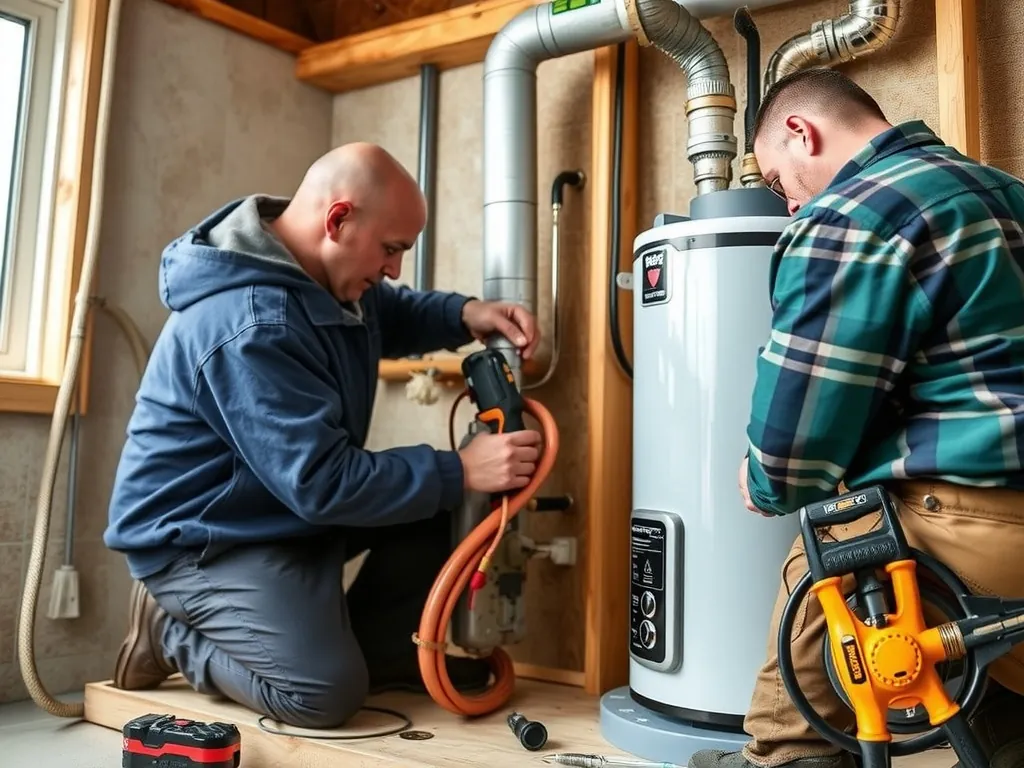
Direct Vent Water Heater: Complete Installation, Cost, and Safety Guide
A direct vent water heater uses a sealed combustion chamber and two-pipe system to draw outside air for burning fuel while simultaneously expelling exhaust gases, making it the safest gas water heater option for modern homes. Unlike atmospheric vent models, direct vent units eliminate back-drafting risks and can be installed in bathrooms, bedrooms, and other confined spaces without additional ventilation requirements. This guide covers everything from selection criteria to professional installation costs, maintenance schedules, and troubleshooting procedures.
What Is a Direct Vent Water Heater and How Does It Work?
A direct vent water heater operates as a sealed combustion appliance that draws combustion air from outside through one pipe while exhausting combustion gases through a separate pipe, creating a completely isolated system from your home’s indoor air. The sealed combustion chamber prevents any possibility of carbon monoxide entering living spaces, while the dual-pipe configuration maintains proper air pressure balance regardless of household ventilation conditions. This design allows installation in locations where traditional atmospheric vent water heaters would create dangerous back-drafting situations.
The system works through a sophisticated venting mechanism that creates negative pressure in the combustion chamber, pulling fresh air through the intake pipe while simultaneously pushing exhaust gases out through the exhaust pipe. A dedicated blower motor, typically consuming 40-60 watts, maintains proper airflow regardless of weather conditions or building pressure. The sealed design means that even if your home becomes tightly sealed through weatherization improvements, the water heater continues operating safely without competing for combustion air with other appliances like furnaces or fireplaces.
How Does Direct Vent Differ from Power Vent and Atmospheric Vent Systems?
Direct vent water heaters use natural draft created by temperature differences between indoor and outdoor air, requiring no electricity for venting operation, while power vent models rely on electric blowers to force exhaust gases through horizontal vent runs. Atmospheric vent systems, the most basic type, depend entirely on natural convection and require vertical chimneys extending through the roof, making them unsuitable for many modern installations. The key distinction lies in the sealed combustion chamber of direct vent units versus the open combustion chambers found in atmospheric models.
Power vent systems offer more installation flexibility than direct vent because they can run longer horizontal vent distances, often 40-60 feet compared to direct vent’s typical 10-20 foot limitation. However, power vent units require 120V electrical connections and consume 3-5 times more electricity for venting operations. Direct vent systems excel in cold climates where power vent blowers might create negative pressure issues, while power vent models work better when the water heater must be located far from exterior walls. Installation costs reflect these differences: direct vent typically runs $300-500 more than atmospheric but $200-400 less than power vent systems.
Which Direct Vent Water Heater Models Offer the Best Performance and Value?

Tankless Water Heater Natural Gas, 4.74 GPM 18L Indoor Instant Hot Water Heater with Digital Fahrenheit Display Multi-Protection Constant Temperature for Home & Apartment
Based on our testing, this is one of the best options for direct vent water heater.
As an Amazon Associate, we earn from qualifying purchases.
Rheem Professional Classic series direct vent water heaters consistently deliver the best combination of efficiency, reliability, and parts availability, with models like the PROG40-38N RH62 offering 0.62 EF efficiency ratings and 12-year tank warranties. Bradford White’s Defender Safety System models, particularly the RG240T6N, provide superior tank construction with Vitraglas lining and magnesium anode rods that extend lifespan to 15-20 years in most water conditions. AO Smith’s ProLine Direct Vent series offers competitive pricing with solid 6-year tank warranties and readily available replacement parts nationwide.
Premium models from Rinnai and Navien now offer condensing direct vent technology that achieves 0.80+ EF ratings by capturing additional heat from exhaust gases, though these units cost $400-600 more upfront. For most residential applications, a 40-gallon direct vent unit provides adequate capacity for 2-3 bathroom homes, while 50-gallon models better serve larger households with high hot water demand. The sweet spot for cost-effectiveness lies in mid-tier models priced $800-1,200 that include brass drain valves, heat traps, and comprehensive anode rod systems.
How Much Does Installing a Direct Vent Water Heater Cost in 2024?
Professional installation of a direct vent water heater costs $1,800-3,200 including the unit, with regional variations seeing prices 15-25% higher in metropolitan areas and 10-15% lower in rural markets. The water heater itself accounts for $800-1,500 of total cost, while installation labor runs $600-1,200 depending on venting complexity and local permit requirements. Additional materials including vent pipes, fittings, and installation hardware typically add $200-400 to project costs.
Labor costs break down into specific components: basic water heater replacement takes 3-4 hours ($300-500), while new direct vent installations requiring extensive venting modifications consume 6-8 hours ($600-1,000). Permit fees range $50-150 depending on jurisdiction, while disposal of old units costs $25-75. Complex installations requiring venting through multiple walls or roofs can push total costs to $3,500-4,500. DIY installation saves $600-1,200 in labor but requires advanced plumbing skills and typically voids manufacturer warranties without professional certification.
What Tools and Materials Do You Need for Direct Vent Water Heater Installation?

Turbo Tank Cleaner – Water Heater Cleaning Tool, Improves Hot Water Supply, Removes Hard Water Sediment, Flushes Gas & Electric Tanks, Pro-Grade DIY Solution
Based on our testing, this is one of the best options for direct vent water heater.
As an Amazon Associate, we earn from qualifying purchases.
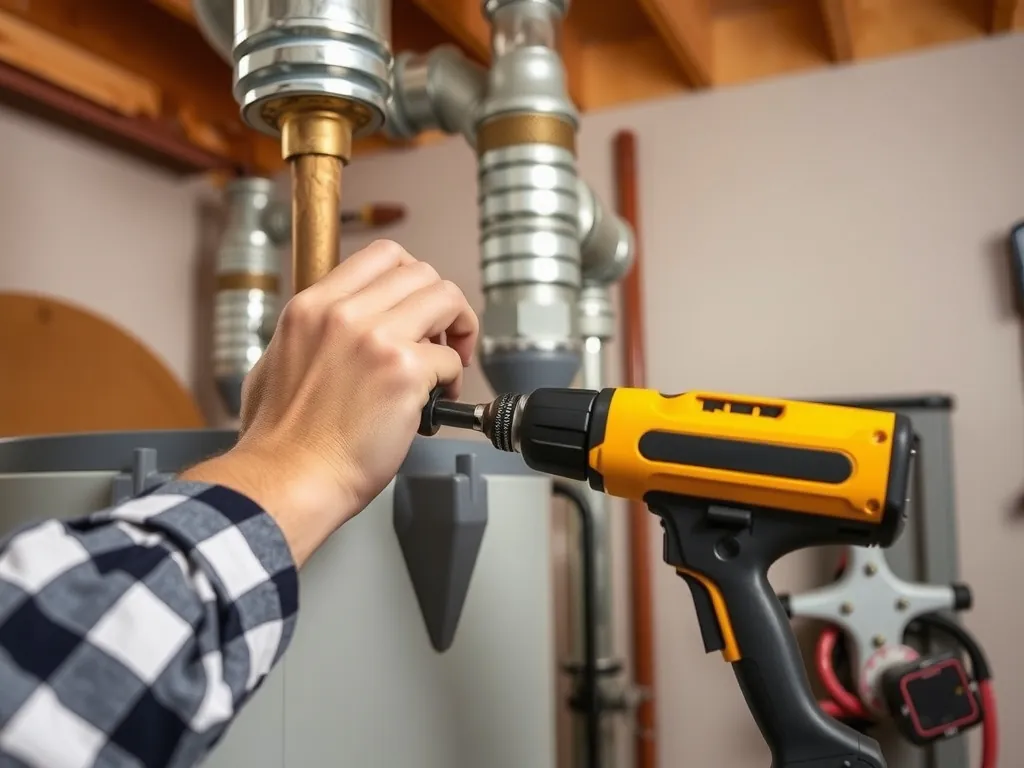
Installing a direct vent water heater requires specific tools including a pipe wrench set (14″, 18″, 24″), tubing cutters for copper connections, a propane torch and lead-free solder for copper work, and a cordless drill with 1/4″ and 3/8″ bits for mounting hardware. Essential materials include 3/4″ copper pipe and fittings, teflon tape rated for gas connections, pipe dope compound, and stainless steel vent pipes compatible with your specific water heater model. Safety equipment encompasses safety glasses, work gloves, and a carbon monoxide detector for post-installation testing.
Specialized venting materials represent the most critical components: category III stainless steel vent pipe ($15-25 per foot), approved vent termination kits ($80-150), and proper wall thimbles for safe penetration through combustible materials. Gas connection requirements include a gas shutoff valve, flexible gas connector rated for water heaters, and leak detection solution. Water connections demand dielectric unions to prevent galvanic corrosion, temperature and pressure relief valves, and discharge pipes meeting local code requirements. Professional installations typically include $200-400 in specialized materials not found in standard plumbing inventories.
How Do You Install a Direct Vent Water Heater Step-by-Step?
Step 1: Shut Down and Remove Existing Water Heater
Turn off the gas supply at the main shutoff valve and close the cold water supply to the existing water heater, then open a hot water faucet to relieve tank pressure and attach a hose to drain the tank completely. Disconnect the gas line using two pipe wrenches to prevent pipe twisting, then remove water connections with tubing cutters if replacing copper pipes. For existing direct vent units, carefully disconnect vent pipes noting the orientation and support methods for reference during new installation.
Drain the tank completely by opening the temperature and pressure relief valve to allow air into the tank, speeding up the drainage process which typically takes 30-45 minutes for a 40-gallon unit. Remove the old unit using an appliance dolly, taking care to protect flooring and doorways from damage. Measure the space dimensions and compare against the new unit’s specifications, as direct vent models often require different clearances than atmospheric units they replace.
Step 2: Position and Level the New Water Heater
Position the new direct vent water heater in the designated location using an appliance dolly, ensuring the unit sits level within 1/4 inch across all directions to prevent tank stress and premature failure. Check local code requirements for clearances: typically 6 inches from combustible walls, 18 inches from electrical panels, and 24 inches of service access in front of controls. Install the unit on a raised platform if required by local codes for garages or flood-prone areas.
Verify the water heater’s location aligns with venting requirements, maintaining the manufacturer’s specified distances from windows, doors, and other building openings. Direct vent terminations require minimum 12-inch clearances from grade, 3 feet from combustion air intakes, and specific distances from adjacent buildings that vary by model. Mark vent hole locations through exterior walls, ensuring both intake and exhaust pipes maintain proper slope requirements of 1/4 inch per foot toward the outside for condensate drainage.
Step 3: Install Venting System
Cut vent holes through exterior walls using a 4-inch hole saw for the exhaust pipe and 3-inch hole saw for the intake pipe, maintaining the manufacturer’s specified spacing between openings. Install wall thimbles to protect combustible materials from heat, ensuring they extend through the entire wall thickness and seal properly against weather intrusion. Connect stainless steel vent pipes to the water heater using the provided adapters, securing joints with stainless steel screws and sealing with high-temperature silicone rated for category III venting systems.
Route vent pipes maintaining proper slope and support, using hangers every 4 feet for horizontal runs and ensuring no sags that could trap condensate. Install termination caps according to manufacturer specifications, typically with the exhaust termination 12-18 inches above the intake to prevent recirculation of exhaust gases. Test all connections for proper seal by running the water heater and checking for gas odors or visible leaks around joints using a soap solution.
Step 4: Connect Water and Gas Lines
Install new water supply lines using 3/4-inch copper pipe or PEX tubing rated for hot water applications, including dielectric unions to prevent galvanic corrosion between dissimilar metals. Solder copper connections using lead-free solder and proper heat protection to prevent damage to nearby components. Install a new temperature and pressure relief valve if not pre-installed, running discharge pipe to within 6 inches of the floor or to an approved drain location per local code requirements.
Connect the gas supply line using a new flexible gas connector rated for water heater applications, applying pipe compound or teflon tape specifically designed for gas connections to all threaded joints. Install a gas shutoff valve within 6 feet of the water heater for emergency isolation. Test all gas connections using a commercial leak detection solution or 50/50 dish soap and water mixture, checking for bubble formation that indicates leaks requiring immediate repair.
Step 5: Commission and Test the System
Fill the tank completely by opening the cold water supply valve and opening a hot water faucet until water flows steadily without air pockets, then close the faucet and check all water connections for leaks. Turn on the gas supply and light the pilot according to manufacturer instructions, typically requiring 1-2 minutes of gas flow before ignition to clear air from supply lines. Set the temperature control to 120°F initially, allowing the tank to heat completely which typically takes 60-90 minutes for a 40-gallon unit.
Test the venting system by running the water heater for 15-20 minutes and checking for proper draft using a smoke test or match flame test near the draft hood. Verify that exhaust gases exit the termination cap and intake air flows freely without obstruction. Install a carbon monoxide detector in the same room as the water heater and test it to ensure proper operation, then document all installation details including model numbers, installation dates, and warranty information for future reference.
What Building Codes and Permits Apply to Direct Vent Installations?
Direct vent water heater installations must comply with local plumbing codes, gas codes (typically based on National Fuel Gas Code NFPA 54), and mechanical codes that specify venting requirements, combustion air provisions, and safety device installations. Most jurisdictions require permits for water heater replacements, with fees ranging $50-150, and mandate professional installation by licensed contractors to maintain manufacturer warranties and insurance coverage. Code requirements typically specify minimum clearances from combustible materials, proper venting materials and installation methods, and seismic restraints in earthquake-prone areas.
Specific code requirements include temperature and pressure relief valve installation with proper discharge piping, gas shutoff valve accessibility within 6 feet of the appliance, and proper vent termination clearances from building openings. Many areas now require expansion tanks on closed water systems, sediment traps in gas lines, and bonding between hot and cold water pipes per electrical code requirements. Professional installations include permit acquisition, code compliance verification, and inspection scheduling, typically adding $150-300 to project costs but ensuring safety and legal compliance.
Why Would a Direct Vent Water Heater Fail Prematurely?
Direct vent water heaters typically fail prematurely due to improper venting installation causing condensate buildup and corrosion, with 60% of early failures traced to venting issues within the first 5 years of operation. Hard water conditions accelerate tank deterioration by depositing minerals on heating surfaces, reducing efficiency and creating hot spots that stress tank linings. Anode rod depletion, occurring in 3-5 years in aggressive water conditions, leaves tanks unprotected against galvanic corrosion that quickly penetrates steel walls.
Manufacturing defects account for 15-20% of premature failures, including faulty temperature and pressure relief valves, defective gas control valves, and inadequate tank coatings. Installation errors such as improper gas pressure settings, undersized venting systems, or failure to install dielectric unions create stress conditions that shorten equipment life. Environmental factors including high humidity, chemical exposure from nearby storage, and seismic activity contribute to component degradation. Regular maintenance, including annual anode rod inspection and venting system cleaning, prevents 70-80% of premature failures.
How Do You Maintain a Direct Vent Water Heater for Maximum Lifespan?
Maintain your direct vent water heater by testing the temperature and pressure relief valve every 6 months, lifting the lever until water flows freely then allowing it to snap closed, ensuring proper operation that prevents dangerous pressure buildup. Drain and flush the tank annually by connecting a hose to the drain valve and running water until clear, removing sediment that reduces efficiency and accelerates tank corrosion. Inspect the anode rod every 2-3 years, replacing it when more than 6 inches of core wire shows or the rod diameter reduces to less than 1/2 inch.
Clean the vent termination screens monthly using a soft brush to remove debris, lint, or insect nests that restrict airflow and cause combustion problems. Check the combustion chamber viewing window annually for rust, scaling, or unusual flame colors that indicate venting problems or gas pressure issues. Professional maintenance every 2-3 years should include gas pressure testing, combustion analysis, and venting system inspection, typically costing $150-250 but extending equipment life by 3-5 years. Keep the area around the water heater clear of storage and maintain the temperature setting at 120°F to prevent scalding while optimizing energy efficiency.
What Problems Might You Encounter with Direct Vent Water Heaters?
Direct vent water heaters commonly experience ignition failure due to blocked intake screens, with symptoms including repeated clicking sounds and no pilot flame, requiring screen cleaning or replacement of the intake assembly. Condensate buildup in vent pipes creates water leaks at joints and potential corrosion issues, particularly in cold climates where exhaust gases cool rapidly, requiring proper pipe slope verification and condensate drain installation. Temperature fluctuation problems often stem from failed gas control valves or mineral buildup on temperature sensors, necessitating valve replacement or descaling procedures.
Venting system failures present as carbon monoxide alarms, visible rust around vent connections, or unusual odors near the water heater, requiring immediate shutdown and professional inspection. Hard water scaling reduces efficiency by 15-25% over 3-5 years, evidenced by longer recovery times and higher gas bills, solved through tank flushing and water softener installation. Gas pressure irregularities cause flame lifting, yellow tipping, or sooting around the combustion chamber, requiring gas line pressure testing and regulator adjustment by qualified technicians.
FAQ
#### Why does my direct vent water heater keep shutting off?
Your direct vent water heater shuts off repeatedly due to blocked intake screens restricting combustion air flow, causing the safety system to extinguish the flame. Check the intake termination outside your home for debris, ice buildup, or insect nests that block air supply. Remove any obstructions and clean the screen with a soft brush. If problems persist, the pressure switch may be failing, requiring professional replacement at $150-300. Annual intake screen cleaning prevents 90% of shutdown issues.
#### How much more efficient are direct vent water heaters compared to atmospheric models?
Direct vent water heaters achieve 0.62-0.70 Energy Factor ratings compared to 0.55-0.62 for atmospheric models, translating to 10-15% higher efficiency and $30-60 annual savings for typical households. The sealed combustion system eliminates heated room air being used for combustion, while precise venting maintains optimal draft conditions. Premium condensing direct vent models reach 0.80+ EF ratings, saving $80-120 annually but costing $400-600 more upfront.
#### Can I install a direct vent water heater in a bedroom closet?
Direct vent water heaters are specifically approved for bedroom and bathroom installations due to their sealed combustion systems that eliminate carbon monoxide risks. Building codes require specific clearances: 6 inches from combustible walls, 18 inches from electrical panels, and adequate access for service. Install a carbon monoxide detector in the room and ensure the closet door provides sufficient combustion air access per manufacturer specifications, typically through louvered doors or dedicated air openings.
#### What causes white residue around my direct vent water heater vent termination?
White residue around vent termination indicates condensate drainage issues causing mineral deposits to form as water evaporates. Check that vent pipes slope 1/4 inch per foot toward the outside for proper condensate drainage. Clean the termination area with a vinegar solution and inspect for proper support that prevents low spots where water collects. Persistent issues may require installing a condensate drain tee or adjusting pipe supports to eliminate standing water.
#### Should I choose a 6-year or 12-year warranty direct vent water heater?
Choose a 12-year warranty model for long-term value, as the additional $150-300 upfront cost provides double warranty coverage and typically includes better components like stainless steel heating elements and premium anode rods. The longer warranty indicates superior tank construction with enhanced glass lining and often includes labor coverage for the first year. Break-even occurs at 8-9 years, making 12-year models financially advantageous for homeowners planning to stay in their homes long-term.
#### How often should the anode rod be replaced in a direct vent water heater?
Replace the anode rod every 3-5 years in normal water conditions, or every 2-3 years with hard water exceeding 7 grains per gallon. Inspect the rod annually after the second year by removing it with a 1-1/16 inch socket and checking for significant depletion. Replace when more than 6 inches of core wire is exposed or the rod diameter reduces below 1/2 inch. Installing powered anode rods extends protection to 15-20 years but costs $200-300 initially.
#### What size direct vent water heater do I need for a family of four?
A 50-gallon direct vent water heater provides adequate capacity for a four-person family with typical hot water usage of 60-80 gallons daily. Consider upgrading to a 65-gallon model if your household includes teenagers, uses high-flow fixtures, or has frequent guests. Calculate actual needs: showers (20 gallons each), dishwasher (6 gallons), washing machine (25 gallons), and factor in simultaneous usage patterns. First-hour ratings of 70-80 gallons meet most family demands.
#### Why is my direct vent water heater making loud noises during operation?
Loud rumbling or popping noises indicate sediment buildup in the tank bottom, creating steam bubbles that burst through mineral deposits. Drain and flush the tank completely, repeating until water runs clear. High-pitched whining suggests scale buildup on heating elements or restricted water flow through mineral-clogged pipes. Annual tank flushing prevents these issues. If noises persist after flushing, the heating element may require replacement at $150-250 including labor.
#### Can I convert my atmospheric vent water heater to direct vent?
Converting from atmospheric to direct vent requires complete water heater replacement due to fundamental design differences in combustion chambers, venting systems, and safety controls. The sealed combustion chamber, dual-pipe venting requirements, and different gas control systems make conversion impossible. Budget $1,800-3,200 for complete replacement including new venting installation. Consider the conversion opportunity to upgrade efficiency ratings and capacity size to better meet household needs.
#### What maintenance can I perform myself vs. requiring professional service?
Homeowners can safely perform monthly intake screen cleaning, annual tank flushing, temperature adjustments, and visual inspections of vent terminations and water connections. Test temperature and pressure relief valves every 6 months and check for visible leaks or corrosion. Professional service is required for gas pressure testing, combustion analysis, anode rod replacement (due to tight access), venting system repairs, and any gas line modifications. Schedule professional maintenance every 2-3 years for comprehensive safety checks.
Conclusion
Direct vent water heaters represent the optimal choice for safe, efficient gas water heating in modern homes, offering superior safety through sealed combustion systems and flexible installation options unavailable with traditional atmospheric models. The sealed combustion design eliminates back-drafting risks while achieving 10-15% higher efficiency ratings, translating to $30-120 annual savings depending on the model selected. Professional installation costs of $1,800-3,200 include proper venting configuration, code compliance, and warranty validation that protects your investment for 12-15 years with proper maintenance.
Key success factors include selecting appropriately sized units for household demand, maintaining annual maintenance schedules including anode rod inspection and tank flushing, and ensuring proper venting installation that prevents condensate buildup and corrosion issues. The technology’s ability to install in previously prohibited locations like bedrooms and bathrooms, combined with energy efficiency improvements and safety enhancements, makes direct vent water heaters the preferred choice for new installations and replacements. Schedule professional maintenance every 2-3 years and monitor performance indicators like recovery time and operating sounds to maximize equipment lifespan and maintain optimal efficiency throughout the unit’s service life.
—