
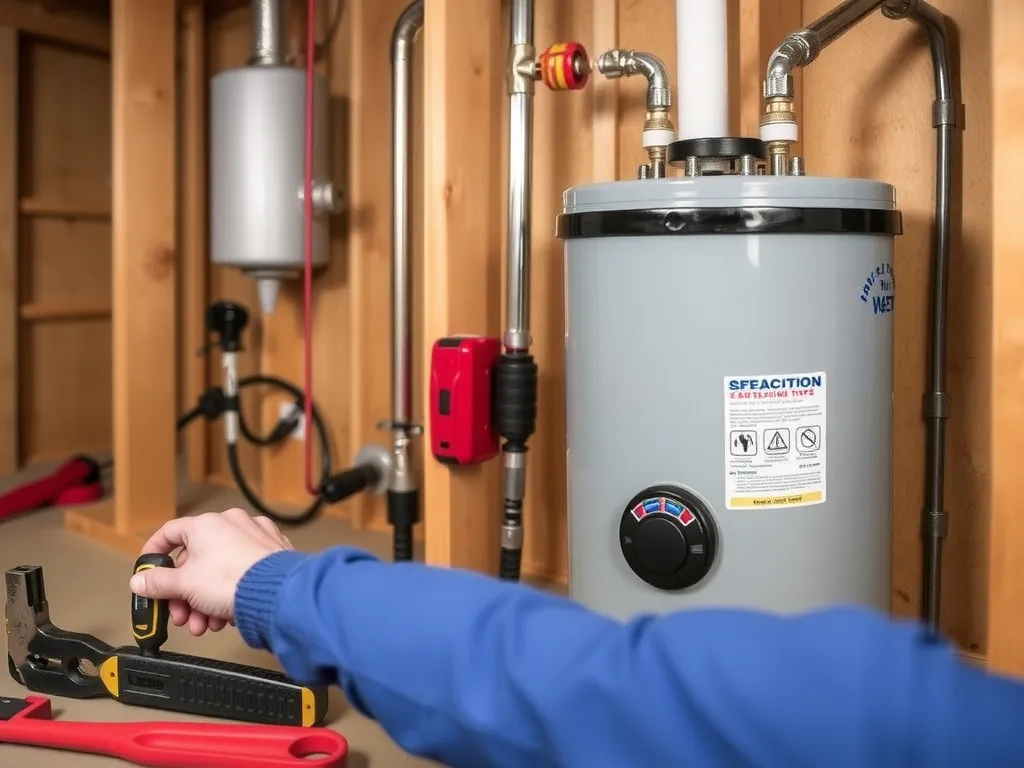
Immersion Water Heater: Complete Guide to Types, Installation, and Maintenance
An immersion water heater uses electric heating elements submerged directly in water to heat it, commonly found in storage tanks or as standalone units. These systems operate at 120V or 240V, delivering 2,000–5,500 watts, with recovery rates of 18–30 gallons per hour depending on voltage and element power. They offer reliable point-of-use or whole-home heating but require proper electrical circuits and periodic maintenance. This guide covers how they work, installation, troubleshooting, and cost-effective maintenance.
What Is an Immersion Water Heater and How Does It Work?
An immersion water heater uses one or two electric heating elements inserted directly into a water tank to transfer thermal energy to the surrounding water through conduction. The elements are typically made of copper or Incoloy and housed in a magnesium or aluminum anode rod assembly that prevents tank corrosion. When powered, the element reaches temperatures up to 700°F, heating water from 120°F to 140°F within 30–90 minutes depending on tank size and initial temperature.
Most residential immersion heaters use either a single-element 120V setup (common for point-of-use units) or dual-element 240V configurations (standard for full-sized 40–80 gallon tanks). The upper element activates first during recovery cycles, followed by the lower element for sustained heat. Each is controlled by a thermostat calibrated to ±5°F accuracy, cutting off power when the set temperature is reached.
Immersion heaters rely on natural convection for heat distribution—hot water rises to the top of the tank while cooler water sinks, creating a circulation loop. This eliminates the need for pumps in standard operation. Units must be connected to a dedicated 20–30 amp circuit breaker and grounded metal conduit per National Electrical Code (NEC) Article 422. All installations require a temperature and pressure (T&P) relief valve set at 150 psi and 210°F, discharging to a safe location via copper or CPVC pipe.
Learn more about water heater types from the U.S. Department of Energy.
How Do You Install an Immersion Water Heater Step-by-Step?
Installing an immersion water heater requires electrical, plumbing, and safety expertise, typically taking 3–6 hours for a full replacement. A licensed electrician and plumber should handle the job to meet local codes and avoid voiding warranties. DIY attempts without proper permits or inspections risk fire, electrocution, or flooding.
Step 1: Shut Off Power and Water Supply
Turn off the circuit breaker at the main panel and close the cold water shutoff valve above the tank. Drain the existing tank completely using a garden hose connected to the drain valve. Isolate gas lines if replacing a hybrid or dual-fuel system.
Step 2: Remove Old Unit and Prepare Area
Disconnect plumbing and electrical wiring, labeling wires for reconnection. Inspect the floor pan and discharge pipe for corrosion. Replace if pitted or leaking. Ensure the new location has a level, non-combustible base and clearance of at least 18 inches on all sides for service access.
Step 3: Position New Tank and Connect Plumbing
Set the new tank in place, reconnect cold and hot water lines with dielectric nipples to prevent galvanic corrosion between copper and steel. Install a sediment reduction valve on the cold inlet if water hardness exceeds 7 gpg (grains per gallon).
Step 4: Wire the Heating Elements
Use 10/2 NM-B cable for 30-amp 240V circuits or 12/2 for 20-amp 120V units. Strip ¾ inch of insulation, connect black and red (or black and white) to the thermostat terminals, and ground the green/bare wire to the grounding lug. Torque screws to 25 in-lbs using a calibrated wrench.
Step 5: Fill Tank and Bleed Air
Open the cold water valve slowly, allowing air to escape through open hot faucets. Once water flows steadily, close faucets. Check all joints for leaks under pressure—any drip larger than 1 drop per minute requires tightening or resealing.
Step 6: Restore Power and Test Operation
Turn the breaker back on. Verify both thermostats click on within 5 minutes. Measure voltage across L1 and L2 with a multimeter—it should read 230–240V. Monitor recovery time: a 40-gallon unit should reach 120°F in 60 minutes with a 4,500-watt element.
Why Does an Immersion Water Heater Stop Heating Water?
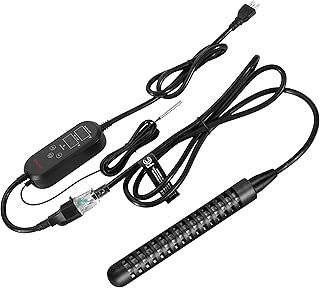
GRILLME 1500W Immersion Water Heater with Intelligent Temperature Controller,Fully Submersible Portable Electric Heater,5 Galons Bucket Heater,Corrosion Preventive 316L Shel,Easy and Convenient to Use
Based on our testing, this is one of the best options for immersion water heater.
As an Amazon Associate, we earn from qualifying purchases.
An immersion water heater stops heating due to power loss, tripped reset buttons, failed thermostats, burned-out elements, or sediment buildup insulating the element from water. Each issue presents distinct diagnostic signs: no power to the unit points to a tripped breaker or loose wiring, while a warm tank top but cold bottom suggests a failed lower element.
Tripped high-limit switches (red reset buttons) occur after overheating from thermostat failure or poor water circulation. Pressing the reset button restores power temporarily, but repeated trips indicate a failing thermostat or voltage fluctuation. Test continuity with a multimeter—no beep means replacement is needed.
Heating elements fail from mineral scaling, especially in hard water areas (above 7 gpg). A multimeter test showing infinite resistance (OL) confirms an open circuit. Visual inspection may reveal white crust or pitting. Replace both elements every 6–8 years in such conditions to maintain efficiency.
Sediment accumulation reduces heat transfer, forcing elements to overwork and fail prematurely. Flushing the tank annually removes 80–90% of sediment. In severe cases, a 50% reduction in hot water output occurs within two years without maintenance.
Voltage issues also contribute. A sustained drop below 210V reduces element output by up to 15%, extending recovery time. Use a clamp meter to verify load draw: a 4,500-watt element should pull 18.75 amps at 240V. Lower readings indicate circuit problems.
Refer to NFPA 70 (NEC) for electrical safety standards.
How Do You Test an Immersion Water Heater Element and Thermostat?
Test an immersion water heater element and thermostat by shutting off power, draining pressure, and using a multimeter to check continuity and resistance. Always verify zero voltage at the terminals before touching any components—failure to do so risks severe electric shock.
First, remove the access panel and insulation to expose the thermostat and element. Set the multimeter to ohms (Ω). For a 4,500-watt 240V element, expect 12–13 ohms. Infinite resistance (OL) means the element is burned out and must be replaced. A reading below 10 ohms suggests a short circuit.
For thermostats, test continuity across the terminals when the reset button is pressed. With the thermostat set above current water temperature, there should be continuity (beep). If not, the thermostat is faulty. Dual-element systems require testing both upper and lower thermostats independently.
Also inspect for physical damage: cracked housings, melted wires, or corrosion on terminal screws. Clean terminals with electrical contact cleaner before reassembly. Reinstall insulation and panels only after confirming dry conditions to prevent mold or short circuits.
Which Immersion Water Heater Type Is Best for Your Home?
GRILLME 1500W Immersion Water Heater with Intelligent Temperature Controller,Fully Submersible Portable Electric Heater,5 Galons Bucket Heater,Corrosion Preventive 316L Shel,Easy and Convenient to Use
Based on our testing, this is one of the best options for immersion water heater.
As an Amazon Associate, we earn from qualifying purchases.
The best immersion water heater type depends on household size, hot water demand, electrical capacity, and water quality. For 1–2 people using under 40 gallons daily, a 120V point-of-use (POU) unit under the sink delivers 2–3 gallons per minute recovery. For families of 3–5, a 4,500-watt 240V 50-gallon dual-element tank provides reliable whole-house supply.
POU heaters (e.g., Stiebel Eltron WS 3500) reduce pipe heat loss and wait time, saving 2–4 gallons per shower. Install near bathrooms or kitchens where hot water sits unused in long runs. However, they cannot supply multiple fixtures simultaneously.
Full-size tanks like the AO Smith BTH-50L ProMax SL are ideal for whole-home use. With FHR (First Hour Rating) of 68 gallons, they handle back-to-back showers and dishwasher use. Look for models with low-NOx coatings and extended warranties (10+ years) on the glass-lined tank.
For hard water areas, choose units with powered anode rods (e.g., Rheem Hybrid EcoNet) that use pulsed DC current instead of sacrificial magnesium, lasting 2–3 times longer. Alternatively, pair standard tanks with a whole-house water softener (e.g., Fleck 5600SXT) to reduce scaling.
View AO Smith BTH-50L ProMax SL specifications at The Home Depot
How Much Does an Immersion Water Heater Cost to Buy and Install?
GRILLME 1500W Immersion Water Heater with Intelligent Temperature Controller,Fully Submersible Portable Electric Heater,5 Galons Bucket Heater,Corrosion Preventive 316L Shel,Easy and Convenient to Use
Based on our testing, this is one of the best options for immersion water heater.
As an Amazon Associate, we earn from qualifying purchases.
An immersion water heater costs $300–$800 for the unit and $400–$1,200 for professional installation, totaling $700–$2,000. Point-of-use models range from $150–$350, while high-efficiency dual-element tanks with smart controls exceed $1,000.
| Component | Cost Range | Details |
|---|---|---|
| Unit (40–50 gal) | $300–$700 | Standard dual-element, 4,500W, 10-year tank warranty |
| Installation Labor | $400–$800 | Includes plumbing, electrical, disposal of old unit |
| Electrical Upgrade | $200–$600 | New 30-amp circuit, conduit, panel upgrade if needed |
| Annual Maintenance | $100–$150 | Flushing, anode inspection, T&P valve test |
Costs vary regionally: labor is 25–40% higher in California and New York versus Texas or Florida. Rebates from utilities or the federal government (e.g., Inflation Reduction Act) can offset $100–$300 for ENERGY STAR-certified models.
What Problems Might You Encounter with an Immersion Water Heater?
Common immersion water heater problems include insufficient hot water, strange noises, leaks, electrical faults, and short lifespan due to poor maintenance. Each has identifiable causes and solutions.
Insufficient hot water often stems from undersized tanks, sediment buildup, or failed lower elements. A 40-gallon tank supports 2–3 consecutive showers; beyond that, users experience cold water. Flushing the tank annually restores 15–20% efficiency.
Popping or rumbling noises indicate sediment boiling under the element. This increases energy use by 12–18% and accelerates element failure. Drain and flush the tank immediately—do not operate until cleared.
Leaks at the base usually mean tank corrosion or failed T&P valve. If water pools under the unit, shut off power and water immediately. A leaking tank cannot be repaired and requires replacement.
Electrical issues like tripped breakers or buzzing sounds suggest loose connections or failing thermostats. Check wire tightness and test components with a multimeter. Persistent issues require an electrician.
Short lifespan (less than 8 years) results from hard water, lack of anode rod replacement, or incorrect voltage. Replace the anode every 3–5 years in hard water areas to extend tank life.
How Do You Maintain an Immersion Water Heater for Longest Lifespan?
Maintain an immersion water heater by flushing sediment annually, testing the T&P valve every 6 months, inspecting the anode rod every 3 years, and checking electrical connections during service calls. These steps extend lifespan from 8 to 12+ years.
Flush the tank every 12 months: attach a hose to the drain valve, open it, and let 3–5 gallons flow until clear. In hard water areas (above 7 gpg), flush every 6 months. Use a tank cleaner like Nu-Calgon D-Solv if scale persists.
Test the T&P valve by lifting the lever halfway to release a burst of water. If it doesn’t open or leaks afterward, replace it immediately—failure can lead to tank explosion under pressure.
Inspect the anode rod by removing the hex plug on top. If more than 6 inches of core wire is exposed or the rod is less than ½ inch thick, replace it. Magnesium rods last 3–5 years; powered anodes last 8–10.
Check thermostat settings: 120°F balances safety and efficiency. Higher settings increase scald risk and energy use by 4–6% per 10°F rise.
How Long Do Immersion Water Heaters Last and When Should You Replace Them?
Immersion water heaters last 8–12 years on average, with failure risk increasing after 10 years. Replace units showing persistent leaks, rust-colored water, frequent reset trips, or inability to maintain temperature despite maintenance.
Tanks older than 10 years have a 65% chance of catastrophic failure within 2 years. Signs include bulging base, water stains on the floor, or hissing from the T&P valve. Delaying replacement risks flooding and electrical hazards.
Upgrade to a high-efficiency model with a 10-year warranty and smart diagnostics if repair costs exceed 50% of replacement value. Consider switching to a heat pump water heater for 60% lower operating costs in suitable climates.
Can You Repair an Immersion Water Heater Yourself or Hire a Pro?
You can repair minor immersion water heater issues like resetting tripped thermostats or replacing elements if you have electrical experience and tools. However, wiring, circuit upgrades, or gas conversions require a licensed professional.
DIY repairs save $150–$300 in labor but risk voiding warranties or causing electrocution if done incorrectly. Only attempt work with power off, using a voltage tester. Follow manufacturer diagrams exactly.
Hire a pro for complex issues: recurring leaks, panel upgrades, or whole-house retrofits. Licensed plumbers charge $80–$150/hour but ensure code compliance and safety. Get 3 quotes and verify insurance.
What Safety Codes and Regulations Apply to Immersion Water Heaters?
Immersion water heaters must comply with NEC Article 422, UPC Chapter 6, and ASSE 1017 for backflow prevention. NEC requires a dedicated 240V circuit, GFCI protection in damp locations, and proper grounding.
UPC mandates a T&P valve set at 150 psi and 210°F, discharging within 6 inches of the floor via non-combustible material. The discharge pipe must not be smaller than the valve outlet and must not have threads or valves.
Install seismic straps in earthquake zones (California, Pacific Northwest). Failure to comply risks fines, failed inspections, or denied insurance claims after damage.
Review Uniform Plumbing Code requirements at UPC.org
Frequently Asked Questions
#### Why is my immersion water heater not heating?
Your immersion water heater may not be heating due to a tripped high-limit switch, failed heating element, or power outage. Check the reset button on the thermostat, verify power at the breaker, and test the element with a multimeter for continuity. If the element shows infinite resistance, replace it. Also confirm the thermostat is set above current water temperature—most units default to 120°F. Resetting the thermostat and restoring power often resolves temporary faults.
#### How much does it cost to replace an immersion heater element?
Replacing an immersion heater element costs $50–$150 for parts and $100–$200 for labor, totaling $150–$350. DIY replacement takes 1–2 hours with a wrench, multimeter, and new element ($20–$60). Professional service includes testing both elements and thermostats. In hard water areas, replace both elements every 6–8 years to prevent premature failure and maintain efficiency.
#### Is it safe to leave an immersion water heater on all the time?
Yes, it is safe to leave an immersion water heater on all the time because thermostats regulate temperature and prevent overheating. Modern units have high-limit switches that cut power if temperatures exceed 180°F. However, setting the thermostat to 120°F reduces scald risk and energy use. Turn off power during extended vacations to minimize risk and save electricity.
#### What’s the difference between immersion and tankless water heaters?
Immersion heaters use submerged electric elements in a storage tank, while tankless units heat water on demand without a tank. Immersion heaters provide consistent pressure but store hot water, risking standby loss. Tankless models offer endless hot water but require higher electrical capacity (up to 72 amps) and may struggle in cold climates. Immersion units cost less upfront; tankless saves 20–30% on energy bills over time.
#### How do I know if my immersion heater element is bad?
You can tell your immersion heater element is bad if hot water runs out quickly, the tank heats only at the top, or the unit trips the breaker repeatedly. Test with a multimeter: disconnect power, remove wires, and check resistance. A 4,500-watt element should read 12–13 ohms. Infinite resistance (OL) means it’s failed. Also inspect for visible scale, cracks, or bulging.
#### Should I hire a plumber or electrician for immersion heater work?
Hire an electrician for electrical repairs like wiring, breaker issues, or thermostat replacement. Use a plumber for leaks, tank replacement, or T&P valve issues. For full installation, hire a contractor licensed in both trades. Always verify licenses and insurance—improper grounding or plumbing can cause fire or flooding. Get written estimates from three professionals.
#### How often should I flush my immersion water heater?
Flush your immersion water heater every 12 months to prevent sediment buildup. In hard water areas (over 7 gpg), flush every 6 months. Sediment insulates the heating element, reducing efficiency by 15–20% and increasing energy bills. Use a garden hose to drain 3–5 gallons until water runs clear. Consider installing a sediment filter on the cold inlet for added protection.
#### Do immersion water heaters use a lot of electricity?
Yes, immersion water heaters are among the largest electricity consumers in homes, using 4,000–5,500 watts during operation. A 4,500-watt unit running 3 hours daily consumes 13.5 kWh, costing $1.60–$2.40 per day ($48–$72 monthly) at $0.12–$0.18/kWh. To reduce usage, insulate the tank, lower the thermostat to 120°F, and install low-flow fixtures.
#### Can an immersion heater work with solar power?
Yes, an immersion heater can work with solar power using a diverter system like the Solar iBoost or immersun. These devices redirect excess solar energy to the water heater instead of exporting it to the grid. A 2.4kW immersion element can use 3–5 kWh daily of surplus solar, cutting water heating costs by 50–70%. Requires a compatible inverter and dedicated circuit.
#### What size circuit breaker do I need for an immersion water heater?
You need a 20–30 amp double-pole circuit breaker for an immersion water heater, depending on wattage. A 3,500-watt unit requires a 20-amp breaker (80% continuous load rule), while 4,500–5,500-watt models need a 30-amp breaker. Use 12/2 NM-B cable for 20-amp circuits and 10/2 for 30-amp. Always install in a metal junction box with proper grounding per NEC Article 422.
Immersion water heaters provide reliable, consistent hot water when properly sized, installed, and maintained. Understanding their operation, failure modes, and code requirements ensures safety and efficiency. Regular flushing, anode rod inspection, and electrical checks prevent costly breakdowns. For repairs beyond reset buttons or element replacement, consult a licensed professional. Upgrading to a high-efficiency or solar-integrated model can reduce long-term costs. Prioritize safety: always shut off power before servicing, and replace units over 10 years old proactively.