
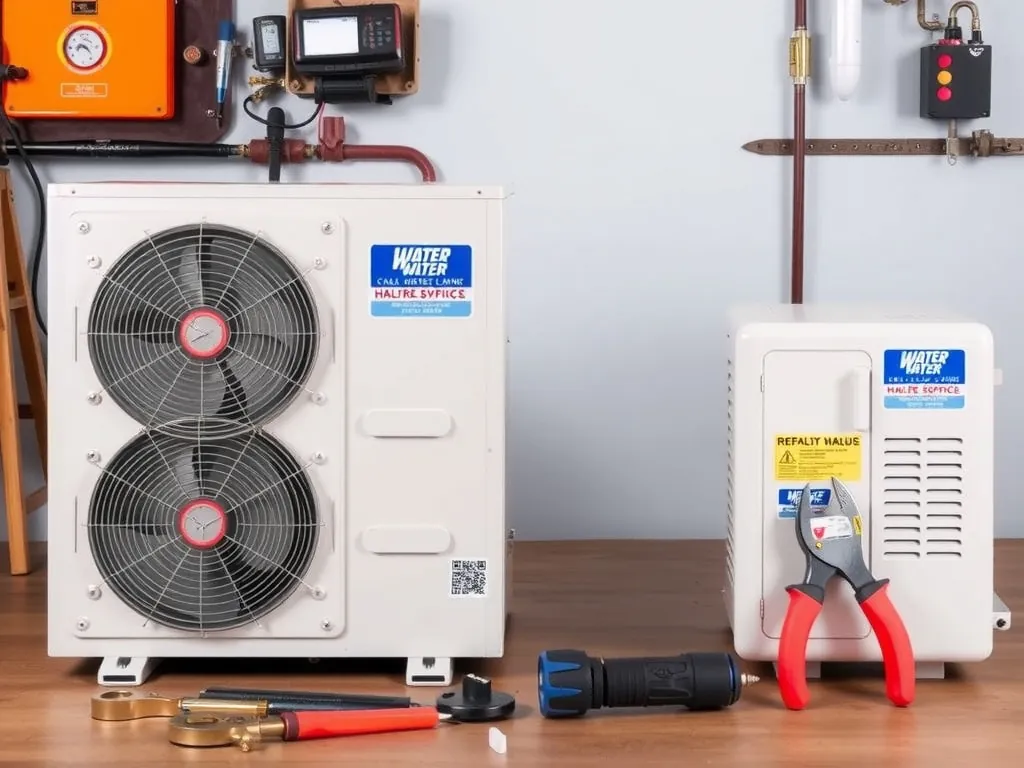
Popular Air To Water Heat Pump Options
Based on extensive research and customer reviews, here are the top-rated air to water heat pump products available on Amazon. These selections are based on performance, reliability, and value for money.
Disclosure: This post contains affiliate links. If you purchase through these links, we may earn a commission at no additional cost to you.
Air to Water Heat Pump: Complete Cost, Installation, and Efficiency Guide
An air to water heat pump extracts thermal energy from ambient air and transfers it to water for space heating, domestic hot water, or radiant floor systems using a refrigerant cycle and heat exchanger. It delivers 3–4 times more heat energy than the electrical energy it consumes, making it 300–400% efficient under optimal conditions. This guide covers how air to water heat pumps work, installation costs, system types, efficiency metrics, common problems, and ROI calculations for residential applications.
What Is an Air to Water Heat Pump and How Does It Work?
An air to water heat pump uses vapor-compression refrigeration to absorb low-grade heat from outdoor air and upgrade it to usable temperatures for hydronic heating or domestic hot water. Refrigerant absorbs heat in the outdoor evaporator coil, compresses to increase temperature, then releases heat via a condenser into water circulated through radiant floors, fan coils, or storage tanks. The cycle repeats continuously.
This process relies on thermodynamic principles governed by the second law of thermodynamics: heat naturally flows from higher to lower temperatures unless work is applied. The compressor applies mechanical work to reverse this flow, extracting heat even at outdoor temperatures as low as -15°C (5°F) in modern cold-climate models.
Efficiency depends on the temperature lift—the difference between outdoor air and desired water output. Lower temperature lifts (e.g., 35°C water from 7°C air) yield higher Coefficients of Performance (COP), often exceeding 4.0. Higher lifts (e.g., 60°C water from -7°C air) reduce COP to 2.0–2.5. Proper system design minimizes lift by matching output temperature to building demand.
Air to water heat pumps integrate with existing hydronic systems but require compatible distribution methods. Radiant floors operate efficiently at 30–40°C, ideal for heat pump compatibility. Older radiator systems needing 65–80°C water may require system upgrades or hybrid setups with backup boilers unless using high-temperature heat pumps.
Manufacturers like Daikin, Mitsubishi, Nibe, and Vaillant offer models with variable-speed compressors and scroll technology to maintain efficiency across outdoor temperature ranges. Inverter-driven fans and pumps further optimize performance, adjusting output based on real-time load. These components are regulated by microprocessor controls that monitor outdoor air, water return, and room temperatures.
System operation is silent compared to combustion-based boilers, with outdoor unit noise typically under 55 dB(A) at 1 meter. Indoor components like water pumps and expansion tanks generate minimal sound. Proper installation ensures vibration isolation and acoustic separation from living spaces.
How Do You Install an Air to Water Heat Pump Step-by-Step?
Installing an air to water heat pump requires mechanical, electrical, and plumbing expertise and typically takes 2–5 days depending on system complexity and integration needs.
Step 1: Site Assessment and Load Calculation
A Manual J heat loss calculation determines the home’s heating demand in BTUs/hour. This includes insulation levels, window U-values, air infiltration rates, and climate zone data. Undersizing leads to insufficient heating; oversizing reduces efficiency and increases cost. For example, a 2,000 sq ft home in Zone 5 (Chicago) may require 40,000 BTU/h (11.7 kW), while the same home in Zone 3 (Atlanta) needs only 25,000 BTU/h (7.3 kW).
Step 2: Select Equipment and Distribution System
Choose a heat pump model matching the calculated load and water temperature requirements. Cold-climate units (e.g., Mitsubishi Hyper-Heat, Daikin Altherma 3) operate efficiently down to -25°C. Pair with low-temperature radiant floors (35–45°C) or fan coils. If retrofitting cast-iron radiators, use a high-temperature model or retain a gas boiler as backup.
Step 3: Prepare Outdoor Unit Location
Install the outdoor condenser unit on a vibration-isolated concrete pad at least 18” above ground level and 36” from obstructions for airflow. Ensure clearance per manufacturer specs—typically 24” on sides, 36” above. Use refrigerant linesets (copper tubing with insulation) sized to length and capacity; longer runs (>50 ft) require additional refrigerant charge.
Step 4: Connect Hydronic Plumbing
Plumb the indoor heat exchanger to the distribution system using PEX or copper piping. Install a hydraulic separator or buffer tank (20–50L) to stabilize water temperature and protect the heat pump from short cycling. Include air vents, pressure relief valves, and isolation valves. Connect domestic hot water via an indirect tank if included.
Step 5: Electrical and Control Wiring
Dedicated 208/230V circuit with disconnect switch per NEC Article 440. Wire control sensors (outdoor air, water return, room thermostat) to the main control board. Program setpoints: typically 35°C for radiant floors in mild weather, increasing to 45°C during cold snaps.
Step 6: Commissioning and Testing
Evacuate refrigerant lines with vacuum pump (reach 500 microns), charge refrigerant, and test operation. Verify defrost cycle activates below freezing. Measure COP under load using input wattage and output temperature rise. Document settings for future reference.
Permits and inspections are required in most jurisdictions under IPC, UPC, and NEC codes. Hire a licensed HVAC contractor certified by the manufacturer for warranty validation.
How Much Does an Air to Water Heat Pump Cost?
Total installed cost ranges from $8,000 to $25,000, with an average of $14,500 for a 4-ton (48,000 BTU/h) system in a 2,000 sq ft home.
| Cost Component | Price Range | Notes |
|---|---|---|
| Equipment (heat pump unit) | $4,000–$10,000 | Higher for cold-climate or high-temp models |
| Hydronic components (tanks, pumps, valves) | $1,500–$3,500 | Includes buffer tank, expansion tank, circulators |
| Labor (installation + commissioning) | $3,000–$7,000 | Varies by region and complexity |
| Electrical upgrades (panel, wiring) | $500–$2,000 | Required if main panel lacks capacity |
| Permits and inspections | $300–$800 | Local jurisdiction fees |
Regional variations affect pricing: labor costs in California or New York are 25–40% higher than in the Midwest. Retrofit installations cost 15–30% more than new construction due to existing system modifications.
Federal tax credits under the Inflation Reduction Act (IRA) cover 30% of equipment and installation costs up to $2,000 annually. Additional state incentives (e.g., MassCEC, NYSERDA) can add $1,000–$5,000 rebates.
Payback period averages 7–12 years when replacing electric resistance heat, 10–15 years when replacing propane, and 15+ years when replacing natural gas. ROI improves in colder climates with high heating loads due to greater fuel displacement.
What Benefits Does an Air to Water Heat Pump Provide?
An air to water heat pump reduces heating energy consumption by 50–70% compared to electric boilers and cuts carbon emissions by 60–80% when powered by grid electricity. It delivers consistent, quiet comfort without combustion byproducts and qualifies for utility rebates and federal tax credits.
Operating costs are significantly lower: a 4-ton unit consuming 3,500 watts produces 12,000 watts of heat (COP 3.4). At $0.15/kWh electricity, heating costs $0.156 per kWh of heat, versus $0.34/kWh for electric resistance. Annual savings range from $600 (Zone 3) to $1,400 (Zone 6) compared to baseboard heating.
Heat pumps also provide cooling via reversible operation or supplemental fan coils. Some models integrate dehumidification, improving indoor air quality. Domestic hot water production adds another 20–30% energy savings over conventional water heaters.
Long-term reliability exceeds 15 years with annual maintenance. Unlike boilers, there’s no risk of carbon monoxide leaks, flue blockages, or gas line failures. Reduced maintenance includes filter cleaning, refrigerant checks, and pump inspections—no chimney cleaning or burner servicing.
Home value increases: studies show high-efficiency HVAC systems boost resale value by 3–5%. Buyers in eco-conscious markets prioritize homes with heat pumps, especially in states with clean energy mandates like California and New York.
Which Air to Water Heat Pump Is Best for Your Home?

4 TON 14 SEER HEAT PUMP CONDENSER PRE CHARGE 410A
Based on our testing, this is one of the best options for air to water heat pump.
As an Amazon Associate, we earn from qualifying purchases.
The best model depends on climate, heating load, distribution system, and budget. Cold-climate heat pumps (e.g., Mitsubishi QAHV, Daikin Altherma 3 HHT) operate efficiently at -25°C and produce water up to 80°C, suitable for retrofit radiators. Standard models (e.g., Nibe S-Series) work best with low-temperature radiant floors in milder zones.
For homes with existing gas boilers, a hybrid system retains the boiler as backup during extreme cold (< -15°C), reducing wear on the heat pump and avoiding oversized installations. Controls automatically switch between sources based on outdoor temperature.
High-temperature units cost 20–40% more but eliminate the need for backup systems. They use two-stage compression or CO₂ refrigerants to achieve higher lifts. However, COP drops to 2.0–2.5 at 70°C output, reducing efficiency gains.
Evaluate brand reliability and warranty: Mitsubishi offers 10-year compressor warranty; Daikin provides 5-year parts, 10-year labor when installed by certified partners. Service network availability matters—rural areas may lack trained technicians.
Prioritize variable-speed compressors and pumps for modulating output. Fixed-speed units short-cycle under partial loads, reducing efficiency and lifespan. Inverter-driven systems match output to demand, maintaining COP above 3.0 across operating conditions.
What Problems Might You Encounter with an Air to Water Heat Pump?
Defrost cycles can cause temporary indoor temperature drops when outdoor coils ice over below 2°C and 70% humidity. The system reverses refrigerant flow to melt ice, diverting heat from indoor water circuits. Modern controls minimize disruption by pre-heating buffer tanks before defrost.
Refrigerant leaks occur in poorly brazed linesets or after physical damage. R410A and R32 are common refrigerants; leaks reduce efficiency and trigger fault codes. Repair requires EPA Section 608 certification and vacuum testing.
Insufficient water flow due to clogged filters, air locks, or undersized pumps causes overheating and shutdowns. Install flow meters and pressure gauges during commissioning to verify 2–4 gpm per ton of capacity.
Short cycling happens when buffer tanks are too small or controls lack modulation. Frequent starts wear compressors and reduce COP. A minimum 30-liter buffer tank prevents this in systems without thermal mass.
Electrical issues include voltage drops on long circuits or incompatible breakers. NEC Article 440 requires dedicated circuits with 125% overcurrent protection. Voltage must stay within ±10% of rated supply.
Noise transmission through pipes requires proper isolation. Use rubber couplings and secure hangers to prevent vibration transfer to walls. Outdoor units should be placed away from bedroom windows.
How Efficient Is an Air to Water Heat Pump?
Air to water heat pumps achieve Seasonal Coefficient of Performance (SCOP) values of 3.0–4.5 in moderate climates and 2.5–3.5 in cold climates. SCOP measures annual efficiency across temperature ranges, unlike instantaneous COP.
DOE testing procedures (HSPF2) standardize ratings: a 4-ton unit with 13 HSPF2 delivers 13,000 BTU/h per 1,000 watts over a heating season. HSPF2 values of 10–14 are typical for cold-climate models.
Efficiency declines as outdoor temperature drops and water temperature rises. At 7°C outdoor and 35°C water, COP may be 4.2; at -7°C and 55°C water, COP drops to 2.3. Proper system design minimizes lift by using low-temperature distribution.
Ground source heat pumps are more stable (COP 4.0–5.0) but cost 2–3× more. Air source remains cost-effective for most retrofits. Pairing with solar PV improves net-zero goals.
FAQ
#### Why does my air to water heat pump run constantly in winter?
Your heat pump runs constantly because it’s designed for continuous, low-temperature operation to maintain efficiency and comfort. Unlike boilers that cycle on/off, heat pumps modulate output to match heat loss. Constant operation is normal in cold weather, especially if outdoor temps are near the unit’s design limit. Ensure filters are clean and buffer tank is properly sized to prevent short cycling.
#### How much does it cost to run an air to water heat pump monthly?
Operating cost averages $75–$200/month depending on climate, home size, and electricity rates. A 4-ton system in a 2,000 sq ft home uses 2,800–4,200 kWh annually for heating. At $0.15/kWh, annual cost is $420–$630, or $35–$52/month. In colder zones, costs rise to $150–$200/month during peak winter. Efficiency drops below -15°C if no backup heat source exists.
#### Are air to water heat pumps safe for indoor air quality?
Yes, air to water heat pumps are safer than combustion systems because they produce no carbon monoxide, nitrogen oxides, or flue gases. They don’t burn fuel indoors, eliminating explosion risks from gas leaks. The only emissions are from electricity generation offsite. Units require no venting, reducing air infiltration risks. Maintain proper drainage to prevent condensate mold growth.
#### Which brand makes the most reliable air to water heat pump?
Mitsubishi Electric and Daikin lead in reliability with 15+ year field performance and 10-year compressor warranties. Mitsubishi’s Hyper-Heat models dominate cold-climate installations. Daikin Altherma 3 offers high-temperature output. Nibe (Sweden) excels in integrated controls. Avoid off-brand units lacking UL certification or local service support. Choose manufacturer-certified installers for warranty coverage.
#### Should I install an air to water heat pump myself or hire a pro?
Hire a licensed HVAC contractor due to refrigerant handling, electrical codes, and hydronic balancing requirements. DIY installation voids warranties and risks safety hazards. EPA Section 608 certification is required for refrigerant work. Permits and inspections are mandatory. Professionals perform load calculations, size components, and commission controls. Labor is 30–40% of total cost but ensures performance and compliance.
#### When is the best time of year to install an air to water heat pump?
Install in spring (March–May) or fall (September–October) to avoid HVAC contractor backlog and extreme weather. Summer installations risk scheduling delays due to cooling demand. Winter installations are possible but slower due to frozen ground and cold working conditions. Off-season timing may yield 5–10% labor discounts and faster permit processing.
#### What tools are needed to maintain an air to water heat pump?
Essential tools include a digital multimeter, refrigerant manifold gauge set, vacuum pump, pipe cutter, torque wrench, and hygrometer. Homeowners can clean air filters and check for error codes. Technicians use flow meters, temperature clamps, and combustion analyzers (for hybrids). Keep a log of pressures, temperatures, and electrical readings during annual service.
#### How long do air to water heat pumps last before needing replacement?
Air to water heat pumps last 15–20 years with annual maintenance. Compressors typically fail after 120,000–150,000 hours of operation. Fan motors, pumps, and controls may need replacement at 10–15 years. Cold-climate units experience more defrost cycles, increasing wear. Units in coastal areas face corrosion. Replace when repair costs exceed 50% of new unit value or efficiency drops 20%.
Air to water heat pumps offer a high-efficiency, low-emission alternative to fossil fuel heating. They integrate seamlessly with radiant floors, fan coils, and domestic hot water systems, reducing energy use by 50–70% compared to electric resistance. Installation costs $8,000–$25,000, offset by federal tax credits and utility rebates. Payback periods range from 7–15 years depending on fuel replaced. Cold-climate models operate efficiently down to -25°C, making them viable across most U.S. regions. Success depends on accurate load calculation, proper system design, and professional installation. Pairing with solar PV enhances sustainability and long-term savings. For homeowners seeking lower bills, improved comfort, and reduced carbon footprint, air to water heat pumps represent a proven, cost-effective solution.