
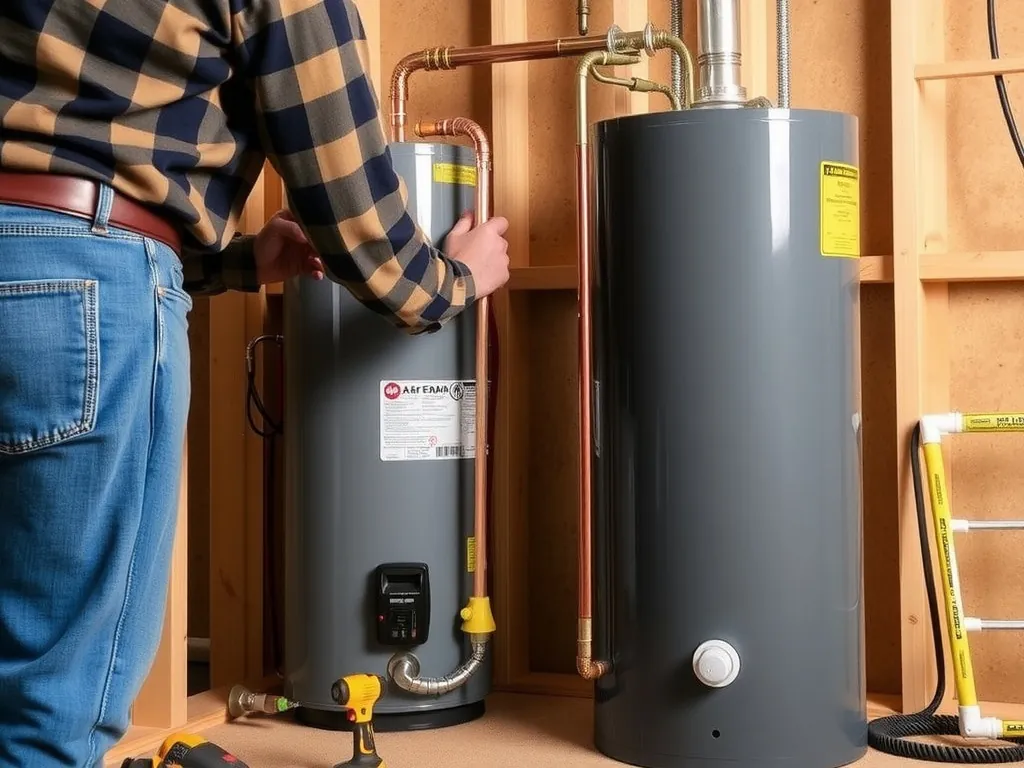
50 Gal Water Heater: Complete Selection, Installation, and Maintenance Guide
A 50-gallon water heater delivers sufficient hot water for 3–5 person households, balancing capacity, energy efficiency, and upfront cost. Most residential installations use electric or gas models, with heat pump variants gaining traction for 50%+ energy savings. This guide covers selection criteria, installation standards, troubleshooting, maintenance schedules, and cost breakdowns for all major types.
What Is a 50 Gal Water Heater and How Does It Work?
A 50-gallon water heater is a storage tank system that heats and holds 50 gallons of water for on-demand domestic use, typically powered by electricity, natural gas, or propane. It operates via thermostatically controlled heating elements or a gas burner, maintaining water at 120–140°F until drawn through plumbing fixtures. The tank is insulated to minimize standby heat loss, and a dip tube delivers cold water to the bottom while hot water exits via a heat-out pipe. Temperature and pressure relief valves (TPR) are mandatory for safety under UPC and IRC codes.
Modern 50-gallon units feature advanced insulation (R-24+), sacrificial anode rods for corrosion resistance, and digital controls. Heat pump models extract ambient heat to achieve up to 3.5 Energy Factor (EF) ratings. Understanding this core mechanism informs maintenance, efficiency choices, and failure diagnosis.
How Do You Choose Between Electric, Gas, and Heat Pump 50 Gal Water Heaters?
Electric 50-gallon water heaters use two 4500W heating elements controlled by dual thermostats and are ideal where gas lines are unavailable. They have lower upfront costs ($600–$900) but higher operating expenses due to electricity rates. Gas models use a 40,000 BTU/hr burner and vented flue; they recover hot water faster (35–50 gallons/hour) and cost $800–$1,200 installed. Heat pump water heaters (HPWH) use refrigerant cycles to transfer heat from air, achieving EF ratings of 3.0–3.5 and cutting energy use by 50–60%.
For homes with natural gas access and high demand, gas is optimal. In regions with high electricity costs (e.g., California, Northeast), HPWHs offer the best long-term ROI despite $1,500–$2,200 installed prices. Electric models suit rural homes or where gas isn’t feasible. Always verify local codes: some jurisdictions restrict HPWH installation in enclosed spaces without adequate airflow (minimum 1,000 ft³ of air per unit).
Why Does a 50 Gal Water Heater Run Out of Hot Water Too Fast?
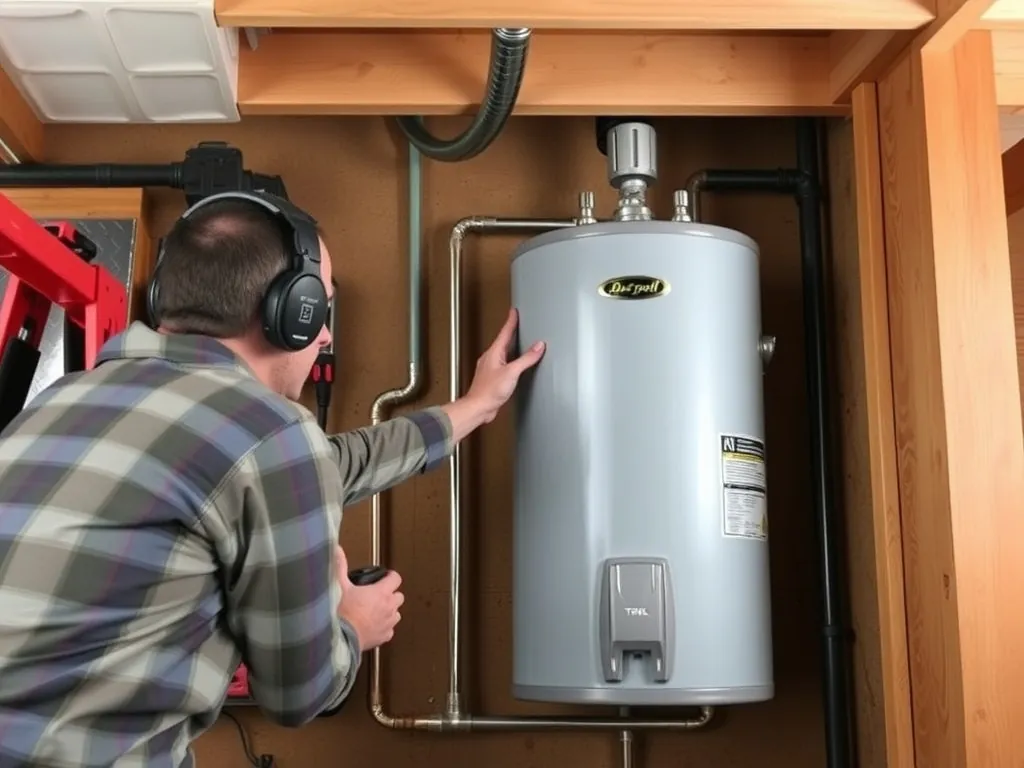
A 50-gallon water heater runs out of hot water prematurely due to sediment buildup, faulty dip tube, failed heating elements, undersized recovery rate, or simultaneous high-demand usage. Sediment insulates the bottom element, reducing efficiency by up to 48% (DOE data). A broken dip tube allows cold water to mix with hot water at the top, reducing usable output. In electric units, one or both elements may burn out—symptoms include lukewarm water or no hot water despite power.
Gas units may suffer from a clogged burner, failed thermocouple, or insufficient gas pressure. Recovery rate matters: a standard gas unit recovers 35–50 gallons/hour; a 50-gallon electric unit recovers only 15–20 gallons/hour. If four people shower consecutively in under 90 minutes, recovery speed becomes critical. Upgrade to a 75-gallon unit or install a heat pump model with 80+ gallon/hour recovery if usage exceeds 70 gallons/day.
How Do You Test a 50 Gal Water Heater’s Heating Elements and Thermostats?
To test electric water heater elements, first shut off power at the breaker. Drain 2–3 gallons to relieve pressure, then remove the access panels and insulation. Use a multimeter set to ohms (Ω) to check continuity between element terminals. A reading of 10–16Ω indicates a functional element; infinite resistance means failure. Test for grounding by placing one probe on a terminal and the other on the metal tank—any reading above 0Ω indicates a short and replacement is needed.
For thermostats, disconnect wires and test continuity across terminals with the temperature dial set to high. A good thermostat shows continuity; open circuit means failure. Electric models have upper and lower thermostats—faulty upper thermostats cause no hot water; faulty lower thermostats cause partial heating. Gas water heaters use a thermocouple and gas control valve—test thermocouple voltage with a millivolt meter; below 20mV requires replacement. Always verify power supply voltage (240V for electric) before testing.
Which 50 Gal Water Heater Is Best for Energy Efficiency?

GASLAND Gasmart E 199000 BTU Tankless Water Heater, Up to 7.6 GPM, Whole House Natural Gas Indoor Installation Residential On-demand Instant Hot Water Heater, CE686NG
Based on our testing, this is one of the best options for 50 gal water heater.
As an Amazon Associate, we earn from qualifying purchases.
The most energy-efficient 50-gallon water heater is the heat pump water heater (HPWH), with Energy Factor (EF) ratings of 3.0–3.5, compared to 0.90–0.95 for gas and 0.90–0.94 for standard electric. HPWHs like the Rheem ProTerra, AO Smith Voltex, and Bosch Therm 3000 use 60–70% less energy than conventional electric models. They qualify for federal tax credits under the Inflation Reduction Act (up to $1,750) and many utility rebates (e.g., $600 from PG&E, $800 from ConEdison).
Gas tank models with condensing technology (e.g., Bradford White M-H50-50N) achieve EF 0.95, the highest for gas, but still use 2.5x more energy than HPWHs. High-efficiency electric models with improved insulation (e.g., Rheem Performance Platinum) reach EF 0.95 but lack the heat pump advantage. For net-zero homes or regions with low off-peak electricity rates, HPWHs offer the fastest ROI—typically 4–7 years. Avoid standard electric models in high-cost electricity states like Hawaii or California.
How Much Does a 50 Gal Water Heater Cost to Purchase and Install?
GASLAND Gasmart E 199000 BTU Tankless Water Heater, Up to 7.6 GPM, Whole House Natural Gas Indoor Installation Residential On-demand Instant Hot Water Heater, CE686NG
Based on our testing, this is one of the best options for 50 gal water heater.
As an Amazon Associate, we earn from qualifying purchases.
A 50-gallon water heater costs $600–$2,200 for the unit alone, with installation adding $400–$1,500 depending on type and complexity. Electric models: $600–$900 unit + $400–$700 labor. Gas models: $800–$1,200 unit + $700–$1,200 labor (includes venting, gas line, and safety checks). Heat pump models: $1,500–$2,200 unit + $800–$1,500 labor (due to ducting, condensate drain, and electrical upgrades).
Regional labor variations: Midwest labor averages $75/hour; coastal areas (CA, NY) range $100–$150/hour. Complex installations (e.g., relocating tank, upgrading electrical panel to 240V/40A, adding a condensate pump) add $300–$800. After rebates and tax credits, HPWHs can cost as little as $800–$1,200 net. Total installed cost for a standard electric unit: $1,000–$1,600; for gas: $1,500–$2,400; for HPWH: $2,300–$3,700 before incentives.
How Do You Install a 50 Gal Water Heater Step-by-Step?
1. Shut off power and water supply. Turn off the circuit breaker for electric units or the gas shutoff valve for gas units. Close the cold water inlet valve and open a hot water faucet to relieve pressure.
2. Drain the old tank. Attach a garden hose to the drain valve and route it to a floor drain or outside. Open the valve and allow full drainage—this may take 30–60 minutes.
3. Disconnect utilities. For electric: disconnect wires at the terminal block. For gas: disconnect gas line with pipe wrench and cap it. Remove the vent pipe with a screwdriver and pliers.
4. Remove the old unit. Use a dolly or tank mover—50-gallon units weigh 140+ lbs when full. Never lift by pipes or fittings.
5. Prepare the new location. Ensure floor is level and can support 600+ lbs when full. Install a pan with drain if required by code (UPC 507.4).
6. Install new tank. Position unit, connect cold inlet and hot outlet using flexible braided stainless steel connectors. Use Teflon tape on threaded fittings.
7. Reconnect utilities. For electric: wire 240V (black/red to terminals, green to ground). For gas: connect gas line with flexible connector, pressure-test with soapy water. Reattach venting per manufacturer specs.
8. Refill and purge air. Open cold water valve. Allow water to flow from hot faucets until all air is expelled.
9. Power on and set temperature. For electric: restore breaker. For gas: relight pilot or set to “on.” Set thermostat to 120°F per EPA safety guidelines.
⚠️ Safety warning: Never power on a tank before it’s completely filled—dry firing destroys heating elements.
What Problems Might You Encounter with a 50 Gal Water Heater?
Common problems include no hot water, insufficient recovery, leaking tank, strange noises, and water discoloration. No hot water in electric units often means a tripped high-limit switch or failed upper thermostat. Gas units may have a faulty thermocouple, blocked vent, or pilot light outage. Slow recovery stems from sediment buildup, undersized unit, or low gas pressure.
Leaking tanks indicate internal corrosion—any water pooling at the base means replacement is necessary. TPR valve leaks suggest excessive pressure (over 150 psi) or faulty valve. Rumbling or popping noises result from mineral sediment heating at the tank bottom. Discolored water (brown or yellow) indicates corroded anode rod or pipe rust.
Solution: Flush tank annually to remove sediment. Replace anode rod every 3–5 years. Install a water softener in hard water areas. Replace TPR valve if it drips or doesn’t reset. Never ignore leaks—delayed replacement risks water damage ($2,000–$10,000 in repairs).
How Often Should You Maintain a 50 Gal Water Heater?
Maintain a 50-gallon water heater annually to maximize lifespan and efficiency. Flush the tank every 6–12 months to remove sediment—drain 2 gallons until water runs clear. Test the TPR valve monthly by lifting the lever—water should flow and shut off when released. Check for corrosion on fittings and electrical connections quarterly. Inspect the anode rod every 2–3 years—replace if it’s less than ½ inch thick or heavily corroded.
Gas units require annual burner inspection for soot or debris. Heat pump units need filter cleaning every 3 months and condensate drain inspection. Maintain inlet water pressure between 40–80 psi using a pressure-reducing valve if needed. Keep the area around the tank clear of combustibles (6 inches minimum per IRC 2702.1). Proper maintenance extends tank life from 8–12 years to 15–20 years.
What Are the Safety Regulations for 50 Gal Water Heaters?
The International Residential Code (IRC) and Uniform Plumbing Code (UPC) mandate critical safety requirements. TPR valves must be installed and discharge within 6 inches of the floor, using full-size copper or CPVC pipe (minimum 3/4″ diameter) with no threads or valves in the line. Water heaters must be elevated 18 inches above the floor if installed in garages (IRC 302.1) to prevent ignition of flammable vapors.
Gas units require 12 inches of clearance from combustibles and must be equipped with a flame arrester if installed in garages. Electrical units must be on a dedicated 240V, 30-amp circuit per NEC 422.13. All units require a shutoff valve on the cold inlet. In seismic zones (California, Pacific Northwest), flexible connectors and seismic straps are mandatory. Heat pump units require ventilation of at least 1,000 ft³ of air space (ASHRAE 62.2).
How Do You Know When to Replace Your 50 Gal Water Heater?
Replace your 50-gallon water heater if it’s over 10 years old, shows visible rust, leaks, or has failed components requiring costly repairs. Age is the strongest predictor: 80% of tank failures occur after 10 years (DOE). Rust on the tank base, wet spots, or persistent TPR valve leaks indicate internal corrosion. Frequent repairs (e.g., replacing elements or thermostats more than twice) signal impending failure.
Other indicators: noisy operation due to sediment, inconsistent temperature, or discolored water. If repair costs exceed 50% of a new unit’s installed price, replacement is cost-effective. New high-efficiency models (especially HPWHs) offer 40–60% energy savings, paying for themselves in 5–7 years. Upgrade to a tankless or heat pump model if your household uses over 80 gallons/day or seeks tax credits.
FAQ
#### Why is my 50 gal water heater making loud popping noises?
Popping or rumbling sounds result from sediment buildup at the tank bottom, where minerals trap water and superheat it, causing steam bubbles to burst. This reduces efficiency by up to 48% and stresses the tank lining. Flush the tank by draining 5 gallons through the drain valve until water runs clear. For hard water areas, install a water softener and flush biannually. Persistent noise after flushing indicates severe scale—replace the tank to prevent failure.
#### How much does it cost to replace a 50 gal water heater with a heat pump model?
Replacing a standard electric 50-gallon heater with a heat pump model costs $2,300–$3,700 installed, including unit ($1,500–$2,200) and labor ($800–$1,500). After federal tax credits (up to $1,750) and utility rebates (e.g., $600–$800), net cost ranges from $800–$1,200. Payback period is 4–7 years due to 50–60% lower energy bills. Verify local rebates at dsireusa.org before purchase.
#### Can I install a 50 gal water heater myself?
Yes, if you have plumbing and electrical experience, but gas and heat pump installations require licensed professionals in most jurisdictions. Electric units are DIY-friendly if you can wire a 240V circuit and drain the tank safely. Gas units require gas line connection, venting, and pressure testing—illegal without a permit and licensed plumber. HPWHs need HVAC-grade airflow and condensate drain setup. Always obtain permits; DIY without them voids warranties and insurance.
#### Is a 50 gal water heater big enough for a family of 4?
Yes, a 50-gallon tank is adequate for a family of 3–4 with moderate usage (2–3 showers, dishwasher, laundry per day). However, if multiple people shower consecutively or you run heavy appliances simultaneously, recovery rate becomes critical. Gas units recover 35–50 gallons/hour; electric only 15–20. For high-demand households, consider a 75-gallon tank or heat pump model with 80+ gallon/hour recovery.
#### What tools do
#### How long does a 50 gal water heater last?
A standard 50-gallon water heater lasts 8–12 years, but with maintenance (annual flushing, anode rod replacement), it can last 15–20 years. Heat pump models last 10–15 years due to compressor wear. Gas units often last longer than electric due to fewer electrical components. Tank corrosion is the primary failure mode—hard water and neglected anode rods shorten lifespan. Replace at 10 years for safety and efficiency.
#### Should I choose a gas or electric 50 gal water heater?
Choose gas if you have natural gas access, high hot water demand, and want faster recovery. Choose electric if gas is unavailable, but expect higher operating costs. In regions with low off-peak electricity rates or rebates, heat pump electric models offer superior savings. Avoid standard electric in areas with high electricity prices (e.g., California, Hawaii). Always check local utility rates and incentives at energy.gov.
#### Does a 50 gal water heater need a pressure relief valve?
Yes, a TPR valve is federally mandated by UPC and IRC codes. It prevents tank rupture by releasing water if pressure exceeds 150 psi or temperature exceeds 210°F. Install it on the side or top of the tank, connected to a discharge pipe leading within 6 inches of the floor. Test monthly. A missing or faulty TPR valve is a serious explosion risk—never operate without one.
#### Can I use a 50 gal water heater with a tankless booster?
Yes, but it’s rarely cost-effective. A 50-gallon tank with a point-of-use tankless booster (e.g., Stiebel Eltron Tempra Plus) can extend hot water supply for long showers or multiple fixtures. However, the added cost ($500–$800) and complexity often outweigh benefits. Better alternatives: upgrade to a 75-gallon tank or heat pump model with higher recovery. Use tankless boosters only in large homes with long pipe runs.
#### How do I dispose of my old 50 gal water heater?
Contact your municipal waste department or local recycling center—many accept water heaters for scrap metal recycling. Some retailers (Home Depot, Lowe’s) offer haul-away services for $25–$75 when you purchase a new unit. Do not leave it curbside—it may violate local ordinances. Remove the anode rod and TPR valve before recycling. Drain all water and cap connections to prevent contamination.
Placement: Section “Why Does a 50 Gal Water Heater Run Out of Hot Water Too Fast?”