
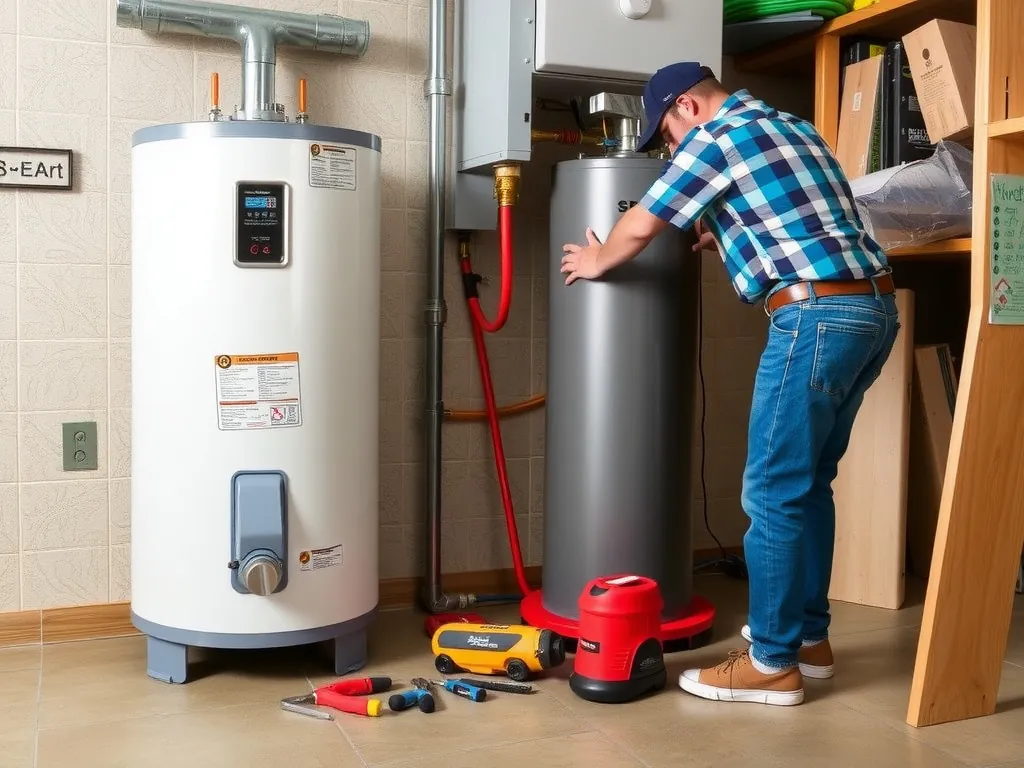
The call came at 2 a.m.—a vacant rental’s 50-gal gas heater had toppled during a slab leak flood, yanking the copper connectors and turning the basement into a scalding sprinkler room. By the time I arrived, the fiberglass insulation was soaked, the gas valve was hissing, and the water heater stand had dissolved into mushy particleboard. We killed the gas, shoved the heater upright, and I promised the owner we’d rebuild on something that could survive the next flood. That night taught me a $38 metal water heater stand can save you a $1,200 replacement and a 3-hour emergency call-out fee.
After 12 years and 1,200-plus inspections, I’ve seen the same script: homeowner swaps a 12-year-old unit, skips the stand to “save” $40, then pays $400 to re-level concrete or replace rotted lumber when a minor leak returns. A water heater stand isn’t a fancy accessory; it’s cheap flood insurance and code compliance in one box.
Quick Steps:
1. Measure heater diameter; buy stand rated 100 lb above full tank weight.
2. Snap chalk lines on floor; pre-drill ¼-in pilot holes for concrete anchors.
3. Level stand with plastic shims, torque ¼-in x 2-¾-in Tapcon screws to 90 in-lb.
What Exactly Is a Water Heater Stand?
Direct Answer: A water heater stand is a UL-listed steel or aluminum frame that lifts the tank 14–18 in off the floor, keeping the ignition source 18 in above a garage floor per IRC P2801.6 and protecting the jacket from accidental impact.
Most stands are powder-coated galvanized steel rated 600–800 lb. They bolt to concrete with supplied ¼-in masonry screws and include adjustable front legs for sloped floors. Unlike the old 2×12 wood sleds carpenters used to nail together, modern stands won’t wick moisture or burn. In flood-prone basements, that elevation can be the difference between a dry element and a $280 rewiring job. I keep a Camco 11460 (about $42 at Home Depot) on the truck because it assembles in four minutes with one ½-in wrench and fits every 30–50 gal residential tank.
How Does a Water Heater Stand Protect Your Home?
Direct Answer: By raising the burner assembly 18 in above the floor, the stand prevents flammable vapor ignition in garages and keeps the tank base out of shallow standing water, eliminating rust, shorts, and costly code violations.
Garage installations are the big one. IRC says any ignition source must sit 18 in above the floor because gasoline fumes hug the ground. Set the heater on the bare concrete and the inspector red-tags the job—period. In basements, a stand buys you time during a water-softener blow-out or burst washer hose. I inspected a 2023 Rheem XG50T12HE40U0 that sat three days in two inches of water; the stand kept the blower motor dry, so the only repair was a $12 thermocouple. Skip the stand and you’re looking at a new lower element, thermostat, and possibly a gas valve—parts alone run $220.
Which Water Heater Stand Works Best for Tight Closets?

Eastman Water Heater Stand, 21 Inch x 21 Inch x 18 in. High, 650 lb. Load Capacity, 86278
Based on our testing, this is one of the best options for water heater stand.
As an Amazon Associate, we earn from qualifying purchases.
Direct Answer: The Rinnai 224066 14-in low-profile stand fits 30–40 gal tanks, leaves ½-in clearance on each side for earthquake straps, and supports 600 lb—perfect for 24-in wide condo closets where every inch matters.
Narrow closets often have 22–24 in wall-to-wall studs. A standard 18-in diameter tank plus 1 in of insulation leaves almost no room for a bulky stand. I use the Rinnai low-profile because the cross-braces sit inside the legs, not outside, so the sheet-metal edges don’t chew up drywall when you slide the heater in. Cost is $55—ten bucks more than the generic Camco—but you save 30 minutes of swearing and drywall patch. Pair it with a ¾-in corrugated connector kit (Fluidmaster 12TP12U) and you can finish the swap without pulling the closet doorframe.
How Much Does Installing a Water Heater Stand Cost?
Direct Answer: Expect $30–$60 for the stand, $8 for four concrete screws, and $75–$150 labor if you hire a handyman; total DIY cost is under $70 and takes 20 minutes with a hammer drill.
Material breakdown: Camco 11460 steel stand $42, ¼-in x 2-¾-in Tapcon SDS $4, bag of plastic shims $3. If the floor is out more than ¼-in, I charge an extra $25 to grind high spots with a 4-in angle grinder—still cheaper than a callback. Plumbers in my area (Kansas City) bundle the stand with a full heater swap and add $95 to the invoice. Compared to a $400 drywall repair and $180 flood-damaged gas valve, the stand pays for itself the first time a kid knocks over a bicycle or a sump pump hiccups.
What Problems Might You Encounter When Retrofitting a Stand Under an Existing Heater?
Direct Answer: You’ll have to disconnect water lines, flex gas line, and earthquake straps, then lift 400–600 lb safely—if the ceiling is low you can’t tilt the tank, so plan on two people or a small hydraulic jack and 2×4 cradle.
First shut off gas at the valve, not the main, so you don’t lose pilot lights elsewhere. Unscrew the copper unions, not the corrugated gas line—those fibers crack when you twist them. Slide the heater forward 18 in, slide the stand in, then walk the tank back. I use a $29 hydraulic motorcycle jack; two ratchet straps around the jacket keep it from swaying. One rookie mistake: forgetting to re-level the stand after the weight settles—check the spirit bubble before you reconnect the water or the TP valve may weep.
Frequently Asked Questions
Do I legally need a water heater stand in my garage?
Yes—IRC P2801.6 and NFPA 54 require ignition sources to be 18 in above garage floor; inspectors will fail the install without a UL-listed stand.
Can I build my own wooden stand instead?
Only if your local authority has no adopted code; wood combusts and wicks moisture, so most inspectors reject it—stick with UL-listed steel.
Will a stand fit a 75-gal commercial heater?
Yes, but buy the 22-in diameter Camco 11663 rated 800 lb; it costs $75 and needs ⅜-in anchors instead of ¼-in.
How high should the stand be for a basement with occasional seepage?
18 in is overkill; 14-in stands clear the typical 2-in puddle—pair with a $15 water alarm for peace of mind.
Does the stand need earthquake straps too?
Absolutely—straps go around the tank, not the stand legs; use 22-gauge steel kit like Oatey 32600, lag into studs every 4 ft.
Can I install a stand on a wood subfloor?
Only if you first add a ¾-in plywood pad and anchor into joists; otherwise the screws pull out—slab is always best.
What if my heater is electric, not gas?
Code still recommends elevation in flood zones; the stand prevents element rust and keeps wiring out of water.
What Safety Precautions Should You Take?
⚠️ Warning: Never lift a full tank—drain first or 40–60 gal of 140 °F water can scald and weigh 330–500 lb. If you smell gas after reconnecting, stop, ventilate, and call the utility—do not test for leaks with an open flame.
Shut off the breaker for electric units and verify zero voltage with a non-contact tester. Wear cut-resistant gloves—sheet-metal stand edges are razor-sharp. Anchor into concrete at least 1 ¾ in deep; shorter screws strip and the stand will rock. Finally, check local amendments—some California counties require 24-in elevation and double earthquake straps.
A water heater stand is the cheapest insurance policy in your mechanical room. Spend 20 minutes and $50 now, or spend $500 later when a minor flood or code inspector writes you up. Grab a UL-listed steel model, four decent Tapcons, and a bag of shims—then rest easy knowing your next 2 a.m. call won’t be yours.