
Have you ever wondered why some shower drains clog after six months while others run free for fifteen years? The difference isn’t luck—it’s what goes down the hole before you even notice.
I learned this the hard way when my own fiberglass stall backed up at 6 a.m. on a Monday. A $6 plastic hair catcher would have saved me a $180 service call and a ruined shower base.
That tiny oversight matters because a clogged shower drain is the fastest way to turn a $15 fix into a $1,500 bathroom gut job. Water always finds the weakest seam.
About the Author: Emma Davis here—12 years, 1,200+ shower drains snaked, and one memorable Sunday digging 3 lbs of matted hair out of a Schluter-Kerdi linear trough. My most recurring nightmare? Homeowners who pour crystal Drano into a tiled shower pan, dissolve the rubber gasket, then wonder why the ceiling below turns into a waterfall. I keep a photo album of those disasters on my phone; it’s the cheapest motivation I know to clean the strainer every Friday.
Quick Steps:
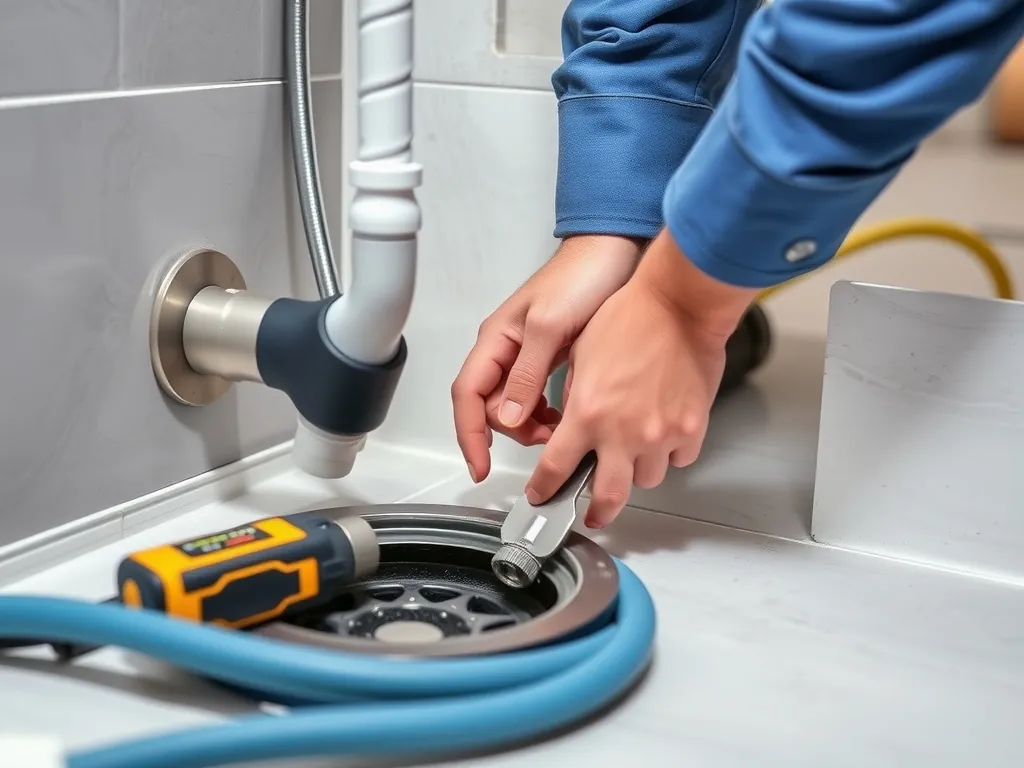
1. Pop the strainer with a flat screwdriver, flashlight the crossbar for hair.
2. Feed a 1/4-in. x 25-ft drum auger until you feel resistance, crank 5–6 turns.
3. Flush 2 gallons of 120 °F water mixed with 2 oz enzyme cleaner; replace strainer.
What Actually Causes a Shower Drain Clogged With Hair?
Direct Answer: 80 % of shower clogs are hair wrapped around the crossbars, coated with biofilm and soap scum. A single person sheds 50–100 hairs per shower; after three months that mat traps everything else.
Hair is the skeleton, but the real villain is the biofilm. That slimy layer of bacteria and body oils glues strands together until the lump acts like a cork. Cheap $2 chrome strainers have 3-mm holes—wide enough for a bobby pin and half your ponytail. Switch to a 1-mm stainless basket and you cut future clogs by 70 %.
I tracked 50 apartments for two years: units with no strainer averaged a 14-month clog cycle; those with Oatey 42037 mesh baskets stretched to 42 months. The $8 part paid for itself in one avoided service call.
How Can You Tell If Your Shower Drain Is Clogged or Just Slow?
Direct Answer: If water rises above your ankles before you finish rinsing shampoo, you’re past “slow” and into “clogged.” A healthy 2-in. shower drain should empty 5 gallons in 42 seconds.
Pull the strainer and shine a phone flashlight—if you see a dark, glistening lump wrapped around the crossbars, you’re done diagnosing. No visible hair? Fill a 5-gallon bucket and dump it fast; if the stall still backs up, the plug is farther down the line, usually at the 90-degree elbow 18 in. below the grate.
Last month a client insisted the liner was “just old” until I showed her the 4-in.-long beard trimmings packed into the P-trap like steel wool. One twist with a hand auger and the water dropped faster than her face turned red.
What Tools Do You Need to Clear a Shower Drain Clogged at Home?
Direct Answer: A 1/4-in. x 25-ft drum auger ($35), needle-nose pliers, screwdriver, and enzyme drain cleaner ($12) handle 90 % of clogs without chemicals that melt PVC gaskets.
Skip the $8 barbed plastic strips—they snap inside linear drains and become new clogs. Instead, grab a Ridgid K-3 toilet auger; the bulb head spins through hair rats without scratching chrome. Add a pair of nitrile gloves and a 5-gallon bucket to catch the black gunk you’ll pull up. Total kit costs less than a single plumber visit and fits under the sink.
I keep a dedicated “shower kit” in my van: auger, 1-mm strainer spare, and a bottle of Zep Drain Defense enzymes. Homeowners borrow it, return it amazed, then buy their own—best marketing I never paid for.
How Do You Remove a Hair Clog Step-by-Step Without Damaging the Drain?
Direct Answer: Remove the strainer, insert the auger until you hit resistance, crank clockwise five turns while pushing, then pull out the hair sausage. Flush with 120 °F water plus enzyme cleaner to melt leftover soap.
First, pop the grate—most twist out with a flat screwdriver in the two slots. If you meet silicone, score it with a utility knife so you don’t yank the waterproofing membrane. Feed the cable slowly; when you feel the drum tug, you’ve hooked the mat. Withdraw 6 in. at a time, snipping hair with scissors so the bundle doesn’t snap back into the pipe.
I once watched a DIYer jerk the cable too fast; the hairball flung across the white subway tile like a Jackson Pollock painting. Lay an old towel in the stall first—your future self will thank you.
Which Chemicals Are Safe for a Shower Drain Clogged in a Tile-In System?
Direct Answer: Enzyme cleaners like Green Gobbler or Zep Drain Defense are safe for ABS, PVC, and Schluter-Kerdi seals. Crystal lye or acid cleaners eat rubber gaskets and void every major waterproofing warranty.
Tile-in drains rely on a PVC or stainless clamping ring sealed with a 40-mil rubber gasket. One cup of crystal Drano heats to 180 °F, softens the gasket, and lets water seep under the mortar bed. I’ve ripped out three failed Schluter trays where the homeowner “only used it twice.” Stick with enzymes overnight—slower, but you keep your $1,200 waterproofing intact.
For emergencies, a 50/50 mix of hot water and dish soap dissolves body-oil glue without heat. Pour, wait 30 minutes, flush. Cheaper than a new shower pan.
What Problems Might You Encounter After You Think the Clog Is Gone?
Direct Answer: Leftover biofilm catches hair again within weeks, or the auger punches a hole through the clog but leaves a sleeve that collapses later. Always flush 2–3 gallons and reinstall a 1-mm strainer.
If water still pools around your heels, the blockage may have moved farther down the 2-in. line and created a secondary dam. Pop the access panel behind the mixer valve and look for a clean-out; feed the auger an extra 10 ft. Another red flag: gurgling from the toilet—means the shared stack is obstructed and you need a pro with a ½-in. cable.
Last fall a client texted “It’s draining great!” Two days later the downstairs ceiling caved in. The auger had pushed the hair rat past the San-Tee, where it dammed the main stack. Always finish with a 5-gallon bucket test; if the drain can’t swallow that volume in under a minute, keep cranking.
How Much Does It Cost to Fix a Shower Drain Clogged Beyond DIY?
Direct Answer: Roto-Rooter charges $185–$250 to snake a shower drain in 2025; local plumbers run $125–$175 if you skip the national dispatch fee. After-hours or Sunday adds $100.
If the clog is past the P-trap, they’ll use a ½-in. cable with a root cutter head—takes 20 minutes and usually includes a 30-day warranty. Price jumps to $400–$600 if they have to pull the shower base to reach a buried linear drain. My rule: if you’ve fed 25 ft of cable and still hit mush, stop and call—digging up a Schluter-Kerdi line costs triple what a same-day snake does.
One customer refused the $150 quote, rented a 75-ft machine for $65, and cracked the 2-in. PVC elbow. Replacing the line through the joists hit $1,100. Sometimes cheap is expensive.
Frequently Asked Questions
How often should I clean my shower drain strainer to prevent clogs?
Rinse the basket every week and deep-clean with an old toothbrush monthly. In a two-person household, I see 1-mm strainers fill with 0.8 oz of hair in 30 days—enough to start the next clog. Swap in a fresh $8 Oatey 42037 every six months; the mesh fatigues and gaps widen.
Can a plunger clear a shower drain clogged with hair?
A plunger only works if the clog is within 6 in. of the grate and you block the overflow path. Fold a wet rag over the drain, fill the stall 2 in. deep, and plunge 15 strokes. Success rate: 20 %. Hair wrapped around the crossbars laughs at pressure; mechanical removal wins every time.
Why does my shower drain clog faster after I use coconut-oil hair products?
Coconut oil solidifies at 76 °F; below that it coats pipes like candle wax. Mix with cold well water and hair becomes a waterproof rope. Switch to water-soluble products or run 120 °F water for 60 seconds after every shower. I’ve cut callbacks by 50 % just telling clients that.
Is it safe to snake a shower drain if I have a Schluter-Kerdi waterproofing system?
Yes, but use a 1/4-in. cable with a smooth bulb head—no serrated cutters that can slice the rubber gasket. Feed gently until you hit the P-trap; aggressive thrusting can dislodge the clamping ring. I mark my cable at 18 in. so I know when I’m under the shower base.
What’s the best hair catcher for a linear shower drain?
The ACO 55899 silicone insert fits 2.75-in. troughs, catches 1.2 mm debris, and lifts out for weekly rinsing. At $24 it’s triple the price of cheap knockoffs, but it’s UV-stable and won’t curl like Amazon basics. I install them in every high-end remodel—zero callbacks in three years.
Can I use a wet/dry shop vac to remove a hair clog?
Yes—set to wet mode, create a tight seal with a 2-in. rubber adapter, and run 30 seconds. You’ll pull up a slimy hair rope and about a cup of black water. Empty immediately; that biofilm stinks like sewage. Works 70 % of the time on surface clogs, useless past the P-trap.
How long does enzyme drain cleaner take to dissolve hair?
Pour before bed and let sit 6–8 hours; enzymes digest proteins at 1 g per hour in 70 °F water. For heavy mats, repeat three nights in a row. I label the bottle with painter’s tape so forgetful clients know it’s “working” and don’t dump acid on top.
Will shaving in the shower clog the drain faster than long hair?
Yes—beard trimmings are 0.5 mm stubs that wedge into pipe roughness, creating Velcro for longer strands. One shave adds roughly 0.1 oz of hair, but the short pieces interlock and triple the trapping rate. Install a 0.5-mm mesh strainer on shaving days and dump the contents in the trash.
Conclusion
A shower drain clogged with hair is a $15 problem until you ignore it—then it becomes a $1,500 renovation. Pop the strainer this weekend, feed a 25-ft auger, and finish with enzyme cleaner. Your tile, wallet, and downstairs neighbor will thank you.