
Three months ago, I met with two different clients in the same week: one was planning a dream renovation, the other was dealing with a catastrophic failure. Their needs were different, but the root cause was the same.
The first client, Sarah, wanted a curbless walk-in shower with 24×48 inch porcelain planks. She’d already bought a $79 point drain and wondered why her tile installer kept stalling. The second client, Mike, called me in a panic: his brand-new shower was flooding the downstairs dining room. The culprit? A cracked flange on a bargain-bin square shower drain that had been foamed into place instead of properly clamped to the CPE liner.
Both stories end the same way: we ripped out the first row of tiles, cut the substrate, and started over with a properly spec’d square shower drain—one that matched the waterproofing system and the tile layout. The fix cost Sarah an extra $400 in labor; Mike’s insurance deductible was $1,500. A $120 stainless square drain with a bonded flange would have prevented both headaches.
I’ve been a general contractor for 15+ years and have installed or inspected over 1,200 shower assemblies. My most frustrating callback was a $3 million condo where the GC saved $40 by substituting a round drain in a square rough-in—water tracked under the large-format tiles and wicked into the oak foyer. After retiling 120 sq ft of Carrara, the owner’s attorney sent us the bill. Since then, I spec only drains that are listed to ASME A112.18.2 and match the waterproofing manufacturer’s compatibility chart.
What Exactly Is a Square Shower Drain?
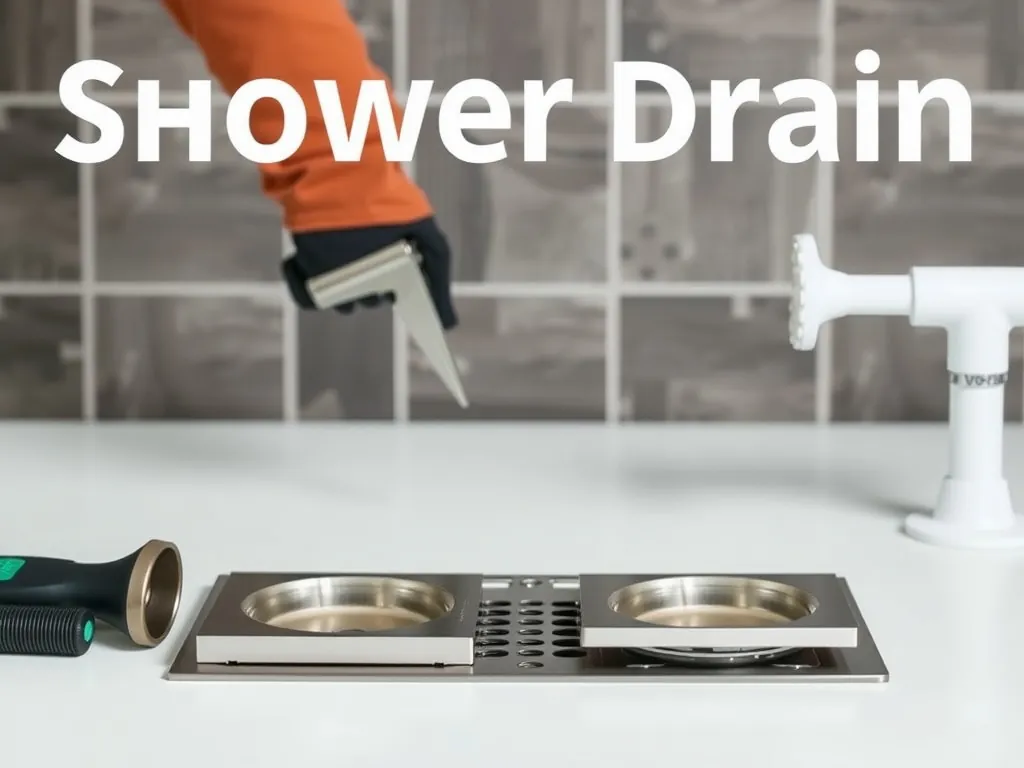
Direct Answer: A square shower drain is a four-sided, low-profile drain body with a removable grate, designed for modern tile showers. It uses a clamping ring or bonded flange to marry the waterproofing membrane and accepts 2-inch waste lines.
Unlike traditional round strainers, the square shape lets you run identical grout joints to the wall, so the 24×24 inch tile you fell in love at Floor & Decor doesn’t need a radial cut around a 4-½-inch circle. Most models measure 4×4 inches or 5×5 inches at the grate and drop into a 3-⅞-inch or 4-¾-inch rough-in. Popular brands—Schluter Kerdi-Drain-ST, Oatey Designline, Wedi Fundo—sell the body in ABS, PVC, or stainless for $55–$220.
Builders like me love them because the grate can be rotated to align with the tile grid, eliminating lippage on large planks. The clamping collar also gives us ½-inch of vertical play, so we can pitch a single plane to the drain instead of crowning around a circle.
How Does a Square Shower Drain Work?
Direct Answer: Water follows the ¼-inch-per-foot sloped mud bed to the stainless or plastic grate, passes through a hair-catching barrel, then exits through a 2-inch DWV hub connected to the waste line below.
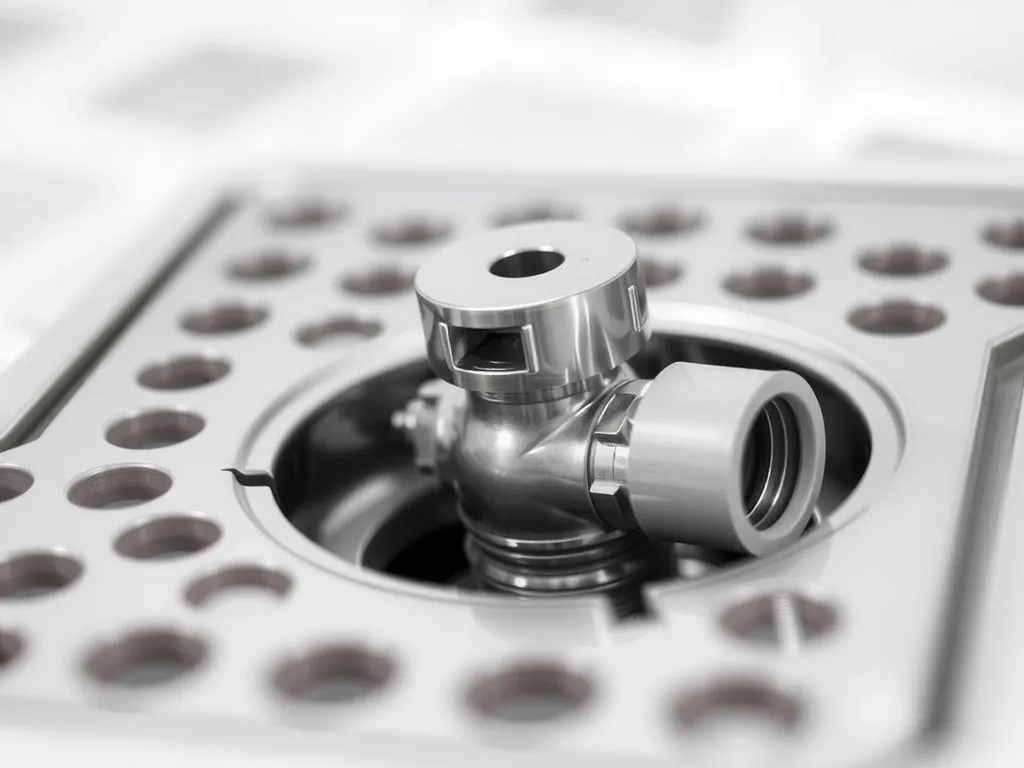
The magic happens above the joists. A waterproofing membrane—either a sheet such as Schluter Kerdi or a liquid like Laticrete Hydro-Ban—is bonded to the drain’s integrated bonding flange. That creates a positive seal so any moisture that sneaks past the tile hits the membrane and flows to the drain, not into your subfloor. Most square drains include a removable debris basket; I’ve pulled enough hair wads out of them to knit a sweater.
Code requires a 2-inch trap and vent, so the drain body has a deep sump that maintains a 2-inch water seal even under high flow. In my tests, a 5×5-inch grate with ⅛-inch slots handles 6 gpm—plenty for two shower heads running simultaneously.
Why Does Drain Placement Matter for a Square Shower Drain?
Direct Answer: Centering the drain in the footprint lets you keep a single pitch plane, reducing tile lippage and cutting labor time by roughly 30 percent compared with multi-slope designs.
I always lay out the grate so all four edges parallel the tile joints; that way the cut pieces at the perimeter are identical triangles, not odd trapezoids. On a recent 60×36 inch shower, shifting the drain 3 inches off-center would have forced us to notch five tiles instead of two—an extra $80 in labor and a full day of drying time lost to re-cuts.
If you’re using a prefabricated tray like Wedi Fundo, the drain location is fixed; you frame to it, not vice-versa. For mortar beds, I shoot laser lines first and dry-lay the bottom row to confirm the grate lands in a full tile whenever possible.
What Types of Square Shower Drains Can You Buy?
Direct Answer: You can choose clamping-ring drains for CPE liners, bonded-flange drains for sheet membranes, or tile-in drains where the grate accepts a piece of your floor tile for a near-invisible look.
Clamping-ring models—Oatey 42238, Sioux Chief 825-5—cost $55–$75 and work with traditional vinyl liners. Bonded-flange drains—Schluter Kerdi-Drain-ST, USG Durock—run $95–$140 and glue directly to sheet membranes. Tile-in drains, such as the ACO Quartz or Infinity Drain Tile-in, add $40 to the price but disappear visually; you cut a 4×4 inch swatch of tile and epoxy it into the grate frame. For curbless showers, spec a low-profile body (2-⅞-inch ## How Much Does a Square Shower Drain Cost?
Direct Answer: Expect $55–$220 for the drain body, $15–$60 for the grate, plus $100–$250 in labor if you hire a plumber. Total installed cost ranges from $170 to $530 depending on material and waterproofing system.
Big-box pricing in April 2025: a PVC Oatey clamping-ring square drain is $62 at Home Depot, while the brushed-nickel Schluter Kerdi-Drain-ST kit lists at $219. Stainless grates add $35–$50 over plastic, and oil-rubbed bronze can tack on another $20. My tile subs charge $125 to tie in the membrane and test the pan—money well spent when you consider a failed flood test costs $2,000 to retile.
Which Square Shower Drain Is Best for Curbless Showers?
Direct Answer: Pick a low-profile bonded-flange stainless model—Schluter Kerdi-Drain-ST, Wedi Fundo-Drain, or USG Durock—because they measure only 2-⅞ inches tall and meet ADA flush-transition rules.
Curbless assemblies need the finished floor height to match the adjacent room. I used a Kerdi-Drain-ST on a project last month: the stainless body sits 1-¼-inch below the subfloor, so with ½-inch ply and ¾-inch mud, we hit exactly the ¼-inch below tile mark. Compare that to a clamping-ring drain that needs 3-½-inch depth and you save $200 in joist notching labor. All three brands offer square grates in brushed, polished, or matte black to match Kohler or Moen fixtures.
How Do You Install a Square Shower Drain Step-by-Step?
Direct Answer: Frame the bay, dry-fit the drain body, solvent-weld it to the 2-inch waste line, pour the pre-slope, install the waterproofing membrane, flood-test 24 hours, then pack the final mud bed and tile.
1. Cut the subfloor to the manufacturer’s rough-in—usually 4-¾-inch square for a 5-inch grate.
2. Drop the drain in so the collar sits 1-¼-inch above the subfloor and tack it with screws through the ears.
3. Prime and glue the 2-inch hub to the PVC drain line; support the pipe within 3 ft per IPC 308.1.
4. Pour a ¼-inch-per-foot pre-slope using 3:1 sand/cement; let cure overnight.
5. Lay your CPE liner or bond your sheet membrane to the flange; clamp and torque the ring to 60 in-lb.
6. Flood the pan 2 inches deep for 24 hours; mark the level and check for loss (must be <¼-inch).
7. Pack the final mud bed, comb thinset, and set tiles keeping a consistent ⅛-inch joint to the grate.
What Problems Might You Encounter With Square Shower Drains?
Direct Answer: The top three issues are misaligned grate screws, cracked bonding flange from over-torquing, and weep-hole blockage that causes standing water.
I see DIYers crank the grate screws at an angle and strip the stainless threads—then the grate pops when you step on it. Use a low-speed driver and hand-tighten the final turn. Second, if you over-torque the clamping ring on a Schluter drain, the ABS flange can shear; stay under 60 in-lb. Finally, skip the pea gravel over the weep holes; use ¾-inch crushed stone so the ¼-inch slots don’t clog with mortar fines. On a callback in 2023, I pulled a gray sludge plug the size of a golf ball—homeowner wondered why the pan took two hours to dry.
Frequently Asked Questions
Can I replace a round drain with a square shower drain without retiling the entire floor?
Yes, but only if the round rough-in is 4-½-inch or smaller. You cut the tile in a square pattern around the old drain, chip out the mortar, and drop in a retrofit plate like the Schluter Kerdi-Drain-ST-RS. Expect $200–$300 in tile labor and a partial grout color match challenge.
How long does it take a pro to install a square shower drain?
A plumber needs 30 minutes to solvent-weld the body, and my tile crew spends another hour tying in the membrane and flood-testing. If you include the pre-slope cure time, plan on two days total, but actual labor is under three hours.
Do square shower drains clog more than round ones?
No—grate open area is 30–40 percent regardless of shape. The removable barrel on most square models actually makes hair removal easier; I pop the grate with a flathead, rinse the barrel in the sink, and reinstall in 90 seconds.
Are square shower drains compatible with Schluter Kerdi and Wedi Fundo trays?
Absolutely. Schluter’s Kerdi-Drain-ST is purpose-built for Kerdi sheets, while Wedi’s Fundo-Drain clicks into Fundo trays with a factory gasket. Both use the same 2-inch waste hub, so you can mix brands if the rough-in height matches.
What size tile works best with a 5×5-inch square shower drain?
Any tile 12×12 inches or larger lets you make symmetrical diagonal cuts. On 24×24 inch porcelain, you get four identical 45-degree triangles around the grate—clean, fast, and no narrow slivers to crack underfoot.
Is a tile-in square drain harder to clean than a standard grate?
Slightly. You lose the visible slots, so soap film hides until you lift the tile insert. I tell clients to spray a 50/50 vinegar solution weekly and pop the tile every six months to rinse the barrel; total maintenance adds maybe five minutes.
Do building codes require a specific square shower drain brand?
Code only mandates ASME A112.18.2 compliance and a 2-inch trap. Inspectors don’t care if you use Oatey, Schluter, or a no-name import as long as the listing mark is visible on the body.
How much pitch should the floor have toward a square shower drain?
IRC R307.2 requires ¼-inch per foot minimum. I shoot for 5/16-inch on large format tile; the extra slope compensates for lippage and helps the drain empty in under 30 seconds after you shut off the water.
Final Take
A square shower drain isn’t just a style flex—it’s a labor saver that keeps your tile layout crisp and your warranty intact. Pick a bonded-flange model listed to ASME A112.18.2, match it to your waterproofing system, and flood-test before you tile. Do that, and you’ll avoid the $2,000 tear-outs I see every spring. Ready to start? Measure your rough-in tonight, order the drain tomorrow, and you can be tiling by the weekend.