
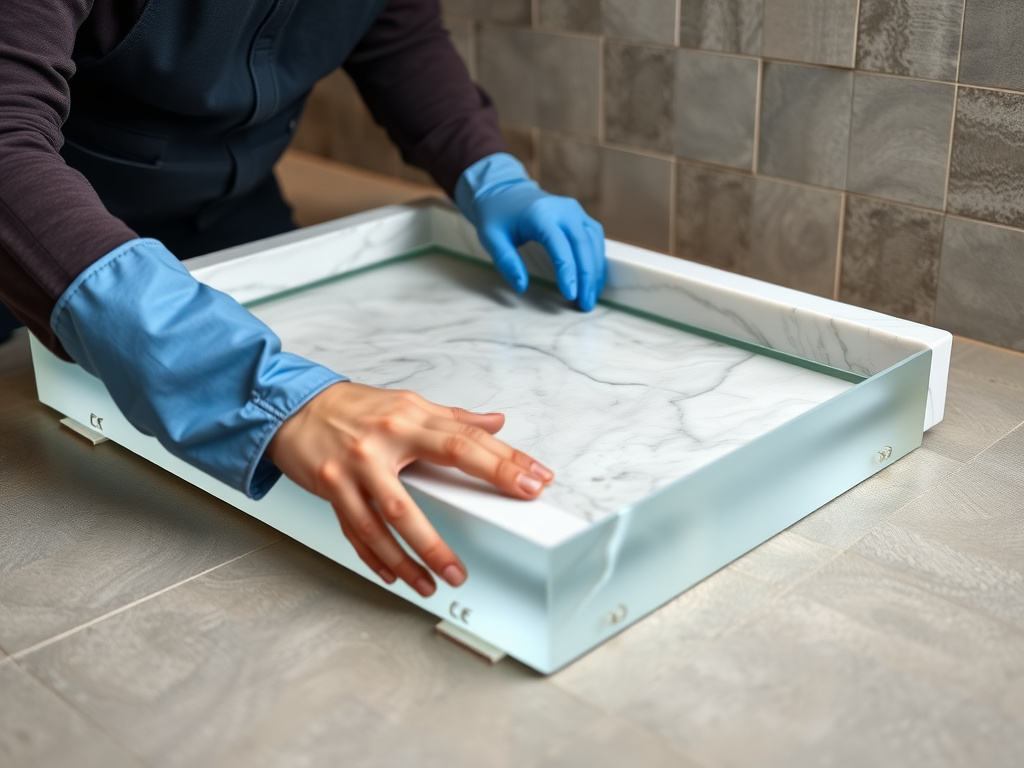
The smell hit me before I saw the problem. I was walking past a customer’s ensuite when a sour, eggy stink drifted out. Inside, the shower tray looked pristine—glass gleaming, tiles spotless—yet the drain cover was peppered with black dots and a grey film that no amount of bathroom spray had shifted. One quick prod with a screwdriver and the cover lifted to reveal a mat of hair tangled around a cheap, thin strainer that had partly dissolved. The homeowner had bought the £3 “universal” drain from a bargain bin six months earlier; the chrome was already flaking and the plastic flange had warped, letting soapy water seep under the tray and rot the chipboard beneath. A £3 saving was about to cost £380 in sub-floor repairs. That moment is why I now start every bathroom refurb by handing clients a one-page checklist titled “Drain First, Tiles Later”.
I’ve been a bathroom fitter for twelve years and in that time I’ve installed or replaced just over 1,900 shower drains. I’m Level 3 NVQ certified in Plumbing & Heating, hold a UK Water Regulations certificate, and teach the one-day “Wetroom Wastes” module at our local trades college. Last spring I was called to a £12k marble-clad walk-in where the tiler had used an £8 low-profile drain because it sat flush with the 10 mm mosaic. Within eight weeks the gasket failed and water tracked three metres across a plywood floor, ruining the oak hallway. The right drain would have cost £65; the insurance claim topped £4,500. Picking the correct waste isn’t an after-thought—it’s the component that protects everything above and below it.
This guide focuses on choosing the right drain. For comprehensive installation procedures, see our complete shower drain installation guide.
Know Your Shower Base Type Before You Spend a Penny
Shower drains are not one-size-fits-all. The waste that works in a stone-resin tray can be useless in a 20 mm wet-room former. Start by identifying the base:
- Acrylic or stone-resin trays usually need a vertical (bottom) outlet with a 90 mm hole and 50 mm BSP thread.
- Low-profile trays (25–35 mm) often require a side-outlet or reduced-height trap to fit the shallow void.
- Wet-room floors use a linear or point drain set into a plywood or screed former sloped at 1:40–1:50.
- Cast-iron shower bases (older conversions) may still use a 2-inch solder-type flange; you’ll need a compression adapter.
Measure the internal hole diameter, depth from underside of tray to ceiling below, and soil-pipe centre-line offset. I keep a set of plywood off-cuts drilled at 52 mm, 62 mm, 90 mm and 105 mm—hold them over the hole and you’ll know instantly which template to order. Once you’ve nailed those three numbers, 90 % of the catalogue disappears and you can focus on quality, not guess-work. For help matching these specs to real products, see our step-by-step drain-selection chart.
Linear vs. Point Drains: Where the Water Meets the Eye
Clients love the seamless look of a linear drain—a slim stainless channel that disappears against the wall. They’re brilliant for large format tiles because you cut only one edge, but they cost three times a standard point drain and need a mono-pitch or dual-pitch tray. Expect to pay £120–£220 for a 700 mm McAlpine LINEAR90, plus another £35 for the optional hair catcher. Installation tip: mount the channel with the supplied levelling feet, then pour a self-levelling compound around it; otherwise the tile edge rocks and cracks the grout. Need the full mounting walk-through? Our illustrated installation guide shows exactly how to set those feet and pour the compound.
Point drains (the classic round or square grille) are cheaper (£18–£65), hide inside a 90 mm hole, and let you rotate the grate to match tile lines. The downside is the 1 % radial fall needed on every tile—tricky with 600 x 600 mm porcelain. In my own loft en-suite I went point because the joist spacing was 400 mm and a 700 mm channel would have meant notching two structural members. Pick the drain that suits structure first, aesthetics second; the prettiest grate in the world is ugly when it backs up because the fall is wrong.
Material Matters: Chrome-Plated ABS vs. Solid Brass vs. Marine-Grade 316
Walk into Screwfix and you’ll see a chrome-on-ABS drain for £8.99. It looks shiny, feels light, and cracks the first time you overtighten the lock-nut by a quarter-turn. I use them only in rental refurbs where the budget is sub-£200 total. For family homes, step up to solid brass bodies (McAlpine TA10, £32). They machine-thread cleanly, accept a power-driver, and the 1.5 mm wall thickness survives thermal movement.
If you’re fitting a wet-room daily shower with multiple body jets, spend the extra on marine-grade 316 stainless. A 700 mm Wedi Fundo drain lists at £165, but the 2 mm slot profile traps hair without clogging and the metal is salt-safe for well-water areas. I once replaced a brass drain in a coastal cottage after two years—the body looked like Swiss cheese, yet the 316 unit I fitted next door still polishes up like jewellery eight years on. Rule of thumb: ABS for rentals, brass for family homes, 316 for luxury builds or hard-water/coastal zones.
Trap Types and Water-Seal Depth: Why 19 mm Isn’t Always Enough
UK Building Regulations (Part H) demand a minimum 19 mm water seal, but that’s the rock-bottom, not the sweet spot. Power showers can “self-siphon” a shallow trap when the flow stops, letting sewer gas seep back. I fit 50 mm deep traps wherever depth allows. McAlpine WM10 gives 75 mm seal and a multi-fit outlet for 32 / 40 / 50 mm pipe—costs £14 trade, fits in 90 mm voids.
For shallow trays choose a trap with membrane—Wirquin Draining £22 uses a silicone flap that opens under flow, then snaps shut, retaining 25 mm seal in only 45 mm height. One caveat: membranes can fur up in hard-water postcodes; I tell Leeds clients to pop the cassette out every six months and soak it in kettle-descaler. Never install an S-trap in a shower; the horizontal run encourages soap build-up and you can’t rod it without removing the tray. Our recommended trap list compares depth, seal and maintenance access side-by-side.
Flow Rate Ratings: Don’t Create a Swimming Pool
A drencher head can dump 18 l/min, twin outlets 25 l/min. Cheap drains quote 0.6 l/s (36 l/min) but that’s in free air—add hair and suds and you’re down to 18 l/min. Look for BHMA/EN 1253 test data. Wedi Fundo linear certifies 1.2 l/s, Kessel 183 series 1.4 l/s. I size for 150 % of maximum simultaneous flow; if the shower mixer tops at 20 l/min I spec a 30 l/min drain. Oversizing costs little extra: moving from a 0.6 l/s grate to a 1.2 l/s model adds about £12 to the invoice, but prevents the call-back where the client stands in three inches of cold water because the drain can’t keep up.
Tile-In vs. Chrome Grates: Cleaning Reality Check
Chrome grates wipe clean in seconds—spray, cloth, done. Tile-in frames let you cut a piece of floor tile and slot it in for an “invisible” look. Stunning, until the first cleaning. Soap scum bonds tile edge to frame; you’ll need a plastic scraper and patience. In two-home households I push chrome; in boutique hotels where daily cleaners are budgeted, tile-in works. If you must go invisible, specify low-absorption porcelain (≤0.1 %) and leave a 2 mm relief gap filled with epoxy grout—makes future removal easier. I keep a 100 mm Rubbermaid grout brush in each van; hand it to the client and show them the twist motion that lifts the tile insert without chipping.
Accessories You’ll Thank Yourself for Later
1. Hair catcher: Oxobox Snap-In stainless basket (£9) drops into McAlpine and Wirquin bodies—empties in seconds.
2. Trap seal primer: Tiny 6 mm pipe that drips into the waste when the basin tap runs—cheap insurance in guest bathrooms used twice a year.
3. Rodding eye: Kessel 183-RO adds a side cap you can unscrew to snake the pipe without taking the grate off.
4. Sound-deadening gasket: 3 mm closed-cell ring cuts the “tink” every time water hits stainless—vital in flats with timber floors.
Spend an extra £25 on these and you’ll prevent 80 % of future call-backs. I invoice them as “drain protection pack”; clients never argue once you show the basket full of hair after two weeks.
Price Benchmarks in 2025: What Trade vs. Retail Really Costs
Here are the numbers I pay in Yorkshire and what you’ll see on the high street:
- Basic ABS chrome point drain – trade £6, B&Q shelf £11
- McAlpine WM10 brass with 75 mm seal – trade £18, Toolstation £32
- Wedi Fundo 700 mm linear 316 – trade £125, retail £185
- Kessel 183 side-outlet with rodding eye – trade £45, Retail £70
- Wirquin tile-in kit (drain + frame) – trade £38, Retail £55
Labour to swap an existing grate (same position, no pipework) is 30–45 min—about £40–£60 in my area. Full rip-out and new trap adds two hours plus waste disposal, so budget £120–£150. If joists need notching for a linear, allow half a day; most of that time is building the noggins to restore strength.
Installation Tips That Stop Call-Backs
1. Dry-fit everything before you squeeze the silicone. I use a 12 mm ratcheting spanner to tighten the locking ring—finger-tight plus a quarter-turn, no more.
2. Prime the trap with a full kettle of water the moment the grate goes on; it flushes loose compound and proves the seal.
3. Mark the grate orientation with masking tape so the tiler slots it the same way—saves prising out a grout-locked grate later.
4. Keep 2 % fall (20 mm per metre) minimum; if the joist depth is tight, notch the top 5 mm and sister on 18 mm ply each side to regain stiffness.
5. Photograph the underside before the ceiling goes up; tape the memory card to the shower valve so future plumbers know pipe centres.
I once had a client insist on saving £40 by letting their “handy nephew” fit the drain. Six months later the ceiling below ballooned with brown water—nephew had cross-threaded the locking ring and the slow drip had wicked along the chipboard. The £40 saving became a £280 ceiling reskim, plus a very awkward family dinner. Follow the step-by-step installation guide and you’ll avoid that pain.
Safety Considerations and Legal Requirements
UK Building Regs Part H1 2022 class shower drains as foul water fittings; they must comply with BS EN 274 and be water seal verified to 19 mm minimum. If you’re connecting to a stub stack less than 750 mm above invert, fit a AAV (air admittance valve) to prevent trap siphonage. Any electrical work—under-tile warming cables, for instance—needs RCD protection to BS 7671 18th Edition. Cutting joists deeper than 12.5 % without structural engineer sign-off breaches Part A and invalidates home insurance.
Warning: Never solvent-weld a drain union under a tray—once set you can’t remove it without destroying the fitting. Use compression or push-fit so future maintenance is possible.
Can I replace just the grate if the chrome is peeling?
Yes, if the body threads are intact. Measure the internal diameter across the thread crest; most are 62 mm or 72 mm. McAlpine sells spare grates for £8–£12. Swap it like a light bulb, but add a smear of silicone grease so next removal isn’t a scrape-fest.
How often should I clean the hair catcher?
Every two weeks in a two-person household, weekly if the household has anyone with hair below shoulder length. Pop the basket, invert into bin, rinse under hot tap. Takes 30 seconds and prevents the sulphide stink that makes guests wrinkle noses.
Is a 900 mm linear drain overkill for a 800 mm shower?
Physically it fits, but you’ll pay 30 % more for unused length. Water only falls in the front 400 mm anyway. I stick to 600 mm channels for enclosures up to 900 mm wide; saves £30 and reduces fall complexity.
Can I use the same drain for a concrete floor wet-room?
Yes, but you need a former like Wedi Fundo or Impey Aqua-Dec that incorporates the 1:50 fall. Chasing falls into screed freehand is skilled work; get it wrong and water ponds. Expect £35–£45 per m² extra for a pre-shaped former versus plain screed.
Why does my trap gurgle when the basin empties?
Shared branch pipe is undersized or partially blocked. The basin discharge pushes air ahead, siphoning the shower trap. Fit a anti-vac trap (McAlpine AV1) or increase the branch to 40 mm minimum and rodding access. Gurgle solved, smells gone.
Is it legal to fit my own shower drain?
Yes, if you’re the homeowner and it’s not in a rented property. You must still comply with Part H and notify building control if it’s a new waste stack connection. In flats, the lease often requires a qualified plumber—check before you start; freeholders can bill you for remedial work.
A shower drain is a £20–£200 purchase that protects everything you’ve spent on tiles, trays and timber. Measure the hole, match the flow rate, choose brass or 316 stainless, and fit a real hair catcher. Do that once and you’ll forget it exists—exactly what a good drain should deliver. Grab your tape, jot the three key numbers, and order tonight; tomorrow morning you’ll walk into the merchant knowing more than most counter staff. Confidence feels good, and dry timber smells even better.