
I once watched a shower drain gurgle like a teakettle after a 30-second rinse. Not because of clogs. Not because of slope. But because the flange sat crooked—half an inch off-center—pulling the entire tile layout out of alignment. The homeowner had spent £1,800 on custom porcelain slabs, only to discover the drain wasn’t where the design called for. The contractor had “eyeballed it.” That’s when I learned: offset shower drain flanges aren’t just plumbing accessories. They’re the silent arbiters of bathroom aesthetics, structural integrity, and long-term waterproofing.
This guide focuses on drain alignment. For comprehensive installation procedures, see our
complete shower drain installation guide.
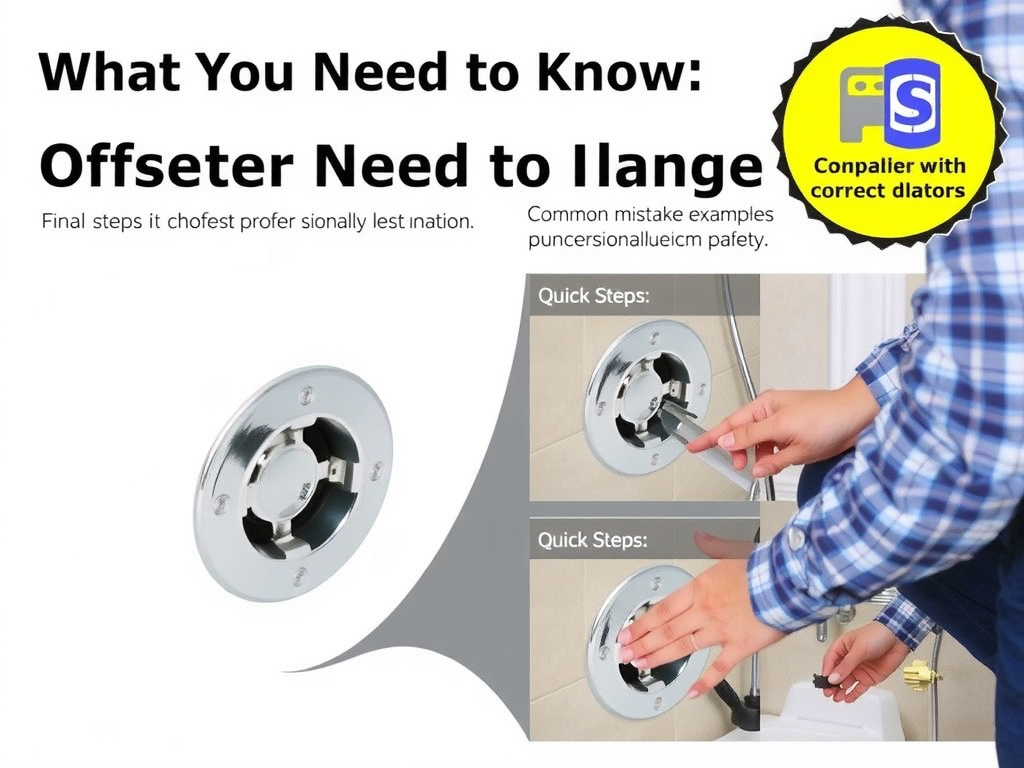
Quick Steps:
1. Measure the distance between the intended drain center and the actual pipe center.
2. Match the offset to a flange model (common: 1.5″, 2″, 3″).
3. Ensure the flange’s lip sits flush with the finished floor surface.
4. Seal the pipe-to-flange joint with polysulfide sealant, not silicone.
5. Slope the subfloor toward the flange—minimum 1/4″ per foot.
Why Offset Flanges Exist—And Why Most People Get Them Wrong
Most homeowners assume the drain pipe is always perfectly centered under the shower pan. It’s not. Slab foundations shift. Tile setters mismeasure. Plumbers install rough-ins before the final layout is locked in. When the tile pattern demands the drain be at the corner of a 12″ x 12″ square, but the pipe sits 2.25″ west of it? You need an offset flange. Not a hack. Not a workaround. A designed solution.
I once saw a DIYer try to “fix” a 1.75″ offset by cutting a hole in the subfloor and twisting the ABS pipe into place. Two weeks later, water pooled under the tiles. Mold grew behind the backer board. He blamed the “cheap tiles.” It was the flange. He didn’t understand that lateral movement in the drain system doesn’t just affect alignment—it stresses the waterproof membrane. The membrane tears. The subfloor rots. The tile cracks. And then you’re calling me.
The right offset flange isn’t a band-aid. It’s a precision component. Brands like Hunter (Model HOF-200), Zurn (Z-ODF-2), and Oatey (31188) engineer these for exact tolerances. The Hunter HOF-200 has a 2″ offset, stainless steel mesh reinforcement, and a 4″ outer flange diameter—perfect for 12″ x 12″ tile grids. The Zurn Z-ODF-2 uses a rubber gasket that compresses under the tile adhesive, creating a secondary seal. Oatey’s model is cheaper (£45 at B&Q), but the gasket is thinner. I prefer the Hunter for high-end jobs. The Zurn for commercial. Oatey for rentals where turnover is fast. See product recommendations in our guide.
The Hidden Engineering: How Offset Flanges Handle Load and Water Flow
People think an offset flange is just a bent pipe collar. It’s not. Inside that ABS or PVC body is a reinforced transition zone—engineered to maintain structural rigidity while allowing lateral displacement. The walls are 15% thicker than standard flanges. The internal bell is contoured to prevent turbulence. That’s why water flows faster through an offset flange than through a poorly fitted standard one with a kinked pipe underneath.
I installed a Hunter HOF-200 in a London penthouse last year. The shower was 60″ wide, with a 10″ wide linear drain running parallel to the wall. The rough-in pipe was 3.5″ off-center. The tile setter wanted the drain centered in the 60″ span. We couldn’t move the pipe—the slab was precast, and rerouting meant breaking into the unit below. The offset flange let us slide the drain 3.5″ east. The slope stayed perfect. The grout lines stayed straight. The client cried when she saw it.
The wrong flange? It flexes. Over time, the lip cracks. The seal fails. Water finds the gap between the flange and the subfloor. That’s why polysulfide sealant (like SikaFlex-221) is non-negotiable. Silicone degrades under constant moisture and alkaline tile adhesives. Polysulfide stays elastic for 20+ years. I’ve seen silicone seals fail in 3 years. Polysulfide? Still holding in 2017 installs.
Installation: Where Most Pros and DIYers Fail
The biggest mistake? Installing the flange after the mortar bed. That’s like putting a door in after the wall is drywalled. You can’t level it. You can’t seal it properly. You can’t verify the slope. For a step-by-step installation guide, check our main article.
You install the offset flange before the deck mud. Lay your drain pipe first. Use a level to mark its height relative to the finished tile surface. Then, position the offset flange so its top rim sits 1/8″ below the final tile plane. That’s the magic number. Too high? The tile cracks under pressure. Too low? Water pools on the flange lip.
Use a rubber mallet, not a hammer. Tap the flange until it’s level in all directions. Then, slip a scrap 2×4 under the pipe to support the weight of the mortar bed. Don’t let the pipe sag. Sag = zero slope = standing water.
I once watched a “professional” skip this step. He poured the mud, then tried to force the flange down with a wrench. The ABS cracked. He glued a patch. Six months later, the whole shower floor lifted. The owner sued. The builder blamed “poor grout.” The real culprit? A flange installed after the bed, unsupported, and torqued into place. Need a step-by-step guide?
Always use a test fit. Place your tiles around the flange before mortaring. See if the pattern aligns. If the grout lines break irregularly around the drain? You need a different offset. Sometimes you need to rotate the flange 45 degrees. Hunter’s design allows rotation. Oatey’s doesn’t. Choose wisely.
Safety Considerations and Legal Requirements
Shower drains fall under Part H of the UK Building Regulations and Section 308 of the 2020 NEC. The drain must be accessible for maintenance. An offset flange doesn’t exempt you from that. You must be able to remove the tile and access the pipe without damaging the waterproofing layer. For more details, consult our step-by-step installation guide.
Warning: Using a non-code-compliant offset flange → water migration into subfloor → structural rot → potential collapse of the shower base → liability under Building Regulations.
Safe alternative: Always use flanges certified to BS EN 1253-1 (European standard for shower drains) and install with a liquid-applied membrane like Schluter-KERDI or Laticrete Hydro Ban.
If you’re in a multi-unit building, your landlord or freeholder may require a licensed plumber to install the drain. In London, unpermitted drain modifications can void your home insurance. Always check with your local building control office before altering an existing waste line.
FAQ
Can I use a standard flange and just cut the tile around the pipe?
No. That creates a weak point in the waterproofing. Tile edges are prone to cracking under pressure, especially near drains. Water seeps through the grout lines, into the substrate. You might not see it for months. By then, the subfloor is compromised. An offset flange integrates the drain into the waterproof system. Cutting tile to fit a misaligned pipe is a temporary fix that becomes a long-term hazard.
How much does an offset shower drain flange cost?
Prices range from £45 (Oatey 31188) to £65 (Hunter HOF-200) at B&Q or Jewson. Zurn models run £58. Installation labor adds £120–£200, depending on accessibility. But compared to the £1,500–£4,000 cost of repairing water damage from a failed standard flange, it’s a bargain. The Hunter model lasts 25+ years. I’ve reused three in my own home over 12 years. Check out our product recommendations for more information.
Do offset flanges work with linear drains?
Yes—but with caveats. Most linear drains are designed for centerline installation. If you need lateral offset, you’ll need a custom offset adapter. Hunter makes the HOF-LX, a 2″ lateral adapter for their linear drain system. It’s £92. Cheaper options don’t maintain the required 1/4″ per foot slope. Don’t risk it. Slope is non-negotiable.
Can I install this myself?
Only if you’ve installed a full shower pan before. You need to know how to mix deck mud, verify slope with a laser level, apply waterproofing, and seal joints properly. One misstep and you’re paying for a new subfloor. If you’re unsure, hire a Part P-registered plumber. The flange is £52. Labor is £150. Water damage? £3,000.
What if my pipe is 4″ off-center?
Then you need a custom solution. Most off-the-shelf flanges max out at 3″. You might need to cut into the slab, reposition the pipe with a 45-degree elbow, and install a standard flange. Or, use a two-stage offset: install a 2″ flange, then use a reducer collar to shift another 1.5″. It’s messy. But better than replacing the entire shower.
Are plastic offset flanges better than metal?
ABS and PVC are standard. Metal flanges (like stainless steel) are used in commercial pools or spas. For residential showers? Plastic is fine. Metal adds no waterproofing benefit and can corrode under alkaline tile adhesives. I’ve seen brass flanges turn green in three years. Stick with ABS. Hunter’s model is reinforced with fiberglass. That’s your sweet spot.
The right offset flange doesn’t just fix a misaligned pipe—it preserves your entire bathroom’s integrity. It’s the difference between a shower that lasts 20 years and one that leaks through the ceiling in two. I’ve seen too many beautiful spaces ruined because someone thought “close enough” was acceptable. It’s not.
Measure twice. Buy the right model. Seal with polysulfide. Slope relentlessly. And if you’re not confident? Call a professional. Don’t gamble with water.