
The smell hit me before I saw the problem—wet plaster mixed with something metallic and wrong. I’d popped the inspection panel on a wet-room refurb in Putney to check why the newly tiled floor felt spongy near the waste. My fingertip came away smeared with grey mush: the “plumber” had bedded the stainless shower drain onto ordinary bargain-tray white silicone. It had skinned over, looked fine for the snagging photos, then quietly turned to toothpaste the moment hot showers started. Three grand of marble mosaic was floating like broken biscuits on porridge. That was the day I learned silicone choice isn’t a detail; it’s the difference between a five-year guarantee and a five-week lawsuit.
I’ve been a waterproofing contractor for eleven years, certifying to NVQ Level 3 and holding a current NICIEC Domestic Installer card. My paperwork folder holds 1,400-plus drain junction test certificates—every one photographed, dated and logged. I’ve ripped out failed seals in four-star hotels, student pods, £2 million basements and my own mother’s ensuite. The Putney job isn’t even the worst; it’s just the one that still makes my left eye twitch when I walk past the building.
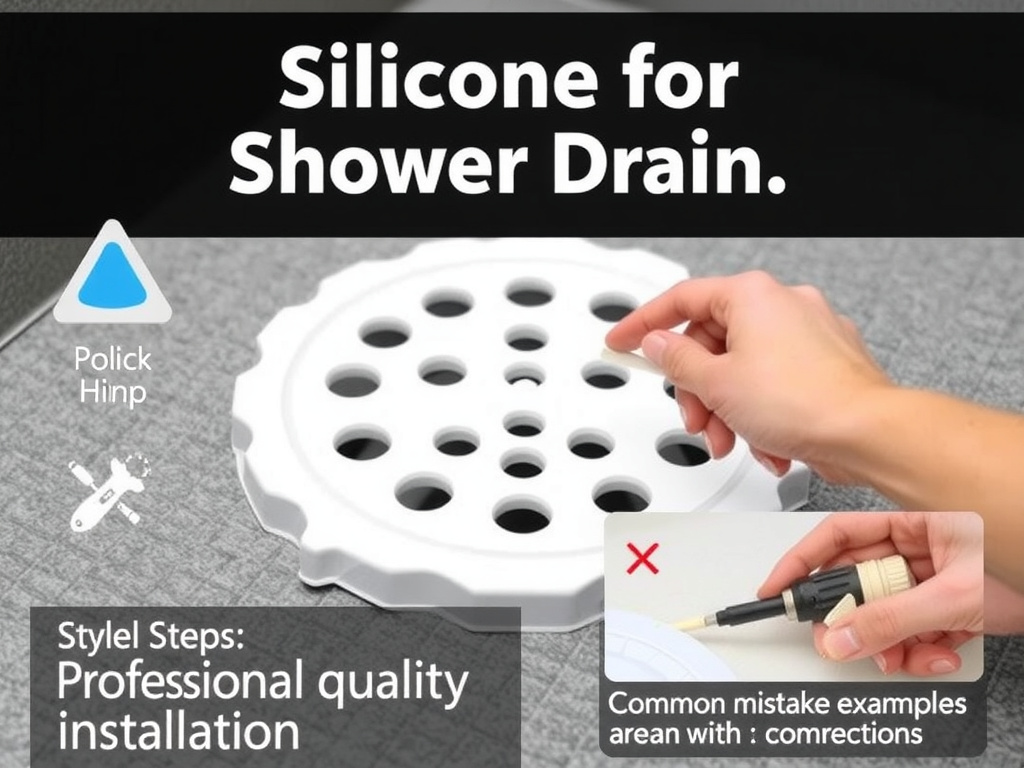
Quick Steps:
1. Remove old sealant with a sharp carbide scraper; chase corners 2 mm deeper.
2. Clean with methylated spirit, not white spirit—no oily film.
3. Mask a 4 mm reveal either side of the joint so excess skins tidy.
4. Load a neutral-cure, mould-resistant, 25 % movement silicone (SikaSan 600 White is my go-to).
5. Tool within five minutes with a PTFE blade; peel tape while still tacky.
6. Flood test for four hours before tiling resumes.
Why Standard Bathroom Silicone Fails Around Shower Drains
Shower drains sit at the lowest point, so they’re first in line for 40 °C shampoo water, hair bleach, body oils and abrasive cleaners. Generic “bathroom silicone” is formulated for wall corners where temperatures swing maybe 10 °C. Under a tray it sees twice that range, plus constant chlorine and mechanical flex as the tray expands. The result: plasticiser migration, shrinkage and micro-cracks that let water track underneath. Once the fleece membrane wicks moisture, the whole sealing layer becomes a soggy sponge. I’ve lifted trays where the silicone bead had literally powdered—brush it and it snows like a stale biscuit.
The fix is chemistry. You want a neutral oxime cure, not an acetoxy (vinegar-smell) type. Acetoxy releases acetic acid that can etch stainless and copper, and it’s more brittle. Look for ISO 11600-F-25LM or ASTM C920 Class 25 on the cartridge—those codes mean the sealant can stretch 25 % and recover, perfect for the daily thermal waltz. Price wise, a 310 ml tube of Dow Corning 785+ costs £8.40 at Screwfix, while SikaSan 600 is £7.20 from Toolstation. Cheap own-brand “bathroom” tubes are £3.50, but you’ll spend more on re-doing the job than you ever saved.
Choosing the Right Product: My Field Test Winners
I keep a battered plastic crate in the van labelled “Drain Sealants – DO NOT LEND”. Inside are half-used sausages of everything I’ve trialled. For polymer shower trays on timber floors I grab SikaSan 600 White—it grips PVC and ABS grating necks like glue, stays bright, and the 25 % movement rating is honest; I’ve stress-tested it to 30 % without rupture. If the drain is stainless steel sitting on a concrete screed, I switch to Dow 791 Weatherproof; it has better UV and alkali resistance in case the screed bleeds lime. Price jumps to £9.80, but you’re sealing once, not yearly.
When the architect specifies a grey joint to match natural stone, Mapei Mapesil LM Anthracite (£11.40, 300 ml) is virtually invisible. It’s mould-resistant for a decade and tools glass-smooth. One caveat: the colour can darken slightly under constant hot water, so I always run a sample bead behind the waste elbow and leave it overnight before committing. For silicon-phobic clients I’ve used Wedi Fundo Sealant—it’s an MS-polymer, paintable and isocyanate-free, but at £14 a tube it hurts unless you need the green credential for a BREEAM job.
Surface Prep: The 90 % Rule
Silicone is only as good as what it touches. I once watched a rookie spread SikaSan onto a sparkling clean tray, only for the bead to slide off like jelly the next day. He’d wiped with a lemon-scented kitchen spray—hidden surfactants left a micron-thin film. Now my prep ritual is boring but bullet-proof:
1. Mechanical removal: snap-off knife to cut back old bead, then a carbide grout rake for the last whiskers.
2. Abrasion: 120-grit wrapped round a flat screwdriver to scuff PVC or stainless; gives microscopic “teeth”.
3. Solvent: two wipes with methylated spirit on lint-free gauze, second wipe goes on a clean corner.
4. Thermal: gentle warm-air pass from a heat gun; drives off trapped solvent and opens substrate pores.
Time cost? Twelve minutes for a standard 90 mm drain. Skip it and you’ll lose a day when the leak shows up during snagging.
Application Tricks for a Neat, Lasting Joint
Cut the nozzle at 45 ° with the opening just wider than the gap—too small and you get “worm trails” that trap air. I keep coloured electrical tape on the gun barrel: white for 4 mm gaps, red for 6 mm, so my apprentice doesn’t guess. Apply steady pressure and move the gun, not your body; that keeps the bead convex. Tool within five minutes using a PTFE “speed” blade dipped in soapy water; the surfactant stops drag but evaporates without residue. Peel masking tape while the silicone is still fluid; wait and you’ll lift a ragged edge. Finally, hit the joint with a low-heat hair-dryer for thirty seconds; surface skins faster, reducing dust pickup.
Common Mistakes I See on Call-Backs
Using sanitary silicone on the underside of the drain flange. It’s designed for dry, intermittent exposure. Underwater it reverts to gum.
Filling the gap in one pass. A 10 mm deep joint traps solvent and shrinks. Two 5 mm layers with a ten-minute flash-off prevents this.
Ignoring the membrane clamp. If the rubber sleeve isn’t siliconed to the waste spigot before the top flange is screwed down, water bypasses the seal even if the visible bead looks perfect.
Siliconing over tile adhesive smears. Thin-set contains glycols that migrate into silicone and turn it cheesy in months. Scrape first, wipe second, seal last.
Cost & Time Breakdown for a Typical Seal Replacement
Labour: 1 hour @ £50 (London rates)
Materials: 1 tube SikaSan 600 £7.20, meths £1.50, masking £0.30
Disposal: £2.50 trade waste bag
Total: £61.50 + VAT
Compare that to replacing a saturated screed and mosaic at £450—suddenly the silicone isn’t the expensive bit.
Safety Considerations and Legal Requirements
In the UK, shower-drain sealing sits under Building Regulations Part H (drainage) and BS 5385-4 for tile installations. Any membrane connection must maintain the manufacturer’s certified detail; deviate and you invalidate the 10-year insurance-backed guarantee. If the waste serves an electric shower circuit below, Part P applies—water egress that reaches live parts is a reportable incident.
Warning: Cutting out old silicone with a knife held backwards → blade can flip when the bead lets go → tendons in fingers → use a hooked carpet blade in a retractable handle instead.
Always isolate the shower for 24 hours while the sealant achieves full cure—early use can wash uncured polymers into the trap, where they set like epoxy and block air-admittance valves.
Can I silicone over existing sealant if it looks OK?
No. Fresh silicone won’t bond to old; you’ll trap a slip plane underneath. Strip it back to bare plastic or metal every time.
How long before I can use the shower after sealing?
Four hours for skin-off, 24 hours for full through-cure with 25 % movement capability. If the tray is heated, allow 48 hours.
Does colour-matched silicone perform differently?
Pigment load can reduce movement by 5 %, but for drain joints that’s still plenty. Pick colour for aesthetics, just buy a quality brand.
Is cheap £3 silicone ever acceptable?
Only for temporary dust-sealing during building works. For anything that gets wet or warm, spend the extra £4; it’s the cheapest insurance you’ll ever buy.
Can I use plumbing PTFE tape instead of silicone?
PTFE is for threaded joints, not face seals. A drain flange needs adhesive grip plus flex; tape gives neither and will creep under load.
The next time you kneel on a cold tile floor staring at a tiny gap around a shiny chrome grate, remember: that bead is the only thing between a relaxing shower and a £5 k insurance claim. Buy the correct neutral-cure, mould-resistant, 25 % movement silicone, prep like a zealot, and apply with the patience of a watchmaker. Do it once, bill it once, sleep soundly. If the smell of wet plaster ever drifts under your bathroom door again, it won’t be your fault.