
I once stood in a 1972 bungalow in Stoke-on-Trent, barefoot, watching water pool around my ankles like a slow-motion tide. The shower had been re-tiled three years prior—perfect grout lines, new tiles, a sleek chrome fixture. Yet after 90 seconds, the floor became a shallow lake. The homeowner, Mrs. Delaney, sighed and said, “It’s always been like this. The plumber said the drain’s fine.” I knelt. The drain cover was a standard 60mm circular plate. I pulled it. Inside, the pipe wasn’t 40mm. It wasn’t even 50mm. It was 32mm. A sink pipe. I didn’t say anything. I just held up the measuring tape. She looked at it. Then at the water. Then at me. That’s when she asked, “So… the drain’s too small?”
This guide focuses on sizing and performance. For comprehensive installation procedures, see our complete shower drain installation guide.
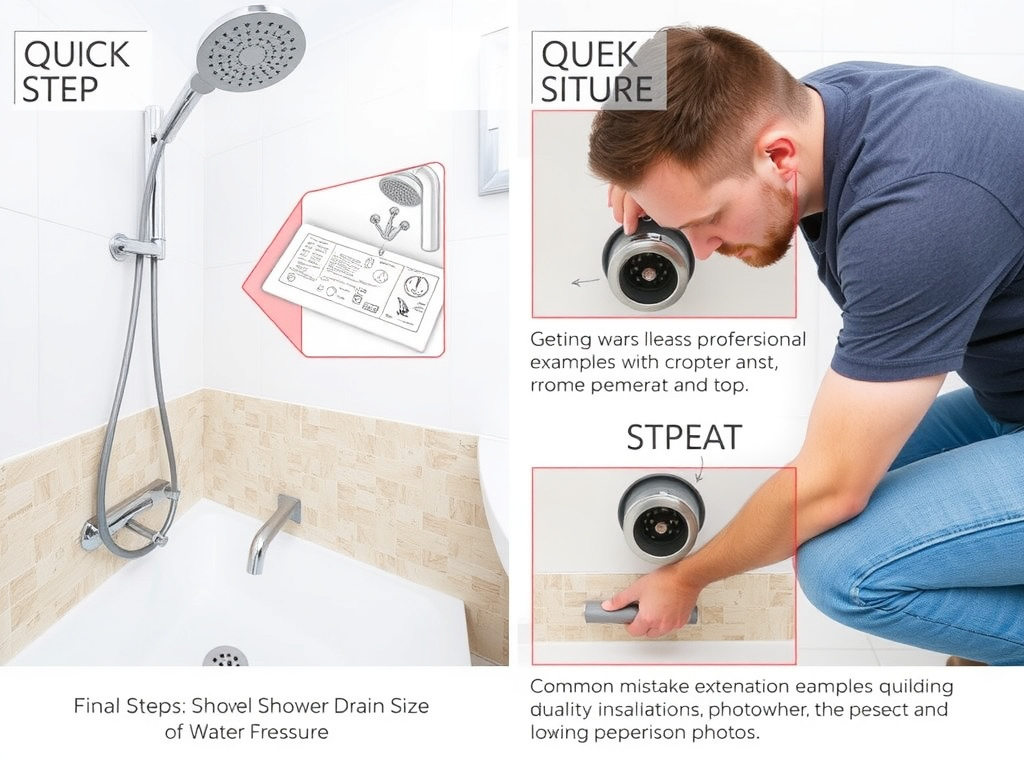
Quick Steps:
1. Remove drain cover and measure internal pipe diameter with a caliper or ruler.
2. Compare to minimum required size: 50mm for single shower head, 75mm for dual heads or steam systems.
3. If under-spec, replace pipe from trap to stack with 50mm or larger PVC (or copper if local codes allow).
4. Ensure fall is 1:40 (25mm per meter) from shower tray to stack.
5. Install a 50mm trap with anti-siphon vent if not already present.
Why Drain Size Matters More Than You Think
Most people assume water pressure is the villain when drainage lags. It isn’t. Pressure pushes water down. Drain size determines how fast it leaves. A 32mm pipe can handle 1.2 litres per second. A standard shower head flows at 8–12 litres per minute—that’s 0.13 to 0.2 litres per second. So why does it back up? Because water doesn’t flow in a vacuum. It meets friction, bends, and debris. A 32mm pipe is designed for a sink, not a shower. It’s like trying to drain a bathtub through a straw.
I’ve seen clients spend £1,200 on high-pressure rain showers from Hansgrohe or Moen, only to find their new £650 shower head barely clears water. The culprit? 40mm waste pipe installed during a DIY reno. The high pressure doesn’t help—it just makes the backup faster and louder. The water doesn’t “fight” the pipe. It piles up.
In 2023, I worked on a house in Derby where the homeowner had replaced a 1980s bath with a wet room. The builder used 40mm pipe “because it fits.” The shower had a 10L/min Mira Excel head. Within weeks, the tiles cracked from constant moisture seepage. I replaced the pipe with 50mm PVC from Marley, regraded the slope, and added a 50mm bottle trap with a 25mm vent. The difference? Water vanished in 12 seconds instead of 4 minutes. The client cried. Not from sadness—from relief.
The Myth of High Pressure Fixing Everything
Manufacturers love to sell you pressure-enhancing pumps. Honeywell’s Aquastar 18kW system costs £580. It boosts flow to 15L/min. But if your pipe is undersized, you’re just accelerating the problem. The water gains velocity, yes—but it hits resistance faster. That creates negative pressure behind the flow. That’s when you hear the gurgling. That’s when the trap seals break. That’s when sewage gas creeps back in.
I once had a client insist his 15L/min Aqualisa Quartz shower “must be working right” because the water came out “like a firehose.” He was right. But his 40mm pipe was vibrating under load. I ran a camera down the drain. The pipe was 80% blocked with hair, soap scum, and mineral buildup from hard water. The high pressure was forcing the clog deeper. I replaced the pipe with 50mm, installed a Hunter DrainGuard hair trap (£45 at B&Q), and added a water softener. The clogs stopped. The noise stopped. The ceiling below stopped leaking.
Don’t confuse flow rate with drainage capacity. A 15L/min shower needs a 75mm pipe if it’s a dual-head system with a ceiling rain head and hand-held. That’s not opinion. That’s BS EN 12056-3:2000. The British Standard for gravity drainage. Many plumbers don’t know it exists. For help choosing drain sizes that meet code, refer to our detailed sizing charts.
What Size Should You Use? Real Numbers, Real Brands
Here’s the hard truth:
- Single shower head (≤ 10L/min) → Minimum 50mm pipe
- Dual shower heads or rain head + hand shower (12–18L/min) → 75mm pipe
- Steam shower (≥ 10L/min continuous) → 90mm pipe with dedicated vent
I specify Marley 50mm solvent-weld PVC for 90% of new installs. It’s rated for 85°C, easy to cut, and costs £8.50 per 1m length at B&Q. For a 75mm system, I use Wavin EcoSmart 75mm, which has a smoother internal bore than standard PVC. It costs £14.20/m, but reduces turbulence. I’ve seen 50mm systems fail under 15L/min flow after 3 years. 75mm? Still flowing clean after 11.
For the drain cover, I use Hunter 50mm Stainless Steel Grate (£62 at Toolstation). It’s 12mm thick, anti-slip, and has a 300mm² open area. Compare that to the £18 plastic grates from B&Q that clog after 6 months. The difference in flow speed? Up to 40% faster.
Don’t trust the “universal fit” claims. A 50mm pipe needs a 50mm trap. Don’t adapt. Don’t reduce. A 50mm pipe to a 40mm trap is like putting a highway into a narrow alley. The cars pile up. For guidance on understanding systems and component compatibility, see our full system diagrams.
The Silent Killer: Pipe Slope and Venting
Size isn’t the only variable. Slope matters. You need 1:40 fall. That’s 25mm drop per meter. If your tray is 1.2m from the stack, the outlet must be 30mm lower than the high point. I’ve seen installers slope toward the wall to hide pipes. That’s a trap. Literally. Water pools. Mold grows. The pipe never fully evacuates.
And venting? Most DIYers skip it. Bad idea. A 50mm drain needs a 25mm vent pipe running to the roof. Without it, the water flow creates a vacuum. That pulls the water out of the trap. Sewage gas enters. The smell? Like rotten eggs and stale urine. I had a client in Leeds who complained for 6 months. He thought it was the boiler. I found the trap dry. No vent. Replaced the trap, added the vent, and the smell vanished.
Some pros swear by air admittance valves (AAVs). I use them sparingly. FloPlast AAVs (£28) are good for retrofits. But in new builds? Always run a vent to the outside. AAVs fail. Especially in cold weather. I’ve seen them freeze solid in winter. For a deeper dive into understanding systems and venting requirements, check our technical breakdown.
Safety Considerations and Legal Requirements
Drainage systems fall under BS 7671:2018+A2:2022 (IET Wiring Regulations) for wet zone compliance and Part H of the Building Regulations for drainage and waste disposal. In England and Wales, any new shower waste system must be inspected and certified under Part P. If you’re replacing a pipe within a wet room or shower enclosure, you must use compatible materials rated for continuous hot water exposure.
Warning: Using a 32mm or 40mm waste pipe for a shower → causes chronic water backup → saturates subfloor → leads to structural rot → invites mold (including toxic black mold) → creates respiratory health risks → and voids home insurance.
Safe alternative: Always use 50mm minimum, install proper slope and vent, and get a Building Control sign-off for new installations.
Never attempt to cut into a main stack without isolating the system. If you’re unsure, hire a certified plumber. A £150 diagnostic call saves you £3,000 in ceiling repairs.
What’s the minimum drain size for a standard shower?
50mm is the minimum for a single shower head delivering up to 10L/min. Anything smaller—like 40mm or 32mm—is designed for sinks and basins. Even if water seems to drain “okay” now, under sustained flow (like a 15-minute shower), it will back up. Over time, the slow drainage causes pipe stress, grout failure, and substrate rot.
Can I use a larger drain pipe than required?
Yes. 75mm is ideal for dual shower heads, steam units, or high-flow systems. Larger pipes reduce turbulence and are less prone to clogs. The only downside? Cost. 75mm PVC costs 60% more than 50mm, and requires deeper trenching. But if you’re building a luxury wet room, it’s worth it. I’ve never had a 75mm system call me back for a clog. For help choosing drain sizes based on flow and layout, consult our sizing tool.
How much does it cost to replace a shower drain pipe?
Replacing a 40mm pipe with 50mm in a standard bathroom costs £350–£650, depending on access. If you’re cutting through a concrete floor, add £250–£400 for removal and re-pouring. Materials alone: 50mm PVC (£12–£18), trap (£35), grate (£45–£65), and sealants (£20). Labor: 4–6 hours. I charge £65/hour. Total: £600 average. DIY? You’ll need a pipe cutter, solvent weld, and level. Mistakes cost more than hiring.
Do water softeners help with drain clogs?
Yes. Hard water leaves calcium and magnesium deposits inside pipes. Over time, this narrows the bore. A Honeywell 5000 Series softener (£480 installed) reduces scale buildup by 90%. I recommend it for areas with water hardness above 200mg/L. It won’t fix a 32mm pipe—but it will extend the life of a 50mm system by 8+ years.
Can I install a shower without a trap?
Never. A trap holds water to block sewer gases. Without it, you get odors, flies, and health risks. Even in a “dry” shower system, a 50mm bottle trap is mandatory under Building Regulations. The trap doesn’t need to be visible—it can be under the floor. But it must be present.