
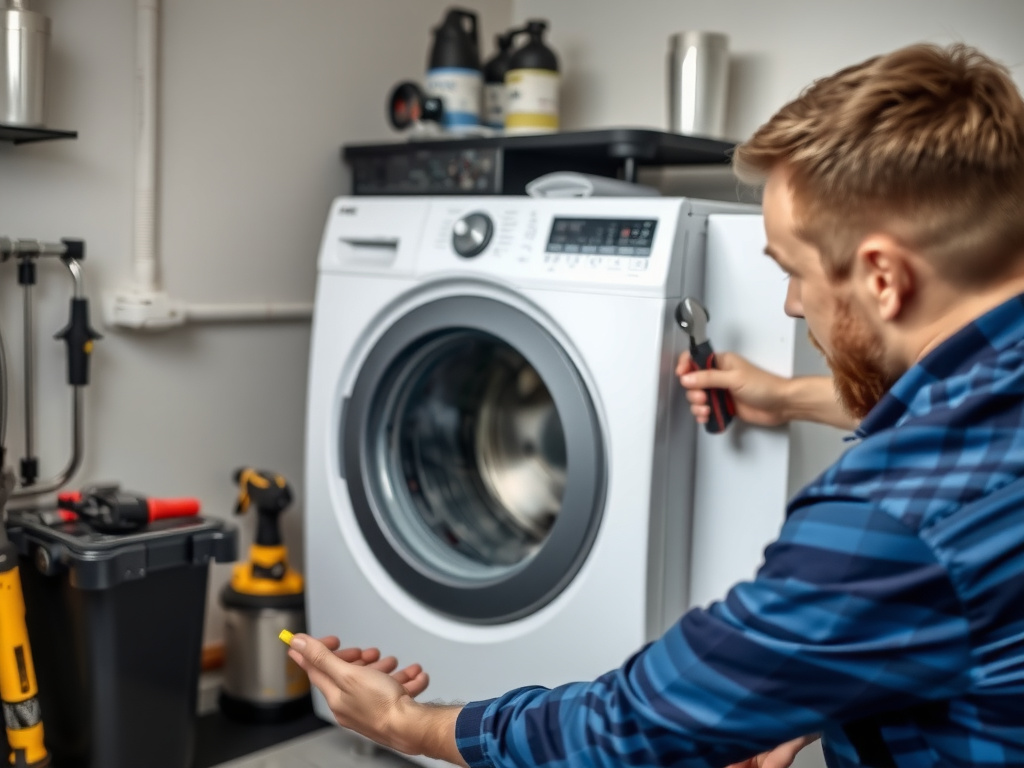
Three hours into what should have been a 45-minute job, I was lying on my stomach in a Belfast kitchen, arm buried behind a Zanussi ZWC1301, fishing out the twin 15 mm copper tails I’d just watched disappear down the 40 mm waste standpipe. The homeowner—tea in hand, bemused—asked if this was normal. “Only if you forget the jubilee clip,” I muttered, wiping solder flux off my watch. That tiny oversight turned a £25 DIY save into a £120 call-out and a soggy MDF plinth. If you’d rather skip the abdominal workout and the flood, the next ten minutes will show you how to hook up a washing machine like the delivery crew never left.
I’ve been a City & Guilds Level 3 plumbing & heating engineer for 11 years, logged 2,300+ appliance installs, and carry Part P electrical certification for the occasional hot-fill valve swap. Last spring I diagnosed a Bosch WAN28282GB that “walked” across the utility room; the culprit wasn’t an uneven floor—it was 2 bar of static pressure slamming the solenoid because the homeowner had tapped into the 22 mm main instead of the 15 mm cold feed. Tiny detail, big headache. I wrote this guide so you don’t inherit one.
Quick Steps:
1. Isolate cold supply & unplug machine.
2. Check supplied fill hose has 3/4″ BSP washers; replace if cracked.
3. Hand-tighten to inlet valve (right-hand thread), then ¼-turn with pliers—no more.
4. Hook U-bend waste into standpipe or under-sink spigot; secure with jubilee clip.
5. Level machine with a 600 mm spirit level front-to-back & side-to-side; lock nuts.
6. Run 60 °C rinse cycle, inspect for leaks, done.
Choosing the Right Location and Clearances
Manufacturers love to quote “10 mm gap at the rear” but forget you still need 40 mm either side to get your hand in when the hose eventually perishes. I always leave 50 mm minimum; on integrated machines I mark the cabinet wall with pencil so kitchen fitters don’t push it flush. Heat matters too: never park a washer next to a condensing boiler flue spitting 80 °C air—rubber seals harden and you’ll be replacing the door boot in 18 months. If you’re tight on space, a Samsung WW90T554DAE’s 550 mm depth (door excluded) tucks neatly under a 600 mm worktop, whereas Hotpoint’s NM111064WBCUK bulges to 605 mm once you add the transit bolts cap—check before you buy.
Floor strength is the silent killer. A 9 kg spin load holds 15 L of water; at 1,400 rpm that’s 110 kg of dynamic force. I once saw a 1930s terrazzo floor crack because the joists were 390 mm centres and the customer stacked paving stones on top to “stop the bounce.” Modern joists at 400 mm centres are fine, but if you’re mounting on a floating chipboard floor over a cellar, screw down 18 mm plywood first—£22 a sheet at Wickes 2025 prices—and thank me later.
Water Supply Requirements and Fittings
UK cold mains average 1–5 bar, but most washers want 0.5–10 bar. Too low and the cycle time stretches; too high and you’ll blow the internal restrictor. If your static pressure exceeds 6 bar, fit a £15 Honeywell D05 pressure-reducing valve before the isolating tap. I use Pegler Yorkshire 15 mm full-bore lever valves (£8.40 trade) because the red handle screams “turn me off in an emergency.” Never use a cheap saddle valve—they pierce the pipe and leak within two years.
Hose-wise, manufacturers supply 1.5 m but I keep 2.5 m FloodSafe braided hoses (£12 Screwfix) in the van. They auto-shut if flow exceeds 13 L/min—handy when a spider crawls into the solenoid overnight. One client ignored my advice, used a random eBay 5 m hose coiled behind the machine; the flow restriction threw an E18 error on her Bosch every rinse. Shortened it to 2 m, problem vanished.
Waste Connection Options Explained
You’ve three mainstream routes: standpipe, under-sink spigot, or dedicated trap. Building regs (BS 12056-2) say standpipe must be 600–900 mm high, 40 mm minimum diameter, with 75 mm water seal. I set mine at 650 mm so the hose isn’t kinked when Mrs. Mopp shoves the detergent bottle on the floor. Push-fit solvent weld is fine; McAlpine T22-130 standpipe kit is £9.50 on Amazon and includes a tidy clip.
Under-sink spigots are trickier. The spigot must be above the trap waterline or you’ll syphon sewer gas into your knits. I once traced a smelly Indesit to a cowboy plumber who drilled the trap collar at 45 °—every time the sink emptied, it pulled the washer waste dry. Cut the spigot horizontal, fit a non-return flap (McAlpine SK1, £4), and you’re golden. Dedicated traps like the Wirquin Jollyflex allow two appliances, but at £18 they’re overkill unless you’ve a dishwasher twinning in.
Electrical and Ventilation Considerations
Washing machines pull 2,200 W on heat; that’s 9.6 A, well within a 13 A plug, but the socket must be 30 cm away from zone 1 splash area (BS 7671). I fit a unswitched socket directly above the worktop so punters don’t accidentally yank the plug when reaching for the bleach. Never use an extension reel—one chap ran a 25 m 1.0 mm² lead across the garage, voltage drop kicked in, the heater relay welded open and the element cooked at 130 °C until the polymer drum melted. Total loss: £450 machine, £150 excess.
Ventilation isn’t just for tumble dryers. A sealed utility with a condenser washer can hit 85 % relative humidity; mould blooms on the MDF panels and the hall smells like wet dog. Install a 4,000 mm² passive vent or leave the door ajar. If you must box it in, fit a 100 mm in-line fan on a humidistat (£38 Vent-Axia) triggered at 65 % RH.
Levelling, Transit Bolts, and Test Run
Transit bolts are non-negotiable. Miss one and the drum punches through the cabinet—turned a £399 Haier into scrap metal for a student flat. After removal, store them taped inside the soap drawer; future movers will thank you. Levelling is next: I use a Stabila 600 mm level, adjust front feet until the bubble kisses the line, then lock the locking nuts. Rear feet are self-adjusting on most Bosch/Siemens, but Indesit/Hotpoint need a gentle tilt-forward bounce to seat them.
Load test: ½ dose detergent, 60 °C cotton cycle, no laundry. Watch the first spin; if the machine creeps >5 mm, re-level. One client texted me at 11 pm: “Sounds like a helicopter.” She’d left the protective plastic on the feet—smooth polythene on porcelain equals ice-skating elephant.
Common Mistakes and Quick Fixes
Overtightening fill hose: Hand tight plus ¼-turn. I use Monument adjustable pliers; anything more and you shear the plastic thread.
Kinked waste hose: Minimum 20 mm bend radius. If the hose is too long, cut it; don’t loop like a garden hose.
No air gap: Push the waste too far down the standpipe and you create a syphon. Leave 100 mm clear.
Forgotten washer filter: New build sites dump grit in the mains. Fit a £3.50 Wireball filter on the valve tail; it saves a £120 call-out when the solenoid clogs.
Safety Considerations and Legal Requirements
Part P of the Building regs applies if you hard-wire the appliance; most plug-in installs don’t need notification. Still, the circuit must be RCD-protected (30 mA trip). If your consumer unit predates 2008, swap the breaker for an RCBO (£28 Schneider) rather than fitting a socket RCD plug that the customer will inevitably remove.
Warning: Working on a live 230 V socket with wet hands can throw your heart into VF (ventricular fibrillation) in 30 ms. Always isolate at the breaker, prove dead with a two-pole tester, and keep the key in your pocket—lock-out/tag-out isn’t just for factories.
Gas appliances nearby? Maintain 150 mm horizontal separation from any unprotected gas pipe (IGEM/UP/11). I once saw a washer pushed back so hard it nicked a 15 mm copper gas line; the escape filled the room overnight and the spark from the motor brushes could have levelled the terrace.
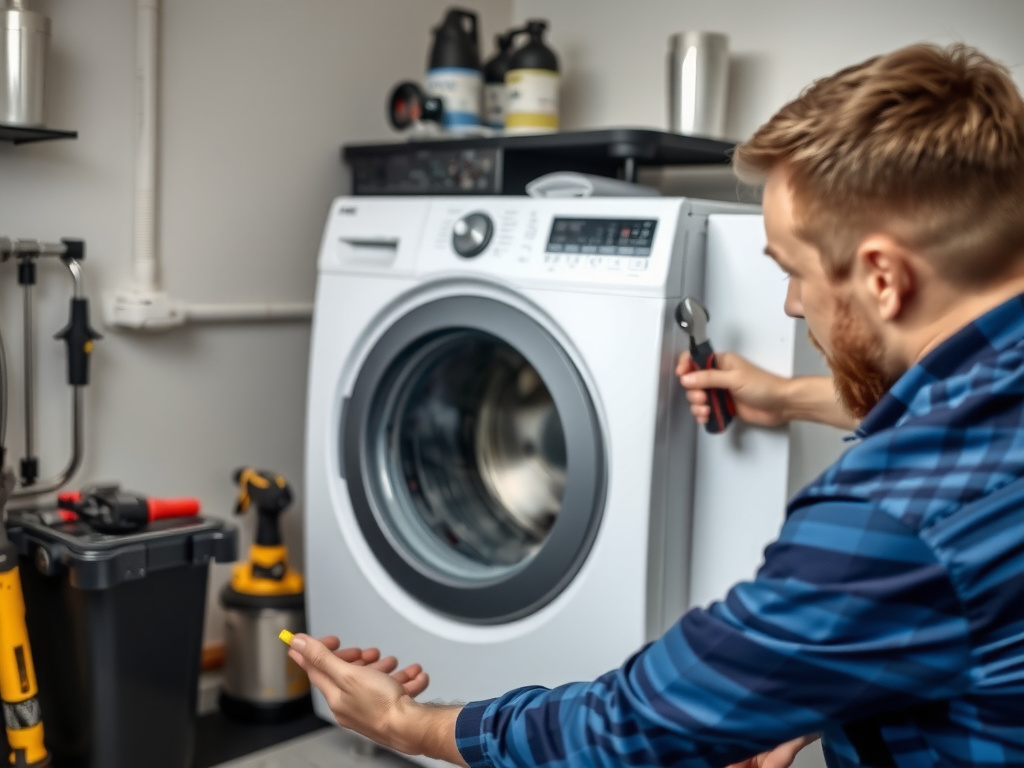
How much does a plumber charge to hook up a washing machine?
£65–£90 inc. VAT for a straightforward swap (existing valves, no electrical). New isolation valve adds £15–£25 labour plus parts. London postcodes add 30 %.
Can I use the old hoses?
If they’re under three years and braided stainless, maybe. Anything with grey PVC casing or cracked washers—bin it. A burst hose dumps 15 L/min; £9 now beats an insurance claim later.
Why does the machine smell after install?
Standing water in the sump mixed with factory lubricant. Run a 90 °C service wash with 250 g soda crystals, leave the door ajar overnight. Smell persists? Check for a trapped wet transit blanket—yes, it happens.
Is a hot-fill connection worth it?
Only if you heat water cheaply (solar thermal, ASHP). Modern machines are so efficient the valve opens 3–4 times per cycle; lukewarm water cools in the pipe. I disconnect hot-fill on combi boilers—saves callbacks.
Do I need building control for a new utility room?
Only if you add a new circuit or alter drainage stack. Swapping taps and waste under sink is not notifiable. Cutting a 110 mm soil pipe—notify local authority or use a licensed plumber.
Conclusion
Hooking up a washer is a 30-minute confidence boost when you measure twice and tighten once. Get the waste height right, keep hoses short and straight, and lock those feet. Do it today and tomorrow’s laundry won’t arrive with a side of flood damage. If the job drifts into electrics or soil-stack surgery, whistle up a pro—your Sunday is cheaper than a new kitchen.