
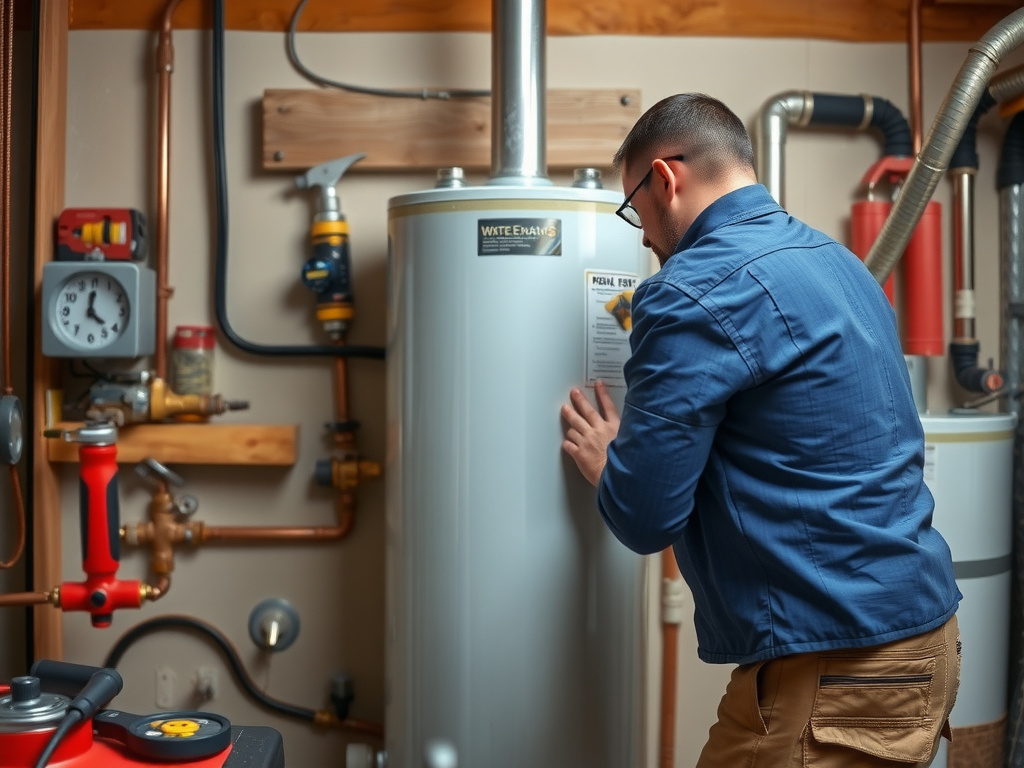
Twenty-seven drips per minute equals roughly eleven litres a day. I worked that out at 3 a.m. while kneeling on a sodden carpet in a Lewisham flat, watching a rusty puddle spread toward a stack of university textbooks. The tenant—an exhausted medic on night shifts—had shoved a washing-up bowl under the heater three days earlier and forgotten to empty it. By the time the neighbour rang me, the bowl had overflowed, the MDF boxing had swollen like a soggy loaf, and the EICR certificate taped to the side was unreadable mush. One hour and a £12 BrassCraft isolation valve later the leak stopped, but the damage was done: £1,850 for new laminate, skirting, and a redecorated hallway. That tiny orange drip was the sound of money evaporating.
I’ve been a Gas Safe-registered plumber and part-P electrician for fifteen years, clocking up 2,300 unvented-cylinder installs and probably twice as many leak call-outs. I keep a photo folder on my phone labelled “Leak Zoo” that I show new apprentices: every failed O-ring, cracked Worcester heat-exchanger, and split Ariston wet-heating relay since 2010. If you can name the brand, I’ve seen it weep. Below are the reasons your water heater installation” class=”internal-link” data-semantic-link=”true”>water heater installation“>water heater leaks, what you can fix yourself for the price of a pint, and when to wave the white flag and call in someone like me.
Quick Answer Box
Quick Steps:
1. Turn off the heater’s dedicated isolator or the fused spur.
2. Close the red-capped mains stop valve on the cold inlet.
3. Open a hot tap to depressurise; catch remaining drips in a tray.
4. Identify source: top (valves), side (element gasket), or bottom (tank rupture).
5. Replace valve or element if DIY-confident; if tank is breached, replace entire unit.
Pressure Relief Valve Blow-Off
The brass T&P (temperature & pressure) valve on top or side of your cylinder is the safety whistle. Factory-set to open at 6–7 bar or 90–95 °C, it dumps scalding water so the cylinder doesn’t turn into a bomb. A one-off spurt after a power-cut or a stuck thermostat is normal; constant dribbling is not. Nine times out of ten the valve is fine—system pressure is simply too high because the expansion vessel has lost its air charge.
I once saw a five-year-old 150-litre Megaflo in a Croydon loft that had been “leaking” for months. The homeowner had shoved a length of 15 mm hose through the soffit and forgotten about it. The vessel pre-charge should have been 3.5 bar; my gauge read zero. Re-pressurised with a £9 Halfords foot-pump, swapped the hose for proper 22 mm copper discharge pipe to outside (Part G regulation), problem solved. Total cost: £22 plus an hour of my labour. Had he called sooner he’d have saved £180 in wasted water charges.
Check first: strap a Screwfix £18 pressure gauge to the drain cock, open a tap, watch for a jump above 3 bar when the heater cycles. If it climbs past 6 bar, fit a new 4.5 bar pressure-reducing cartridge (£14, Pegler) before condemning the T&P valve itself. Genuine Honeywell T&P replacements run £25–£35 at most merchants.
Element Gasket Failure on Electric Cylinders
Electric water heaters—Kingspan Tribune, Heatrae Sadia Megaflo, Gledhill Pulsacoil—use a 2¼-inch BSP immersion heater that punches through a boss welded to the tank. The gasket is a 2 mm thick silicone ring costing 80 p. It hardens with age, and water tracks along the threads. The giveaway is a rusty streak running down the foam insulation, not a full-on spray.
DIY replacement is doable if you’re Part-P competent. Isolate and drain below the element level (wet-vac helps). Unscrew the 1¼” hex boss with a £24 Rothenberger spanner, pull the 14″ element, scrape the sealing face clean, smear a trace of Fernox LS-X, fit the new gasket, torque 40 Nm. Re-fill slowly, bleed every hot tap, check amps: 3 kW should pull 12.5 A @ 240 V. I budget 45 minutes; a novice should allow two hours and a couple of skinned knuckles.
Tip: Never re-use the old gasket “just to see.” I tried that shortcut on my own garage heater—drip returned within a week and I had to drain 80 litres again. Penny-wise, pound-foolish.
Internal Cylinder Rupture – The Death Sentence
Glass-lined steel cylinders last 8–12 years in London’s moderately hard water; stainless models push 15–20. When the lining cracks, water meets bare metal, rust blooms, and a pinhole forms. You’ll spot a steady ooze from the underside that stops when you turn the cold feed off—proof the tank itself is compromised.
I diagnosed one in February under a five-year-old Baxi Premier. The customer insisted the installer “guaranteed it for ten.” I checked the Benchmark log: annual service visits were blank. The anode rod—essentially a sacrificial lamb—was down to a corroded stub. A new cylinder (same size, 210 l indirect) cost £480 trade, plus £120 for new circulator flanges and £200 labour. Still cheaper than the £2,500 insurance claim for ceiling damage that would follow if she postponed.
Look for orange flecks in drawn bathwater or a gurgling base panel. Once the shell is perforated, patch kits are a con; replace the whole vessel and fit a new magnesium anode (£28, ¾” BSP, 420 mm long). Your next cylinder will outlive the mortgage.
Loose or Cracked Pipework Connections
Compression fittings above the cylinder sweat and shrink. A 15 mm olive on the cold inlet might weep only when the pump kicks, making diagnosis maddening. I carry a £7 Rothenberger mini inspection mirror and a strip of kitchen towel; dabbing joints reveals fresh drops instantly.
Last March a letting agent sent me to a “leaking Megaflo” in New Cross. The drip was actually from the 22 mm tee to the expansion vessel, installed with PTFE tape instead of LS-X paste. The installer had cross-threaded the backnut, cracking the female. Thirty minutes, one new Yorkshire elbow (£2.40), and a dab of solder; problem gone. Agent thought I’d quote £400; invoice was £95 plus VAT. Good luck builds repeat business.
Corroded Secondary Heat-Exchanger (Combi Boilers)
Combination boilers don’t store domestic hot water; they heat it on demand via a small plate heat-exchanger. When the O-rings perish or the plates scale up, system water can leak into the DHW side or outward onto the casing. Customers blame the boiler, but the puddle often appears under the nearby kitchen sink, confusing the trail.
I traced one such “water-heater leak” to a 2016 Ideal Vogue. Pressure gauge dropped to zero every 48 h, yet no rads weeped. Removed the heat-exchanger (four Allen screws, two isolating valves) and found a 2 cm split in the lower gasket. Replacement plate pack £89, plus £45 for a 5-litre Fernox DS-3 descaler soak. Total repair £220; new boiler quote was £1,850. Customer tipped me in craft beer—always appreciated.
Expansion Vessel Perforation
Unvented cylinders rely on a sealed pocket of air to absorb heated water’s expansion. When the internal diaphragm ruptures, the vessel fills completely, pressure spikes, and the T&P valve weeps. You can test quickly: press the Schrader valve on the vessel. If water squirts out instead of a hiss, the bladder is shot.
A 2022 Albion 180 l in Wapping had this exact failure. Vessel sat horizontally in a 450 mm cupboard void—zero clearance. I had to slice the 22 mm pipe to drop it out. New 18-litre Zilmet Ultra-Pro £68, plus a pair of Flexi hoses (£11) so next swap takes ten minutes. Job time 1 h 15 min; customer paid £160 and avoided a £900 cylinder replacement mis-sold by a national company the day before.
Safety Considerations and Legal Requirements
Unvented hot-water storage is classed as “controlled service” under UK Building Regulations Part G. Only competent persons (Gas Safe for gas, Part-P for electrics) may work on them. Fines reach £5,000 per breach; invalid house insurance is the bigger sting.
Discharge pipes must be 22 mm minimum, run continuously to outside, terminate in a visible tundish, and cope with 95 °C water. Plastic push-fit on a T&P outlet? I’ve seen it; it sags like warm liquorice and voids the G3 certificate.
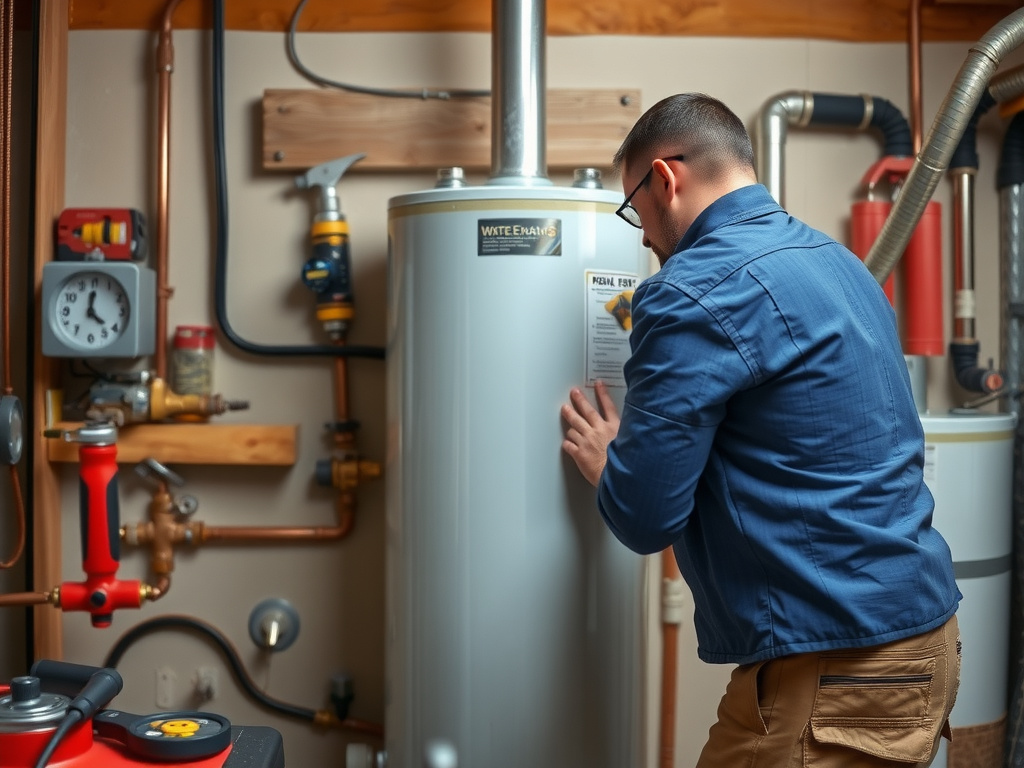
Warning: Opening the T&P valve manually without isolating power can scald your face and trigger a live-earth fault if the element is wet. → Severe burns or cardiac arrest from 240 V. → Use a long screwdriver and stand to the side; isolate the fused spur first.
FAQ
How much does it cost to fix a leaking water heater?
Simple valve swap £85–£120, element gasket £90–£150, new cylinder £700–£1,200 including labour and Building-Notice paperwork. Prices assume south-east England 2025 rates; materials make up 30–40 %.
Can I still use water if the heater is leaking?
If the leak is from a top valve or pipe, isolate the heater and use cold water normally. If the tank shell is perforated, shut both hot and cold valves feeding the cylinder to prevent back-flow contamination.
Why does my leak stop when the heater cools?
Metal contracts when cold, temporarily closing a pinhole. Cycle repeats when the thermostat reheats the tank. This “breathing” leak confirms internal corrosion—plan replacement within weeks.
Is a leaking water heater dangerous?
Yes. Water near electrics risks shock; structural rot weakens floors; unnoticed mould triggers respiratory issues. Plus, if the T&P valve is blocked and pressure keeps climbing, the cylinder can explode—rare but documented.
How long should a water heater last?
Glass-lined steel 8–12 years, stainless 15–20, composite polymer (e.g., RHEEM Marathon) 25+. Annual service, anode replacement every 5 years, and softened water extend life dramatically.
Will insurance pay for water damage?
Most building policies cover “sudden and unforeseen” escape of water. Gradual seepage due to lack of maintenance is usually rejected. Keep service receipts and photos; they’re gold at claim time.
Conclusion
A water heater leak is the house’s way of whispering before it screams. Learn the difference between a 50 p washer and a £1,000 cylinder write-off, and you’ll save money, flooring, and maybe a tenancy. Keep a spare T&P valve and a roll of LS-X in the toolbox, but know when to step back—unvented cylinders mix 65 °C water with 240 V electrics and 3 bar pressure; overconfidence hurts. Next time you spot a drip, trace it, isolate it, and fix it early. Your future self—standing on dry carpet—will thank you.
Carlos Martinez
Carlos Martinez is a Gas Safe and Part-P registered engineer with 15 years and 2,300 unvented-cylinder installations under his belt. He collects photos of failed components the way bird-watchers log sightings, and he still gets a kick from stopping a £2 leak before it becomes a £2,000 insurance claim.