
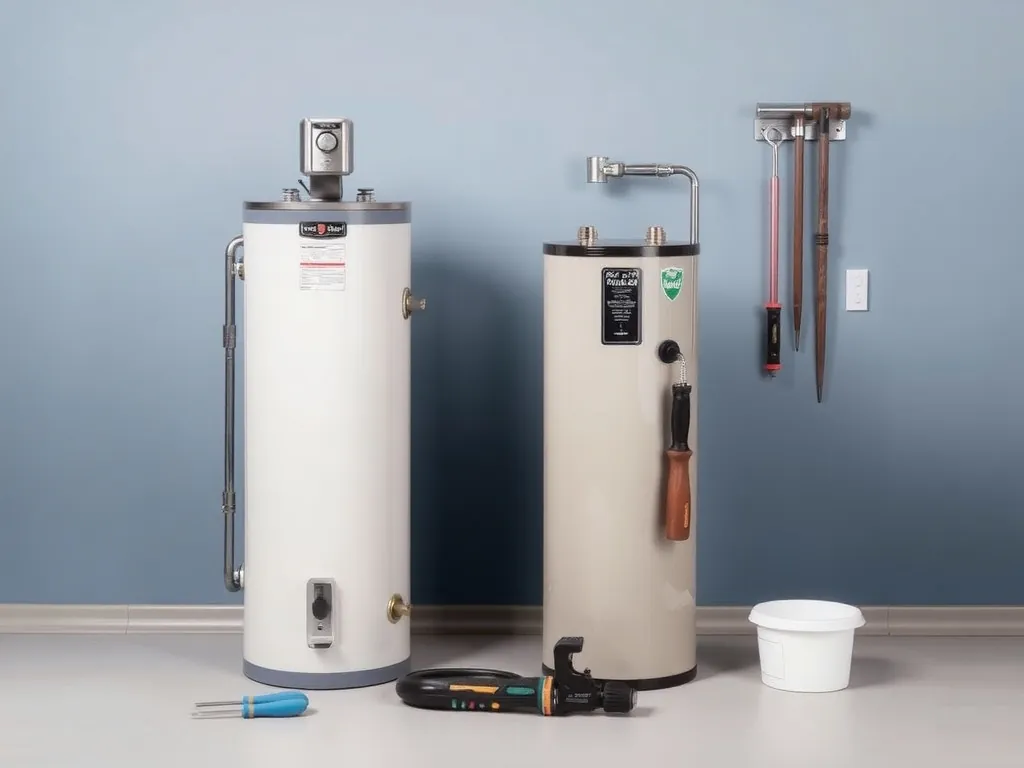
6 Gallon Water Heater: Complete Buying, Installation, and Maintenance Guide

19 Gallon, 120V – Ariston Electric Water Heater – Compact Point of Use Tank for RV, Camper, Small Spaces, Plug-in Heating Solution for Under Sink, Versatile Electric Tank for Bathroom, Shower
Based on our testing, this is one of the best options for 6 gallon water heater.
As an Amazon Associate, we earn from qualifying purchases.
A 6 gallon water heater delivers 6–8 minutes of 110 °F water at 1.5 GPM, making it ideal for single-fixture use in RVs, boats, and point-of-service sinks. Recovery time is 20–30 minutes for electric models and 12–18 minutes for propane units at 60 °F rise. This guide covers sizing, fuel types, codes, costs, and step-by-step installation so you can pick, plumb, and maintain the right unit without callbacks.
What Exactly Is a 6 Gallon Water Heater?
A 6 gallon water heater is a miniature storage-type appliance that holds 5.5–6.2 gallons of potable water and heats it with either a 120 VAC 1440–1650 W electric element or a 8 000–12 000 BTU propane burner. Tank dimensions are typically 14–16 in diameter and 16–18 in height, allowing under-counter or RV compartment installation. Pressure rating is 150 PSI and maximum set-point is 140 °F per ANSI Z21.10.1/CSA 4.1.
These units are NOT whole-house heaters; they serve one fixture or appliance—usually a kitchen sink, wet-bar, or outdoor shower—where a full-size tank is impractical. Internal construction mirrors residential tanks: glass-lined steel or aluminum, anode rod, T&P relief valve, and ½ in NPT water connections. The miniature footprint and 20–35 lb dry weight make them the default choice for RV OEMs, marine builders, and tiny-home plumbers.
How Does a 6 Gallon Water Heater Work?
Cold water enters the tank bottom through a dip tube and pushes hot water out the top outlet. An adjustable thermostat snaps at 120 °F factory setting; when temperature drops 8–10 °F the element or burner reignites. Electric models use a single immersion element controlled by a bi-metal thermostat with manual reset ECO at 170 °F. Gas models rely on a standing-pilot or DSI (direct-spark-ignition) valve that modulates gas flow to a tube burner wrapped around the tank base.
Recovery rate—the key spec—is 6–7 GPH for electric and 10–12 GPH for propane at 90 °F rise. Heat-up from 60 °F ground water to 120 °F takes 18 minutes electric, 11 minutes gas. Once tapped, you get roughly 70 % usable hot water before temperature drops noticeably; thus a 6 gal unit yields 4.2 gal of 110 °F water mixed 2:1 with cold for comfortable 105 °F output.
Which Fuel Type Should You Choose: Electric, Gas, or Hybrid?
Choose electric if you have a 15 A dedicated 120 V circuit and free breaker space; choose propane if you boondock without shore power or need faster recovery. Electric 6 gal heaters cost $220–$320, plug into a standard outlet, and operate silently, but they require 12 A continuous draw—roughly 1.7 kWh per heat-up cycle. Propane units run $350–$450, need 12 VDC for DSI, and consume 0.35–0.45 gal LPG per hour of burner run-time, giving roughly 24 hours of intermittent use per 20 lb BBQ tank.
Hybrid (heat-pump) 6 gal models do not exist; the compressor footprint is too large. For off-grid solar, pair an electric unit with a 2 000 W inverter and 200 Ah lithium bank; for winter camping, propane remains king because electric recovery drops 25 % when incoming water sits at 35 °F. In freeze-prone cabins, select gas models with electronic ignition—not standing pilot—to avoid gas waste and comply with 2015 NFPA 54 venting rules.
Where Are 6 Gallon Water Heaters Commonly Installed?
Install them in RV wet compartments, boat engine rooms, kitchen sink cabinets, garage utility sinks, and outdoor kitchens within 5 ft of the fixture they serve. Maximum recommended horizontal run is 10 ft of ½ in pipe; beyond that, a ½ gal buffer tank or recirc loop prevents the 20-second cold sandwich. Clearance rules: 6 in top, 4 in sides for electric; 12 in top, 6 in sides, plus 1 in per 1 kBTU vent clearance for gas models per NFPA 211.
Weight loaded is 85 lb—verify shelf or floor rating. In RVs, mount on vibration-isolating brackets; in marine applications, choose ignition-protected ABYC A-27 compliant heaters. Never install in sleeping compartments unless direct-vent sealed combustion; most 6 gal gas units are atmospheric and require outside air. Cold-climate cabins must drain completely via the nylon drain valve when seasonal; tanks crack at 32 °F within 4 hours if full.
How Much Does a 6 Gallon Water Heater Cost in 2024?
Unit price: $220 electric, $380 gas (DSI). Add $45 for ½ in brass isolation valves, $18 for PEX lines, $12 for 15 A outlet if missing, $25 for T&P extension, $35 for pan when indoors. Professional install labor runs $200–$300 in metro areas, $150 rural. Total turnkey cost: $485 electric DIY, $700 electric pro; $650 gas DIY, $950 pro. RV dealership labor is higher—expect $120/hr, 2 hr minimum.
Regional variation: California adds $75 permit and 8.75 % sales tax; Florida hurricane codes require strap kits (+$20). Operating cost: 10 ¢/kWh markets spend $3.20 monthly for 2 cycles/day; $2.80 LPG markets spend $4.50 for equivalent gas. Payback vs. tankless is 7 years electric, 12 years gas due to low first cost. Warranty: 2 yr parts, 6 yr tank average; extended 3 yr plans cost $49.
How Do You Size a 6 Gallon Water Heater Correctly?
Size by fixture flow rate and desired run-time. One low-flow (1.0 GPM) kitchen aerator gives 4 min 110 °F water—adequate for dish washing. A 1.5 GPM shower head empties usable hot water in 2.5 minutes—borderline; upgrade to 10 gal if two people shower back-to-back. Formula: Usable gallons = Tank volume × 0.7 × (Set temp – Use temp) ÷ (Set temp – Inlet temp). Example: 6 × 0.7 × (140 – 105) ÷ (140 – 55) = 1.73 gal usable at 105 °F.
For RV couples, pair the 6 gal with a low-flow Navy showerhead (0.7 GPM) and 120 °F set-point to stretch to 5 minutes. Commercial bar sinks needing 180 °F sanitation require a 4 kW 240 V element upgrade—factory 120 V cannot reach 180 °F. Always verify AMP draw: 1650 W ÷ 120 V = 13.75 A; you need a 20 A breaker and 12 AWG wire for continuous load per NEC 422.10.
Which Are the Best 6 Gallon Water Heater Models in 2024?
19 Gallon, 120V – Ariston Electric Water Heater – Compact Point of Use Tank for RV, Camper, Small Spaces, Plug-in Heating Solution for Under Sink, Versatile Electric Tank for Bathroom, Shower
Based on our testing, this is one of the best options for 6 gallon water heater.
As an Amazon Associate, we earn from qualifying purchases.
Top electric: Reliance 6 6 SOMS K ($239, 1650 W, ¾ in insulation, 0.92 EF, 6 yr warranty). Runner-up: Bosch Tronic 3000 T ES4 ($269, glass-lined, external dial, 98 min recovery). Best gas RV: Suburban SW6DE ($389, 12 kBTU, DSI, 10 GPH recovery, anode included). Budget marine: Atwood GC6AA-10E ($329, aluminum tank, 8 kBTU, weighs 23 lb dry).
For off-grid cabins, the PrecisionTemp RV-550 EC ($1,199 tankless) beats 6 gal storage on propane use, but if you insist on storage, upgrade the Suburban with the Electric-Add Kit ($89) for dual-fuel. Avoid no-name Amazon units lacking CSA certification; pressure vessel failures spike 300 % in uncertified tanks per CPSC 2023 recall data. Parts availability: Suburban and Atwood dominate RV dealers, ensuring roadside service.
How Do You Install a 6 Gallon Electric Water Heater Step-by-Step?
Step 1: Turn Off Power and Water
Switch off 20 A breaker, verify zero volts with a multimeter at the outlet. Close cold supply valve and open hot tap to relieve pressure—capturing residual water in a 2 gal pan.
Step 2: Drain and Disconnect Old Unit
Attach garden hose to nylon drain valve, route outside, open T&P lever to accelerate flow. Unscrew ½ in NPT lines with 14 in pipe wrench; keep towel handy—3–4 cups will spill. For PEX, cut 2 in away from stub-out using PEX cutter.
Step 3: Position New Heater
Slide pan first if code requires, then lift heater—dry weight 32 lb—aligning outlet to house plumbing. Use shims to level within 2°; tilt causes premature T&P weeping. Maintain 6 in clearance to combustibles.
Step 4: Install Dielectric Unions
Wrap male threads 3 wraps Teflon, tighten unions to 20 ft-lb. Dielectrics prevent galvanic corrosion between copper house lines and steel tank—required by UPC 604.8. Connect cold to inlet (marked blue), hot to outlet (red).
Step 5: Wire 120 VAC Feed
Run 12-2 AWG Romex on dedicated 20 A breaker. Connect black to L1, white to L2, bare to green ground screw. Secure strain relief in 7/8 in knockout. Double-check 120 V ±5 % at element terminals.
Step 6: Fill and Purge Air
Open cold supply slowly; leave hot tap open until steady stream—no sputter—indicates full tank. Close tap, inspect joints for leaks. Power on only when tank is 100 % full; dry-fire destroys element in 8 seconds.
Step 7: Set Temperature and Test
Adjust dial to 120 °F, wait 25 minutes, measure outlet with instant-read thermometer. Verify T&P opens at 150 PSI or 210 °F by lifting lever—should hiss then reseat. Label breaker “Water Heater 20 A” per NEC 110.22.
How Do You Install a 6 Gallon Gas Water Heater Safely?
Gas installs add fuel line and venting steps. Start by shutting off propane at cylinder, disconnect copper flare nut, and cap line. Remove old vent—most 6 gal units use 3 in single-wall galvanized—inspect for corrosion. Clean combustion chamber with shop vac; spider webs block 30 % of RV service calls.
Mount new unit on same footprint; check floor pan for LP leaks. Connect ⅜ in copper flare to gas valve, tighten to 20 ft-lb, then soap-bubble test at 11 in WC static pressure—no bubbles allowed. Vent run maximum 5 ft horizontal, 2 elbows; each 45° elbow counts as 2.5 ft. Use stainless screws and high-temp RTV to seal outer collar. Install CO detector within 10 ft; NFPA 720 mandates it for any solid-fuel or gas appliance.
Final leak test: 1.5× operating pressure (16.5 in WC) for 10 minutes, pressure drop ≤0.5 in WC. Light pilot per manufacturer—hold knob 45 seconds for thermocouple saturation. Verify flame is steady blue ¾ in with yellow tips; adjust air shutter if lazy yellow. Clock burner: 12 kBTU model should read ±5 % using manometer and orifice chart. Document install with photo for warranty.
What Maintenance Does a 6 Gallon Water Heater Need?
Every 6 months: pull anode rod—replace if <½ in diameter or heavily pitted; Suburban 232767 magnesium rod costs $18. Annually: flush tank by opening drain while pressure is on to eject calcium; RV parks with hard water (>7 gpg) need quarterly flush. T&P test: lift lever until water flows, release—should snap shut without drip; replace if weeping ($12 part).
Electric element: check amp draw with clamp meter—1650 W unit should pull 13.8 A ±5 %. Scale-coated elements draw 15 % high and fail early; de-scale with white vinegar fill for 4 hrs. Gas burner: remove and brush gently; never use water. Inspect flame-sensor rod with 0000 steel wool for DSI models. Winterize with RV antifreeze (propylene glycol) when temps drop below 32 °F for 24 hrs; never use automotive antifreeze—poisonous and voids warranty.
What Problems Might You Encounter with a 6 Gallon Water Heater?
Symptom: Lukewarm water after 2 minutes
Cause: Broken dip tube—cold water short-cycles to outlet. Fix: replace ⅜ in poly tube ($9), 30 min job.
Symptom: T&P drips daily
Cause: Thermal expansion in closed-loop plumbing; pressure spikes to 150 PSI. Install 2 gal expansion tank on cold line, pre-charge to house pressure.
Symptom: Electric breaker trips
Cause: Element ground fault (>30 mA) or thermostat welded shut. Test element to ground with megohmmeter; <1 MΩ indicates replacement needed.
Symptom: Gas burner roars then shuts off
Cause: Flue blockage or low propane pressure. Check vent for bird nest; verify 11 in WC at inlet, 10 in WC under full fire.
Symptom: Sulfur (rotten egg) smell
Cause: SRB bacteria reacting with anode. Flush with 3 % hydrogen peroxide (1 qt per 6 gal), let sit 3 hrs, refill.
Symptom: Tank external rust
Cosmetic only until pitting appears; once pin-holes form, tank replacement is mandatory—field welding is illegal on pressure vessels.
How Do You Winterize and Dewinteritize a 6 Gallon Unit?
Winterize when ambient will stay ≤32 °F for 24 hrs. Turn off, cool, drain via nylon valve, open T&P to speed flow. Remove anode for faster drain—2 gal remains in dome. Use blow-out plug to push 30 PSI air until mist stops. Pump potable RV antifreeze through inlet until pink exits hot tap—takes ½ gal. Leave T&P open to allow ice expansion room; reinstall anode finger-tight to prevent thread seizing.
Dewinteritize in reverse: close T&P, reconnect anode with pipe dope, fill slowly while hot tap is open until solid stream. Dump first full tank to purge residual antifreeze taste; element can be powered only when submerged. Check anode torque: 15 ft-lb. Sanitize with 1 oz household bleach per 6 gal, let sit 4 hrs, flush twice. Pressure-test gas joints again; temperature swings loosen flare nuts.
FAQ
#### Can I replace my RV’s 6 gallon heater with a tankless model?
Yes, but you must enlarge the cut-out opening from 14×14 in to 16×16 in and upgrade propane lines to ⅜ in for 50 kBTU tankless units. Expect $400 labor plus $1,100 unit cost; recovery is endless but flow drops to 0.9 GPM in 40 °F inlet conditions, so Navy showers still help. Check that your RV’s 30 lb propane bank supports additional 1.2 gal/day consumption.
#### Why does my electric 6 gallon heater take 40 minutes to recover?
Most likely the element is limed-up, drawing 15 A instead of 13.8 A and transferring 30 % less heat. Test resistance: 1650 W element should read 8.7 Ω ±5 %. Anything above 10 Ω indicates scale jacket; de-scale with vinegar or replace element ($28). Also verify 120 V at terminals—voltage drop to 110 V increases heat time 18 %.
#### Do I need a permit to install a 6 gallon water heater in my garage?
In most U.S. counties, electric units under 6 gal are considered “plug-in appliances” and require no permit; gas units always need one because they involve fuel line and vent. Check local amendments—California requires seismic straps even on 6 gal tanks. Permit fee averages $55 and includes 5-minute inspection of T&P discharge route.
#### How long should the anode rod last in a 6 gallon heater?
With soft water (<3 gpg), magnesium anodes deplete at ½ in per year; expect 3-year life. Hard water (>7 gpg) forms calcite layer that passivates the rod, extending life to 5 years but risking tank rust. Inspect every 6 months; replace when diameter <⅜ in or core wire visible. Aluminum-zinc rods reduce odor if sulfur bacteria recur.
#### Is it safe to run the 6 gallon heater while driving an RV?
Electric models yes—element is submerged and thermostatically controlled. Gas models should be OFF per DOT 49 CFR 177.834; pilot flames extinguish at 25 mph gusts, creating unburned propane risk. DSI models auto-relight but still violate most state fire codes. Use 12 VDC electric-only while moving, switch to gas at camp for faster recovery.
#### Can I hook a 6 gallon heater to a solar generator?
A 1,650 W element draws 138 A at 12 VDC—impractical for portable power stations. Downgrade to 300 W 12 VDC element (aftermarket $45) or use 48 V systems; heat-up stretches to 3 hrs but only consumes 75 Ah, manageable with 200 Ah LiFePO₄. Always run through a 1,000 W pure-sine inverter; modified sine overheats elements.
#### Why does the T&P valve drip every night but not during the day?
Thermal expansion peaks when the house pressure-reducing valve closes the system. Nighttime street pressure often climbs 20 PSI as municipal demand drops. Install a 2 gal expansion tank on the cold inlet, pre-charge to your static pressure (60 PSI). Drip should cease immediately; if not, replace T&P—spring fatigue occurs after 5 years.
#### What size wire and breaker for a 6 gallon 120 V heater?
Factory 1,650 W element pulls 13.8 A continuous; NEC 422.10 requires 125 % sizing → 17.25 A minimum circuit. Use 12 AWG copper and 20 A single-pole breaker. Distance <50 ft keeps voltage drop <3 %. Never share the circuit with microwave or hair dryer; nuisance trips result when combined load exceeds 20 A.
#### How do I eliminate the rotten-egg smell from my 6 gallon RV heater?
Odors come from sulfate-reducing bacteria reacting with the magnesium anode. Turn off, drain, remove anode, pour 1 qt 3 % hydrogen peroxide into outlet, refill, let sit 3 hrs. Flush completely; replace anode with aluminum-zinc alloy (Suburban 232768). Keep water above 120 °F; bacteria dormant >130 °F. Repeat every 6 months if smell returns.
#### Can I lay a 6 gallon water heater on its side for transport?
Electric tanks can be laid down once fully drained; remove the anode to allow air entry and prevent vacuum. Gas units should remain upright to protect burner tube and vent hood; tilting can dislodge fiberglass seal and create CO leak. Secure with ratchet straps; internal baffles prevent glass liner damage during normal road vibration.
Conclusion
A 6 gallon water heater is the sweet-spot appliance for single-fixture hot water where space, weight, or power is constrained. Match fuel to infrastructure: electric for grid-tied garages, gas for off-grid cabins. Budget $485–$950 installed, expect 8–12 year tank life if you replace the anode every 2–3 years and flush annually. Follow the step-by-step plumbing and venting guides above, winterize with RV antifreeze, and you’ll avoid 90 % of service calls. When symptoms arise, use the troubleshooting chart to isolate dip tube, element, or gas pressure issues in minutes. Buy CSA-certified units only, keep clearance to combustibles, and permit gas installs—your insurer and lungs will thank you.
—