
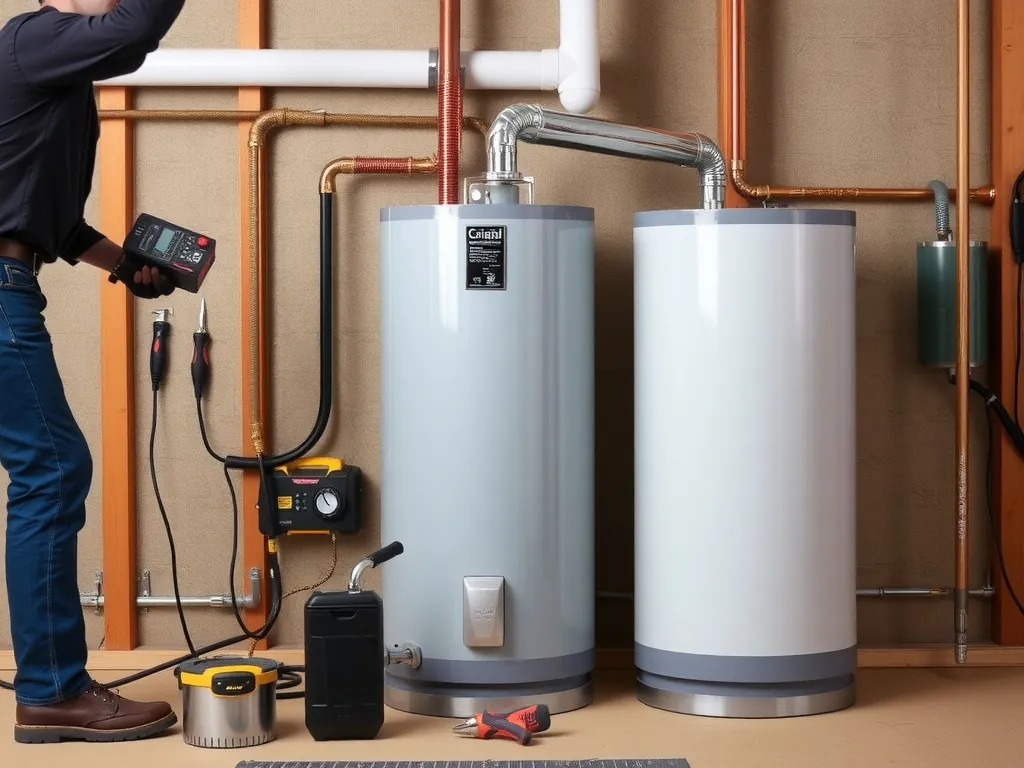
Top 50 Gallon Hot Water Heater Recommendations
Based on extensive research and customer reviews, here are the top-rated 50 gallon hot water heater products available on Amazon. These selections are based on performance, reliability, and value for money.


Disclosure: This post contains affiliate links. If you purchase through these links, we may earn a commission at no additional cost to you.
50 Gallon Hot Water Heater: Complete Technical Guide, Costs, and Installation
A 50-gallon hot water heater delivers 160-180 gallons of hot water in the first hour, making it the optimal capacity for 3-5 person households. These units cost $400-$2,800 depending on fuel type and efficiency rating, with installation adding $500-$1,500. This guide covers selection, sizing, installation, and maintenance for all 50-gallon configurations.
What Exactly Is a 50 Gallon Hot Water Heater?
A 50-gallon hot water heater stores and maintains 50 gallons of heated water at 120-140°F, ready for immediate household use. The tank capacity represents the total volume, while the first-hour rating indicates actual performance – typically 160-180 gallons for quality units. These systems combine storage capacity with recovery rates of 40-65 gallons per hour, ensuring continuous hot water supply during peak demand periods.
Modern 50-gallon units utilize either gas burners (30,000-50,000 BTU) or electric heating elements (4,500-5,500 watts) to maintain temperature. The tank construction features glass-lined steel with anode rod protection, pressure relief systems, and multiple insulation layers achieving 0.90-0.95 energy factors. Advanced models include smart controls, leak detection, and self-cleaning systems to prevent sediment buildup.
How Do 50 Gallon Water Heaters Work?
Fifty-gallon water heaters operate on thermal stratification principles, with heated water rising to the top while cold water enters through a dip tube at the bottom. The thermostat monitors temperature 2-4 inches from the tank top, activating heating elements when temperature drops 10-15 degrees below the set point. Gas models use a burner assembly beneath the tank, while electric units employ dual heating elements positioned at upper and lower tank sections.
The recovery process begins immediately after hot water withdrawal. Cold water enters through the dip tube, reaching the bottom where the lower element or main burner activates. The heating cycle continues until the entire tank reaches the set temperature, typically taking 60-90 minutes for full recovery. Advanced models feature mixing valves that blend hot and cold water, effectively increasing usable capacity by 15-25% while maintaining safe delivery temperatures.
Which Fuel Type Should You Choose for a 50 Gallon Unit?
Gas-powered 50-gallon heaters cost $600-$1,800 and operate at 30,000-50,000 BTU input, delivering faster recovery rates of 50-65 gallons per hour. These units require proper venting through chimneys or direct vent systems, adding $200-$500 to installation costs. Natural gas models achieve 0.60-0.70 energy factors, while propane units offer identical performance with slightly higher fuel costs.
Electric 50-gallon models range $400-$1,200 with simpler installation requiring only 240-volt electrical connections and no venting. Recovery rates reach 20-25 gallons per hour with 4,500-watt elements, making them suitable for households with moderate hot water demands. Energy factors of 0.90-0.95 exceed gas models, but operating costs depend heavily on local electricity rates, typically $300-$600 annually versus $200-$400 for gas.
How Much Does a 50 Gallon Hot Water Heater Cost?
Equipment costs for 50-gallon water heaters span $400-$2,800 based on type and features. Basic electric models start at $400-$600, while high-efficiency gas units with power venting reach $1,200-$1,800. Premium hybrid heat pump models command $1,500-$2,800 but qualify for $300-$1,000 in utility rebates, reducing effective costs significantly.
Installation expenses add $500-$1,500 depending on complexity. Simple electric replacements require 2-3 hours at $150-$300 labor, while gas conversions needing new venting, gas lines, or electrical upgrades cost $800-$2,000. Regional variations show 15-25% higher costs in metropolitan areas, with permits adding $50-$200. Total project costs average $900-$1,800 for standard replacements and $1,500-$3,500 for new installations.
How Do You Size a 50 Gallon Water Heater for Your Home?
A 50-gallon capacity optimally serves households of 3-5 people with 2-3 bathrooms, assuming moderate hot water usage patterns. Peak demand calculations require totaling simultaneous fixture requirements: showers use 2.5 gallons per minute, washing machines consume 20-25 gallons per load, and dishwashers require 6-10 gallons. The first-hour rating must exceed total peak demand by 20-30% for adequate performance.
Climate significantly impacts sizing decisions. Northern regions with 40-50°F incoming water require 20-30% more heating capacity than southern areas with 60-70°F groundwater. Households with teenagers, jetted tubs, or high-efficiency washers should consider 65-75-gallon models or upgrade to units with 180+ gallon first-hour ratings. Professional load calculations using ASHRAE standards prevent undersizing issues that cause cold showers and premature unit failure.
What Installation Requirements Must You Meet?
Installation codes mandate specific clearances: 30 inches front access, 6 inches side clearance, and 18 inches overhead for gas units requiring venting. Electric models need 240-volt, 30-amp dedicated circuits with 10-gauge wire, while gas units require ¾-inch gas lines delivering 200,000+ BTU/hour capacity. Water connections demand ¾-inch lines with accessible shutoff valves and expansion tanks when closed systems exceed 80 PSI.
Venting requirements vary by fuel type: atmospheric gas units need 4-inch B-vent extending 5 feet above roof penetration, while power vent models use 2-3 inch PVC through sidewalls. Drainage pans under units prevent water damage, requiring 1-inch drain lines to suitable disposal points. Permit requirements include pressure testing gas lines, electrical inspections, and final operational verification by local authorities.
How Do You Install a 50 Gallon Water Heater Step-by-Step?
Step 1: Preparation and Safety
Turn off utilities at main shutoffs – gas valve clockwise, electrical breaker off, and cold water supply closed. Drain existing tank by connecting hose to boiler drain, opening hot water faucets to break vacuum, and allowing complete emptying over 30-45 minutes. Test for gas leaks using soap solution on connections – bubbles indicate leaks requiring immediate repair.
Step 2: Removal and Site Preparation
Disconnect water lines using pipe wrenches on galvanized or tubing cutters on copper. Remove gas line with two wrenches preventing pipe twisting, or disconnect electrical wires noting wire positions for reference. Extract old unit using appliance dolly – 50-gallon heaters weigh 150-200 pounds empty plus 400 pounds of residual water. Clean floor area, checking for level within ¼ inch across all directions.
Step 3: New Unit Positioning and Connections
Position new heater on drain pan, ensuring 6-inch minimum clearance from combustible materials. Install new ¾-inch copper or PEX connections with dielectric unions preventing galvanic corrosion. Connect gas line using pipe dope on male threads only, testing at 1.5 times operating pressure. Wire electric models following manufacturer diagram: black to L1, red to L2, white to neutral, green to ground.
Step 4: System Startup and Testing
Fill tank completely before activating any heating elements – open nearest hot water faucet until steady stream flows without sputtering. Set thermostat to 120°F initially, checking operation cycles. Test pressure relief valve by lifting lever – should release water then reseal completely. Verify no leaks at all connections during first heating cycle lasting 60-90 minutes for full temperature recovery.
What Maintenance Does a 50 Gallon Unit Require?
Annual maintenance extends unit life from 8-10 years to 12-15 years through systematic component care. Drain 2-3 gallons quarterly to remove sediment, performing full tank flushing annually by completely draining until water runs clear. Test temperature-pressure relief valve every six months – should release water when lever lifted and reseal without dripping.
Replace anode rods every 3-5 years depending on water conditions – rods measuring less than ½ inch diameter or 6 inches of core wire exposure require immediate replacement. Check gas burner flames annually: proper combustion shows steady blue flames 1-2 inches high with slight yellow tips. Electric elements need cleaning when lime buildup exceeds 1/8 inch thickness, requiring element removal and wire brushing.
What Problems Might You Encounter with 50 Gallon Units?
Temperature Issues
Inadequate hot water often stems from failed heating elements – upper element failure causes rapid temperature drops, while lower element failure reduces Thermostat malfunctions create erratic temperatures, typically requiring replacement when readings vary more than 10 degrees from settings. Dip tube deterioration allows cold water mixing at tank top, reducing effective capacity by 30-40%.
Leakage and Tank Failure
Tank leaks indicate internal corrosion progressing beyond anode rod protection – small drips from connections may seal with tightening, but tank body leaks require complete replacement. Pressure relief valve weeping signals thermal expansion issues, needing expansion tank installation sized at 10% of water heater capacity. Condensation during heavy usage mimics leaks but disappears when tank reaches operating temperature.
Performance Degradation
Sediment buildup reduces efficiency 2-3% annually, creating popping sounds during heating cycles as water trapped under mineral deposits flashes to steam. Hard water areas accelerate this process, requiring annual descaling with vinegar or commercial cleaners. Scale formation on electric elements creates hot spots causing premature failure – elements showing white, crusty deposits need replacement rather than cleaning when efficiency drops exceed 25%.
How Long Do 50 Gallon Water Heaters Last?
Tank-style 50-gallon water heaters typically last 8-12 years, with gas units averaging 8-10 years and electric models reaching 10-12 years under normal conditions. Premium models with enhanced anode systems and thicker tank walls extend service life to 15-18 years. Water quality dramatically impacts longevity – soft water areas see 20% longer life, while hard water regions reduce lifespan by 2-3 years without proper maintenance.
Replacement indicators include: tank age exceeding warranty period, rusty or metallic-tasting water, rumbling sediment sounds, visible corrosion on tank or connections, and efficiency drops exceeding 30%. Annual operating costs increasing 15-20% year-over-year signal declining performance warranting replacement evaluation. New units offer 10-30% efficiency improvements, justifying earlier replacement when energy savings exceed $100-150 annually.
FAQ
#### What causes a 50-gallon water heater to run out of hot water quickly?
Rapid hot water depletion typically indicates a failed dip tube allowing cold water to mix at the tank top, reducing usable capacity by 30-40%. Other causes include lower heating element failure in electric models (reducing capacity 50%), excessive sediment buildup insulating the bottom from heat, or thermostat malfunctions maintaining temperatures 15-20 degrees below settings. Professional diagnosis involves testing both elements, checking dip tube condition, and measuring actual versus set temperatures.
#### How much does it cost to operate a 50-gallon water heater annually?
Annual operating costs range $200-$600 depending on fuel type and local utility rates. Gas units average $250-$400 yearly based on $1.20-$1.50 per therm rates, while electric models cost $400-$600 at $0.12-$0.15 per kWh. High-efficiency heat pump models reduce electric costs to $150-$250 annually. Actual expenses vary with household usage, incoming water temperature (15-20% higher in northern climates), and unit efficiency degradation over time.
#### Can you install a 50-gallon water heater yourself?
DIY installation saves $500-$1,500 in labor costs but requires extensive plumbing and electrical/gas experience. Electric installations need 240-volt electrical work permits in most jurisdictions, while gas installations legally require licensed professionals for liability and code compliance. Homeowner installations risk voiding warranties, creating safety hazards from improper venting or gas connections, and facing permit violations during home sales. Professional installation includes warranties, permits, and code compliance verification.
#### What size breaker do you need for a 50-gallon electric water heater?
Fifty-gallon electric water heaters require 240-volt, 30-amp dedicated circuits with 10-gauge copper wire. Units with 5,500-watt elements may specify 35-amp breakers for continuous load compliance. The circuit must serve only the water heater without other appliances sharing power. Older homes with 20-amp circuits require complete rewiring to meet current electrical codes and prevent nuisance tripping during high-demand heating cycles.
#### How do you know when to replace versus repair a 50-gallon unit?
Replace units exceeding 10 years old with major component failures like tank leaks, multiple element failures, or extensive corrosion. Repair makes economic sense for newer units under 8 years with single component issues costing under $300 total. Consider replacement when repair costs exceed 50% of new unit prices, efficiency drops below 60% of original rating, or when upgrading to high-efficiency models offers payback within 5-7 years through energy savings.
#### Which brand makes the most reliable 50-gallon water heater?
Bradford White leads professional ratings with 12-15 year average lifespans and comprehensive 6-year tank warranties, followed by Rheem and AO Smith offering similar longevity. Consumer Reports shows Bradford White units requiring 30% fewer repairs during warranty periods. Budget brands like Whirlpool and GE provide adequate 8-10 year service but use thinner tank materials and shorter warranty coverage. Professional installation brands typically outperform retail models through better components and construction.
#### What permits do you need for 50-gallon water heater installation?
Most jurisdictions require plumbing permits ($50-$150) for all water heater installations, with additional electrical permits ($30-$75) for electric models or gas permits ($75-$200) for gas installations. Permit requirements include pressure testing gas lines, verifying proper venting installations, confirming electrical connections meet code, and final operational inspections. Professional contractors typically handle permit acquisition and scheduling required inspections, ensuring compliance with local building codes.
#### How long does it take to install a 50-gallon water heater?
Standard replacements require 2-4 hours including draining, disconnection, installation, and testing. Complex installations involving gas line modifications, venting changes, or electrical upgrades extend to 4-8 hours. New installations needing rough-in plumbing, gas lines, or electrical service add 6-12 hours across multiple days including inspections. Emergency installations can complete within 24 hours, while scheduled replacements during peak seasons may require 3-7 day lead times.
#### Why does my 50-gallon water heater make popping or rumbling noises?
Popping and rumbling sounds indicate sediment buildup at the tank bottom where water trapped under mineral deposits flashes to steam during heating. This process reduces efficiency 2-3% annually and accelerates tank failure through overheating. Hard water areas experience this issue within 2-3 years without annual flushing. Treatment involves complete tank draining and flushing until water runs clear, with severe cases requiring professional descaling or element replacement when efficiency drops exceed 25%.
#### What temperature should you set a 50-gallon water heater?
Set water heaters to 120°F for optimal balance between energy efficiency, safety, and bacterial control. This temperature prevents scalding while controlling Legionella bacteria growth, saving 6-10% on energy costs versus 140°F settings. Households with immunocompromised individuals or dishwasher requirements without booster heaters may need 130-140°F settings with mixing valves preventing scalding. Test temperatures at the tap using a cooking thermometer, adjusting settings in 10-degree increments until reaching target temperatures.
Conclusion
A 50-gallon hot water heater provides optimal capacity for most 3-5 person households when properly selected, installed, and maintained. Key decisions include choosing between gas ($600-$1,800) for faster recovery or electric ($400-$1,200) for simpler installation, understanding that total project costs reach $900-$3,500 including professional installation. Regular maintenance including annual flushing and anode rod replacement every 3-5 years extends service life from 8-10 years to 12-15 years while maintaining efficiency.
Professional installation ensures code compliance, warranty protection, and safety verification despite adding $500-$1,500 to project costs. Consider energy efficiency ratings, first-hour capacity, and local utility rates when calculating long-term operating expenses of $200-$600 annually. Replace units showing age-related decline, efficiency drops exceeding 30%, or when repair costs exceed 50% of replacement prices. With proper selection and maintenance, a 50-gallon unit delivers reliable hot water service meeting household demands efficiently for over a decade.
—