
50 Gal Gas Water Heater: Complete Selection, Installation, and Maintenance Guide
A 50-gallon gas water heater delivers consistent hot water for 3–4 person households, typically recovering 40–50 gallons per hour with first-hour ratings of 65–85 gallons. It operates on natural gas or propane, requires a 3/4-inch gas line and 6-inch vent, and must comply with UPC and IRC safety codes. This guide covers selection criteria, installation protocols, efficiency metrics, maintenance schedules, troubleshooting, and cost breakdowns for residential applications.
What Is a 50 Gal Gas Water Heater and How Does It Work?
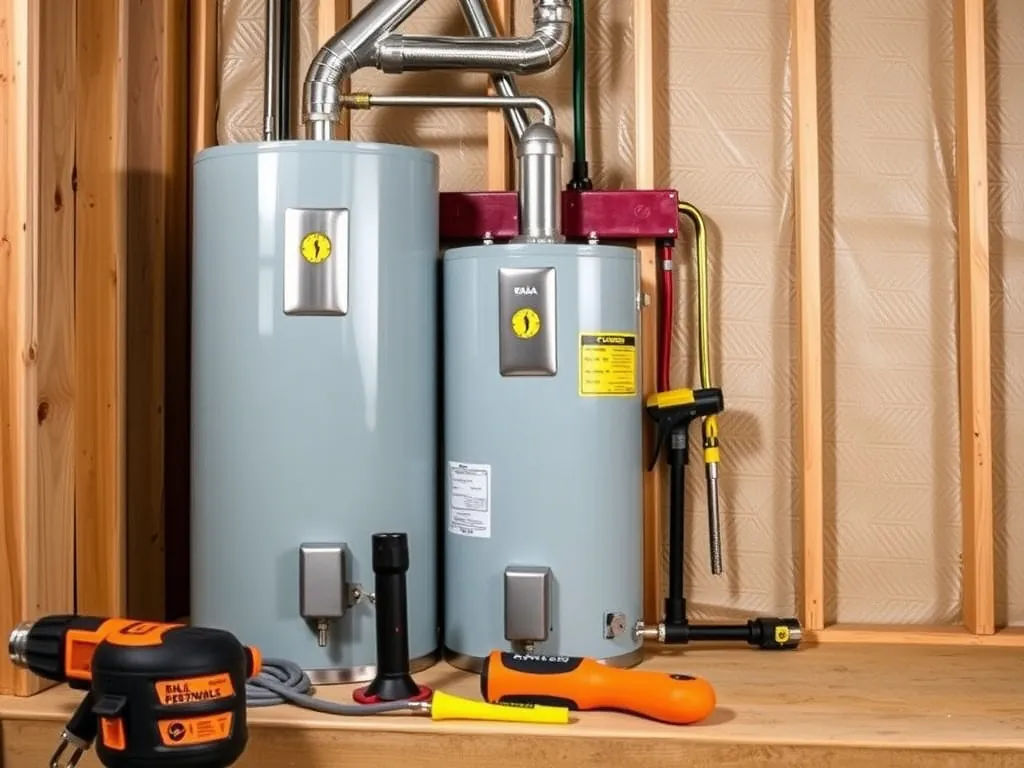
A 50-gallon gas water heater is a storage tank system that heats and stores 50 gallons of water using a gas burner beneath the tank, controlled by a thermostat and thermocouple. Cold water enters through a dip tube at the bottom, is heated by the burner, and exits via a heat-out pipe at the top. The thermostat regulates temperature between 120–140°F, while the thermocouple ensures the pilot light remains lit for safety. The tank is insulated with foam or fiberglass to reduce standby heat loss, and a pressure relief valve prevents dangerous overpressure. The system operates independently of electricity for heating, though some models use electric ignition or control boards.
How Do You Size a 50 Gal Gas Water Heater for Your Home?
A 50-gallon gas water heater is optimal for homes with 3–4 occupants using multiple simultaneous hot water fixtures, such as showers, dishwashers, and laundry. To confirm sizing, calculate peak hour demand: one shower (17–25 gallons), one load of laundry (20–25 gallons), and one dishwasher (8–12 gallons) totals 45–62 gallons. A 50-gallon unit with a first-hour rating (FHR) of 70+ gallons satisfies this demand. For homes with 5+ occupants or multiple bathrooms, consider a 75-gallon unit. Avoid undersizing: a 40-gallon tank may run out during back-to-back showers. Oversizing increases standby losses and upfront cost without significant benefit. Check the Energy Factor (EF) rating—0.62 or higher indicates high efficiency. Models like the Rheem Performance Platinum 50 Gal or AO Smith GPVX-50 are engineered for high FHR and low standby loss.
Why Does a 50 Gal Gas Water Heater Fail Prematurely?
A 50-gallon gas water heater fails prematurely due to sediment buildup, corrosion, or improper installation. Sediment accumulation from hard water insulates the tank bottom, forcing the burner to work longer, overheating the steel and causing pinhole leaks—common after 7–9 years without flushing. Anode rod depletion accelerates tank corrosion; magnesium rods last 3–5 years in hard water areas. Improper venting (undersized flue, excessive elbows, or blocked termination) causes flue gas condensation, corroding the heat exchanger. Incorrect gas pressure (over 7″ WC or under 5″ WC) leads to incomplete combustion and soot buildup. Lack of expansion tanks in closed-loop plumbing systems causes thermal expansion stress, rupturing the tank. According to the Plumbing-Heating-Cooling Contractors Association (PHCC), 68% of premature failures are linked to lack of maintenance or incorrect installation practices.
How Do You Test a 50 Gal Gas Water Heater for Efficiency and Safety?
To test efficiency, measure the first-hour rating (FHR) on the Energy Guide label; a 50-gallon unit should deliver 65–85 gallons per hour. Check the Energy Factor (EF): 0.62–0.67 is standard for gas models; higher values indicate better insulation and heat retention. Use a digital thermometer to verify outlet water temperature: 120°F is ideal to prevent scalding and mineral scaling. Test the pressure relief valve by lifting the lever: water should discharge steadily and stop when released. If it leaks continuously, the valve is faulty or the system lacks an expansion tank. Check flue gas temperature with an infrared thermometer—should be 300–450°F at the vent outlet. Higher temperatures indicate sediment buildup or blocked flue. Use a manometer to verify gas pressure at the inlet: 5–7 inches of water column (WC) is standard per UPC 1204.3. Inspect for soot on the burner or tank bottom—black residue indicates incomplete combustion and carbon monoxide risk. Test for gas leaks with soapy water on fittings: bubbles indicate leaks requiring immediate repair.
Which 50 Gal Gas Water Heater Is Best for Hard Water Areas?

GASLAND Gasmart E 199000 BTU Tankless Water Heater, Up to 7.6 GPM, Whole House Natural Gas Indoor Installation Residential On-demand Instant Hot Water Heater, CE686NG
Based on our testing, this is one of the best options for 50 gal gas water heater.
As an Amazon Associate, we earn from qualifying purchases.
In hard water areas (above 7 grains per gallon), select a 50-gallon gas water heater with a glass-lined steel tank, a replaceable aluminum-zinc anode rod, and a self-cleaning or sediment-reducing inlet design. The Rheem Performance Plus 50 Gal (Model 72V50-40) features a patented EcoNet® system that slows sediment accumulation and includes a 6-year tank warranty. AO Smith’s GPVX-50 includes a Blue Diamond™ tank coating and a high-capacity anode rod rated for 10-year protection. Bradford White’s MI-50T6F-N has a Duraliner™ tank and a built-in water filter to trap sediment before it enters the tank. Avoid units without replaceable anodes; non-replaceable rods void warranties after 5 years. Pair the unit with a whole-house water softener to extend lifespan by 3–5 years. Units with a 10-year warranty on the tank, like the Bradford White or AO Smith models, are preferred in high-mineral regions like Arizona, Texas, or Colorado.
How Much Does a 50 Gal Gas Water Heater Cost to Buy and Install?
GASLAND Gasmart E 199000 BTU Tankless Water Heater, Up to 7.6 GPM, Whole House Natural Gas Indoor Installation Residential On-demand Instant Hot Water Heater, CE686NG
Based on our testing, this is one of the best options for 50 gal gas water heater.
As an Amazon Associate, we earn from qualifying purchases.
The total installed cost for a 50-gallon gas water heater ranges from $1,200 to $2,800, depending on unit quality, labor, and regional factors. Unit cost: $500–$1,100 for standard efficiency (EF 0.62–0.65) and $900–$1,500 for high-efficiency (EF 0.67+). Labor: $300–$700 for removal, venting, gas line connection, and pressure testing. Additional costs: $150–$300 for a thermal expansion tank (required in closed-loop systems), $200–$400 for upgrading gas line from 1/2″ to 3/4″ (common in older homes), and $100–$250 for permit fees. In California, labor and permits average 25% higher due to Title 24 energy codes. In the Midwest, labor is lower ($300–$500) but gas line upgrades are frequent. ROI: High-efficiency models (EF 0.67+) reduce annual gas use by 15–20%, saving $70–$120/year. Payback period is 4–6 years. Always request a written quote including tank disposal, pressure testing, and vent termination inspection.
How Do You Install a 50 Gal Gas Water Heater Step-by-Step?
1. Shut off gas and water supply: Turn the gas valve to OFF and close the cold water inlet valve. Drain the old unit by connecting a hose to the drain valve and routing it to a floor drain or outside. Open a hot water faucet to relieve pressure.
2. Disconnect vent and gas line: Remove the flue collar from the old unit using a wrench. Disconnect the flexible gas line with an adjustable wrench; use pipe thread sealant on new connections.
3. Remove old unit: Slide the old water heater out using a dolly. Ensure clear access to the floor pan and vent riser.
4. Prepare new unit: Install a dielectric union on the cold inlet to prevent galvanic corrosion. Attach a 3/4″ threaded expansion tank (if required by local code) to the cold line using a T-fitting.
5. Position new heater: Place the unit on a fire-rated pan (per IRC P2707.1) with 12″ clearance on all sides. Ensure the vent pipe aligns with the draft hood.
6. Connect gas line: Use black iron pipe or CSST (corrugated stainless steel tubing) sized for 50,000–75,000 BTU input. Torque fittings to 30–40 inch-lbs. Test for leaks with soapy water.
7. Connect vent: Install 3″ or 4″ Type B vent pipe with no more than two 90° elbows. Slope upward 1/4″ per foot. Terminate outside with a rain cap.
8. Connect water lines: Connect cold inlet and hot outlet with copper or PEX. Open water valve slowly to purge air.
9. Ignite and test: Open gas valve. Light pilot (if manual) or activate electronic ignition. Set thermostat to 120°F. Run hot water for 10 minutes to purge air. Verify temperature and check for leaks.
10. Final inspection: Record serial number, install label, and submit for code inspection. Retain receipt and warranty card.
What Problems Might You Encounter with a 50 Gal Gas Water Heater?
Common problems include no hot water, insufficient recovery, strange noises, or pilot light failure. No hot water is typically caused by a failed thermocouple, faulty gas valve, or depleted anode rod. Test the thermocouple with a multimeter: it should read 20–30 millivolts when heated. Low hot water volume is often due to sediment clogging the dip tube or heating element. Flush the tank annually—15–20 gallons of sediment can reduce efficiency by 40%. Knocking or popping sounds result from sediment buildup under the burner; flush until water runs clear. Pilot light won’t stay lit due to a dirty pilot orifice, weak thermocouple, or gas pressure drop. Clean the orifice with a needle and replace the thermocouple if voltage is low. Water leaking from the bottom indicates tank corrosion—replace immediately. A burning smell indicates dust on the burner or debris in the combustion chamber—clean with a shop vacuum. Always turn off gas before troubleshooting. Never use an open flame to check for leaks.
What Maintenance Schedule Maximizes a 50 Gal Gas Water Heater’s Lifespan?
To maximize lifespan, follow a quarterly and annual maintenance schedule. Quarterly: Visually inspect the pressure relief valve for leaks, check gas line for corrosion, and ensure vent termination is clear of debris. Annually: Drain 1–2 gallons from the tank to remove sediment. Use a garden hose connected to the drain valve; run until water runs clear (typically 5–10 minutes). Test the pressure relief valve monthly by lifting the lever—water should flow and stop when released. Replace the anode rod every 3–5 years in hard water areas (every 5–7 years in soft water). Use a 3/4″ socket wrench and 10″ extension to access the rod—wear gloves. Check the combustion chamber for soot buildup; clean with a brush and vacuum. Inspect the flue for condensation or rust—indicates improper venting. Lubricate the gas valve stem annually with silicone grease. Replace the expansion tank every 8–10 years. Record all maintenance in a logbook. Units maintained this way last 12–15 years vs. 7–9 for neglected units. The EPA estimates that annual flushing improves efficiency by up to 15%.
How Do You Choose Between a 50 Gal Gas Water Heater and a Tankless Model?
Choose a 50-gallon gas water heater over a tankless system when you have high simultaneous demand (multiple showers, laundry, dishwasher running together), limited upfront budget, or existing gas and vent infrastructure. Tankless units cost $1,500–$3,500 installed, require 3/4″ gas lines, and often need electrical upgrades for ignition. They deliver 2–5 GPM continuously, which may not suffice for two showers running simultaneously. A 50-gallon gas heater provides 65–85 GPH first-hour rating—enough for 3–4 showers in 45 minutes. Tankless units save 20–30% on energy but require higher initial investment and may need multiple units for large homes. For homes with 3–4 occupants and average usage, a 50-gallon tank offers better value. For homes with 1–2 occupants and low, staggered usage, tankless is more efficient. Consider hybrid heat pump models if you seek efficiency without tankless complexity. The U.S. Department of Energy recommends tank systems for most families under 4 people due to reliability and lower installation cost.
What Safety Codes Apply to a 50 Gal Gas Water Heater Installation?
Installation of a 50-gallon gas water heater must comply with the Uniform Plumbing Code (UPC), International Residential Code (IRC), and National Fuel Gas Code (NFPA 54). Key requirements: Minimum 6″ clearance from combustibles to the top of the tank (IRC G2413.5). Minimum 12″ clearance on all sides for service access. Must be installed on a non-combustible floor pan if located in a garage (IRC G2411.4). Gas line must be sized for the input BTU (typically 3/4″ for 75,000 BTU units). Vent pipe must be Type B double-wall and sloped upward 1/4″ per foot (UPC 1204.3). Pressure relief valve must discharge within 6″ of the floor, directed to a drain or exterior (IRC 504.6). An expansion tank is required in closed-loop systems (UPC 608.6). Gas shutoff valve must be within 6 feet of the appliance (NFPA 54 7.2.4). Install carbon monoxide detectors within 15 feet of the unit (NFPA 72). Failure to comply voids insurance and may result in fines or system shutdown. Always obtain a permit and schedule final inspection.
FAQ
#### Why is my 50 gal gas water heater making loud popping noises?
Loud popping or rumbling noises are caused by sediment buildup at the bottom of the tank, which traps water and creates steam pockets that collapse violently when heated. This insulation effect reduces efficiency by up to 40% and accelerates tank corrosion. To fix, drain 1–2 gallons of water from the tank’s drain valve every 3–6 months. Continue until the water runs clear. For heavy sediment, shut off the unit, flush with a hose for 10–15 minutes, and use a wet/dry vacuum to remove remaining sludge. Replace the anode rod if it’s corroded to below 1/2″ thickness. If noise persists after flushing, the tank may be corroded internally—replacement is necessary.
#### How often should I flush my 50 gal gas water heater?
Flush your 50-gallon gas water heater at least once per year, or every six months if you have hard water (above 7 grains per gallon). Flushing removes mineral sediment that accumulates on the tank bottom, insulates the burner, and reduces efficiency. Use a garden hose connected to the drain valve, direct it to a floor drain or outside, and open the valve until water runs clear (typically 5–10 minutes). Drain 1–2 gallons monthly to maintain performance. Skipping flushes shortens tank life by 3–5 years and increases energy costs by 15–20%. The U.S. Department of Energy recommends annual flushing as a critical maintenance task for all tank-type heaters.
#### Can I install a 50 gal gas water heater myself?
You can legally install a 50-gallon gas water heater yourself in most states, but only if you hold a valid plumbing or gas fitting license or obtain a homeowner permit. DIY installation carries serious risks: improper gas line connections can cause explosions, incorrect venting can lead to carbon monoxide poisoning, and unsecured tanks can tip over. If you lack experience with gas piping, pressure testing, or venting codes, hire a licensed professional. Most manufacturers void warranties if not installed by a certified technician. Permits are required in nearly all jurisdictions—failure to obtain one can void homeowner insurance. For safety and compliance, professional installation is strongly recommended.
#### What’s the difference between a standard and high-efficiency 50 gal gas water heater?
A standard 50-gallon gas water heater has an Energy Factor (EF) of 0.62–0.64 and uses a basic draft hood and minimal insulation. A high-efficiency model (EF 0.67–0.70) features a condensing heat exchanger, sealed combustion, and thicker foam insulation. Condensing models capture exhaust heat from flue gases, improving efficiency by 15–20%. High-efficiency units cost $300–$600 more upfront but save $80–$150 annually on gas bills. They require a PVC vent (due to cooler exhaust) and a condensate drain. Models like the Rheem Performance Platinum or AO Smith Signature Series qualify for ENERGY STAR® and federal tax credits (up to $320 under Inflation Reduction Act). Choose high-efficiency if you plan to keep the unit 10+ years.
#### Is a 50 gal gas water heater better than an electric one?
A 50-gallon gas water heater is more cost-effective to operate than an electric model, especially in areas with high electricity rates. Gas units heat water twice as fast (40–50 GPH vs. 15–20 GPH for electric) and cost 30–50% less to run annually ($150–$200 vs. $300–$400). Gas units also work during power outages if equipped with a standing pilot. Electric models require 240V circuits and 30–50 amp breakers, which may need costly upgrades in older homes. However, electric heaters have no venting requirements, lower installation cost, and zero combustion emissions. Choose gas for efficiency and recovery speed; choose electric if gas line installation is prohibitive or you prioritize indoor air quality.
#### How long does a 50 gal gas water heater last?
A well-maintained 50-gallon gas water heater lasts 12–15 years. Without maintenance, sediment and corrosion reduce lifespan to 7–9 years. Tank life depends on water quality, anode rod replacement, and annual flushing. Units with 10-year warranties (e.g., AO Smith, Bradford White) use thicker tank linings and better anodes. The industry average failure rate increases sharply after 10 years—70% of failures occur after 12 years. Replace proactively at 10–12 years to avoid catastrophic leaks. Monitor for signs: rust on the base, slow recovery, cloudy hot water, or frequent pilot outages. Keep maintenance logs to track performance.
#### Do I need an expansion tank with my 50 gal gas water heater?
Yes, you need a thermal expansion tank if your home has a closed-loop plumbing system—common in modern homes with backflow preventers or pressure-reducing valves. When water heats, it expands; without an expansion tank, pressure builds and can rupture the water heater, valves, or pipes. Most codes (UPC 608.6, IRC P2707.5) require expansion tanks in closed systems. A 2-gallon tank is sufficient for a 50-gallon heater. Install it on the cold water inlet line using a T-fitting, within 6 feet of the heater. Test pressure annually—should match city water pressure. Failure to install one is a leading cause of premature water heater failure.
#### What brands make the most reliable 50 gal gas water heaters?
The most reliable 50-gallon gas water heater brands are AO Smith, Bradford White, and Rheem. AO Smith’s GPVX-50 features a Blue Diamond™ glass lining and 10-year tank warranty. Bradford White’s MI-50T6F-N uses Duraliner™ coating and a built-in sediment filter. Rheem’s Performance Platinum 50 Gal offers EcoNet® smart monitoring and a 6-year warranty with optional 10-year upgrade. All three use high-quality burners, durable anodes, and factory-installed pressure relief valves. Avoid budget brands like State or Whirlpool—higher failure rates and shorter warranties. Check for ENERGY STAR® certification and EPA WaterSense compatibility for efficiency.
#### Can I replace a 50 gal gas water heater with a larger tank?
Yes, you can replace a 50-gallon gas water heater with a larger tank (e.g., 75 or 80 gallons) if you have adequate space, gas line capacity, and venting clearance. Larger tanks require a 3/4″ gas line (minimum), 10″ side clearance, and a larger vent pipe (4″ for 75k+ BTU). Ensure the floor can support the additional weight—75 gallons weighs 650+ lbs when full. Verify your gas meter can supply sufficient BTUs—consult your utility. Larger tanks improve recovery for large families but increase standby losses. If space or venting is limited, consider a tankless unit instead.
#### Does a 50 gal gas water heater qualify for tax credits?
Yes, certain high-efficiency 50-gallon gas water heaters qualify for federal tax credits under the Inflation Reduction Act (IRA). Units with an Energy Factor (EF) of 0.70 or higher and certified by ENERGY STAR® qualify for a $320 tax credit (up to $2,000 total for home energy upgrades). Models from AO Smith, Rheem, and Bradford White with condensing technology meet these thresholds. The credit is claimed on IRS Form 5695. State incentives may also apply—check dsireusa.org. Non-condensing models (EF < 0.70) do not qualify. Always retain manufacturer certification documents and installation receipts.
—
Placement: After “How Do You Test a 50 Gal Gas Water Heater for Efficiency and Safety?”