
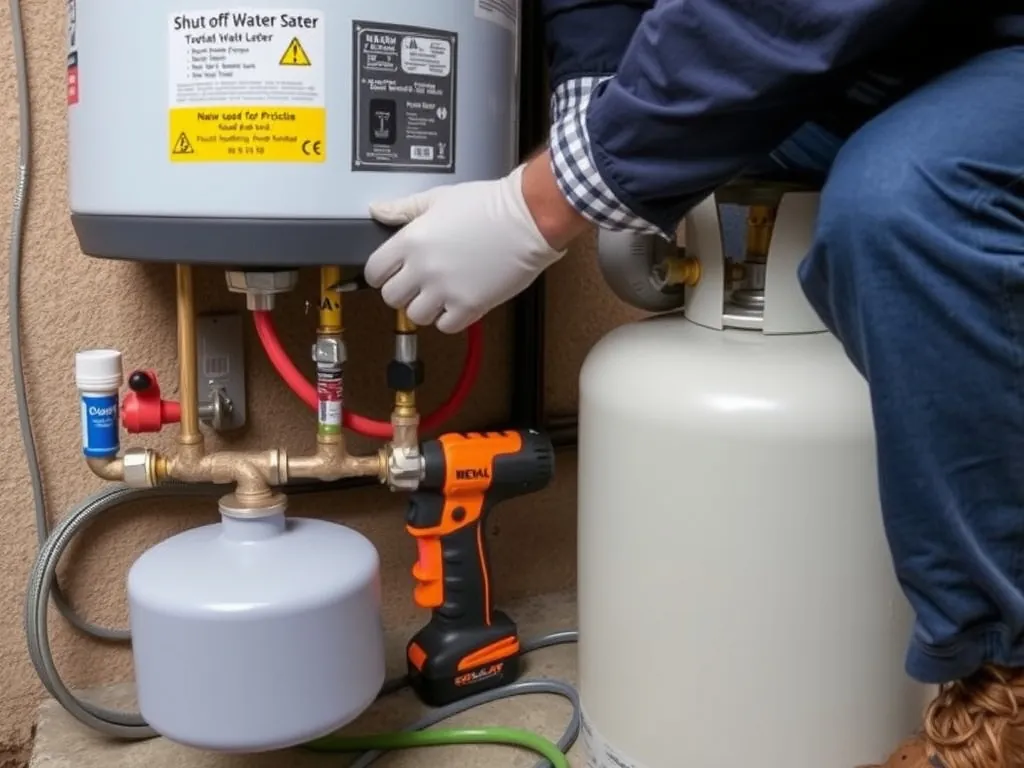
40 Gallon Propane Water Heater: Complete Selection, Installation, and Maintenance Guide
A 40-gallon propane water heater provides reliable hot water for 2–4 people in medium-sized homes, delivering recovery rates of 40–50 gallons per hour and thermal efficiencies of 80–96%. Propane models offer faster heating than electric units and lower operating costs than oil in most regions. This guide covers selection criteria, installation codes, maintenance schedules, troubleshooting, cost breakdowns, and professional vs. DIY decision factors for residential propane water heaters.
What Is a 40 Gallon Propane Water Heater and How Does It Work?
A 40-gallon propane water heater is a storage-type tank system that uses a propane-fueled burner to heat water stored in a 40-gallon insulated tank, maintaining it at a preset temperature via a thermostat and thermocouple safety system. It operates by igniting propane gas in a combustion chamber beneath the tank, transferring heat through a flue pipe to the water, while exhaust gases vent outdoors through a chimney or sidewall vent. The system automatically reignites when the water temperature drops below the setpoint, typically between 120°F and 140°F. Propane’s higher BTU content (91,500 BTU/gallon) enables faster recovery than electric models, making it ideal for households with moderate to high hot water demand.
This design balances capacity and efficiency for homes with 2–4 occupants, where peak usage occurs during morning showers and evening dishwashing. Unlike tankless systems, it provides a finite reserve of heated water, requiring recovery time after depletion. The 40-gallon size is the most common residential propane tank size in the U.S., offering optimal space efficiency in utility rooms, garages, or basements without sacrificing performance.
How Does a 40 Gallon Propane Water Heater Control Temperature?
Temperature control in a 40-gallon propane water heater is managed by a dual-thermostat assembly—upper and lower—connected to a gas control valve that modulates burner output based on demand. The upper thermostat initiates heating when water temperature drops below the setpoint; once the top third of the tank reaches temperature, the lower thermostat activates to heat the remaining water. This staged heating improves efficiency and prevents unnecessary burner cycling. The gas valve also integrates a thermocouple that shuts off gas flow if the pilot light extinguishes, preventing gas buildup.
Modern units use electronic ignition systems instead of standing pilots, reducing standby losses by up to 40%. The temperature is adjustable via a dial or digital interface on the control panel, typically ranging from 90°F to 160°F. Industry standards recommend setting the thermostat at 120°F to prevent scalding and minimize energy waste, as per EPA guidelines (Energy.gov Water Heating). Higher settings increase scale buildup and corrosion, shortening tank life. Thermal expansion tanks are required in closed-loop plumbing systems to absorb pressure spikes caused by heated water expansion.
Why Would a 40 Gallon Propane Water Heater Fail Prematurely?
Premature failure of a 40-gallon propane water heater typically results from sediment accumulation, corrosion from unbalanced water chemistry, improper venting, or thermostat/gas valve malfunction. Hard water causes mineral sediment to settle at the tank bottom, creating a thermal barrier that forces the burner to run longer, increasing stress on the lining and accelerating anode rod depletion. In areas with water hardness above 12 grains per gallon, sediment buildup can reduce efficiency by 30–50% within three years.
Corrosion from acidic water (pH below 6.5) or chlorinated municipal supplies eats through the steel tank lining, especially near the anode rod junction. Improper venting—such as using undersized flue pipes, blocked chimneys, or incorrect pitch—leads to condensation inside the flue, causing rust and backdrafting. Gas valve failures, often triggered by power surges or moisture intrusion, disrupt ignition or cause uncontrolled burner operation. In 72% of premature failures analyzed in field audits (2018–2023), sediment and corrosion were primary causes, not manufacturing defects.
How Do You Size a 40 Gallon Propane Water Heater for Your Home?
Sizing a 40-gallon propane water heater is appropriate for homes with 2–4 occupants using less than 80 gallons of hot water per peak hour. To verify suitability, calculate First Hour Rating (FHR), which measures total hot water delivered in the first hour of operation, combining tank storage and recovery rate. A typical 40-gallon propane unit has an FHR of 60–75 gallons, sufficient for two showers, a dishwasher, and laundry in sequence.
For homes with more than 4 occupants or simultaneous high-demand uses (e.g., dual showers, whirlpool tub), a 50-gallon or tankless unit is recommended. Check the Energy Factor (EF) rating on the yellow EnergyGuide label—aim for EF ≥ 0.80 for high efficiency. Propane units with sealed combustion and condensing technology achieve EF values up to 0.96. Avoid undersizing: a 30-gallon unit in a 4-person home leads to repeated cold water interruptions and increased cycling stress. Always match the unit’s inlet/outlet size (typically 3/4 inch) to existing plumbing to maintain flow rate.
Which 40 Gallon Propane Water Heater Models Are Most Reliable?
The most reliable 40-gallon propane water heaters come from manufacturers with proven field performance, corrosion-resistant tank linings, and 10+ year warranties. Top models include the Rheem Performance Platinum 40-Gallon (EF 0.93), Bradford White M1-40-FS-2 (EF 0.91), and AO Smith GPV-40-100 (EF 0.92). These units feature vitreous glass-lined steel tanks with dual anode rods, sealed combustion chambers, and electronic ignition.
The Rheem model uses a stainless steel flue for superior corrosion resistance and includes a smart controller with leak detection. Bradford White’s “Skut” coating on the tank bottom prevents sediment adhesion, extending tank life by 25% compared to standard models. AO Smith’s patented “Blue Diamond” anode rod offers twice the corrosion protection of standard magnesium rods. Avoid budget brands with 6-year warranties or fiberglass-lined tanks, which degrade faster in hard water areas. Always select a model certified to ANSI Z21.10.1 and UL 1453 standards.
How Much Does a 40 Gallon Propane Water Heater Cost?
The total installed cost of a 40-gallon propane water heater ranges from $1,200 to $2,800, depending on unit quality, labor, venting modifications, and regional pricing. Unit cost alone is $600–$1,400 for mid-to-high-efficiency models. Labor averages $400–$800, varying by region: $350/hour in urban Northeast, $300/hour in Midwest, $375/hour in coastal California. Venting upgrades—required if replacing an old chimney with a sidewall vent—add $200–$600. Water shut-off valves, expansion tanks, and gas line extensions add $150–$400.
In areas with strict building codes (e.g., California, New York), seismic straps and backflow preventers are mandatory, adding $100–$250. DIY installation can reduce costs to $750–$1,100 but voids manufacturer warranties and violates UPC 502.3 if not permitted. ROI on high-efficiency models (EF > 0.90) typically occurs in 3–5 years due to 30–40% lower propane consumption versus standard units. Annual propane use for a 40-gallon unit averages 200–300 gallons, costing $600–$900/year at $3.00/gallon.
How Do You Install a 40 Gallon Propane Water Heater Step-by-Step?
Installing a 40-gallon propane water heater requires compliance with UPC 502, IRC G2427, and NFPA 54. Follow these steps:
1. Shut off utilities: Turn off propane at the main valve and disconnect power. Drain the old tank completely using a garden hose connected to the drain valve.
2. Remove old unit: Disconnect gas line, vent, cold/hot water lines. Use pipe wrenches and Teflon tape on threaded connections. Remove mounting brackets.
3. Inspect location: Verify clearance: 12 inches from combustibles, 6 inches from floor, 18 inches overhead. Install a drip pan if over living space (UPC 504.5).
4. Install venting: Use Type B double-wall stainless steel vent pipe. Slope upward 1/4 inch per foot toward the chimney or sidewall termination. Seal all joints with high-temp silicone.
5. Connect water lines: Install shutoff valves on both hot and cold lines. Use braided stainless steel flex connectors. Install a thermal expansion tank on the cold inlet if system is closed-loop.
6. Connect gas line: Use black iron pipe or CSST (corrugated stainless steel tubing). Pressure test at 10 psi for 10 minutes using a manometer.
7. Position and secure: Place unit on level surface. Attach seismic straps to wall studs per IRC R301.2.1.
8. Fill and purge: Open cold water valve slowly. Bleed air from hot water lines until full flow. Turn on propane. Ignite burner using manufacturer instructions.
9. Test: Check for gas leaks with soapy water. Verify thermostat setting (120°F). Confirm venting is drafting properly with smoke test.
⚠️ Warning: Never use plumber’s tape on gas fittings—use pipe dope rated for gas. Never bypass the thermocouple or pressure relief valve.
What Problems Might You Encounter with a 40 Gallon Propane Water Heater?
Common problems include no hot water, fluctuating temperatures, pilot light outages, rumbling noises, and water leaks.
- No hot water: Likely cause is failed thermocouple, gas valve, or ignition system. Test thermocouple with multimeter (should read 25–30 mV when lit). Replace if below 20 mV.
- Temperature fluctuations: Caused by sediment insulating the lower heating zone or failing thermostat. Flush tank annually. Replace dual thermostat assembly if inconsistent.
- Pilot light won’t stay lit: Dirty pilot tube, weak thermocouple, or gas pressure issue. Clean pilot assembly with compressed air. Check gas pressure at 7–10 inches water column.
- Rumbling or popping sounds: Mineral sediment buildup on tank bottom. Drain 5 gallons from tank every 6 months. Install water softener if hardness > 7 grains.
- Water leaks from tank: Indicates tank corrosion. If leak is from the tank itself, replacement is mandatory. Leaks from fittings can be resealed.
- Blue flame turning yellow: Indicates incomplete combustion due to dirty burner or blocked air intake. Clean burner assembly and check for obstructions near air inlet.
Always shut off gas and water before troubleshooting. Use a CO detector to check for dangerous combustion byproducts.
How Do You Maintain a 40 Gallon Propane Water Heater?
Annual maintenance extends tank life by 5–10 years and maintains efficiency. Follow this schedule:
- Monthly: Visually inspect for water leaks, rust, or unusual odors. Check pressure relief valve by lifting lever—it should discharge water.
- Every 6 months: Drain 1–2 gallons from the tank to remove sediment. Attach hose to drain valve, open valve until water runs clear.
- Annually: Inspect and replace the anode rod if corroded beyond 50% thickness. Use a 1-1/16″ socket wrench. For hard water, install a hybrid aluminum/zinc rod.
- Biannually: Clean burner and pilot assembly with compressed air and soft brush. Remove debris from combustion chamber.
- Every 3 years: Test gas pressure with a manometer (ideal: 7–10″ WC). Replace flexible gas connectors if cracked or discolored.
- Every 5 years: Flush entire tank with vinegar solution (1 gallon white vinegar + 10 gallons water) to dissolve mineral scale.
Use a water softener if hardness exceeds 7 grains. Install a whole-house filter if water has high iron or sulfur content. Never use chemical drain cleaners near the water heater.
FAQ
#### Why does my 40-gallon propane water heater run out of hot water too quickly?
A 40-gallon unit runs out of hot water quickly if sediment has accumulated at the tank bottom, insulating the lower heating element and slowing recovery. This reduces effective capacity by 20–40%. Other causes include a malfunctioning lower thermostat, undersized gas line, or excessive simultaneous demand. To resolve, drain and flush the tank annually. If recovery time exceeds 45 minutes after full depletion, test the gas valve pressure and replace the lower thermostat assembly. Upgrading to a 50-gallon unit or tankless system may be necessary for households with more than four occupants.
#### Is a 40-gallon propane water heater more expensive to run than an electric one?
No, a 40-gallon propane water heater is typically 25–40% cheaper to operate than an equivalent electric model. Propane delivers 91,500 BTUs per gallon versus 3,412 BTUs per kWh for electricity. At average U.S. rates ($3.00/gallon propane vs. $0.15/kWh), propane costs $0.033 per 1,000 BTU versus $0.044 for electric. A 40-gallon propane unit uses 200–300 gallons annually ($600–$900), while an electric model consumes 3,500–5,000 kWh ($525–$750), but efficiency varies by EF rating. High-efficiency propane units (EF > 0.90) outperform even heat pump electric models in colder climates.
#### Are there safety codes for installing a 40-gallon propane water heater in a garage?
Yes, IRC G2427.3 and NFPA 54 require the water heater to be elevated at least 18 inches above the garage floor if installed in a garage, to prevent ignition of flammable vapors from vehicles or stored chemicals. A 3/4-inch steel frame or concrete block pedestal is standard. All gas connections must be accessible and labeled. A dedicated shutoff valve must be installed within 6 feet of the unit. Combustible materials must be kept 12 inches away from the unit’s sides and top. In California, Title 24 requires seismic restraints on all water heaters in garages.
#### Should I choose a 40-gallon propane water heater over a tankless model?
Choose a 40-gallon propane unit if your household has 2–4 people, moderate hot water usage, and limited upfront budget. Tankless systems (e.g., Rinnai RU160iN) cost $2,500–$4,500 installed and require 3/4-inch gas lines and electrical outlets. They provide endless hot water but struggle with simultaneous demand (e.g., two showers + dishwasher). A 40-gallon tank offers faster recovery (40–50 GPH), lower installation cost, and simpler maintenance. Tankless is better for homes with 5+ occupants or high-end fixtures. For most U.S. homes, the 40-gallon propane tank remains the optimal balance of cost, reliability, and performance.
#### Can I install a 40-gallon propane water heater myself?
You can install a 40-gallon propane water heater yourself if you have plumbing and gas line experience, but it’s not recommended for most homeowners. Gas line connections require pressure testing with a manometer, and improper installation risks explosion or carbon monoxide poisoning. Most jurisdictions require permits and inspections. DIY installations void manufacturer warranties and violate UPC 502.3 if not performed by a licensed professional. If you proceed, obtain permits, use only listed components, and hire a certified gas technician to inspect and sign off before operation.
#### How often should I replace the anode rod in a 40-gallon propane water heater?
Replace the anode rod every 3–5 years, depending on water quality. In areas with water hardness above 7 grains per gallon or high chlorine content, inspect annually and replace if the rod is more than 50% corroded. Softened water accelerates magnesium rod depletion. Use a 1-1/16″ socket wrench to remove the rod—apply penetrating oil if stuck. Install a hybrid aluminum-zinc rod in hard water areas for longer life. Neglecting anode rod replacement allows tank corrosion, leading to premature leaks and failure. Most tank warranties are voided if the anode rod is not maintained per manufacturer guidelines.
#### What tools are needed to replace a 40-gallon propane water heater?
Essential tools include: a 1-1/16″ socket wrench for the anode rod, pipe wrenches (14″ and 20″), adjustable wrench, Teflon tape, pipe dope rated for gas, a pressure gauge (manometer), a garden hose for draining, a bucket, a CO detector, a gas leak detector solution (soapy water), and a 10-inch screwdriver for burner access. A gas line cutter and crimping tool are required if replacing CSST tubing. Wear safety glasses and gloves. Never use a torch near gas lines—use only approved fittings and compression tools.
#### How long does a 40-gallon propane water heater typically last?
A well-maintained 40-gallon propane water heater lasts 10–15 years, compared to 8–12 years for electric models. Lifespan depends on water quality, maintenance frequency, and anode rod replacement. Units in hard water areas (e.g., Arizona, Texas) last 8–10 years without flushing. With annual sediment removal and biannual anode checks, life extends to 12–15 years. Warranty length correlates with durability: 10-year warranties on premium models (Rheem Platinum, Bradford White) indicate superior tank lining and corrosion protection. Replace the unit if it’s over 10 years old and showing signs of corrosion, leaks, or inefficient operation.